What Happens If You Cannot Show an Iowa Insurance Card
We've all been there: you're out enjoying a beautiful Iowa day on your ATV or UTV, cruising down a gravel road, and suddenly, those flashing lights appear in your rearview. Your heart sinks a little, even if you know you haven't done anything wrong. But then the deputy asks for your insurance card, and a cold wave of dread washes over you as you realize it's not where it should be. This guide is all about navigating that stressful situation, understanding the rules, and making sure you're prepared so it doesn't happen again.
The Immediate Roadside Reality: What Happens When a Deputy Stops You
It’s a scenario no rider wants to face. You're simply enjoying the freedom of the open secondary roads that Iowa allows for ATV and UTV use, perhaps on your way to a favorite fishing spot or just exploring the vast rural landscapes. Then, a law enforcement officer, whether it’s a county sheriff's deputy or a conservation officer, signals for you to pull over. The first thing you're likely to experience is a request for your driver's license, vehicle registration, and proof of insurance. This is standard procedure, just like with any other motor vehicle stop on a public road.
The Initial Encounter and Lack of Proof
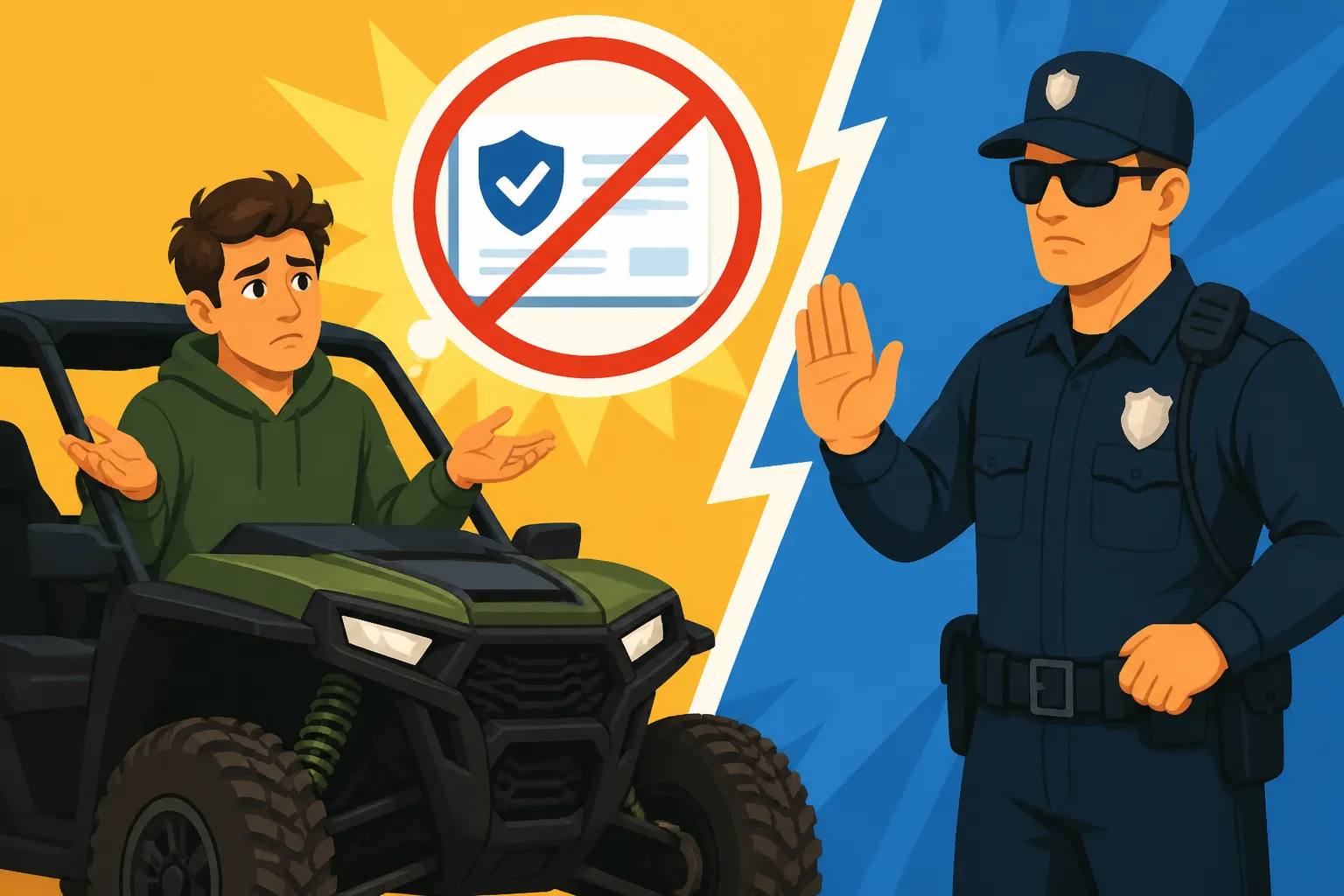
When you reach into your storage compartment or gear bag and come up empty for that little card, the immediate feeling can range from mild annoyance to outright panic. You know you have insurance, you pay for it every month, but for some reason, the physical proof isn't with you. Maybe it's in your truck, or you swapped out wallets, or it's tucked away in another machine. Whatever the reason, the fact remains: you can't present it on demand. The deputy will note this, and while they might be understanding, their job is to enforce the law as it stands at that moment. They don't have the luxury of just taking your word for it.
What Law Enforcement Looks For
When an officer pulls you over while you're riding your ATV or UTV on an authorized public road, they're not just looking for a piece of paper. They're looking for verifiable proof that your machine meets Iowa's legal requirements for road operation. This includes ensuring you have a valid driver's license, that your machine is properly registered with a current decal, and critically, that you carry the minimum required liability insurance. They need to see a physical or electronic card that clearly shows the policy holder's name, the effective dates of coverage, the policy number, and the insurance company's name. They're checking for compliance with [What Iowa Requires of an Proportion on a Public Road]. If any of these elements are missing, it raises immediate concerns from their perspective.
The Immediate Consequences: A Citation is Likely
Let’s be realistic. If you cannot produce proof of insurance at a roadside stop in Iowa, the most immediate and likely consequence is a citation. This isn't just a friendly reminder; it's a formal legal document stating that you've violated a state law. While a sympathetic officer might initially give you a chance to look, if it's truly not there, they have to act. This can feel incredibly frustrating, especially if you know you’re insured, but the system relies on immediate proof. This citation will require you to either pay a fine or appear in court to address the matter. It’s a moment that can quickly turn a pleasant ride into a stressful legal process.
Iowa's Mandatory ATV Insurance for Road Use
It's a common misconception that because ATVs and UTVs are primarily off-road vehicles, they don't carry the same insurance requirements as cars when venturing onto public roads. In Iowa, that's simply not the case. The moment your wheels touch an authorized secondary road or street, you are subject to the same basic insurance laws that apply to any other motor vehicle. This isn't about being punitive; it's about protecting everyone.
Why Insurance is Required on Iowa Roads
The fundamental reason behind the [Iowa ATV Insurance Requirement] for road use is financial responsibility. Accidents happen, and when they involve a motor vehicle on a public road, there can be significant costs associated with property damage, medical bills, and lost wages. Without insurance, if you were to be at fault in an accident, the injured parties would have little recourse to recover their losses, and you could face immense personal financial liability. Iowa law aims to ensure that if such an unfortunate event occurs, there is a financial safety net in place to cover at least the basic damages. This helps protect not only other drivers and their property but also you, the rider, from potential ruinous lawsuits.
The Minimum Coverage Iowa Expects
Iowa law specifies minimum liability coverage amounts that all motor vehicles, including ATVs and UTVs operating on public roads, must carry. These minimums are often referred to as "20/40/15" or similar figures, representing:
- $20,000 for bodily injury to one person in an accident.
- $40,000 for total bodily injury to all persons in an accident.
- $15,000 for property damage in an accident.
It's crucial to understand that these are minimums. Many riders choose to carry higher limits for greater protection, especially given the rising costs of medical care and vehicle repairs. While these are the basic requirements for [Iowa ATV Insurance Minimum Coverage], it's always a good idea to discuss your specific needs with an insurance agent to ensure you're adequately protected, both on and off the road.
What Counts as Valid Proof of Insurance
Gone are the days when a physical card was your only option. While a traditional paper insurance card is still perfectly acceptable, Iowa now recognizes several forms of proof. This can include:
- A physical insurance card issued by your insurance provider.
- An electronic image of your insurance card displayed on a mobile electronic device (like your smartphone).
- A letter or document from your insurance company confirming coverage.
- Proof from a database or online system that an officer might be able to access (though relying solely on this is risky, as connectivity isn't always reliable in rural Iowa).
The key is that the proof must be readily accessible and clearly show that your specific ATV or UTV is covered, and that the policy is current. Make sure that when you're riding, you have one of these forms of proof with you. It’s easy to forget, but a quick check before you head out, perhaps while you're hooking up your trailer or putting on your helmet, can save you a lot of grief. [Carrying the Certificate on an Iowa Ride] for your registration certificate is similar to how you should treat your insurance proof – keep it with the machine or on your person.
Beyond the Ticket: Understanding the Financial and Legal Ramifications
Receiving a citation for not showing proof of insurance isn't just a minor inconvenience; it carries financial penalties and can have longer-term impacts. It's important to understand the full scope of what you might be facing when that ticket is handed to you.
The Cost of an Uninsured Driving Citation
Let's not sugarcoat it: riding without proof of insurance in Iowa, even if you have insurance but simply can't produce the card, can be costly. The [Iowa Fines for No Proof of Insurance] can be significant, often starting in the hundreds of dollars. This fine is designed to be a deterrent and to emphasize the importance of compliance with the law. Beyond the base fine, there might be additional court costs or administrative fees that add to the total. This unexpected expense can quickly sour any pleasure derived from your ride. It’s a stark reminder that preparation is key to avoiding these kinds of financial surprises.
| Violation Type | Initial Fine (Example) | Potential Additional Costs |
|---|---|---|
| No Proof of Insurance | Varies by jurisdiction | Court fees, administrative fees |
| Unregistered ATV/UTV on Public Land | Varies by jurisdiction | Court fees, impoundment |
| Operating without a valid Driver's License | Varies by jurisdiction | Court fees, license suspension |
Note: Specific fine amounts can vary by county and jurisdiction, and may increase with repeat offenses. Always check your citation for exact figures.
Potential Impact on Your Driving Record and Insurance Rates
A citation for not showing proof of insurance typically goes on your driving record. While it might not carry the same weight as a major moving violation, it can still have repercussions. Insurance companies often review your driving record when setting premiums. A citation, even for a minor offense, can be seen as an indicator of increased risk. This means you might see an increase in your ATV or UTV insurance rates, and potentially even your rates for other vehicles you insure. It’s a ripple effect: a momentary lapse in memory can lead to higher monthly payments for years to come. In some cases, if you have multiple infractions, it could even make it harder to find affordable coverage.
How to Address the Citation (If You Had Insurance)
If you were insured at the time of the stop but simply couldn't produce the card, there's usually a way to mitigate the situation. Most jurisdictions in Iowa allow you to present valid proof of insurance to the court or the county attorney's office by a certain date. This is often called a "fix-it ticket" or "dismissal with proof." You'll typically need to:
- Obtain proof: Get a copy of your insurance card or a letter from your insurer confirming active coverage on the date of the citation.
- Contact the court/attorney: Follow the instructions on your citation or contact the court clerk to find out the specific procedure for submitting your proof.
- Pay an administrative fee: Even if the charge is dismissed, there is often a small administrative fee you’ll need to pay for the court to process the dismissal.
It’s imperative not to ignore the citation. If you fail to appear in court or provide proof by the deadline, the penalties can escalate, potentially leading to additional fines, suspension of your driving privileges, or even a warrant for your arrest. Being proactive can save you a lot of headache and money in the long run.
Proactive Steps: Ensuring You're Always Covered and Prepared
The best way to deal with a roadside stop where you can't produce your insurance card is to prevent it from ever happening. A little preparation goes a long way in ensuring your rides are stress-free and compliant with Iowa law.
Keeping Your Insurance Information Accessible
This is the most straightforward and effective step. Before every ride on a public road, develop a routine. Check for your driver's license, your ATV's registration, and most importantly, your proof of insurance. Consider these options for keeping your information handy:
- Waterproof Container: Keep a laminated copy of your insurance card and registration certificate in a small, waterproof container attached to your ATV or UTV. Many machines have glove compartments or small storage bins perfect for this.
- Digital Copy: Store an electronic copy of your insurance card on your smartphone. Make sure it's easily accessible without needing Wi-Fi or cellular data, perhaps as a screenshot or downloaded PDF.
- Wearable Pouch: Some riders prefer a small, zippered pouch that clips to their belt or can be worn around the neck, keeping essential documents close to their person.
- Dedicated Wallet: If you have a separate wallet for riding, make sure your insurance card is always in it.
It's also a good idea to keep a backup copy in your tow vehicle, just in case you somehow misplace the primary copy. Remember, even with accessories from brands like SuperATV making your machine more capable, you still need to be legally ready.
Reviewing Your Policy Regularly
Insurance policies aren't a "set it and forget it" kind of thing. Life changes, and so do your needs. Take a few minutes once or twice a year to review your ATV or UTV insurance policy.
- Check Coverage Dates: Ensure your policy is current and you're aware of the renewal dates.
- Update Machine Information: If you've bought a new machine, sold an old one, or made significant modifications, make sure your insurer knows. A policy might not cover a newly acquired machine without proper notification.
- Evaluate Coverage Limits: Are the [Iowa ATV Insurance Minimum Coverage] limits still sufficient for your comfort level, especially given inflation and potential risks? Consider if higher liability, comprehensive, or collision coverage makes sense for you.
- Understand Exclusions: Know what your policy doesn't cover. Some policies have exclusions for racing, specific types of modifications, or riding in certain areas.
A quick call to your insurance agent can clear up any questions and ensure you're fully aware of your coverage. This regular check-up can prevent far more serious problems than just not having a card.
Exploring Options for Road-Ready Machines
Making your ATV or UTV truly "road-ready" involves more than just ensuring it's insured. It means equipping it with the necessary safety features and understanding all the nuances of [Iowa Rules for Riding a Gravel Road] and other public thoroughfares. Products like signal lights, mirrors, and horns are often required for street legality, and having reliable, high-quality components is crucial. For instance, SuperATV offers a range of accessories that can help riders meet these requirements, from turn signal kits to mirrors that provide the visibility needed for safe road operation. Investing in these features not only enhances your safety but also demonstrates your commitment to being a responsible rider, which can sometimes make a positive impression during a roadside stop. Always ensure your machine is equipped with all the lighting, reflective gear, and other requirements before you venture onto public roadways.
Disclaimer
This article is for general informational purposes only and does not constitute professional advice. Laws, prices and regulations vary by location and change over time. Consult a qualified professional for guidance on your specific situation.