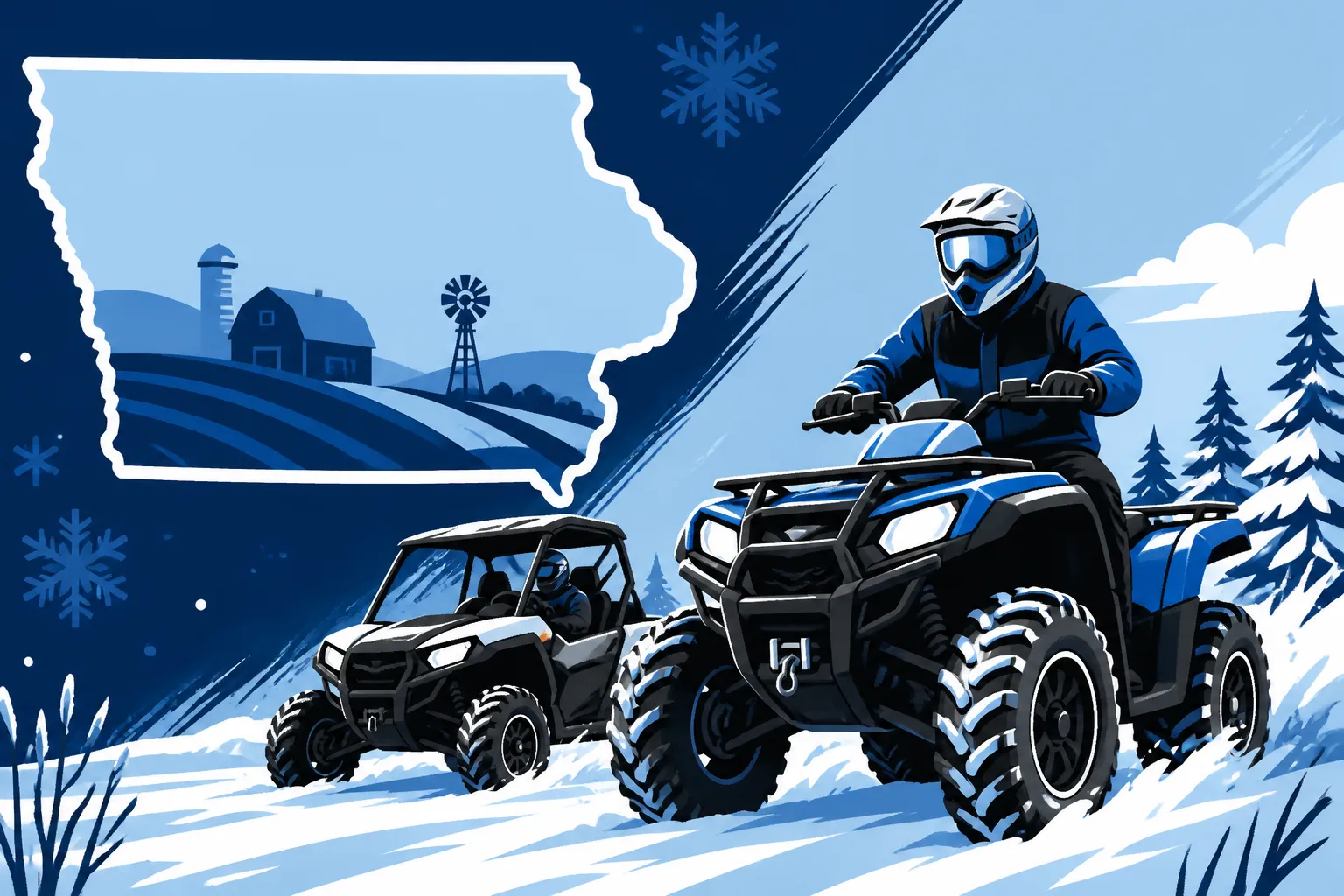
Iowa Rules for Riding in Winter
The crisp air, the glistening snow, the quiet hush of a winter landscape – it all sounds incredibly inviting for an ATV or UTV ride, doesn't it? But here in Iowa, those beautiful winter scenes also bring a unique set of challenges and rules for off-highway vehicle (OHV) enthusiasts. It's easy to get caught up in the thrill of a snow-covered trail or the convenience of plowing your driveway with your machine, but understanding the specific regulations and safety precautions for winter riding is crucial to avoid trouble and stay safe. This guide will walk you through everything you need to know about Iowa's rules for riding ATVs and UTVs when the temperatures drop and the snow flies.
Navigating Iowa's Winter Road Rules for ATVs and UTVs
When winter settles over Iowa, many riders wonder if the rules for ATVs and UTVs on public roads change. The short answer is, not really in their fundamental nature, but the conditions definitely change how those rules are applied and perceived. Iowa’s laws regarding OHV use on public roads are quite specific, regardless of the season, and winter weather often highlights why these regulations are so important.
Gravel and Secondary Roads in Winter
Iowa generally permits ATVs and UTVs on unpaved county secondary roads. This is a big point of confusion for many, as it’s not an open invitation to ride any road. The key is "unpaved secondary." This means the gravel roads that crisscross our beautiful state. However, when those gravel roads become snow-covered, things can get a little nuanced. If a gravel road is completely covered in snow, making it indistinguishable from a trail, it doesn't automatically become a free-for-all. The underlying classification as a secondary road still holds, and so do the associated rules.
You'll still need to be at least 18 years old and hold a valid driver's license to operate your machine on these roads. The 35 mph speed limit remains firmly in place, even if you feel like you could go faster in fresh snow. Visibility is also a huge factor in winter. With shorter daylight hours and often overcast skies, your machine’s lights become even more critical. Iowa requires headlights to be on at all times when riding on public roads, and this is non-negotiable in winter. You’ll also need functional taillights, brake lights, and a slow-moving vehicle triangle on the rear of your machine. Companies like SuperATV offer excellent lighting solutions and accessories that can significantly improve your visibility and safety during those dim winter days. Don't forget, [Iowa's 35 mph Cap] is strictly enforced, regardless of the road condition.
Paved Roads and City Streets
This is where many riders get into trouble, winter or not. While some counties and cities have ordinances allowing ATVs and UTVs on certain paved secondary roads or city streets, these are the exception, not the rule. The general statewide rule is that paved roads are off-limits for ATVs and UTVs. A snow-covered paved road is still a paved road. It doesn't magically transform into a permissible riding area just because there's snow on it.
If you’re riding in a town that has opened its streets to OHVs, like Waukon, you still need to adhere to their specific local ordinances, which often include curfews, speed limits, and designated routes. These local rules never supersede state laws regarding age, licensing, insurance, and equipment. Always check with the local city clerk or county recorder's office before assuming you can ride on any paved surface, especially in winter when emergency services are already stretched. For example, [Waukon's Open Streets and Alleys] might have different rules than a neighboring community.
Insurance and Registration in Winter
Just because there's snow on the ground doesn't mean your responsibilities as a machine owner disappear. Your ATV or UTV still needs to be properly registered with the Iowa DNR through your county recorder's office. The annual registration period runs from January 1st to December 31st, with a renewal window opening in September. So, if you're riding in January or February, your machine needs to have its current decal. Riding an expired registration, even in deep snow on a country road, can still lead to fines. For more details, you can look up [Iowa's Fines for an Unregistered ATV].
Furthermore, if you're riding on any public road, including permissible gravel roads, you are legally required to carry liability insurance. Iowa has specific minimum coverage requirements: $20,000 for bodily injury to one person, $40,000 for bodily injury to two or more people, and $15,000 for property damage. A winter accident can be even more complex due to icy conditions, so having proper insurance isn't just a legal necessity, it's a smart safeguard. An officer can and will check for proof of insurance roadside, even if the road is covered in snow.
Safety Considerations for Winter Riding in Iowa
Winter riding presents a whole new array of hazards compared to fair-weather adventures. The beautiful, pristine snow can hide dangers, and the cold itself poses risks that need to be carefully managed. Safety should always be your top priority.
Reduced Traction and Braking Distance
Snow and ice dramatically reduce traction, making it much harder to steer, accelerate, and most critically, to stop. What might be a routine braking maneuver in summer can become a dangerous slide in winter. Always assume there’s less grip than you think there is. This means you need to slow down significantly, increase your following distance, and brake much more gently and earlier than usual.
Ice, in particular, is an extreme hazard. Even a thin layer of black ice can cause a complete loss of control. Be extremely cautious in shaded areas, on bridges, and in low-lying spots where moisture tends to freeze first and linger longest. If you plan to ride on frozen bodies of water, which Iowa does allow under specific conditions, you absolutely must verify the [Ice Thickness Before a February Ride]. Never ride alone on ice, and always carry appropriate safety gear like ice picks and a rope.
Hypothermia and Frostbite Risks
Riding in cold weather exposes you to wind chill, which can rapidly lead to hypothermia and frostbite. Even if the air temperature isn't brutally cold, the wind created by riding can make it feel much colder. Hypothermia occurs when your body loses heat faster than it can produce it, leading to a dangerously low body temperature. Frostbite is the freezing of skin and underlying tissues, most commonly affecting fingers, toes, ears, and the nose.
To combat these risks, dress in layers. A good base layer wicks moisture away from your skin, a middle layer provides insulation, and an outer layer offers wind and water protection. Avoid cotton, which absorbs moisture and loses its insulating properties when wet. Invest in quality winter riding gear, including insulated, waterproof gloves, boots, and a helmet designed for cold weather. Heated grips and thumb warmers are also fantastic additions that make a huge difference in comfort and safety. [Iowa Rules for Riding in Winter] emphasize personal preparation as much as machine preparation.
Visibility Challenges for Riders and Others
Winter days are shorter, and weather conditions like falling snow or fog can severely limit visibility. This isn't just about you being able to see where you're going; it's about other drivers and trail users being able to see you. Always use your headlights and taillights, even in broad daylight. Consider adding extra auxiliary lighting or reflective tape to your machine and gear, especially if you're riding on roads.
Wearing bright, contrasting colors, such as [Blaze Orange on an Iowa November Ride] or neon yellow, can make you much more noticeable against a snowy backdrop. Be extra vigilant at intersections, driveways, and blind corners. Other drivers might not be expecting an OHV on a snow-covered road, and their own visibility may be compromised by frosted windows or snow glare. The combination of your reduced traction and another driver's limited awareness creates a recipe for disaster.
Preparing Your Machine and Yourself for Iowa's Winter Conditions
A successful and safe winter ride in Iowa starts long before you even turn the key. It requires meticulous preparation of both your ATV or UTV and yourself. Skipping these steps can lead to breakdowns, discomfort, and potentially dangerous situations in remote or cold conditions.
Machine Maintenance for Cold Weather
Winter riding puts extra strain on your machine. The cold thickens fluids, makes rubber brittle, and taxes your battery. Before heading out, give your ATV or UTV a thorough winter check-up:
- Battery: Cold weather dramatically reduces battery performance. Make sure your battery is fully charged and in good condition. Consider a battery tender if your machine sits for extended periods.
- Fluids: Check all fluid levels (oil, coolant, brake fluid). Ensure your coolant is mixed to the correct antifreeze ratio for Iowa's winter temperatures.
- Tires: Proper tire pressure is always important, but in winter, slight adjustments might be needed for optimal traction in snow. Some riders opt for specific winter or aggressive tread tires for better grip.
- Fuel System: Fill your fuel tank to prevent condensation, which can lead to fuel line freezing. Consider adding a fuel stabilizer and a fuel line antifreeze if your machine isn't frequently used.
- Brakes: Check your brakes for proper function. Worn pads or sticky calipers can be problematic in any season, but especially in icy conditions where precise control is vital.
- Lights: Confirm all lights (headlights, taillights, brake lights) are working correctly and are free of snow or ice build-up. Consider auxiliary lights for improved visibility.
- Winches and Recovery Gear: If you get stuck in deep snow, a winch is invaluable. Ensure it's in good working order and you have all the necessary recovery straps and shackles. Many quality winches and recovery accessories are available from companies like SuperATV.
Essential Winter Riding Gear and Supplies
Beyond dressing in layers for warmth, there's a host of other gear that can make your winter ride safer and more enjoyable:
- Helmet: A full-face helmet or one with a face shield is best to protect against wind and cold. Anti-fog inserts or heated shields are game-changers.
- Goggles/Eyewear: If not using a full-face helmet, ensure your goggles provide good protection and don't fog up.
- Gloves/Mitts: Insulated, waterproof gloves or mitts are crucial. Consider those with finger separations inside for better dexterity while still offering warmth.
- Boots: Waterproof, insulated boots are a must to keep your feet warm and dry.
- Survival Kit: Always carry a small survival kit, especially when riding in remote areas. This should include:
- First-aid supplies
- Fire starter (waterproof matches, lighter)
- Emergency blanket or bivy sack
- Snacks (energy bars, nuts)
- Water (or a way to melt snow for water)
- Knife or multi-tool
- Headlamp or flashlight
- Fully charged cell phone (with a portable charger)
- Map and compass (and know how to use them)
- Communication: A fully charged cell phone is a start, but service can be spotty in rural Iowa. Consider a satellite messenger or personal locator beacon for true emergencies, especially if riding alone.
Specific Winter Riding Scenarios and Rules
Iowa’s winter landscape offers various opportunities for riding, but each comes with its own set of rules and considerations. Knowing these distinctions is key to staying legal and safe.
Riding Snow-Covered Roads
As discussed, [Riding a Snow-Covered Gravel Road] is generally permissible under Iowa's OHV laws for unpaved secondary roads, provided you meet all other requirements (age, license, registration, insurance, equipment). The challenge is distinguishing between a gravel road and what might be an unplowed paved surface, or a field access lane. Always err on the side of caution. If you're unsure, don't ride it.
One common question is about using your ATV or UTV for plowing snow on public roads. While you can certainly use your machine to plow your own driveway or private lanes, using it to plow public roads, even minor ones, is generally the responsibility of county or city road crews. Interfering with or altering public roads without authorization can lead to legal issues. However, utilizing your machine with a plow attachment for private snow removal is an excellent use of your OHV in winter, and SuperATV offers a range of durable plows and mounting systems perfect for the task.
Riding on Frozen Lakes and Rivers
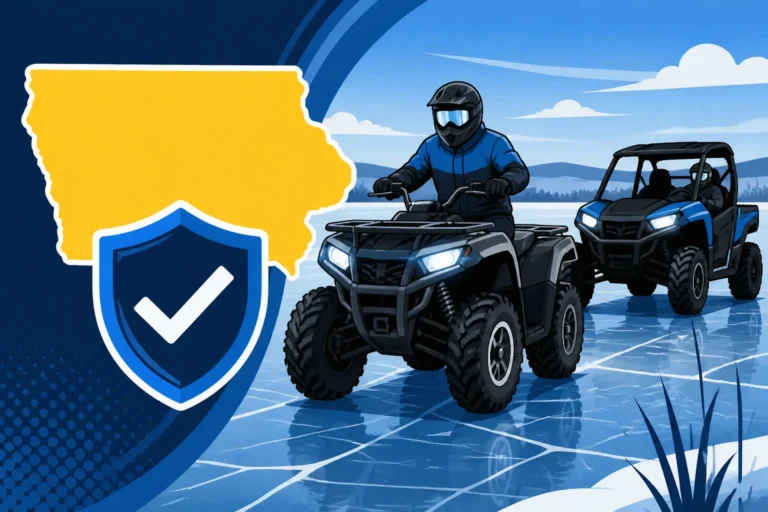
Iowa does permit riding ATVs and UTVs on public ice, such as frozen lakes and rivers, but with very strict caveats. The most critical factor is ice thickness. There is no statewide minimum thickness dictated by law for recreational OHV use, but the Iowa DNR strongly recommends at least 5-7 inches of clear, solid ice for ATVs and UTVs. This is a recommendation, not a guarantee of safety. Ice thickness can vary dramatically even across a small area due to currents, springs, and snow cover.
Never ride alone on ice. Let someone know your plans and expected return time. Avoid areas near inlets, outlets, docks, or any structure that might weaken the ice. Always carry ice picks and a rescue rope. Be aware of local regulations, as some municipalities might have specific rules for their public waterways. Remember, your ATV or UTV registration covers this activity, but safety remains entirely your responsibility. Always verify [Iowa Rules for Riding Public Ice] before venturing out.
Riding on Private Land in Winter
The rules are much more relaxed when it comes to riding on private land in Iowa, regardless of the season. If you have permission from the landowner, you can ride your ATV or UTV on their property, including snow-covered fields, timber, and trails. This is often the safest and most enjoyable way to experience winter riding in Iowa, as you don't have to contend with public road restrictions.
Even on private land, however, personal safety and machine preparation remain paramount. Inform someone of your route and expected return. Be mindful of hidden obstacles under the snow, like rocks, stumps, or fences. And remember, while you might not need to adhere to the same road-use equipment requirements, common sense dictates having functional lights, especially if riding near dusk or dawn. Respect the landowner's property and leave no trace.
| Scenario | General Iowa Rules (Winter) | Key Safety/Preparation |
|---|---|---|
| Gravel Roads | Permitted (unpaved secondary). 18+, DL, 35mph, lights, SMV triangle, insurance, registration. | Reduced traction, visibility. Dress warm, check lights. |
| Paved Roads | Generally not permitted. Only specific county/city ordinances. | Very high risk. Confirm local laws before riding. |
| City Streets | Generally not permitted. Only specific city ordinances (e.g., Waukon). | Adhere to local curfews, routes. High traffic risk. |
| Frozen Lakes/Rivers | Permitted on public ice. Requires extreme caution and ice thickness verification. | Never alone, ice picks, rope, emergency kit. |
| Private Land | Permitted with landowner permission. No public road rules apply. | Hidden obstacles under snow. Still dress warm, inform others. |
| Plowing Snow | OK for private property. Generally not for public roads by private citizens. | Use proper plow equipment, be aware of machine strain. |
The Iowa DNR and Winter Riding
The Iowa DNR plays a significant role in managing off-highway vehicle recreation, and their resources are invaluable, especially during winter. While the DNR doesn't directly enforce all road use laws (that's typically up to county sheriffs and local police), they oversee registration, safety education, and trail management within Iowa's designated OHV parks.
OHV Parks in Winter
Iowa's eight designated OHV parks, like Gypsum City OHV Park near Fort Dodge or Bluff Creek OHV Park at Eddyville, primarily cater to spring, summer, and fall riding. Many of these parks are managed by local clubs and may have limited or no official winter maintenance or hours. While a snow-covered trail at an OHV park might seem appealing, it’s crucial to check the park's specific winter policies before you go. Some parks may close entirely during winter months, or have specific rules about riding on snow. For instance, [Iowa's Weather-Driven Trail Closures] are common outside of winter, so always check with the park or the DNR website for current conditions and closures before trailering your machine.
Riding in OHV parks also requires a valid Iowa registration decal, which effectively acts as your permit to ride. This is different from the [Iowa's Nonresident User Permit] needed by out-of-state riders. If you are operating a machine within one of these parks, even in winter, your machine still needs to be up to date.
Safety Education for Young Riders
While the immediate focus of winter riding is often on adults and their machines, it's important to remember that young riders also need special consideration. Iowa requires anyone aged 12 to 17 to complete an approved ATV safety education course and carry their certificate when operating an ATV on public lands, including OHV parks. This requirement doesn't change in winter.
Even if you're on private land, supervising young riders is crucial. Winter conditions can be much more challenging for inexperienced operators. Reduced traction, visibility, and the effects of cold can overwhelm a young rider quickly. Always ensure they are dressed appropriately, on a machine sized for them, and supervised by a licensed, experienced adult. For further information, see [Iowa ATV Safety Certificate Requirements].
Winter riding in Iowa offers a unique and exhilarating experience, but it demands respect for the elements and a thorough understanding of the rules. By taking the time to prepare your machine, gear up properly, and understand where and how you can legally ride, you can enjoy the beauty of Iowa's winter landscapes from the seat of your ATV or UTV safely and responsibly.
Disclaimer
This article is for general informational purposes only and does not constitute professional advice. Laws, prices and regulations vary by location and change over time. Consult a qualified professional for guidance on your specific situation.