Iowa Rules for Riding Public Ice
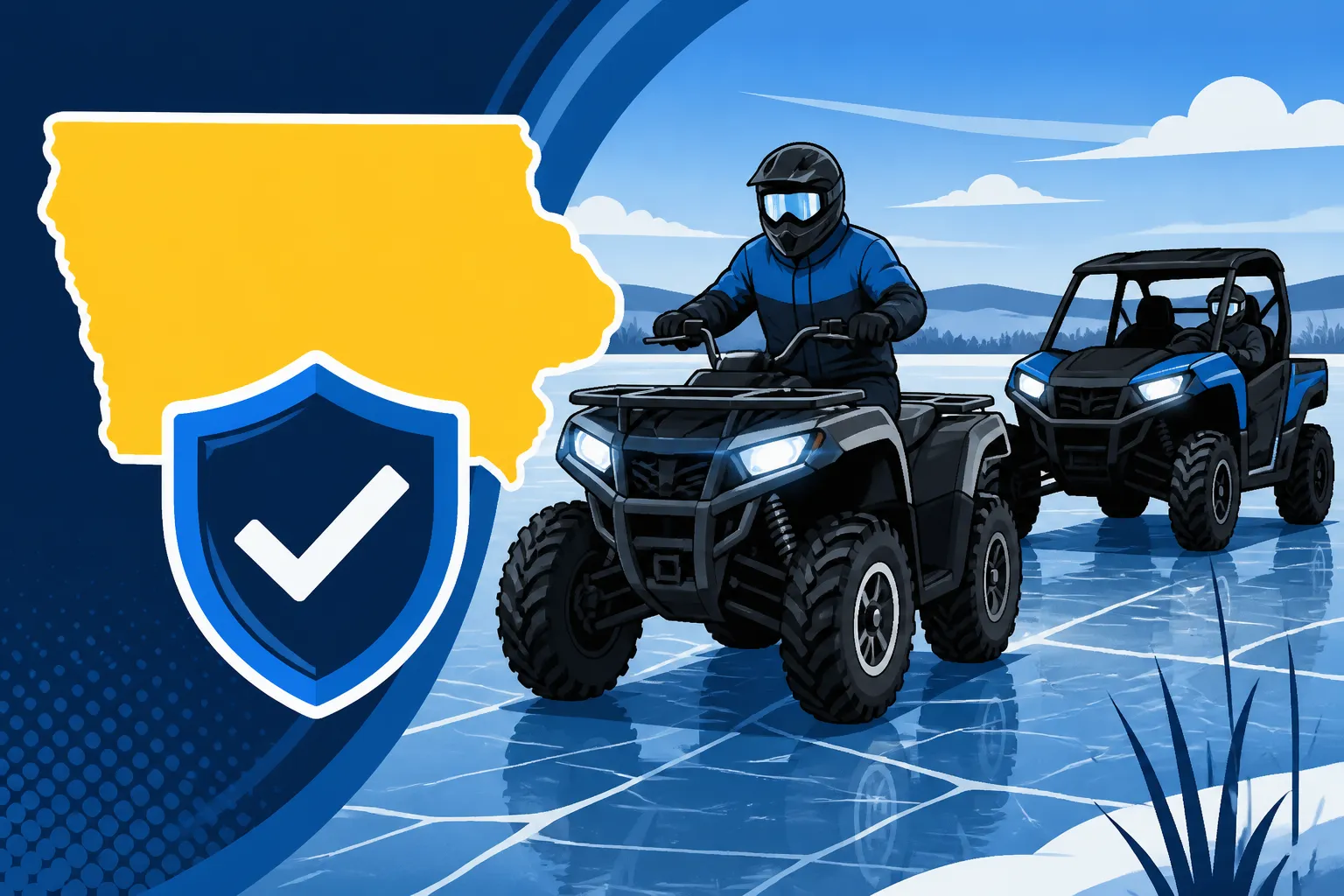
There’s a unique kind of freedom that calls to Iowa ATV and UTV riders when the winter sets in and the lakes and rivers freeze over. The thought of gliding across a vast, white expanse with nothing but the hum of your machine and the crisp air can be incredibly tempting. But, before you venture out, it’s absolutely critical to understand Iowa's rules for riding public ice. This guide will walk you through the essential safety measures, legal requirements, and responsible practices to ensure your winter rides are memorable for all the right reasons, not the wrong ones.
The Allure and Risks of Ice Riding in Iowa
Iowa winters can be long, and for many of us, the off-road trails we love become inaccessible under a blanket of snow and ice. That's when the frozen waterways start to look like an enticing alternative, offering a new kind of open-air adventure.
Why the Ice Calls to Riders
There’s truly nothing quite like the feeling of having acres of open, frozen surface stretching before you. It’s a completely different riding experience than the winding trails or gravel roads. For many, it’s a chance to explore areas normally only accessible by boat in summer, or simply to enjoy the sheer exhilaration of sliding and maneuvering on a slick surface. Anglers often use ATVs and UTVs to reach prime fishing spots, hauling all their gear with ease across the snow-covered ice. It’s a powerful draw for winter enthusiasts seeking to extend their riding season and embrace the unique beauty of an Iowa winter landscape.
The Undeniable Dangers
However, that allure comes with very serious, often life-threatening risks. The biggest danger, hands down, is unstable ice. What looks solid on the surface can hide treacherous thin spots, currents, or pressure ridges that can give way without warning. It's not just the immediate danger of going through the ice; it's the shock of the cold water, the difficulty of self-rescue, and the risk of hypothermia. Beyond the ice itself, there can be hidden obstacles like rocks, submerged logs, or old fishing shacks frozen into the ice that can cause serious accidents. Many riders feel a false sense of security when they see others out on the ice, but conditions can change rapidly and vary greatly even within a small area. The frustration of wanting to enjoy the ice but knowing the inherent dangers is a common one, and it's a feeling that emphasizes the need for extreme caution and adherence to all safety protocols.
Iowa's Official Stance on Riding Public Ice
Unlike dedicated OHV parks, public ice isn't a "trail" in the traditional sense, so the rules can feel a bit less clear. However, official bodies do have guidelines and, in some cases, outright prohibitions.
Where the Rules Come From
In Iowa, the primary authority for regulating activities on public waterways, including ice, often falls to the Department of Natural Resources (DNR). Their guidance typically focuses on safety and environmental protection. However, it’s crucial to understand that local jurisdictions – counties and cities – can and often do impose their own specific ordinances or restrictions on ice activities within their boundaries. This can create a patchwork of rules, making it essential to do your homework for the specific body of water you intend to ride. What’s allowed on one lake in one county might be strictly forbidden on another just a few miles away.
The Concept of "Public Ice"
When we talk about "public ice," we're generally referring to the frozen surfaces of lakes, rivers, and larger ponds that are considered public waterways. This usually means bodies of water where the public has a right to access, either through public ramps, parks, or adjacent public lands. Private ponds or lakes, of course, are subject to the landowner's permission. For any public body of water, it's the DNR's general guidelines and any specific local ordinances that apply to your ATV or UTV use. It’s not just open season; public access means public responsibility, and that includes following the rules to keep everyone safe.
General Permissibility and Key Restrictions
Generally, ATVs and UTVs are permitted on public ice in Iowa, but this is always contingent on critical safety factors and adherence to state and local regulations. The most paramount restriction revolves around ice thickness. The DNR strongly advises against riding on ice less than [Ice Thickness Before a February Ride] of clear, solid ice, and even then, caution is urged. Ice conditions can change dramatically due to factors like currents, springs, underwater structures, and recent weather. Speed limits, often mirroring those on land or specific to the ice, are also frequently enforced to ensure safety for all ice users. Visibility is another huge factor; conditions like whiteouts can make ice riding incredibly dangerous. You’re riding at your own risk, and Iowa's general approach leans heavily on individual responsibility.
The Role of Property Owners and Public Land Managers
While some large lakes might seem open season, many smaller public bodies of water are managed by county conservation boards or are within state parks. These entities often have their own specific rules or outright bans on motorized vehicle use on the ice. For instance, a county conservation area might permit ice fishing but prohibit ATVs on the ice to protect wildlife or maintain quiet enjoyment for other users. It's never safe to assume. Before loading up your machine, always check with the managing authority for the specific body of water you're interested in. A quick call to the county conservation board or the state park office can save you a lot of trouble, and potentially a hefty fine or a dangerous situation. You need to understand [Iowa Rules for Riding a Wildlife Area] and [Iowa Rules for Riding a County Conservation Area] if your intended riding area touches these sensitive properties.
Essential Safety Measures for Any Iowa Ice Ride
Ignoring safety on the ice isn't just risky; it's a gamble with your life and the lives of those with you. This isn't the time for cutting corners or thinking "it won't happen to me."
Verifying Ice Thickness
This is the single most important rule of [Riding Public Ice in February], bar none. You cannot rely on visual inspection alone, and you definitely cannot rely on someone else's tracks. Ice thickness varies incredibly, even across a few feet. Always check the ice yourself using an auger or spud bar. Drill multiple holes as you venture out, especially near shorelines, inlets, outlets, and areas with currents. A general guideline for ATVs is at least 5-7 inches of clear, new ice, and 8-12 inches for UTVs. However, this is just a guideline; conditions like slush, snow cover, or old, refrozen ice can make even thick ice less stable. Always err on the side of caution.
The Buddy System and Emergency Gear
Never, ever ride on ice alone. The buddy system is non-negotiable. If one machine breaks down or, worse, goes through the ice, you need immediate help. Beyond a riding partner, equip yourself and your machine for emergencies. Ice picks worn around your neck are crucial for pulling yourself out of the water. Carry a throw rope, a basic first-aid kit, a fully charged cell phone (in a waterproof bag), and a whistle. A GPS can be invaluable if a whiteout conditions suddenly reduce visibility. Consider a personal flotation device (PFD) for everyone on board, especially on a UTV. A SuperATV winch mounted to your machine can also be a lifesaver for pulling out a bogged-down machine or assisting in a rescue.
Pre-Ride Machine Checks
Just like any other off-road adventure, your ATV or UTV needs to be in top shape before hitting the ice. Cold weather can be hard on machines. Check your battery, fluids (antifreeze is critical!), and tire pressure. Low tire pressure can offer a bit more floatation on ice but can also make handling squirrely. Ensure all your lights are working, especially your headlights and taillights, as visibility can diminish quickly. Some riders opt for specific ice tires with studs or even tracks for superior traction and flotation. Consider adding a high-visibility flag or a light whip to your machine, especially if you're out with others or in a popular area. A good quality storage box from SuperATV can keep your emergency gear dry and accessible.
Here’s a quick rundown of essential gear for ice riding:
| Item | Purpose | Why It's Critical |
|---|---|---|
| Ice Picks | Self-rescue from icy water | Enables you to pull yourself onto the ice if you fall through |
| Throw Rope (50'+) | Rescuing others or securing your machine | Can be thrown to someone who has fallen in or used to pull out a stuck machine |
| Personal Flotation Device (PFD) | Buoyancy in water | Essential for staying afloat and conserving energy if you go through |
| Auger/Spud Bar | Checking ice thickness | The only reliable way to confirm safe ice conditions |
| Waterproof Phone/Radio | Communication in emergencies | Call for help if stranded, injured, or if ice gives way |
| GPS/Compass | Navigation in low visibility | Prevents getting lost in whiteouts or unfamiliar areas |
| Warm, Waterproof Clothing | Protection from cold and wet | Prevents hypothermia if exposed to cold or water |
| Shovel | Digging out stuck machines or clearing snow | Useful for various minor emergencies on the ice |
| First-Aid Kit | Treating injuries | Addresses cuts, sprains, or other medical issues until professional help arrives |
| Winch (on machine) | Self-recovery or assisting others | Invaluable for pulling a stuck machine out of slush or off a pressure ridge |
| High-Visibility Flag | Increase visibility to others | Helps other riders, anglers, and vehicles see you, especially in snow or fog |
Navigating the Legalities and Local Variations
It's not enough to be safe; you also have to be legal. Ignoring the administrative side can lead to unwelcome interactions with law enforcement.
Understanding County and City Ordinances
As mentioned, while the DNR offers overarching guidance, local ordinances are where things can get really specific, and sometimes, confusing. What might be an acceptable practice on a large state-managed lake could be explicitly prohibited on a smaller city reservoir or a county park lake. For example, some counties might have specific rules about speed limits on ice, noise restrictions, or even designated entry and exit points for ATVs and UTVs. The frustration of trying to track down these hyper-local rules is real, especially since there isn't one central database for every single county or city. Your best bet is always to contact the local sheriff's office, county conservation board, or city clerk's office for the specific body of water you plan to visit. Their word is final, and ignorance of local law is rarely an excuse.
Iowa's Nonresident User Permit for Visitors
If you're visiting Iowa from out of state and plan to ride your ATV or UTV on public ice, you'll need to ensure your machine complies with Iowa's registration requirements. This means obtaining an [Iowa's Nonresident User Permit]. Your home state's registration doesn't automatically grant you permission to ride Iowa's public lands or waters. This permit ensures that all riders contribute to the maintenance and safety efforts within the state, regardless of where their machine is primarily registered. It's a small but vital step to avoid fines and ensure you're riding legally.
Registration and Decal Requirements on Ice
Just because your machine is on ice doesn't mean the standard rules of the road (or trail) disappear. Your ATV or UTV must be properly registered with the state of Iowa and display a valid decal. This is the same decal you would need for riding any designated OHV trail or public land. Riding an unregistered machine on public ice can lead to significant penalties, similar to what you'd face on a trail. Make sure your registration is current and your [Iowa ATV Decal Placement] is visible. The [Iowa ATV Registration Cost] includes the necessary fees that help support Iowa's OHV programs. Forgetting to renew or display your decal could result in [Iowa Fines for an Unregistered ATV].
Equipment Requirements for Ice Riding
Beyond the essential safety gear, there are general equipment requirements that apply to ATVs and UTVs in Iowa, and these extend to riding on ice. Your machine needs working headlights and tail lights, especially if you're riding in low light conditions or at dawn/dusk. A horn is generally required for road use, and while ice isn't a "road," it's a good safety feature to have on your machine to alert others. Many riders also install a high-visibility orange or red flag on a pole, extending above the machine, to make themselves more visible to other ice users, especially snowmobilers or ice anglers who might be hunkered down. A bright flag or a light whip, perhaps from SuperATV, can be a crucial safety addition, helping you stand out against a white background. It's always a good idea to ensure your machine meets [Iowa ATV Insurance Requirement] as well, just in case an accident occurs.
Responsible Ice Riding and Environmental Considerations
Being a responsible rider means more than just following the letter of the law; it's about respecting the environment and other people who use the ice.
Minimizing Environmental Impact
When you're out on the ice, you're interacting with a fragile ecosystem. It's vital to minimize your environmental footprint. Stick to designated access points if they exist, and avoid disturbing sensitive shoreline habitats. Prevent fuel or oil spills by ensuring your machine is well-maintained and by refueling carefully away from open water or ice cracks. Pack out everything you pack in – and then some. This includes any trash, broken gear, or even fishing line. Litter on the ice can easily become litter in the lake once the thaw comes, polluting the water and harming wildlife. The rule of "leave no trace" is paramount here.
Respecting Other Ice Users
Public ice is a shared resource, and you’ll likely encounter ice anglers, snowmobilers, cross-country skiers, and even ice skaters. Each group has a right to enjoy the ice safely. Maintain safe speeds, especially when near fishing shacks, groups of people, or other activities. Give ice anglers a wide berth and don't speed past their lines or create excessive noise that could disturb their peace. Be predictable in your movements and use hand signals if riding in a group. A friendly nod or wave goes a long way in fostering good relations between different types of ice users. Your registration decal helps fund some of the trails you ride in other seasons, but on the ice, mutual respect is the most important currency.
When to Stay Off the Ice Entirely
Sometimes, the safest and most responsible decision is to stay off the ice altogether. If ice conditions are marginal, if there's significant snow cover making it impossible to gauge ice thickness, or if a warm spell has recently occurred, it's not worth the risk. If you see open water, hear strange cracking noises, or encounter slushy spots, turn back. Overcast days with poor visibility or whiteout conditions can turn a fun ride into a dangerous disorientation. Never let peer pressure or the desire for adventure override common sense. When in doubt, don't go out. There will always be another day to ride when conditions are safer.
Disclaimer
This article is for general informational purposes only and does not constitute professional advice. Laws, prices and regulations vary by location and change over time. Consult a qualified professional for guidance on your specific situation.