Iowa Slow-Moving Vehicle Sign Rules
For many of us who love the freedom of our ATVs and UTVs, the idea of getting from our property to a nearby trail, or even just crossing a short stretch of road to a neighbor's field, often brings up a lot of questions about what's actually legal. It's frustrating to have a machine capable of handling tough terrain, only to be bogged down by complex road rules. One of the most common points of confusion for Iowa riders is the requirement for a slow-moving vehicle (SMV) sign when you venture onto public roads. This guide aims to clear up all that head-scratching, detailing exactly why, when, and how you need to display an SMV sign on your off-highway vehicle in Iowa.
Why Iowa Requires a Slow-Moving Vehicle Sign for Road Use
It might seem like just another piece of equipment to buy and attach, but the slow-moving vehicle sign is a crucial safety feature when you're taking your ATV or UTV onto any public road in Iowa. The laws aren't there to make your life difficult; they're designed to prevent accidents, especially given the significant speed differences between an OHV and other road traffic.
The Core Purpose of the SMV Sign
Think about it from the perspective of someone driving a car or truck at highway speeds. They expect to encounter vehicles traveling at or near the posted speed limit. When they come upon an ATV or UTV that's only moving at, say, 25 miles per hour, that speed difference can be incredibly dangerous. A car approaching at 55 mph closes a lot of ground very quickly on a machine moving at 25 mph. The SMV sign serves as a highly visible, universal warning to other drivers: "Hey, this vehicle ahead is moving significantly slower than you might expect, so be ready to slow down and pass with caution." It's all about providing that early heads-up, giving drivers precious extra seconds to react and adjust their speed. We all just want to get to our destination safely, and this sign helps ensure that everyone else on the road knows to give us the space we need.
What Iowa Law Defines as "Slow-Moving"
Iowa's law specifically mandates the display of an SMV sign on any vehicle that "by its design or normal operation is incapable of traveling at a speed in excess of 25 miles per hour." While many modern ATVs and UTVs can technically go faster than 25 mph, when we're talking about legal road use in Iowa, they are often ridden at or below that speed, especially on gravel roads or when navigating between properties. If you're using your ATV on an authorized road, you should assume this rule applies to you. The state recognizes that even if your machine has a higher top speed, its typical operating speed for road travel, combined with its smaller size and profile, places it in that "slow-moving" category relative to cars and trucks. It's about how the vehicle is operating on the road, not just its maximum theoretical speed. This is a key distinction that can trip up riders, but understanding it helps make sense of the requirement.
Understanding the Iowa SMV Sign Requirements
So, you know why you need one. Now, let's talk about the sign itself and how to make sure it's properly displayed on your ATV or UTV. Getting this right is crucial for both safety and avoiding a roadside stop with a deputy.
The Specifics of the Sign Itself
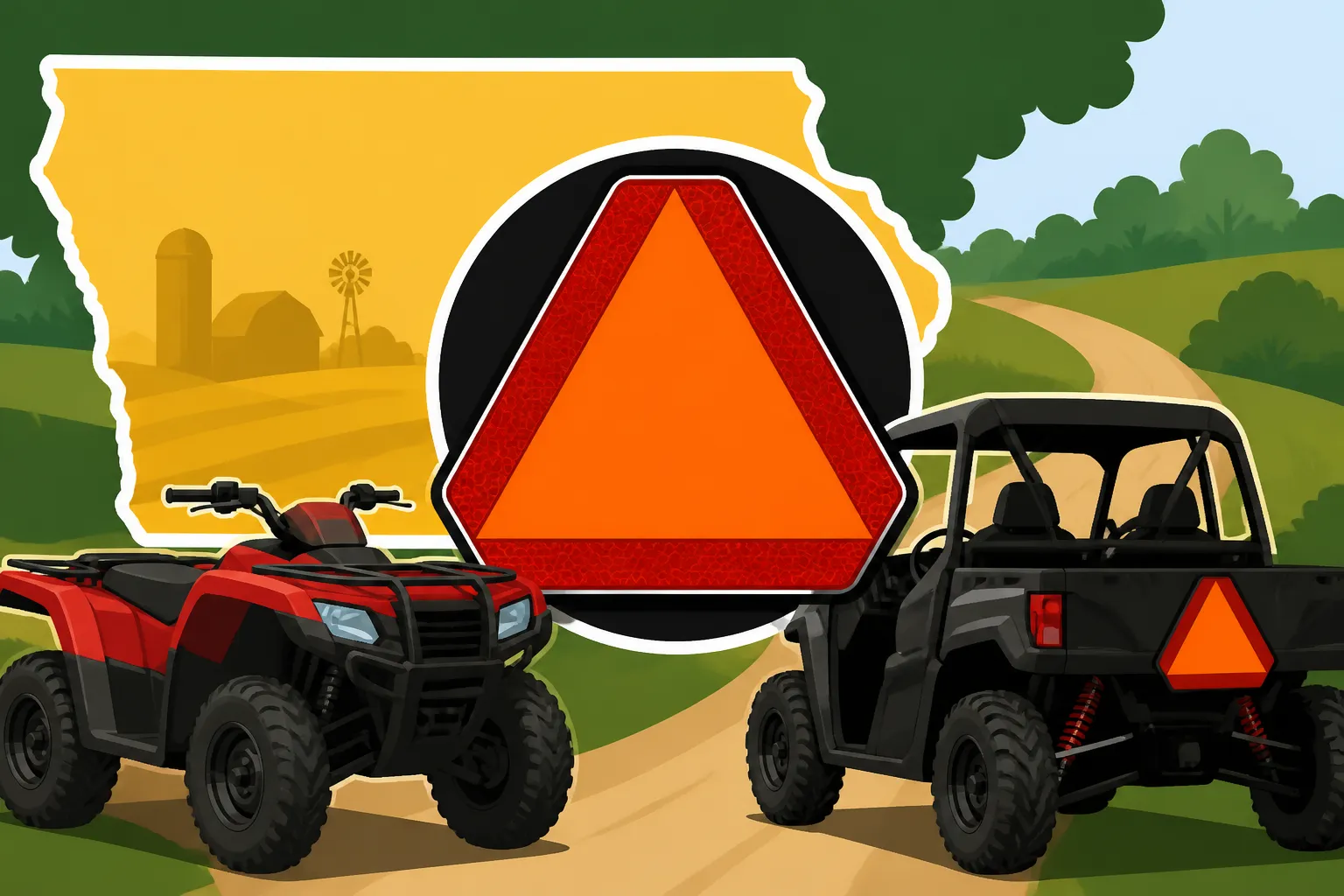
The Iowa law is quite specific about what constitutes a legal slow-moving vehicle sign. It's not just any triangle you can slap on the back of your quad. The sign must be a distinct triangular shape, with a fluorescent orange inner triangle and a reflective red border. The fluorescent orange is designed for high visibility during daylight hours, making your machine stand out in bright sun, overcast conditions, or even twilight. The reflective red border, on the other hand, is specifically for nighttime visibility, catching headlights and alerting drivers after dark. This dual design ensures maximum conspicuity, no matter the time of day. You can find these signs at most farm supply stores, hardware stores, or even online retailers. Companies like SuperATV, while known for aftermarket parts, often carry universal safety accessories or mounting solutions that could accommodate an SMV sign, understanding that riders need to comply with these rules. Remember, it's not just about having a sign, it's about having the right sign that meets these specific design requirements.
Proper Placement and Visibility on Your ATV or UTV
Simply having the sign isn't enough; it needs to be mounted correctly to be effective. Iowa law dictates that the slow-moving vehicle sign must be mounted on the rear-most portion of the vehicle, as near to the center as practical, and at a height that allows it to be clearly visible to oncoming traffic from the rear. This means it shouldn't be covered by cargo, a passenger, or mud flaps. It also means you might need to get creative with mounting brackets on some ATVs and UTVs, which don't always come with an obvious, flat surface for sign attachment. The goal is an unobstructed view for anyone approaching from behind. Imagine a driver coming over a slight hill or around a curve; they need to see that bright orange and red triangle as soon as possible. Some riders opt for robust mounting plates or brackets, sometimes even from accessory manufacturers, to ensure their SMV sign is secure and positioned perfectly. It’s definitely something to consider when you're preparing your machine for [Iowa Rules for Riding a Gravel Road].
When and Where the SMV Sign is Necessary in Iowa
Understanding the conditions under which this sign becomes a mandatory piece of equipment is key to riding legally and safely on Iowa's public pathways. It's not a blanket requirement for all ATV/UTV use, but it's vital for road excursions.
Public Roads Where the SMV Sign is Mandatory
In Iowa, if you're operating your ATV or UTV on any public road where it's legally permitted, you must display a slow-moving vehicle sign. This primarily applies to [Unpaved County Secondary Roads in Iowa], which are the most common public access points for OHVs in the state. However, it also extends to any paved secondary roads or city streets that a county board or city council has specifically authorized for ATV/UTV use. The critical takeaway here is "public road." Whether you're just crossing a street to get to a different field, riding a short distance to access a trail, or traveling a few miles to a neighbor's house, if you're on publicly maintained asphalt or gravel, the SMV sign needs to be visible. It's not just for farmers; any rider taking advantage of Iowa's road access laws needs to comply.
Exceptions and Misconceptions About SMV Sign Use
It's important to clarify that the SMV sign is specifically for road use. If you're solely riding on your own private property, or on designated off-highway vehicle trails within Iowa's OHV parks, you do not need to display a slow-moving vehicle sign. These environments are designed for OHVs, and the typical road traffic dynamics that necessitate the sign simply aren't present. Another misconception sometimes arises regarding speed. While the law targets vehicles "incapable of traveling at a speed in excess of 25 miles per hour," the reality for ATVs and UTVs on public roads is that even if your machine could go faster, you're often operating at or below that speed for safety and legal reasons. Therefore, it's always best practice to have the sign displayed if you're on public roads. The SMV sign is also just one piece of the puzzle; it doesn't exempt you from other critical requirements like having proper [Iowa ATV Insurance Requirement] or ensuring you meet the [Iowa Minimum Age to Ride a Road]. It's an additional safety measure, not a substitute for other legal necessities.
Integrating the SMV Sign with Other Road Use Gear
An SMV sign is a crucial part of your road safety kit, but it works best when it's part of a complete package of required and recommended gear. Think of it as one piece of a puzzle designed to make you as visible and safe as possible on public roadways.
Pairing the SMV Sign with Proper Lighting
While the SMV sign is fantastic for passive visibility during daylight hours and with reflected light at night, it’s not a substitute for active lighting. Iowa law requires certain lighting for ATVs and UTVs operating on roads, especially during periods of low light or after sunset. This includes having your [Headlights On All Day in Iowa] and functional taillights. The SMV sign works in concert with these lights. For instance, the reflective red border of the SMV sign will glow brightly when hit by headlights, but your machine’s actual taillights provide a direct, consistent light source that clearly marks your presence and width. Together, they create a much more comprehensive safety profile. Many riders choose to upgrade their lighting, especially their taillights, for better road visibility. Some aftermarket companies, like SuperATV, offer a range of robust lighting solutions that can be easily integrated onto your machine, further enhancing your safety alongside your mandated SMV sign.
The Full Picture of Iowa ATV Road-Legal Requirements
It’s easy to focus on one specific rule, like the SMV sign, and forget about the bigger picture. When you’re riding your ATV or UTV on Iowa roads, law enforcement officers like a [A Deputy at an Iowa Roadside Stop] will be checking for more than just that orange triangle. You'll need proof of valid [Iowa ATV Insurance Requirement] that meets the state’s minimum liability coverage. You must also have a valid driver's license – remember, Iowa requires an operator to be [Eighteen Years Old Behind the Bars] for road use. Beyond that, your machine needs to be equipped with a functional horn and at least one rearview mirror. All these components work together to ensure that your OHV is not only visible, but also manageable and accountable on shared roadways. The SMV sign is your visual warning, but the lights, horn, mirror, license, and insurance are all equally vital parts of being a responsible, legal road rider in Iowa. Don't let compliance with one rule make you forget about the others.
| Requirement | Description | Why It's Important |
|---|---|---|
| SMV Sign | Triangular sign with fluorescent orange center and reflective red border, mounted on the rear of the machine. | Warns other drivers of significantly slower speeds, preventing rear-end collisions. |
| Proper Placement | Rear-most portion of the vehicle, near center, unobstructed, and clearly visible. | Ensures maximum visibility to approaching traffic from behind, day and night. |
| When Needed | Any time an ATV/UTV is legally operating on a public road (gravel, authorized paved roads, city streets). | Mandatory on public roads where speed differentials create a safety risk. |
| Lighting | Headlights (on at all times), taillights. | Active illumination for visibility in all conditions, especially low light or dark. Complements SMV sign. |
| Horn | Functional audible warning device. | For alerting other road users to your presence or potential hazards. |
| Mirror | At least one rearview mirror, typically on the left side. | Allows the operator to see traffic approaching from the rear without turning their head. |
| Insurance | Minimum liability coverage (20/40/15). | Financial protection in case of an accident involving property damage or injury to others. |
| Driver's License | Valid driver's license for operators 18 and older. | Ensures operator has demonstrated basic driving competence. |
Disclaimer
This article is for general informational purposes only and does not constitute professional advice. Laws, prices and regulations vary by location and change over time. Consult a qualified professional for guidance on your specific situation.