Iowa Fines for No Proof of Insurance
There's nothing quite like the feeling of hitting a gravel road on your ATV or UTV, the wind in your face, the Iowa landscape stretching out before you. It's freedom, pure and simple. But that freedom comes with responsibilities, especially when you venture onto public roads. One of the most common pitfalls riders encounter, often leading to a hefty fine and a lot of frustration, is getting caught without proof of insurance. This guide will walk you through exactly what Iowa expects from you regarding ATV and UTV insurance for road use, the serious financial and legal consequences of riding uninsured, and practical steps you can take to ensure you're always compliant.
Understanding Iowa's ATV/UTV Insurance Requirement for Road Use
It might seem like a simple piece of paper or a digital card on your phone, but proof of insurance is a critical component of responsible ATV and UTV ownership in Iowa, especially when you plan to use your machine on public roads. Many riders, particularly those new to road-legal riding or coming from states with different regulations, often misunderstand the necessity until it's too late.
Why Insurance Matters for Road Riding
Imagine you're cruising down a county gravel road, minding your own business, when suddenly, something unexpected happens. Maybe a deer jumps out, you swerve, and unfortunately, you collide with another vehicle, or perhaps you lose control and damage private property. In these scenarios, the financial implications can be catastrophic. Iowa's requirement for insurance isn't just about collecting fees; it's fundamentally about protecting everyone on the road. It ensures that if you, as the operator, are found at fault in an accident, there's a financial mechanism in place to cover the damages to others' property and injuries to other people. Without it, you could face personal lawsuits that wipe out your savings and future earnings. It’s a peace-of-mind policy for all involved, knowing that reckless or accidental actions won't leave victims financially stranded. This is precisely why the state has defined clear rules around [Iowa ATV Insurance Requirement].
The Specifics: What Iowa Requires in Coverage
So, what exactly does Iowa expect you to carry in terms of ATV or UTV insurance when you're on public roads? The state mandates minimum liability coverage, often referred to as 20/40/15. Let's break down what those numbers mean because they're pretty important to understand for any rider wanting to stay on the right side of the law.
- $20,000 for Bodily Injury Liability Per Person: This is the maximum amount your insurance will pay for the medical expenses, lost wages, and pain and suffering of a single person injured in an accident where you are found at fault. If multiple people are injured, this limit applies to each individual.
- $40,000 for Bodily Injury Liability Per Accident: This is the absolute maximum your insurance will pay for all bodily injury claims in a single accident where you are at fault, regardless of how many people are injured. If total damages exceed this, you could be personally responsible for the difference.
- $15,000 for Property Damage Liability Per Accident: This covers damage you cause to another person's property, whether it's their vehicle, a fence, a mailbox, or even a building, in an accident where you are at fault.
These are the bare minimums. While they meet the legal requirement, many experienced riders and insurance professionals will tell you that carrying more coverage is a wise decision. Accidents, especially those involving ATVs or UTVs, can quickly accumulate costs far beyond these minimums. Think about what your machine could hit – a new pickup truck, a valuable piece of farm equipment, or even another highly customized UTV equipped with SuperATV accessories. The repair bills alone could easily exceed $15,000. It's always best to discuss your specific needs with an insurance agent to ensure you're adequately protected, especially since the actual [Iowa ATV Insurance Minimum Coverage] could barely cover a fender bender.
The Financial Hit: Iowa's Fines for No Proof of Insurance
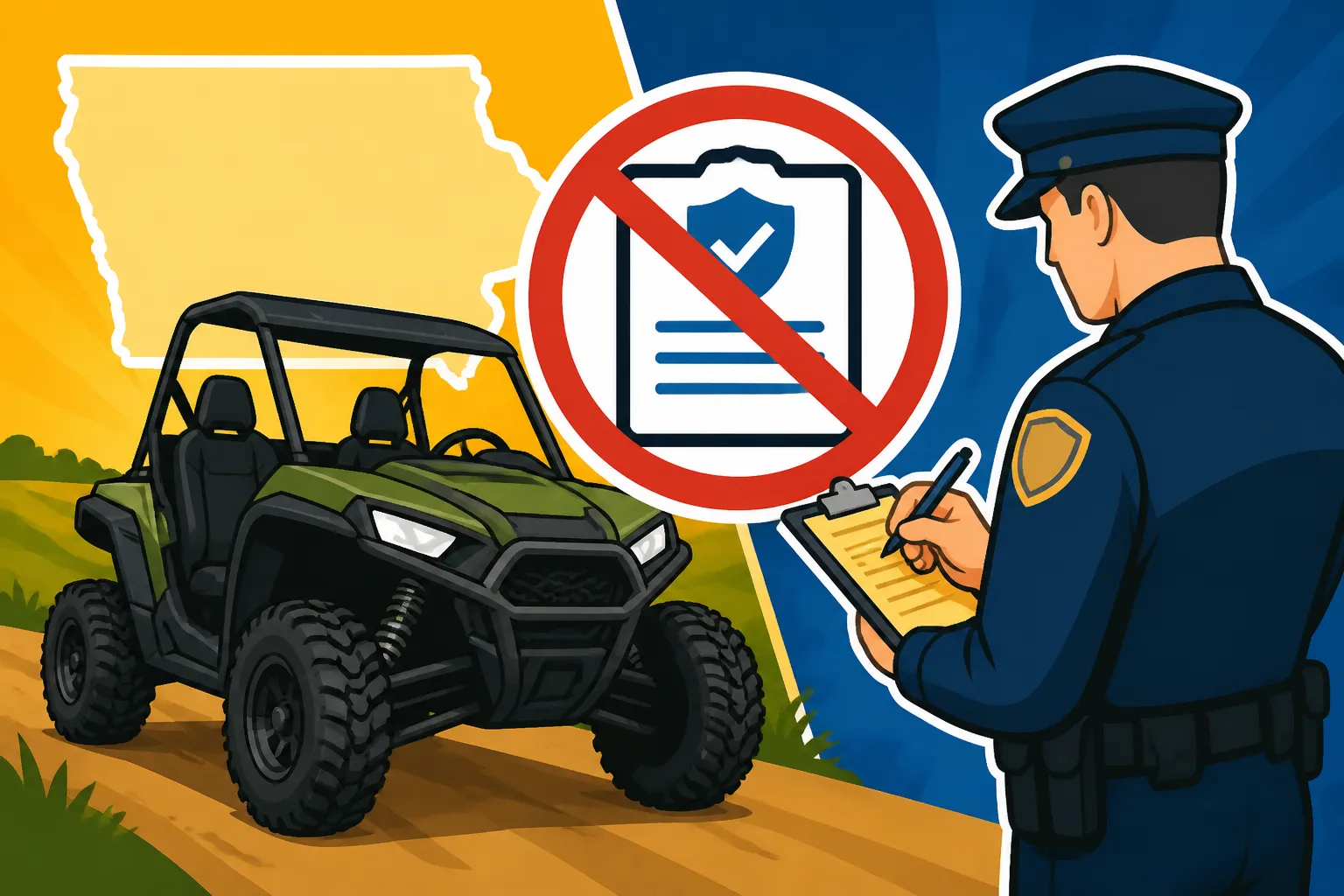
Nobody wants to get pulled over, especially when you're out enjoying your ride. But if you find yourself stopped by a deputy or a state patrol officer on an Iowa public road and cannot produce proof of valid insurance, you're in for more than just a stern lecture. The state takes this requirement seriously, and the penalties reflect that.
Initial Penalties for Lacking Coverage
The immediate consequence of failing to provide proof of insurance at a roadside stop is usually a citation. This isn't just a slap on the wrist; it comes with a significant monetary fine. While the exact amount can vary slightly depending on the jurisdiction and the specific circumstances, you should prepare for a fine that feels substantial. We're talking several hundred dollars for a first offense. This isn't like a parking ticket you can just shrug off; it's a moving violation with financial repercussions that will sting. For example, if you're riding a gravel road outside a small town and an [Iowa Deputy at an Iowa Roadside Stop] asks for your paperwork, not having that insurance card can quickly ruin your day and lighten your wallet. This is specifically outlined in the regulations concerning Iowa Fines for No Proof of Insurance.
Beyond the Fine: Other Consequences
The fine itself is just the beginning. Failing to carry proof of insurance can trigger a cascade of other headaches and expenses that go far beyond the initial ticket.
- Vehicle Impoundment: In some cases, especially if you're deemed a repeat offender or if there are other complicating factors (like an expired registration or a history of violations), law enforcement might have the authority to impound your ATV or UTV. Getting your machine out of impound comes with towing fees, daily storage fees, and the hassle of arranging transport. These costs can quickly add up to hundreds, if not thousands, of dollars, dwarfing the original fine.
- Impact on Driver's License/Registration: While not always an immediate suspension for a first offense, a citation for no insurance can still be recorded against your driving record. Accumulating too many points or serious violations can lead to suspension or revocation of your driver's license. Furthermore, it could complicate future ATV or UTV registration renewals, making the process much more difficult until outstanding issues are resolved. Remember, the state is trying to encourage responsible ridership, and if you can't prove you're responsible, they'll make it harder for you to operate on public land.
- Increased Future Insurance Rates: Once you've been cited for riding without insurance, you can expect your insurance premiums to skyrocket when you do try to obtain coverage. Insurance companies view this as a significant risk factor, indicating you're more likely to engage in risky behavior. This increased cost can follow you for years, making your annual cost of riding significantly higher than it would have been if you had simply maintained continuous coverage.
- Personal Liability in an Accident: This is perhaps the most devastating consequence. If you're involved in an accident while uninsured and found at fault, you are personally liable for all damages and injuries. This means you could be sued directly for medical bills, vehicle repairs, lost wages, and other expenses that easily total tens or even hundreds of thousands of dollars. Your assets, including your home, savings, and even future earnings, could be at risk. No recreational ride is worth that level of financial jeopardy.
Avoiding the Fine: Proving Your Coverage and Staying Compliant
The good news is that avoiding these fines and consequences is relatively straightforward: simply have the required insurance and be able to prove it. It sounds simple, but you'd be surprised how many riders get caught out by forgetting a simple piece of paper or not understanding their policy.
Always Carry Proof: Physical vs. Digital
When you're out on the trails or riding [Iowa Rules for Riding a Gravel Road], your proof of insurance needs to be just as accessible as your driver's license. The state typically accepts a few forms of proof:
- Physical Insurance Card: This is the most traditional method. Keep a current, physical insurance card in a waterproof pouch on your ATV or UTV, or carry it in your wallet. Just like you would with your driver's license, ensure it's always with you when you're operating on public roads.
- Digital Proof: Iowa law often permits showing proof of insurance on an electronic device, such as your smartphone. However, make sure your phone is charged, and you can easily access the digital card, even if you're in an area with spotty cell service. It's a good idea to download a copy of your card to your device rather than relying solely on website access. While convenient, make sure your phone is protected, perhaps in a SuperATV phone mount and case, so it's ready when you need it.
- Other Documentation: Sometimes, a printed copy of your insurance policy declarations page can suffice, but the dedicated insurance card is always the clearest and easiest for law enforcement to verify.
The key is immediate accessibility. If you have to dig through a backpack for five minutes or explain that your phone is dead, it slows down the interaction and can add to a deputy's frustration, even if you ultimately have coverage. Remember, [Carrying the Certificate on an an Iowa Ride] (your registration) is also important, so apply the same diligence to your insurance.
Ensuring Your Policy Covers Road Use
This is where some riders get tripped up. Just because you have an insurance policy for your ATV or UTV doesn't automatically mean it covers you for road use. Many standard off-road vehicle policies are designed primarily for trail riding on private land or designated OHV parks and specifically exclude coverage for operation on public roads.
Before you ever take your machine onto a gravel road or cross a highway, you need to:
- Read Your Policy Carefully: Go through your insurance documents with a fine-tooth comb. Look for clauses related to "public road use," "street legal conversion," or specific exclusions.
- Speak with Your Insurance Agent: The best way to be absolutely sure is to call your insurance provider or agent directly. Explain your intentions clearly: "I plan to ride my ATV/UTV on Iowa's gravel county roads and potentially cross paved secondary roads. Does my current policy cover this, and does it meet Iowa's minimum liability requirements for road use?" They can confirm your coverage or help you adjust your policy to include the necessary endorsements.
- Understand "Implement of Husbandry" Exemptions: While some farm-related ATV/UTV use has specific exemptions, this typically applies only to agricultural work within a limited distance from the farm and doesn't negate the need for insurance when simply recreating or commuting on public roads. Don't assume an agricultural exemption covers your recreational road use.
Always ensure your policy aligns with Iowa's rules for [What Iowa Requires of an ATV on a Public Road] to avoid any nasty surprises.
What to Do if You Get Pulled Over Without Proof
Even the most conscientious riders can have an off day. Maybe you swapped wallets, forgot your document pouch, or genuinely misunderstood your policy. If you find yourself in the unfortunate situation of being pulled over and asked for proof of insurance that you can't immediately provide, here's what to expect and how to handle it.
The Roadside Stop: What to Expect
A roadside stop can be nerve-wracking, but how you conduct yourself can significantly impact the outcome.
- Remain Calm and Compliant: As soon as you see flashing lights, pull over safely to the right side of the road. Turn off your engine. Keep your hands visible on the handlebars or steering wheel. Wait for the officer to approach.
- Be Respectful and Cooperative: When the officer asks for your driver's license (remember, [Iowa Requires a Driver 18 or Older] for road use) and registration, provide them promptly. When they ask for proof of insurance, honestly state if you don't have it on you. Avoid arguing, making excuses, or becoming defensive. Simply explain the situation calmly.
- Avoid Making False Claims: Do not claim to have insurance if you don't, or try to present an expired or invalid card. This can escalate the situation and lead to additional charges.
- Listen to Instructions: The officer will explain why you were stopped and likely issue a citation for no proof of insurance. They may also inspect your machine for other road-legal requirements, like having [A Horn and a Mirror for Iowa Road Use]. Listen carefully to their instructions regarding the citation and any further steps you need to take.
After the Citation: Steps to Take
Receiving a citation for no proof of insurance is certainly a downer, but it's not the end of the world. You usually have options, and taking proactive steps can sometimes mitigate the penalties.
- Obtain Insurance Immediately (If You Don't Have It): If you truly don't have a valid policy, your absolute first step should be to acquire one. This demonstrates good faith and responsibility, which can sometimes work in your favor later.
- Locate Proof (If You Have It But Didn't Present It): If you were insured but simply couldn't produce proof at the stop, locate your current insurance card or policy documentation as soon as possible.
- Contact the Court or Issuing Agency: The citation will have information on how to proceed. Often, you can contact the county attorney's office or the court clerk's office before your court date. In many jurisdictions, if you can present valid proof of insurance that was in effect at the time of the stop, the charge might be dismissed or reduced to a minimal administrative fee. This is a common courtesy designed to clear up simple oversights rather than penalize genuinely insured drivers.
- Consider [Appealing an Iowa ATV Citation]: If you believe the citation was issued in error, or if you had valid insurance that you can now prove, you might have grounds to appeal. This usually involves appearing in court on the date specified on your ticket. Be prepared to present your evidence clearly and concisely to the judge.
- Pay the Fine: If you don't have valid insurance, or if your attempts to get the charge dismissed are unsuccessful, you will need to pay the fine by the due date to avoid further penalties, such as late fees or warrant issuance.
Remember, transparency and prompt action are your best friends in this situation. Don't let a moment of forgetfulness turn into a long-term problem.
| Iowa ATV/UTV Road Use Requirement | What It Means | Penalty for Non-Compliance (No Proof of Insurance) | Mitigating Actions |
|---|---|---|---|
| Minimum Liability Insurance | 20/40/15 bodily injury & property damage coverage | Significant monetary fine (hundreds of dollars) | Carry physical/digital proof; confirm policy covers road |
| Proof of Insurance | Physical card or digital copy on device | Citation, potential vehicle impoundment | Always keep proof accessible; check phone battery |
| Valid Driver's License | 18+ years old, valid license | Citation, potential license suspension | Always carry your valid driver's license |
| Road-Legal Equipment | Headlights, taillights, horn, mirror, etc. | Citation for equipment violation | Ensure machine meets all Iowa What Iowa Requires of an ATV on a Public Road standards |
Disclaimer
This article is for general informational purposes only and does not constitute professional advice. Laws, prices and regulations vary by location and change over time. Consult a qualified professional for guidance on your specific situation.