Iowa Rules for Riding a State Highway
Trying to figure out where you can legally ride your ATV or UTV in Iowa can feel like navigating a maze, especially when it comes to bigger roads. It's easy to assume that if you can ride on some public roads, all public roads are fair game, but that's simply not the case. This guide is here to untangle the complexities of Iowa's laws specifically regarding riding your off-highway vehicle on state highways, helping you understand where you can and cannot go.
The General Landscape of ATV and UTV Road Use in Iowa
When you look at Iowa's rules for ATVs and UTVs on public roads, you quickly realize it's not a blanket "yes" or "no." Instead, it's a patchwork of regulations that depend heavily on the type of road, the local jurisdiction, and even the purpose of your ride. For many riders, the idea of using their machine to get from point A to point B on a public road is appealing, offering a direct route or a way to connect trails. However, the state makes clear distinctions, and understanding these is crucial to staying on the right side of the law.
Iowa law generally allows ATVs and UTVs to operate on certain unpaved secondary roads, often referred to as gravel roads, with specific conditions. This flexibility is a huge benefit for rural residents and those looking to connect to trail systems or access private land. However, this general allowance does not extend to all roads, particularly those maintained by the state. The distinction often comes down to traffic volume, speed limits, and the intent of the road's construction. A county gravel road, designed for lower speeds and less traffic, is viewed very differently from a busy state highway that connects cities and carries heavy truck traffic. The safety concerns and potential for severe accidents escalate dramatically on higher-speed, higher-volume roads.
The 'Unpaved Secondary Road' Foundation
For many Iowans, the familiar rumble of an ATV or UTV on a gravel road is just part of country living. Iowa law, as a baseline, has generally permitted the use of these machines on unpaved secondary roads under specific conditions. Think about those dusty routes winding through cornfields or connecting small towns. These are typically managed by the county, and they form the backbone of local transportation in rural areas. The conditions for riding on these roads often include things like operating during daylight hours, having the proper registration and safety equipment, and sometimes requiring a valid driver's license. For a deeper dive into these specific allowances, you might want to read up on [Iowa Rules for Riding a Gravel Road] and [Iowa's Unpaved Secondary Road Rule].
This allowance for gravel roads is rooted in practicality and the traditional use of these vehicles in agricultural communities. Many farmers rely on ATVs and UTVs to traverse their land, move equipment between fields, or simply get around their property. Sometimes, the most direct path between two parts of a farm involves a short stretch on a public gravel road. While Iowa has specific exemptions for agricultural use, the general permission for recreational riders on unpaved secondary roads still offers a significant amount of freedom. It's this foundation that often leads riders to assume similar rules apply everywhere, which, unfortunately, isn't the case for state highways.
Why State Highways Are Different
The moment you transition from a county-maintained gravel road to a state-maintained highway, the rules shift dramatically. State highways, which include primary roads (often marked with a shield symbol, like U.S. Highways or Iowa State Highways) and interstates, are designed for higher speeds, greater traffic volumes, and are considered part of the state's critical infrastructure for inter-city and interstate travel. The safety implications of allowing slower-moving ATVs and UTVs on these roads are significant, leading to much stricter regulations.
The main reason for these prohibitions comes down to safety. ATVs and UTVs, by their very nature, are not designed to safely operate at the speeds common on state highways. Their narrower wheelbases, often knobby tires, and lack of extensive safety features (like crumple zones or advanced airbag systems common in cars) make them vulnerable in high-speed collisions. The potential for a severe or fatal accident when an ATV collides with a passenger vehicle or a semi-truck on a state highway is incredibly high. Iowa lawmakers and traffic safety experts recognize this inherent risk, which is why these roads are largely off-limits to off-highway vehicles. It's a critical distinction to understand because ignoring it can lead to dangerous situations and serious legal consequences.
Specific Prohibitions and Limited Exceptions on Iowa State Highways
Iowa's stance on ATVs and UTVs on state highways is, for the most part, a firm "no." This might be frustrating if a state highway offers what seems like the shortest path to your destination, but the legal framework prioritizes public safety above convenience in these scenarios. It's not just about avoiding busy intersections; it's about understanding the specific types of state roads that are prohibited and the extremely narrow circumstances under which you might ever be near one.
The general prohibition covers any road designated as a "primary highway" or "interstate highway" by the state. These are the main arteries of Iowa's transportation system, and they are simply not intended for off-highway vehicles. Trying to sneak onto one, even for a short distance, carries significant risks and penalties. This strong stance is consistent across the state, meaning you won't find individual counties or cities opening up state highways to ATV traffic, as that authority rests with the state itself.
The Undivided Two-Lane Primary Highway Rule
Let's get specific about those state highways. In Iowa, ATVs and UTVs are explicitly prohibited from being operated on undivided two-lane primary highways. These are the state roads that aren't interstates or four-lane divided highways, but still carry the "primary highway" designation. You'll often see them connecting smaller cities or running through rural areas, marked with the distinctive state highway shield. While they might look similar to some paved county roads, their classification is entirely different, and with that comes a different set of rules.
The logic here again boils down to speed and safety. Even on a two-lane primary highway, speeds are typically 55 mph or higher, and the traffic volume can be substantial. An ATV or UTV, which might max out at 35 mph (a common speed limit for OHVs on approved public roads in Iowa), would become a significant hazard. The speed differential between an OHV and other vehicles creates a severe risk of rear-end collisions, which are often catastrophic at highway speeds. This prohibition is strictly enforced, and it's a common point of misunderstanding for riders who might not grasp the legal distinction between a county road and a state primary highway. Therefore, when planning your routes, it's essential to consult detailed maps and ensure you stay off these designated primary routes.
Crossing a Multi-Lane Highway: A Narrow Exception
While the general rule is to avoid state highways entirely, Iowa law does offer a very specific and narrow exception for crossing a multi-lane highway. This isn't permission to ride on it, even for a short stretch, but rather to traverse it at an intersection to get from one legal riding area to another. This is often the case when a legal gravel road or trail is on both sides of a major highway, and the only way to continue your journey is to cross.
The rules for [Crossing a Multi-Lane Highway at an Intersection] are stringent:
- At a Right Angle: You must cross at approximately a 90-degree angle to the highway. This is to minimize the time you spend exposed to highway traffic and to make your movement predictable to other drivers.
- Safety and Visibility: You must yield to all oncoming traffic and ensure the crossing can be completed safely. This means exercising extreme caution, as highway speeds mean approaching vehicles cover ground very quickly.
- Designated Intersection Only: Crossings must only occur at intersections that allow for legal passage. You cannot simply pull out from a ditch or field and cross.
- No Riding Down the Highway: Crucially, this exception does not permit you to ride parallel to the highway, even for a short distance, to reach an intersection. You must approach the intersection on a legal road or path, cross directly, and then immediately continue on another legal road or path on the other side.
It's vital to remember that this is an exception for a momentary crossing, not for travel on the highway itself. The moment you begin to ride along the highway, even on the shoulder, you are likely in violation of the law. This restriction also extends to the most heavily trafficked roads; for instance, you'll find that [Why Interstates Stay Closed in Iowa] and [Why Four-Lane Roads Stay Closed in Iowa] are fundamentally about maintaining high-speed traffic flow and minimizing dangerous interactions with slower-moving, less-protected vehicles like ATVs and UTVs. Even crossing an interstate is often impractical or impossible due to limited access points designed for high-speed vehicle entry and exit.
| Highway Type | ATV/UTV Riding Allowed | Notes |
|---|---|---|
| Unpaved Secondary (Gravel) | Yes (with conditions) | Subject to county ordinances, safety equipment, and driver's license requirements. |
| Paved Secondary (County) | Sometimes | Requires specific authorization by county board. Not universally permitted. |
| Undivided Two-Lane Primary | No | Prohibited for safety reasons due to high speeds and traffic volume. |
| Divided Multi-Lane Primary | No | Prohibited due to high speeds and traffic volume. |
| Interstate Highway | No | Prohibited. Crossing extremely limited and often not feasible. |
Practical Implications for Iowa Riders
Knowing the rules is one thing, but applying them to your actual riding plans is another. The prohibitions on state highways mean that you often have to be strategic about how you plan your routes, especially if you're trying to reach an OHV park or connect different trail systems. It requires a bit more foresight than simply pointing your machine in the direction you want to go. Ignoring these rules can lead to more than just a stern talking-to; it can result in significant fines and put your safety, and the safety of others, at grave risk.
One of the biggest takeaways here is that your adventure needs to prioritize legal roads. That might mean taking a longer route on county roads, using a trailer to transport your machine over state highways, or simply choosing a different starting point. The convenience of a short hop on a state highway is simply not worth the potential legal and safety ramifications. Always ride defensively and within the legal boundaries.
Planning Your Route to Avoid State Highways
Given the strict limitations, careful route planning is absolutely essential for ATV and UTV riders in Iowa. You can't just rely on GPS systems that might direct cars down primary highways. Instead, you need to actively seek out routes that stick to county gravel roads or authorized paved secondary roads. This often means embracing a more scenic, albeit potentially longer, journey.
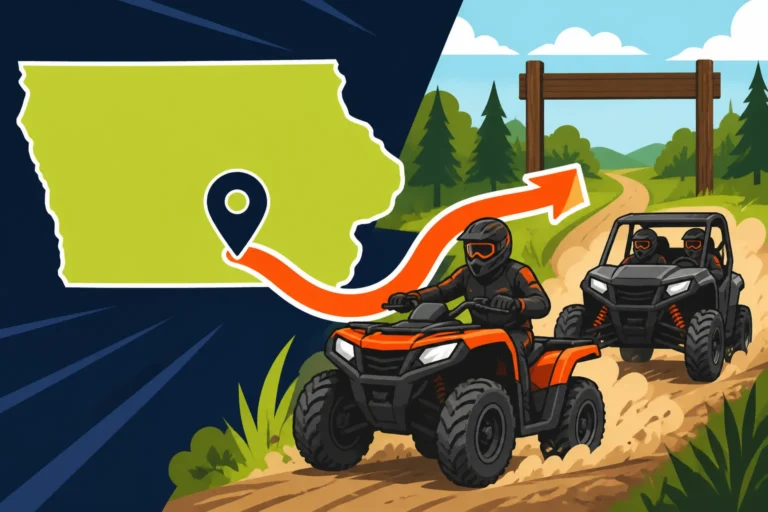
When you're looking to get to a popular spot like an OHV park, you need to specifically plan [The Most Direct Route to an Iowa OHV Park] that avoids state highways. This might involve:
- Using detailed maps: Physical maps or dedicated off-road GPS applications can show you the classification of roads. Look for county road designations versus state highway numbers.
- Pre-riding or researching: If you're unsure about a route, try driving it in a regular vehicle first, or call the local county recorder's office or DNR for advice. They can often clarify which roads are legal for OHV use.
- Leveraging trailers: For longer distances or when state highways are unavoidable in your general path, trailering your ATV or UTV is the safest and only legal option to traverse those segments. Load up your machine, drive the highway portion in your truck, and unload once you're back on legal ground.
- Connecting county systems: Focus on finding ways to link up county roads. Many counties have a robust network of gravel roads that can get you where you need to go, even if it takes a bit more time. Remember, the journey can be just as enjoyable as the destination when you're exploring Iowa's backroads.
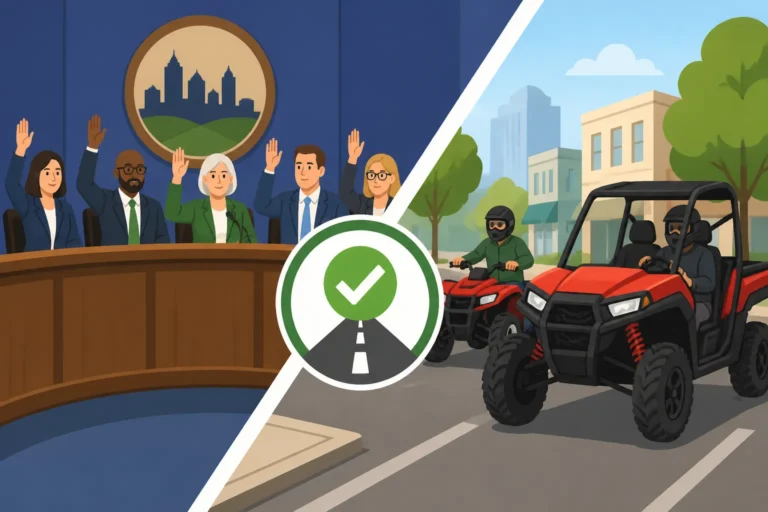
Remember, even if a city or county has opened some of its own streets to ATVs, those ordinances never supersede state law regarding state highways. A city council cannot authorize ATV use on a U.S. Highway that runs through its town, for example.
Consequences of Illegal State Highway Use
Riding your ATV or UTV on a prohibited state highway in Iowa isn't just a minor infraction; it comes with serious potential consequences. Law enforcement officers, including county sheriffs and Iowa State Patrol, are well aware of the regulations and actively enforce them for safety reasons. You could face a range of penalties, and more importantly, you're putting yourself and others at significant risk.
- Fines and Penalties: Expect substantial fines for operating an off-highway vehicle on a prohibited road. These are often treated as serious moving violations, similar to operating a motor vehicle illegally. For example, [Iowa Fines for Illegal ATV Road Use] can add up quickly, especially if combined with other violations like not having proper registration or safety equipment.
- Machine Impoundment: In some cases, law enforcement has the authority to impound your ATV or UTV. This means additional costs for towing and storage, on top of any fines, to get your machine back.
- Safety Risks: This is perhaps the most critical consequence. The risk of a severe accident on a state highway involving an ATV or UTV is exceptionally high. You're simply not designed to operate safely in that environment, and other drivers may not expect a slower-moving OHV. A collision at highway speeds can result in severe injuries or fatalities.
- Insurance Issues: If you're involved in an accident while illegally operating your ATV or UTV on a state highway, your insurance provider may deny coverage, leaving you personally liable for damages and medical expenses. Always ensure you have appropriate [Iowa ATV Insurance Requirement] for any legal road use.
- Operator Requirements: It's also worth noting that operating any vehicle on a public road in Iowa, where permitted, generally requires a valid driver's license and meeting minimum age requirements. Even on legal county roads, [Iowa Minimum Age to Ride a Road] rules apply, and these are certainly enforced on state highways.
In essence, the risks far outweigh any perceived benefit of using a state highway. Always err on the side of caution, stick to legal routes, and prioritize safety above all else. Your enjoyment of Iowa's trails and gravel roads will be much greater when you know you're riding legally and safely.
Disclaimer
This article is for general informational purposes only and does not constitute professional advice. Laws, prices and regulations vary by location and change over time. Consult a qualified professional for guidance on your specific situation.