Crossing a Multi-Lane Highway at an Intersection
You're out enjoying a beautiful Iowa day on your ATV or UTV, cruising down a quiet gravel road, when suddenly, your path is blocked by a busy, multi-lane highway. That moment of hesitation and frustration is totally understandable; it feels like such a roadblock when you're just trying to get from point A to point B. This comprehensive guide is here to demystify the rules and equip you with the knowledge to safely and legally navigate crossing those intimidating multi-lane highways at intersections in our wonderful state.
The Core Iowa Law for Multi-Lane Highways
Iowa's approach to ATVs and UTVs on public roads is built on a foundation of safety and common sense. While our state has opened up a lot of opportunities for off-highway vehicle enthusiasts, there are specific limitations, especially when it comes to the faster, higher-traffic roadways that crisscross our landscape. Understanding these core regulations is the first step in ensuring your ride stays both enjoyable and lawful.
Why Multi-Lane Highways are Generally Restricted
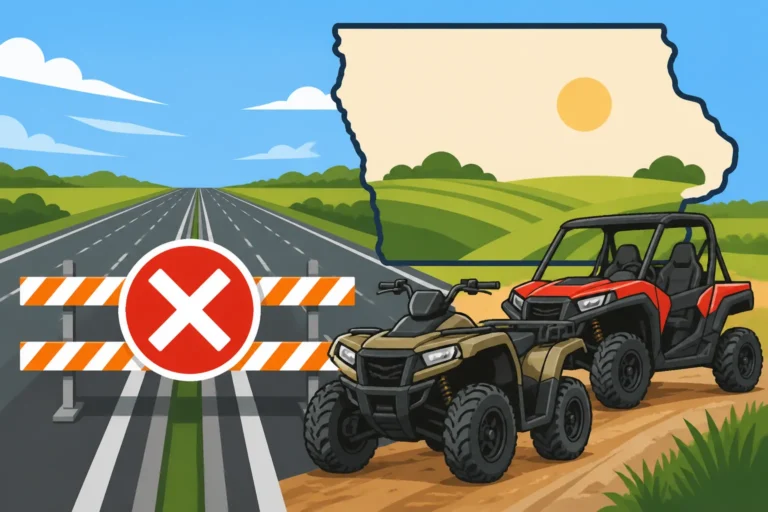
It's no secret that multi-lane highways, especially those with higher speed limits and continuous traffic flow, are designed for cars and trucks moving at a rapid pace. Our ATVs and UTVs, while capable machines, simply aren't built for that kind of environment. The differences in speed, braking distance, and visibility create significant safety concerns. The state's intent here is clear: to minimize the potential for accidents by keeping these machines off roads where they could become a hazard to themselves or to other motorists. Imagine trying to merge onto a busy four-lane road from a dead stop on your quad while cars are zipping by at 60 or 70 miles per hour – it's a terrifying thought, and for good reason. The law acknowledges this inherent risk, which is why you won't find general allowances for riding on these types of roads. This is a stark contrast to what you might experience on [Undivided Two-Lane Primary Highways in Iowa], which have different rules.
The sheer volume of traffic and the speeds involved on multi-lane primary highways mean that an ATV or UTV, which is often slower and less visible, would create a significant impedance to traffic flow. This isn't just an inconvenience; it can lead to dangerous situations, including rear-end collisions, sudden braking, and frantic lane changes by other drivers trying to get around you. Furthermore, these highways often lack shoulders wide enough to safely accommodate an off-highway vehicle should you encounter a problem, leaving you exposed to fast-moving traffic. It's a proactive measure to prevent serious incidents on roads where the stakes are incredibly high for everyone involved.
The Exception: Crossing at an Intersection
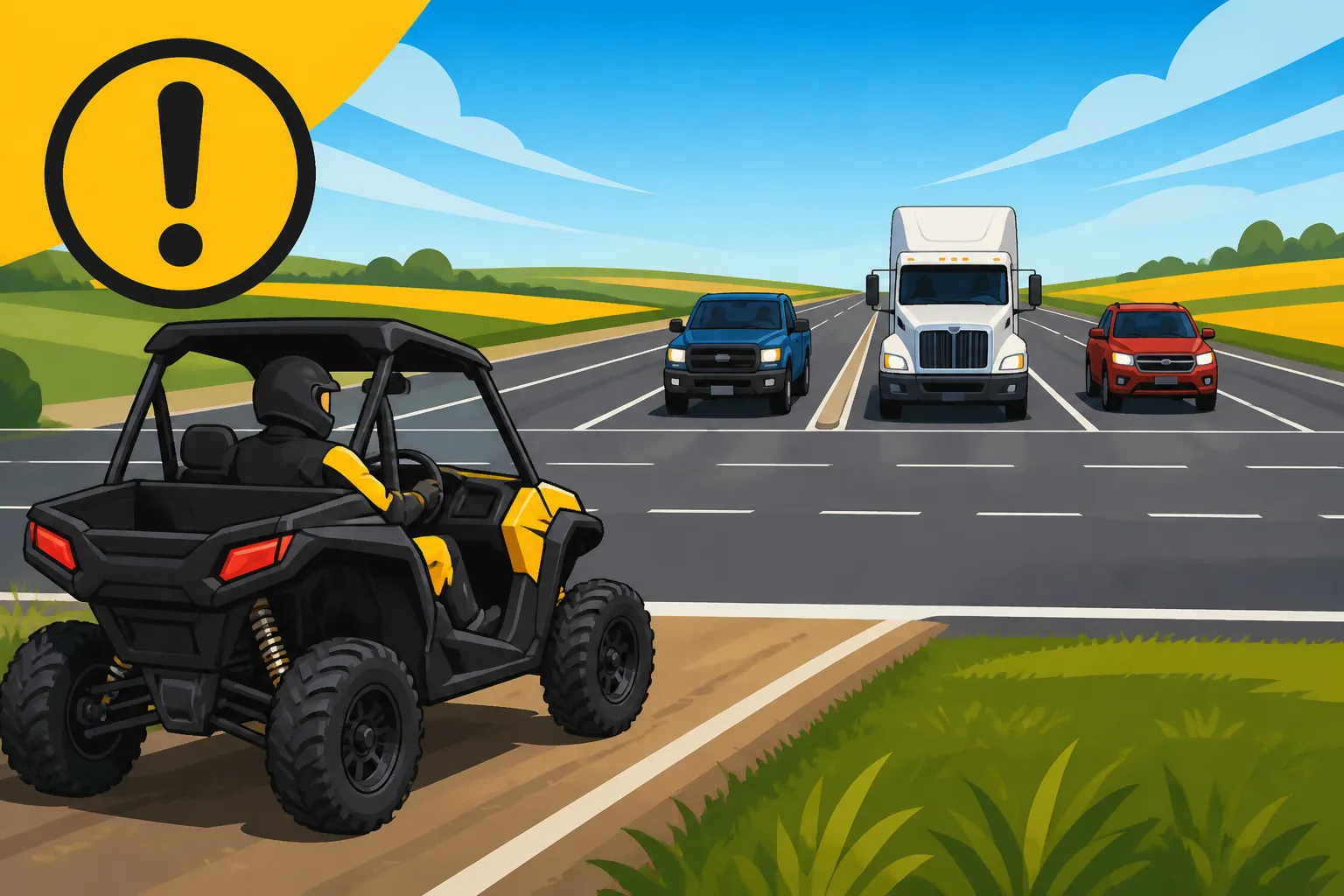
While riding on a multi-lane highway is a definite no-go, Iowa law does provide a crucial exception: you are permitted to cross a multi-lane highway, but only at an intersection. This specific allowance is a lifeline for riders who need to connect different sections of trails, access private land, or simply continue their journey on a designated county or city road. It acknowledges the reality that our road networks are interconnected and sometimes, a major highway is the only thing separating you from where you need to be.
This exception is precise and has no wiggle room. It means you cannot travel along the highway for any distance, no matter how short. Your route must be a direct, perpendicular crossing from one side of the highway to the other, using the designated intersection as your bridge. Think of it as a temporary passage, a brief moment where you enter the highway's domain solely to traverse it and immediately exit on the other side. This is why planning your route to identify these safe crossing points is absolutely critical, rather than just hoping you'll find one when you get there.
Understanding "Most Direct Route" in the Context of Crossing
The concept of the "most direct route" is a recurring theme in Iowa's ATV and UTV road laws. It’s not just a suggestion; it's a legal directive that underpins much of what you can and cannot do when operating your machine on public roads. When it comes to multi-lane highways, understanding this principle is essential for ensuring your crossing is legitimate and not perceived as an attempt to unlawfully travel on a restricted road.
What "Most Direct Route" Really Means for ATV Riders
For ATV and UTV riders in Iowa, the "most direct route" isn't about finding the quickest way to have fun or extend your ride on public roads. Instead, it's about necessity. The law recognizes that sometimes, to access legal riding areas, private property, or to connect designated trail systems, you might need to utilize certain public roads for a short distance. This principle ensures that any road use is purely functional and minimizes exposure to traffic. For example, if you're trying to get to [The Most Direct Route to an Iowa OHV Park], you might use a county gravel road, but if that road is interrupted by a primary highway, you'd use the most direct intersection to cross.
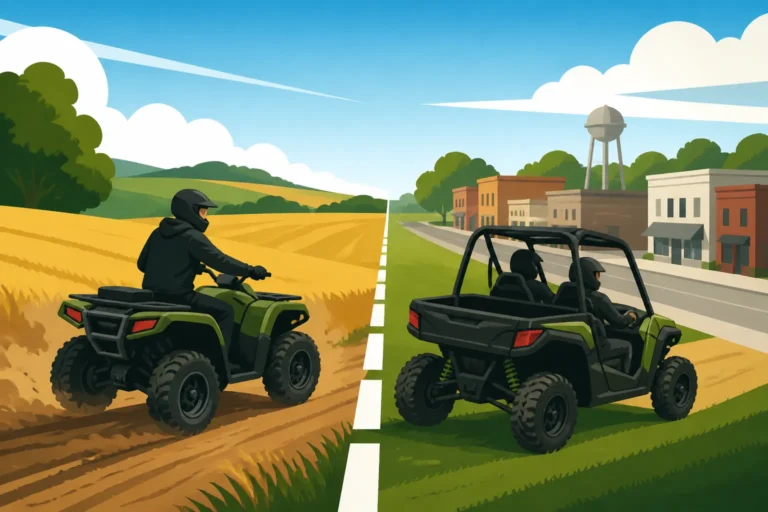
Let's paint a picture: imagine you’re riding on a county gravel road (which is generally permissible for ATVs/UTVs in Iowa) and need to reach another gravel road directly opposite on the other side of a four-lane primary highway. The "most direct route" dictates that you approach the intersection, cross the highway as straight as possible, and immediately continue onto the gravel road on the other side. You shouldn't be making a right turn onto the multi-lane highway, traveling a quarter mile, and then making a left. That would be a violation. It's strictly about bridging the gap, not utilizing the highway itself for travel. This rule is designed to ensure you’re not taking circuitous routes on restricted roads when a more direct, legal option, even if it involves a crossing, is available.
Planning Your Crossing Point
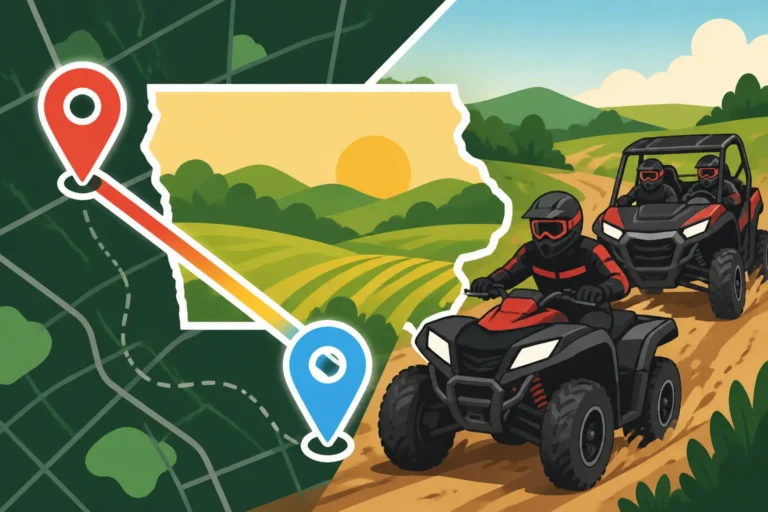
Successful and legal multi-lane highway crossings aren't left to chance; they require careful planning. Before you even fire up your machine, it's wise to study your route, especially if it involves crossing one of these major roadways. Identifying the correct intersection is paramount. Look for intersections where the roads on both sides are also legally accessible for your ATV or UTV. Often, these are county gravel roads or authorized city streets that intersect with the multi-lane highway.
Scouting your route, either by looking at maps online, using satellite imagery, or even by driving it in your truck beforehand, can save you a lot of grief. You want to pinpoint intersections that offer good visibility, clear signage, and ideally, traffic signals if it's a particularly busy stretch. A well-planned crossing minimizes your time on the highway and reduces the chances of confusion or a dangerous encounter. Don't be afraid to pull out a paper map or use a reliable GPS app to plot out your journey, specifically noting these critical crossing points. It's far better to know exactly where you're going than to get caught off guard by a multi-lane monster that you don't know how to navigate safely and legally.
Essential Requirements for ATV/UTV Road Use in Iowa Even for Crossing
Even though crossing a multi-lane highway at an intersection is a fleeting moment, it still constitutes using a public road. This means that all the standard requirements for operating an ATV or UTV on Iowa's public roadways still apply. Ignoring these can lead to serious legal consequences, not to mention putting yourself and others at risk. It’s not just about the act of crossing, but about being properly equipped and qualified to do so.
Minimum Age and Driver's License
One of the most critical requirements for operating an ATV or UTV on any public road in Iowa, including the brief moment you're crossing a multi-lane highway, is the operator's age and licensing status. Iowa law is quite clear on this: you must be at least [Iowa Minimum Age to Ride a Road] (which is 18 years old) and possess a valid driver's license. This isn't a suggestion; it's a non-negotiable legal requirement. The logic here is straightforward: operating a vehicle on a public roadway, even for a short crossing, demands a certain level of maturity, judgment, and knowledge of traffic laws, which is typically associated with licensed drivers.
If you're under 18 or don't have a valid driver's license, you simply cannot operate your ATV or UTV on any public road, period. This rule remains firmly in place, regardless of how quickly you intend to cross. The state doesn't differentiate between a casual ride down a gravel road and a quick dash across a paved highway; both are considered public road use. Ensuring you meet these fundamental requirements, as outlined in [Iowa Driver's License Rules for ATVs], is your first line of defense against citations and ensures you're legally prepared for any road encounter, no matter how brief.
Insurance and Safety Gear (Lights, Horn, Mirror)
Beyond age and licensing, your ATV or UTV itself must be properly equipped to be on any public road, even for a crossing. First and foremost, you absolutely need to carry valid liability insurance. Iowa mandates specific minimum coverage amounts (typically referred to as 20/40/15, meaning $20,000 for injury or death to one person, $40,000 for injury or death to two or more people, and $15,000 for property damage). Without this, you're not only breaking the law but also leaving yourself vulnerable to devastating financial consequences if an accident were to occur. Always ensure your [Iowa ATV Insurance Requirement] is met and you have proof of insurance readily available.
In terms of physical safety equipment, your machine needs to be visible and able to communicate with other traffic. This includes having working headlights that must be on [Headlights On All Day in Iowa], even in broad daylight, and tail lights for any low-light conditions. You also need an audible warning device, so make sure your [Iowa Horn Requirement for Road Use] is met, and at least one rearview mirror, typically on the left side, to comply with [Iowa Mirror Requirement for Road Use]. These simple additions are not just regulatory hurdles; they are vital safety features that can alert other drivers to your presence and allow you to monitor traffic around you. Many riders also enhance their visibility with a [Iowa's Slow-Moving Vehicle Triangle] on the rear of their machine, which is a smart choice for any road use. If you're looking to upgrade, companies like SuperATV offer a range of durable and high-quality mirrors and lighting kits that can significantly boost your safety and compliance on Iowa roads, making you much more visible to fast-moving traffic.
Executing the Multi-Lane Highway Crossing Safely
The moment you approach a multi-lane highway intersection, your focus needs to shift entirely to safety and precision. This isn't the time for casual riding; it's a critical maneuver that demands your full attention and adherence to a strict protocol. Remember, you're interacting with high-speed traffic, and mistakes can have severe consequences.
Pre-Crossing Checklist and Situational Awareness
Before you even commit to entering the intersection, you need to perform a quick but thorough mental checklist. First, assess the traffic. Look in all directions – not just left and right, but also for approaching traffic that might be turning onto the highway or off of it. Pay close attention to the speed of oncoming vehicles; they will likely be moving much faster than you anticipate. If there are traffic signals, observe them carefully. Never assume you have the right-of-way simply because you're at an intersection. If the light is red, wait patiently. If it's green, ensure the cross-traffic has cleared before proceeding.
Next, evaluate the road conditions. Is the pavement wet? Are there potholes or debris that could affect your control? Make sure your tires are properly inflated for road use. Visibility is key. Ensure your headlights are on, and consider wearing high-visibility gear. Most importantly, practice extreme patience. If traffic is heavy, or you feel rushed, wait for a clear, safe gap. A few extra moments of waiting are infinitely better than attempting a crossing that puts you or others in danger. Your senses should be heightened, constantly scanning your surroundings and anticipating potential hazards.
The Act of Crossing: Swift and Decisive
Once you've determined it's safe to proceed, the act of crossing itself needs to be swift and decisive. You want to minimize the amount of time you are exposed to fast-moving traffic on the multi-lane highway. Position your ATV or UTV so that you can cross perpendicular to the flow of traffic, making your path as short and direct as possible. Avoid any hesitant movements or sudden changes in direction; other drivers need to be able to predict your actions.
Accelerate smoothly but quickly enough to clear the lanes efficiently. Your goal is to get from one side to the other in a continuous, deliberate motion. If the intersection is very wide or has a median, you might need to treat it as two separate crossings. For instance, cross the first set of lanes to the safety of the median, then re-evaluate traffic before crossing the second set. Never pause in an active traffic lane. While [Iowa's 35 mph Cap] applies to general road use, during a crossing, your focus isn't on maintaining a speed limit but on clearing the intersection as safely and promptly as possible. Remember, a driver on a multi-lane highway won't expect an ATV, and you must operate defensively to compensate for that.
Common Mistakes and Misconceptions to Avoid
Riding an ATV or UTV in Iowa involves a set of specific rules, and misunderstanding them, particularly regarding multi-lane highways, can lead to dangerous situations and legal trouble. Many riders, with the best intentions, can misinterpret what's allowed, thinking a "little bit" of deviation won't matter. But with these powerful machines, clarity and strict adherence to the law are your best friends.
Not All Intersections Are Created Equal
A common misconception is that simply being at an intersection means you can do anything you want, including turning onto the multi-lane highway for a short distance. This is absolutely incorrect. Iowa law explicitly states you can cross a multi-lane highway at an intersection. It does not grant permission to make a right turn onto it and travel with traffic, even for a single exit. The intent is to allow you to bridge a gap, not to become part of the highway's traffic flow. Imagine a busy interstate intersection: you might be able to cross the on-ramps and off-ramps to get to a frontage road, but you cannot enter the main flow of interstate traffic. The same principle applies here for multi-lane primary highways – your movement must be straight across.
Another point of confusion can arise when differentiating between a controlled intersection with traffic lights and a simple crossroad with stop signs. While the law applies to both, your strategy for crossing should adapt. A controlled intersection, while potentially busier, often provides clearer intervals for crossing. An uncontrolled crossroad, on the other hand, relies entirely on your judgment and the actions of other drivers. Always default to the safest, most predictable method of crossing, and never assume that other drivers see you or will yield their right-of-way. Your safety depends on you being hyper-aware and making conservative decisions.
The Temptation to "Just Drive a Little Way"
We've all been there: you're on a multi-lane highway, you've just crossed, and the next legal gravel road is "just around the bend" – a quarter-mile down the highway. The temptation to "just drive a little way" on the paved multi-lane road can be incredibly strong. You think, "No one will notice," or "It's such a short distance, what's the harm?" This is precisely where riders often get into trouble. Iowa law is firm: if it's a multi-lane highway, you cannot travel along it. The exception is for crossing only. Even a few hundred feet of travel along the highway is a violation.
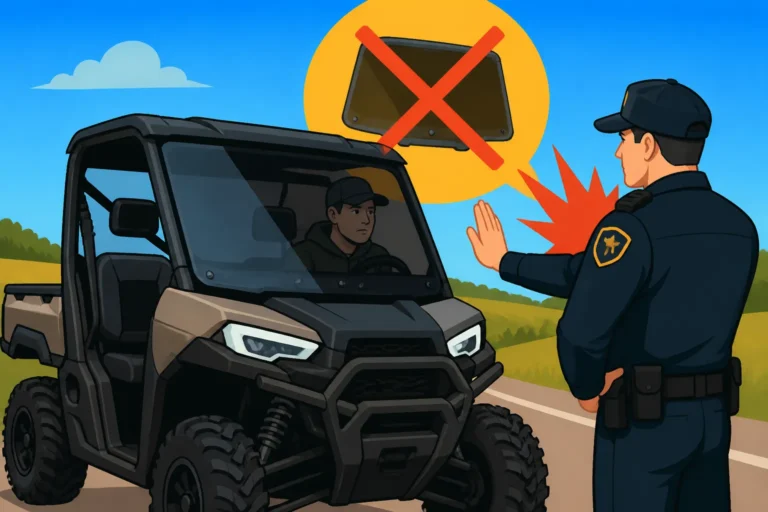
Conservation officers and county deputies are aware of these regulations and will enforce them. The consequences for riding illegally on a multi-lane highway can range from significant [Iowa Fines for Illegal ATV Road Use] to impoundment of your machine, not to mention the potential for a serious accident. It's simply not worth the risk. If your destination or next legal path requires you to travel along a multi-lane highway, you need to re-route or consider trailering your machine. There's no gray area here; the moment your tires start tracking parallel to the main traffic flow on a restricted multi-lane highway, you're breaking the law and putting yourself in a vulnerable position.
Staying Informed and Planning Your Route
The best defense against unexpected challenges and legal infractions when riding your ATV or UTV in Iowa is proactive planning and staying well-informed. Our state's landscape is dotted with varying road types and regulations, and being prepared makes all the difference in having a smooth, enjoyable, and lawful ride.
Utilizing Maps and Local Knowledge
In today's world, there's no excuse for not knowing your route before you head out. Before any ride that might bring you close to or require crossing a multi-lane highway, take the time to study your maps. Online mapping tools, satellite views, and even good old-fashioned paper maps can be invaluable. Look for clear intersections where a legal ATV/UTV road (like a county gravel road or authorized city street) meets the multi-lane highway. Identify these specific crossing points in advance. It's helpful to mark them on your personal map or GPS device.
Beyond digital tools, don't underestimate the power of local knowledge. Talk to fellow riders, join local ATV/UTV clubs, or even ask county conservation officers. They often have firsthand experience with specific routes, tricky intersections, or areas that might be less obvious on a map. They might know about a safer, albeit slightly longer, alternative route that avoids a particularly nasty multi-lane highway crossing altogether. This community wisdom can be a goldmine of practical advice that generic maps simply can't provide.
When in Doubt, Re-Route or Trailer
Ultimately, your safety and adherence to the law are paramount. If you find yourself approaching a multi-lane highway and you're unsure about the legality of a crossing, or if the traffic conditions seem too hazardous, the smartest decision you can make is to re-route. There's no shame in taking a longer path if it means avoiding a dangerous or illegal situation. Sometimes, the most direct route might look tempting on a map but isn't practical or safe in reality for an ATV or UTV.
If re-routing isn't a viable option, or if the sheer volume and speed of traffic make any crossing feel too risky, then the answer is to trailer your machine. This might mean driving your truck and trailer a short distance, even just a few miles, to bypass the problem area entirely. While it might feel like an inconvenience in the moment, it's a small price to pay for avoiding a citation, an accident, or potential injury. Remember, [What Iowa Requires of an ATV on a Public Road] isn't just a list of rules; it's a guide to safe and responsible riding, and sometimes that means knowing when to opt for an alternative transportation method.
Do's and Don'ts for Crossing Multi-Lane Highways
To make things a little clearer, here's a quick summary of the do's and don'ts when you encounter a multi-lane highway intersection in Iowa:
| Action | Do | Don't |
|---|---|---|
| Preparation | Plan your route beforehand, identifying legal crossing points. | Assume all intersections are safe or legal for crossing. |
| Operator Requirements | Be 18+ and have a valid driver's license. | Let anyone under 18 or without a license operate on public roads. |
| Vehicle Requirements | Ensure machine has working lights, horn, mirror, and insurance. | Ride without proper safety equipment or required liability insurance. |
| At the Intersection | Come to a complete stop, check traffic thoroughly (all directions). | Rush or try to beat traffic. |
| Crossing Movement | Cross swiftly and decisively, perpendicular to traffic flow. | Drive along the multi-lane highway, even for a short distance. |
| Traffic Signals | Obey all traffic signals and signs. | Disregard signals or assume right-of-way. |
| Visibility | Keep headlights on, consider high-visibility gear. | Rely on other drivers to see you. |
| Uncertainty | Re-route or trailer your machine if unsure or conditions are unsafe. | Attempt a crossing if you feel unsafe or are unsure of the legality. |
Disclaimer
This article is for general informational purposes only and does not constitute professional advice. Laws, prices and regulations vary by location and change over time. Consult a qualified professional for guidance on your specific situation.