Why Interstates Stay Closed in Iowa
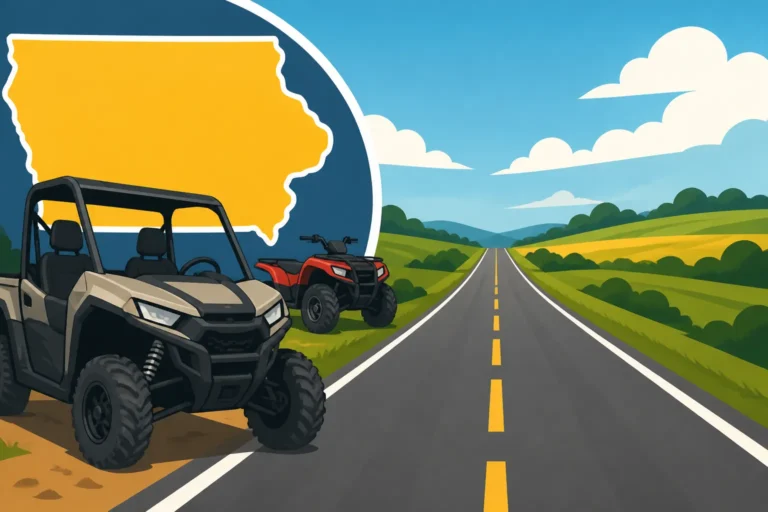
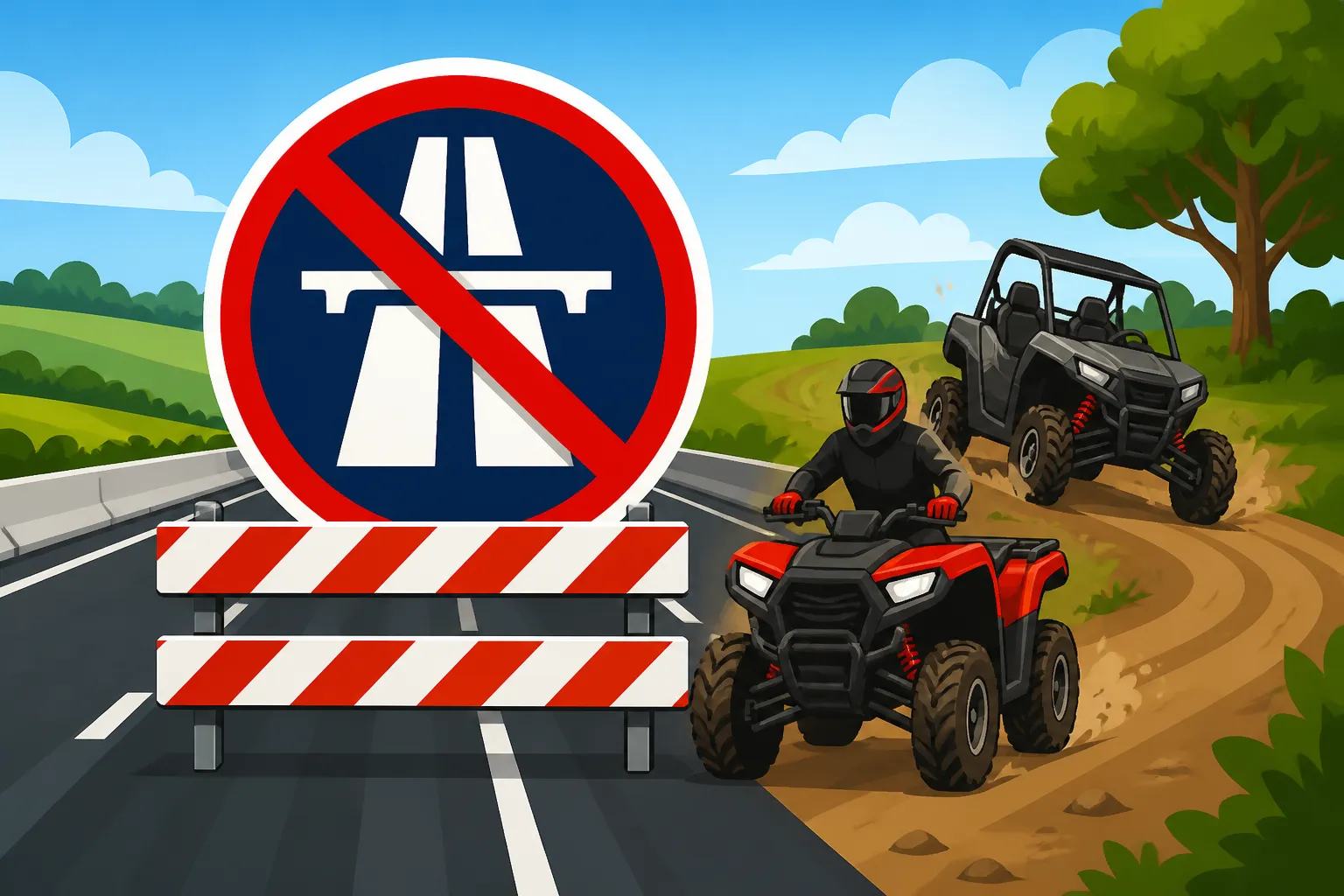
It’s a common frustration for many of us who love hitting the trails or cruising gravel roads on our ATVs and UTVs: why can't we just hop on the interstate for a short stretch to get where we need to go? That quick jump across a river or around a town seems so convenient, yet it’s strictly off-limits in Iowa, and for very good reasons. This comprehensive guide will dive deep into why interstates remain closed to off-highway vehicles, exploring the safety, legal, and practical considerations that keep our machines off the fastest roads in the state.
The Big Picture: Why Interstates Are Different
When you think about the roads in Iowa, interstates stand in a league of their own. They're designed for a very specific type of travel, and understanding that fundamental difference helps explain why our beloved ATVs and UTVs simply don't fit the bill. It’s not just an arbitrary rule; it's about the very nature of these high-speed thoroughfares.
The Core Purpose of Interstates
Interstates were conceived and built for efficient, high-speed, long-distance travel. Their entire design — from the wide lanes and limited access points to the absence of stoplights and sharp turns — is geared toward keeping traffic flowing smoothly and quickly. Think about it: you're rarely stopping, rarely turning sharply, and you're almost always maintaining a high rate of speed. This infrastructure is meant to connect major cities and states, reducing travel times for cars, trucks, and commercial vehicles. It’s about covering ground rapidly and safely, minimizing interactions that could cause slowdowns or accidents. An ATV or UTV, designed for off-road prowess or more leisurely rural travel, doesn’t align with this core purpose at all.
High Speed, High Risk
The most obvious, and perhaps most critical, reason interstates are off-limits is the sheer speed of travel. Vehicles on interstates typically move at speeds of 65, 70, or even higher miles per hour. Our ATVs and UTVs, while capable of decent speeds on their own terrain, are not engineered for sustained highway speeds. Their tires, suspension, and braking systems are optimized for different conditions – gripping dirt, absorbing bumps, and navigating uneven terrain, not for maintaining stability at 70 mph on smooth asphalt. Imagine trying to keep up with traffic in a UTV designed for trail riding; it's a recipe for disaster. The speed differential alone creates an enormous safety hazard, where an ATV or UTV would become a slow-moving obstacle, putting themselves and every other driver at immense risk. The forces involved in a collision at these speeds are catastrophic, and our machines offer minimal protection compared to a passenger car or a heavy truck.
Protecting Everyone on the Road
Ultimately, the rules around interstate use are about public safety for all road users. When you introduce a vehicle onto a roadway for which it wasn't designed, you're not just risking the driver of that vehicle; you're risking every single person around them. The sight of an ATV or UTV on an interstate could be startling for other drivers, leading to sudden braking, swerving, and potential chain-reaction collisions. These highways are densely packed with large commercial vehicles, family cars, and everything in between, all moving at high velocity. The unpredictability of an OHV in that environment creates a level of danger that the state simply cannot permit. It's a pragmatic decision to protect life and limb, ensuring that everyone who uses the interstate can do so with a reasonable expectation of safety.
Iowa's Specific Rules for Off-Highway Vehicles OHVs
Iowa's laws are pretty clear when it comes to what you can and can't do with your ATV or UTV on public roads. While there's some flexibility for certain situations on specific road types, interstates are explicitly excluded. Understanding these nuances helps clarify why that "quick hop" isn't an option.
Defining OHVs in Iowa Law
First, it’s important to remember how Iowa categorizes our machines. Off-highway vehicles (OHVs) include ATVs (all-terrain vehicles), UTVs (utility terrain vehicles, often called side-by-sides), and off-road motorcycles (dirt bikes). The state legislature passed laws specifically governing the use of these machines, differentiating them from traditional motor vehicles like cars and trucks. This distinction is key because it means OHVs aren't automatically granted the same access to all public roads. Their design, purpose, and typical use cases are acknowledged in the law, leading to specific regulations about where they can and cannot legally operate. It’s a recognition that while they are vehicles, they are different vehicles, requiring different rules for public safety and environmental protection.
Roads Where OHVs Are Permitted and Why
While interstates are a no-go, Iowa does allow ATVs and UTVs on certain other public roads under specific conditions. You can often ride on [Iowa's Unpaved Secondary Road Rule], which means gravel or dirt county roads are fair game, assuming the county hasn't specifically restricted them. Some counties even open [Iowa Rules for Riding a Paved Secondary Road] by resolution of the board of supervisors. The rationale here is usually a combination of lower speed limits, less traffic volume, and the ability for these machines to operate more safely in those environments. These roads typically don't have the same high-speed design or dense traffic patterns as interstates, making them a more appropriate fit for OHV travel. Often, the speed limit on these roads for OHVs is capped, like [Iowa's 35 mph Cap], further reducing risk.
The "Most Direct Route" Clause
Iowa law also includes provisions for using OHVs on public roads to access designated riding areas or to travel between parcels of private land. This is where the concept of the [Iowa's Most Direct Route Rule] comes into play. It essentially means you can use an allowable public road (like a gravel road, or an approved paved secondary road) for the shortest possible distance to get to an OHV park, private property, or to reconnect with another legal riding trail. However, this "most direct route" language explicitly excludes interstates and controlled-access highways. Even if an interstate offered the absolute shortest path, it still wouldn't be legal because the law overrides convenience with safety when it comes to those particular road types. So, while you might use a few miles of gravel road to get to [Iowa's Eight Designated OHV Parks], you can't use even a single mile of I-80.
Safety Concerns: It's More Than Just Speed
Beyond the legal definitions, the physical realities of ATVs and UTVs versus interstate traffic present insurmountable safety challenges. It's not just about how fast you can go, but how a machine performs and interacts with other vehicles in a high-speed, high-density environment.
Visibility and Size Discrepancies
Imagine driving a compact car on the interstate and suddenly coming up on a small ATV. Our machines, even a larger side-by-side that has been beefed up with aftermarket accessories from a company like SuperATV, are significantly smaller and sit much lower than typical highway traffic, especially semi-trucks. This difference in size and height makes them incredibly difficult to see, particularly in heavy traffic, around curves, or in adverse weather conditions. Blind spots for larger vehicles become death traps for OHVs. The low profile means they can be easily obscured by other vehicles, making lane changes or merges extremely hazardous. A driver in a tractor-trailer might not even realize an ATV is in their lane until it's far too late.
Design Differences: ATVs vs. Highway Vehicles
Highway vehicles – cars, trucks, SUVs – are designed with features specifically for interstate travel: enclosed cabins, crumple zones, advanced airbags, and robust chassis meant to absorb impact and protect occupants. They also have sophisticated lighting systems for high visibility at speed and in all conditions. Our ATVs and UTVs, on the other hand, are open, exposed, and built for off-road performance. Their tires are often aggressive treads designed for grip on loose surfaces, not for smooth, high-speed asphalt stability. The suspension, while fantastic for bumps and jumps, can feel floaty and less predictable at highway speeds. Even the most capable machine, perhaps one that's been customized with performance parts, isn't fundamentally engineered for the kind of consistent, high-velocity travel an interstate demands. You might have a powerful engine, but that doesn't translate to interstate safety.
Emergency Braking and Handling
Think about an emergency situation on the interstate: a sudden slowdown, an obstacle in the road, or another vehicle swerving. Highway vehicles are built to handle these scenarios with quick, responsive steering and powerful braking systems designed to stop a heavy vehicle from high speeds in a short distance. ATVs and UTVs, while offering good braking and handling for their intended use, would be severely outmatched. Their stopping distances at 70 mph would be significantly longer, and their high center of gravity (especially UTVs) could make sudden evasive maneuvers unstable, risking a rollover. The agility that makes them so fun on trails becomes a liability when trying to dodge traffic or stop abruptly from interstate speeds. A moment of panic could easily lead to a loss of control, putting the OHV driver and everyone around them in grave danger.
Legal Framework and Enforcement
The prohibition of ATVs and UTVs on interstates isn't just a suggestion; it's deeply rooted in state and federal law, and enforcement is taken very seriously. Ignoring these rules can lead to significant consequences.
Federal Influence on Interstate Regulations
The interstate highway system is a federally funded network, which means federal guidelines play a significant role in how these roads are designed and regulated, even at the state level. The national standards prioritize safety and efficiency for vehicles primarily designed for highway use. These federal standards often define what constitutes a "motor vehicle" suitable for interstate travel, and OHVs typically don't meet those criteria. While states have some leeway in road use, the fundamental characteristics of the interstate system, dictated by federal policy, generally preclude the operation of vehicles that can't safely maintain traffic flow and speed. This ensures a consistent safety standard across state lines for this vital transportation network.
Iowa Code and Interstate Restrictions
Within Iowa, the state code explicitly outlines what vehicles are permitted on interstates and controlled-access highways. These laws are clear: ATVs and UTVs are not among them. The statutes identify various exceptions for certain types of vehicles (like farm implements for short distances or emergency vehicles), but OHVs do not fall under any of these categories for interstate travel. It’s part of a broader set of regulations that also dictate [Iowa's Unpaved Secondary Road Rule] and other specific road-use cases. The wording leaves no room for ambiguity regarding high-speed, multi-lane highways. This means a county cannot unilaterally decide to open an interstate segment to OHVs; the state law is binding across all 99 counties.
Consequences of Illegal Interstate Use
Attempting to ride an ATV or UTV on an Iowa interstate can lead to serious legal ramifications. You're not just looking at a minor traffic ticket; you could face significant fines and penalties for operating an unregistered or unauthorized vehicle on a restricted roadway. Law enforcement, including the Iowa State Patrol, is vigilant about keeping these roads clear of inappropriate vehicles. Beyond the immediate citation, there could be impoundment of your machine, and if an accident occurs, your liability could be enormous, especially if you're found to be in violation of road use laws. These are serious consequences that far outweigh any perceived convenience of using an interstate, and riders should be aware of the [Iowa Fines for Illegal ATV Road Use].
Here's a quick look at where OHVs are generally allowed versus prohibited in Iowa:
| Road Type | ATV/UTV Use Generally Allowed (with conditions) | ATV/UTV Use Generally Prohibited | Key Conditions/Notes |
|---|---|---|---|
| Unpaved Secondary (Gravel/Dirt) | Yes | No | County approval not required, but counties can impose restrictions. Speed limits apply. |
| Paved Secondary County Roads | Yes (with county authorization) | No | Requires specific resolution by County Board of Supervisors. [Iowa's 35 mph Cap] often applies. |
| City Streets/Alleys | Yes (with city authorization) | No | Requires specific ordinance by City Council. Hours/zones often restricted. |
| Undivided Two-Lane Primary Hwys | Yes (for [Iowa's Most Direct Route Rule] only) | No | Must be shortest route to legal riding area/private land. [Iowa's 35 mph Cap] applies. |
| Divided Primary Highways | No | Yes | Designed for higher speeds, more traffic. |
| Interstates | No | Yes | Federal and state laws strictly prohibit. High speed, high risk. |
| Private Land | Yes | No | With landowner permission. [Do You Need to Register an ATV on Private Land in Iowa?] No. |
Practical Alternatives for Iowa Riders
Given that interstates are definitively off-limits, what are the best ways to get your ATV or UTV where it needs to go in Iowa? Thankfully, there are plenty of safe and legal options that respect the rules and keep everyone out of harm's way.
Utilizing Secondary and Gravel Roads
For many Iowa riders, the network of county secondary roads, particularly the vast stretches of gravel and dirt, is the backbone of their riding experience. These roads are often perfect for ATVs and UTVs, allowing you to explore the countryside, connect to trails, or simply enjoy a scenic ride. As discussed, [Iowa Rules for Riding a Gravel Road] are generally quite permissive, and many counties have opened [Iowa Rules for Riding a Paved Secondary Road] as well. Before you head out, it's always a good idea to check with the specific county recorder's office or sheriff's department to understand any local ordinances that might be in place. Remember to always ride safely, be visible, and follow all traffic laws, including carrying [Insurance Iowa Requires on a Road] if you're on public roads.
Trailering Your Machine: The Safest Bet
When you need to cover a significant distance, especially to get to an OHV park like Gypsum City or Bluff Creek, trailering your ATV or UTV is hands down the safest and most practical option. This allows you to use the interstate system as it was intended – for your tow vehicle – while ensuring your OHV is transported securely. It eliminates all the safety concerns associated with riding a small, open vehicle on a high-speed highway, and it keeps you in full compliance with Iowa law. Many riders invest in a good trailer, which also provides the flexibility to bring extra gear, fuel, and even multiple machines for a group ride. Consider looking into options for [Trailers and Tow Vehicles in Iowa] to ensure you're equipped for safe transport. Even a well-accessorized UTV from SuperATV might be trail-ready but it's not freeway ready!
Connecting to Iowa's OHV Parks
Iowa is home to some fantastic [Iowa's Eight Designated OHV Parks] that offer miles of diverse trails for riders of all skill levels. These parks are specifically designed for off-highway vehicles and provide a safe, legal, and thrilling environment to ride. When planning a trip to a park, use your tow vehicle and trailer to get there. Once you arrive, you'll find ample parking and direct access to the trails. Riding to and from these parks often involves navigating a short distance on allowable public roads (like the gravel roads leading up to the park entrance) but never the interstate. Planning your route beforehand, prioritizing safe transport, and respecting the designated riding areas will ensure you have a fun and legal experience every time you hit the dirt.
Disclaimer
This article is for general informational purposes only and does not constitute professional advice. Laws, prices and regulations vary by location and change over time. Consult a qualified professional for guidance on your specific situation.