Why No One Keeps a Statewide List
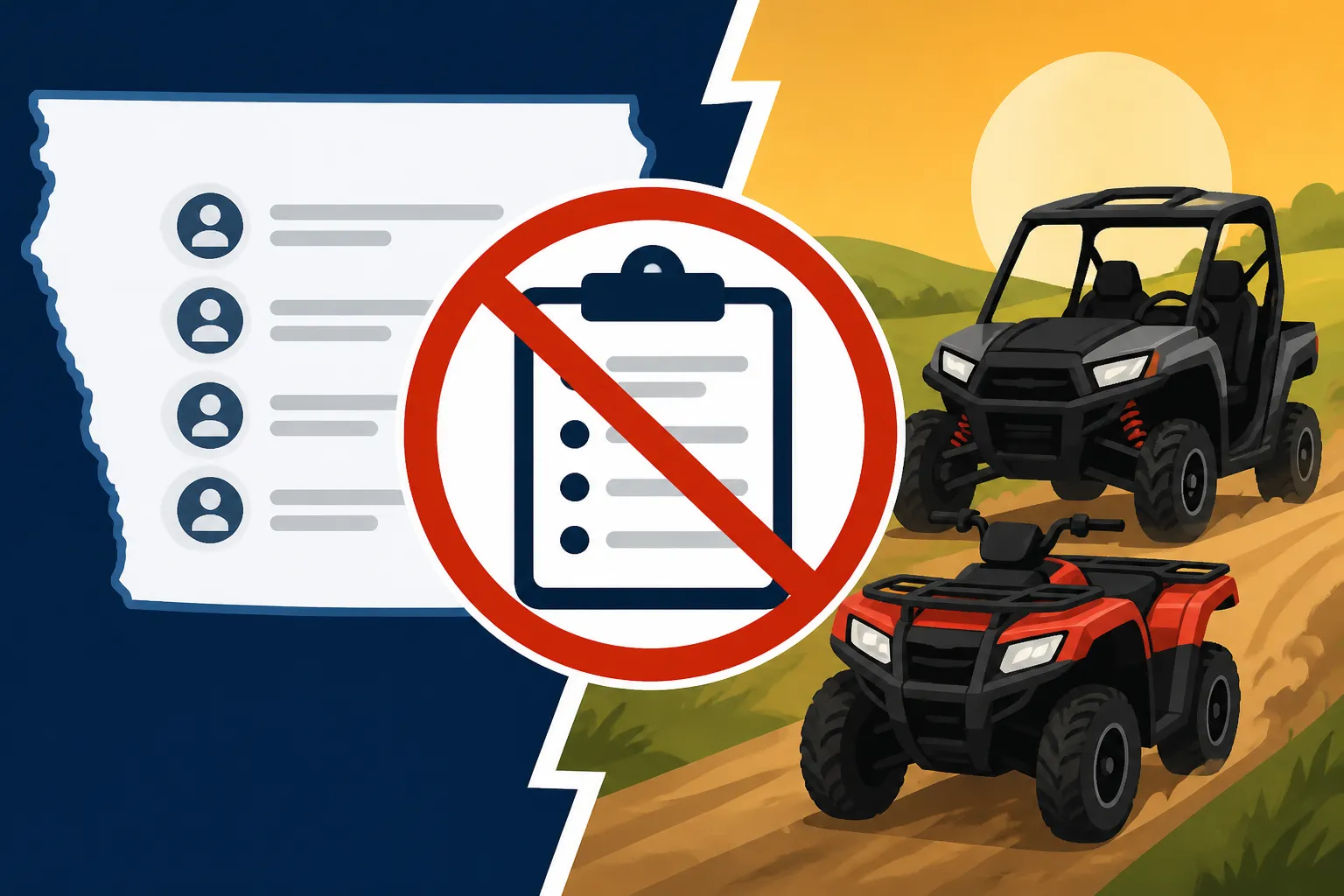
It's incredibly frustrating, isn't it? You've got your ATV or UTV ready for an adventure, you've heard whispers that you might be able to ride certain roads in Iowa, but then you hit a wall. There's no single, definitive list that tells you exactly where you can and cannot ride statewide. You spend hours digging through websites, making calls, and asking around, only to find conflicting information or just plain silence. Why, in this age of instant information, isn't there one easy resource? This guide is here to unravel that mystery, explaining why a statewide list doesn't exist for Iowa's ATV and UTV road rules, and more importantly, how you can navigate this confusing landscape to figure out where you're legally allowed to ride.
The Patchwork of Iowa's ATV and UTV Road Laws: Why No Statewide List Exists
If you've ever tried to map out a street-legal ATV or UTV route across Iowa, you've likely encountered a frustrating reality: there's no single, authoritative document from the state that details every road open to your machine. This isn't an oversight or a lack of effort; it's a fundamental aspect of how Iowa's legal framework for off-highway vehicles (OHVs) is structured. The power to open and close roads to ATVs and UTVs largely rests at the local level, creating a dynamic and often localized set of rules that can change from one county line to the next, or even from one city limit to another.
Local Control: Counties and Cities Call the Shots
The primary reason a statewide list doesn't exist is that Iowa state law empowers local governments – specifically county boards of supervisors and city councils – to make decisions about ATV and UTV access on their roads. The state provides the overarching legal framework, defining what an ATV or UTV is, general equipment requirements for road use (like headlights, taillights, and mirrors), and who can operate them on roads (drivers must be 18 with a valid driver's license). However, when it comes to which roads are open for use, the authority typically trickles down to the individual jurisdictions.
This decentralized approach means that while the state might say "ATVs can be allowed on certain roads," it's up to each of Iowa's 99 counties and hundreds of incorporated cities to decide if and when they will allow them. For instance, state law generally permits ATVs and UTVs on unpaved county secondary roads unless a county specifically prohibits them. But for paved county secondary roads or city streets, the opposite is true: they are generally closed unless the local governing body explicitly passes an ordinance to open them. This distinction is crucial and forms the bedrock of why a statewide list is practically impossible to maintain from a central point. Communities get to decide what works best for their unique traffic patterns, safety concerns, population density, and local recreation goals. This localized control allows for flexibility but admittedly leads to inconsistency for riders. You can dive deeper into these rules by understanding [Iowa Rules for Riding an ATV on Iowa Roads].
No Central Reporting Mandate for Local Ordinances
Adding to the complexity, there is no state mandate requiring counties or cities to report their specific ATV/UTV road ordinances to a central state agency like the Iowa Department of Natural Resources (DNR), the Iowa Department of Transportation (DOT), or the Secretary of State. Each local government is responsible for creating, codifying, and maintaining its own set of laws. When a county board of supervisors or a city council passes an ordinance to open or close a road segment to ATVs/UTVs, that ordinance becomes part of their local code. It doesn't automatically get uploaded to a statewide database.
Imagine the administrative burden if every single town and county in Iowa had to continuously update a central state list every time they modified an ordinance related to OHV use. Road conditions change, traffic patterns evolve, and community opinions shift, leading to potential updates to these local rules. Without a central reporting mechanism, the only way to know the specific rules for a given area is to consult that area's local government directly. This system, while making sense from a local governance perspective, unfortunately leaves riders without that handy, all-encompassing guide they crave.
Understanding County and City Authority on Road Use
Since there's no statewide "yes" or "no" map, understanding who makes the rules and how they do it is your next best step. The authority to open roads for ATV and UTV use is specifically delegated, and the process differs slightly depending on whether you're talking about county roads or city streets. This distinction is vital for any rider planning to utilize their machine beyond designated trail systems.
How Counties Authorize Paved Secondary Roads
When it comes to county roads, the rules for unpaved secondary roads are generally more permissive under state law. However, for paved county secondary roads, the situation changes significantly. These roads are typically closed to ATVs and UTVs unless the county specifically authorizes them. The power to do so rests with the County Board of Supervisors.
For a paved county secondary road to be opened for ATV/UTV use, the Board of Supervisors must formally take action. This usually involves:
- Public Discussion: The issue might be brought up by residents, riding clubs, or even the Sheriff's department, often after public input or concerns are raised.
- Deliberation: The Board will consider various factors. This includes traffic volume on the road, existing speed limits, potential safety implications for both OHV riders and other motorists, the width of the road, and whether the road provides access to an established trail system or a key destination for agricultural purposes. They might also consider the economic impact, such as potential tourism from riders, versus increased maintenance costs or noise complaints.
- Formal Ordinance: If the Board decides to allow OHV use, they will pass a formal ordinance. This ordinance will specify exactly which paved roads (or sections of roads) are open, potentially outlining specific hours of operation, speed limits (though state law sets a 35 mph cap), or other conditions.
This process ensures that decisions are made with local context in mind. A rural county with minimal traffic on paved roads might be more inclined to open them than a densely populated county with high-speed traffic. To understand this process better, you can refer to [How an Iowa County Authorizes a Paved Road] and [Paved Secondary Roads and County Authorization]. It's not a decision taken lightly, and the resulting ordinance is then recorded in the county's official code, rather than being sent off to a state registry.
How Cities Open Streets and Alleys
Cities operate under a similar principle, but their authority extends to municipal streets and alleys within their corporate limits. Just like with paved county roads, city streets are generally closed to ATVs and UTVs unless the city council explicitly passes an ordinance to open them.
The process for a city council is comparable to that of a county:
- Community Input: Often, a decision to open city streets stems from petitions, public meetings, or requests from local businesses or residents who see a benefit for recreation or commerce.
- Council Review: The city council will debate the proposal, weighing factors such as pedestrian safety, traffic flow, noise concerns, parking availability, and enforcement challenges for local law enforcement. They might also consider the impact on local businesses or access to specific points of interest within the city.
- Ordinance Enactment: If approved, the city council will pass an ordinance detailing the specifics. This could include opening all streets and alleys, or just certain routes. It might also specify hours of operation (e.g., "no ATV/UTV riding between midnight and 5 AM"), establish specific speed limits within city limits, or require certain safety equipment beyond state minimums.
A prime example is some cities that have embraced OHV tourism. For instance, you might find that [Waukon's Open Streets and Alleys] allow for ATV and UTV use, but with specific conditions. Each city's approach can be vastly different, reflecting its unique character and priorities. You can read more about this authority in [City Streets and Iowa Council Authorization] and [How a City Council Votes to Open Streets]. This municipal autonomy is exactly why a rider cannot assume that just because one town has open streets, the next one will too.
Your Guide to Researching Local Ordinances (Since No List Exists)
Given the decentralized nature of Iowa's ATV and UTV road laws, you're going to need to do some detective work. It's not as convenient as pulling up a single webpage, but with a systematic approach, you can usually find the answers you need for your specific riding area. The key is knowing who to ask and where to look at the local level.
The Best First Step: Contacting Local Officials
When you're trying to determine if you can legally ride your ATV or UTV on a particular road, the most reliable source of information will always be the local authorities directly responsible for that road. This is absolutely your best first step, rather than relying on hearsay or outdated online forums.
- For County Roads (Paved or Unpaved): Your go-to contact should be the County Auditor's office in the county where you plan to ride. The Auditor's office is typically the custodian of all official county ordinances and resolutions. When you call, clearly state your purpose: "I'm inquiring about ordinances regarding ATV/UTV operation on public county roads." Be specific about the type of road (paved or unpaved secondary road) if you know it, and even the road name or number if you have it. They can usually point you directly to the relevant section of their county code or inform you if no such ordinance exists.
- For City Streets and Alleys: If you're looking to ride within the corporate limits of a town or city, you should contact the City Clerk's office. The City Clerk performs a similar function to the County Auditor, maintaining all official city ordinances and resolutions. Again, be polite and precise in your inquiry. Ask for "ordinances pertaining to the use of ATVs or UTVs on city streets and alleys." They can tell you if their community has opened its streets to OHVs and, if so, under what specific conditions (e.g., specific routes, hours of operation, or required safety equipment). Learn more about this by understanding [Calling a City Clerk About ATVs].
It's a good practice to follow up any phone conversation with an email if possible, requesting a copy or a link to the specific ordinance. This provides you with documented proof of what you've been told, which can be invaluable if there's ever any confusion or a roadside stop.
Online Resources and Local Government Websites
While there's no statewide list, many local governments in Iowa have their ordinances published online. This can be a useful, albeit often clunky, resource once you know where to look.
- County Websites: Most Iowa counties have official websites. Look for sections labeled "Departments," "Auditor," "Board of Supervisors," "Ordinances," or "County Code." You might need to use the website's search function for terms like "ATV," "UTV," "off-highway vehicle," or "road use." Some counties have their full code available as a searchable PDF or a series of web pages.
- City Websites: Similarly, city websites are worth checking. Look for links to the "City Clerk," "City Council," "Ordinances," or "Municipal Code." Be prepared for varying levels of user-friendliness; some smaller towns might only have recent meeting minutes online, while larger cities might have robust, searchable code libraries. For example, if you're looking to ride in a specific area, checking their municipal code might reveal details similar to what is covered in [Waukon's Open Streets and Alleys].
A word of caution: always double-check the "effective date" or "last updated" information for any ordinance you find online. Laws can change, and an older version might not reflect current regulations. If you find something that looks relevant but is several years old, it's still best to confirm with the City Clerk or County Auditor.
To help visualize your research process, here's a quick guide:
| Road Type | Who Authorizes? | How to Research | Common Action Required to Open (from default closed) |
|---|---|---|---|
| Unpaved Secondary Roads | State Law / County Board of Supervisors | County Auditor's Office / County Website | County must prohibit to close them |
| Paved Secondary Roads | County Board of Supervisors | County Auditor's Office / County Website | County must pass ordinance to open them |
| City Streets & Alleys | City Council | City Clerk's Office / City Website | City must pass ordinance to open them |
| State Highways (Primary) | Iowa DOT / Iowa State Legislature | Iowa DOT Website / Iowa Code | Generally closed, except for crossing points |
Even after diligent research, if you find information that seems ambiguous or incomplete, always err on the side of caution. It's better to make another phone call than to risk a citation.
Navigating the Realities of Varying Local Rules
So, you've done your homework, called the County Auditor, checked the City Clerk's website, and found an ordinance that allows you to ride your ATV or UTV on certain roads. Great! But the journey doesn't end there. Iowa's framework for OHV road use comes with its own set of nuances and rules, even when roads are legally open. Understanding these realities is crucial for a safe and legal ride, especially because ignoring them can still lead to fines or accidents.
The "Most Direct Route" and Its Limitations
One of the most important state-level stipulations for ATV and UTV road use, even on legally opened roads, is the "most direct route" rule. This isn't just a suggestion; it's a legal requirement. Iowa law generally states that if you're operating your ATV or UTV on a public road, it must be for the purpose of getting to a designated riding area (like an OHV park), accessing agricultural land, or traveling to and from your home. Crucially, you must take [The Most Direct Route to an Iowa OHV Park] or your destination.
What does this mean in practice? It means that riding your ATV or UTV on public roads, even open ones, is primarily for transit, not for casual cruising or joyriding. You can't just meander down every open road you encounter. If a deputy stops you and asks about your destination, you should be able to articulate a legitimate reason for being on the road and demonstrate you're taking the most sensible, direct path to get there. For example, if you're riding from your farm to a nearby trail system, you'd take the most logical route, even if it means sticking to specific roads rather than exploring every side road. This rule is designed to prevent widespread recreational riding on public thoroughfares and keep the focus on necessary travel.
The Importance of Due Diligence Before You Ride
Because local ordinances can vary so widely and even change over time, ongoing due diligence is paramount for every rider. Never assume that just because you rode a particular road last year, or because a friend said it was okay, that the rules haven't changed.
- Verify for Every Trip: Before you load up your rig, especially if you're exploring a new area or haven't ridden a specific route in a while, take a few minutes to re-verify the local rules. A quick call to the County Auditor or City Clerk can save you a lot of grief.
- Equipment Compliance: Remember, even if a road is open, your machine still needs to comply with state equipment requirements for road use. This typically includes working headlights, taillights, brake lights, a horn, and at least one rearview mirror. Make sure your machine, perhaps with some robust aftermarket accessories from SuperATV, is fully equipped before you hit any public road. These parts can enhance safety and visibility, which is always a good idea.
- Consequences of Non-Compliance: Riding an ATV or UTV illegally on public roads in Iowa can lead to significant penalties, including [Iowa Fines for Illegal ATV Road Use]. Beyond fines, you could face impoundment of your machine or other legal consequences. It's simply not worth the risk.
- Local Riding Clubs and Dealers: Local off-road riding clubs and ATV/UTV dealerships can also be excellent resources. They often have first-hand knowledge of local ordinances, as they are usually active participants in advocating for or understanding these rules. They can sometimes offer insights into specific routes or areas where riding is popular and legal. Sometimes these local shops might even carry specific parts from SuperATV that are popular for making machines street-legal in their particular area.
Ultimately, while the lack of a statewide list can be a headache, understanding why it doesn't exist and how to find the information you need empowers you as a responsible rider. By doing your homework, contacting the right local officials, and respecting the "most direct route" rule, you can safely and legally enjoy your ATV or UTV on Iowa's roads where permitted. Always remember that even if you're riding on open county [Unpaved County Secondary Roads in Iowa], you'll need to meet [What Iowa Requires of an ATV on a Public Road] to stay compliant. Whether you're riding to a local trail or simply need to cross a short stretch of pavement, a little preparation goes a long way.
Disclaimer
This article is for general informational purposes only and does not constitute professional advice. Laws, prices and regulations vary by location and change over time. Consult a qualified professional for guidance on your specific situation.