Which Adult Signs an Iowa Waiver
A child is ready to ride, but the park, rental shop, or event organizer wants a signed waiver. The key question is not simply which adult is nearby: it is who has authority to sign for the minor, and what the specific form requires. Here’s how to sort out the signer, avoid a paperwork delay, and keep a waiver separate from Iowa riding rules.
Who should sign an Iowa ATV waiver for a minor?
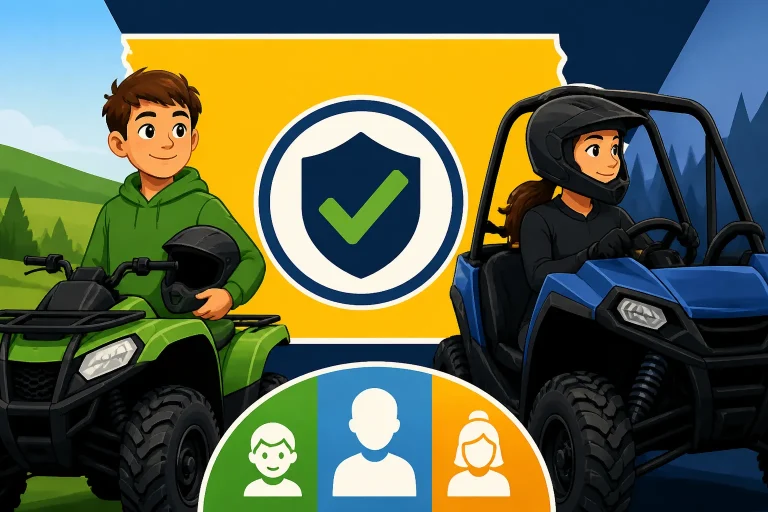
For a minor, start with the child’s parent or legal guardian. That is the safest answer when a form asks for a parent or guardian’s signature. A relative, family friend, coach, or other adult who brings the child does not automatically gain authority to sign just because they are supervising the ride.
Forms differ. One may ask for a parent or guardian to consent to the child’s participation; another may include separate sections for the minor and the adult who accepts responsibility. Read the wording instead of assuming that any adult signature will be accepted. If the form says “parent or legal guardian,” an unrelated adult should not sign that line unless the organization confirms that it accepts a specific written authorization or other arrangement.
The adult should sign only for a role they actually hold. Do not sign as a parent if you are not one, or claim guardianship without that authority. If a parent or guardian cannot attend, contact the park, rental business, club, or event organizer before the ride. Ask whether it accepts an authorization signed in advance and what documentation it needs. Get the answer directly from the organization rather than relying on another rider’s interpretation.
A minor may also be asked to sign or initial a section acknowledging the rules. That does not necessarily replace the parent or guardian’s signature. Follow the form’s instructions and ask the organization if the form does not clearly identify who must complete each section.
| Situation | Who should sign first | What to confirm |
|---|---|---|
| A minor rides with a parent | Parent or legal guardian, following the form | Whether the minor also needs to sign or initial |
| A minor arrives with another adult | Contact the organizer; do not assume the accompanying adult can sign | Whether written authorization is accepted and what form it must take |
| An adult rider signs their own waiver | The adult participant | Whether each rider needs a separate form |
| A rental includes a minor operator | Ask the rental business before booking | Minimum age, guardian presence, and any additional rental forms |
| A club or organized ride has its own paperwork | Follow that organizer’s instructions | Whether its form differs from the park’s waiver |
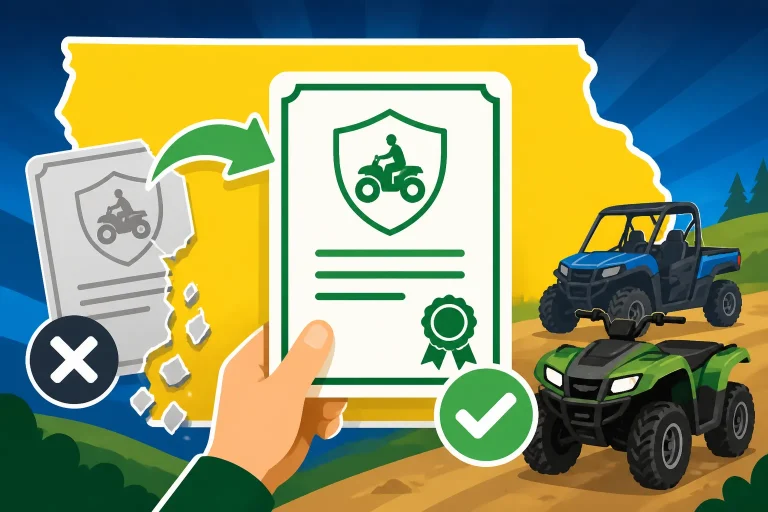
A waiver is a document used by a business, park, club, or event organizer. It is not the same thing as a state permit, registration, safety certificate, or proof of supervision. A signed waiver should not be treated as permission to ignore age limits, operating rules, or the landowner’s requirements.
For related age and supervision questions, see Iowa Supervision Rules for Riders Under 12 and Iowa Safety Certificate Age Range. Those requirements concern riding eligibility and supervision, not who has authority to sign a particular organization’s waiver.
How to handle the form when a parent cannot attend
If the parent or legal guardian will not be present at check-in, do not wait until the group reaches the gate to find out whether another adult can sign. The organizer may have a standard process, or it may require the parent or guardian to be physically present. Its policy is the practical starting point.
Use this process before the ride:
- Ask who must sign. Contact the organization that issued the waiver and describe the situation plainly: the rider is a minor, the parent or guardian will not be present, and another adult will accompany the rider.
- Ask what alternative it accepts. It may require a parent or guardian to sign the organization’s own form in advance, or it may not allow a substitute arrangement. Do not assume a general permission note will be enough.
- Confirm whether the signer must be present. Some organizations may require an adult to complete check-in in person. Others may permit paperwork to be prepared beforehand. Follow the policy for that location or event.
- Complete the exact form requested. Avoid altering the waiver, crossing out terms, or substituting a form from another venue unless the organization approves it.
- Bring identification or supporting documents only if requested. Ask in advance what the adult and minor need to bring, and keep the completed paperwork available during check-in.
- Keep riding eligibility separate. Confirm age, supervision, machine, and site rules independently. A waiver does not establish that a minor can legally operate that machine or ride in that area.
If the child is riding with a grandparent, aunt or uncle, family friend, or other trusted adult, that adult can still be the responsible accompanying adult when the venue permits it. The distinction is that accompanying and supervising a child is not necessarily the same as having legal authority to sign a release on the child’s behalf.
If the organization says it needs a parent or legal guardian’s signature, ask whether the parent can complete the form before arrival and whether the parent must also attend. If the organizer does not accept a substitute signer, the group will need to follow that policy or make other plans. A signature that the organization rejects can leave the rider unable to participate.
For a rental, check with the rental provider before reserving or traveling. Rental paperwork can include terms beyond a general park waiver, and the business may set requirements for the person who operates or signs for the machine. See Iowa Rules for a Rented Machine for the separate Iowa riding-rule questions that can apply.
Waivers, supervision, and permits are different requirements
A common source of confusion is treating every piece of paperwork as one general permission slip. In practice, several separate questions may need answers:
- Who may operate the machine? This depends on the applicable Iowa rules and the type of machine and riding area.
- Who must supervise the minor? Age-based supervision requirements are separate from the waiver.
- Does the rider need a safety certificate? Certificate rules vary by rider and machine type.
- Does the rider or machine need a permit or registration? That depends on where the machine is used and the rider’s circumstances.
- Who signs the venue’s waiver? The organization’s form and policy determine what it will accept.
A parent’s signature does not automatically satisfy all of these conditions. Nor does an adult’s presence necessarily make an otherwise ineligible ride acceptable. Check the rules for the place and activity, not just the paperwork at the entrance.
For example, an event on a designated riding area may have its own participant forms and check-in process. A club ride may need organizers to follow additional procedures, and a commercial rental may use a separate contract. The requirements can vary even when the same child and machine are involved. If an organized event is planned, the responsible organizer should confirm the venue’s conditions directly; see Iowa Rules for an Organized Ride and Organizing a Ride at an Iowa Park.
Likewise, safety certificate rules are not waiver rules. An adult signing a waiver does not earn a certificate for the minor or remove a certificate requirement that applies to the rider. Review Iowa ATV Safety Certificate Requirements if you are unsure whether a young rider needs one.
A private property owner, park operator, or event organizer may also require written permission or a release as a condition of access. That is separate from the state’s requirements for using a machine. A waiver does not grant access to land where the rider has no permission, and a permit or registration does not replace a venue’s check-in paperwork.
A check-in checklist for parents and accompanying adults
A little preparation can prevent a young rider from being turned away after the family has loaded the machine and made the trip. Before leaving, confirm these points with the specific park, event, club, or rental provider:
- Get the correct waiver. Use the form issued by the organization where the ride will take place. A form from another park or event may not be accepted.
- Identify the required signer. If the rider is a minor, check whether the form requires a parent, legal guardian, or another specifically authorized adult.
- Clarify attendance requirements. Find out whether the parent or guardian must be there in person or can complete paperwork ahead of time.
- Ask what happens if the parent is absent. Do not treat a verbal “permission” from the parent as equivalent to a signature accepted by the organizer.
- Check each rider’s paperwork. One adult’s signature may not cover every child or adult in a group. Ask whether each participant needs a separate form.
- Review the waiver before signing. Make sure the form identifies the right participant and activity, and that the person signing understands the language and role indicated.
- Verify riding rules separately. Check the minor’s age eligibility, supervision, machine type, site rules, and any certificate or registration requirements.
- Keep confirmation accessible. If the organizer approved an advance-signing process, bring the requested paperwork or confirmation as instructed.
If the form’s wording is unclear, ask the organization to explain what it means before signing. Do not assume that a broad permission note, text message, or signature by the accompanying adult will be accepted. And if the question is about the legal effect of a waiver rather than the organization’s check-in policy, consult a qualified attorney; a venue’s willingness to accept a form is not the same as a legal determination about its enforceability.
The practical rule is straightforward: for a minor, have the parent or legal guardian sign unless the organization clearly confirms an accepted alternative. Then check Iowa’s riding and supervision requirements separately. That keeps the waiver question from being mistaken for permission to ride.
Disclaimer
This article is for general informational purposes only and does not constitute professional advice. Laws, prices and regulations vary by location and change over time. Consult a qualified professional for guidance on your specific situation.