Iowa Sound Limits at an OHV Park
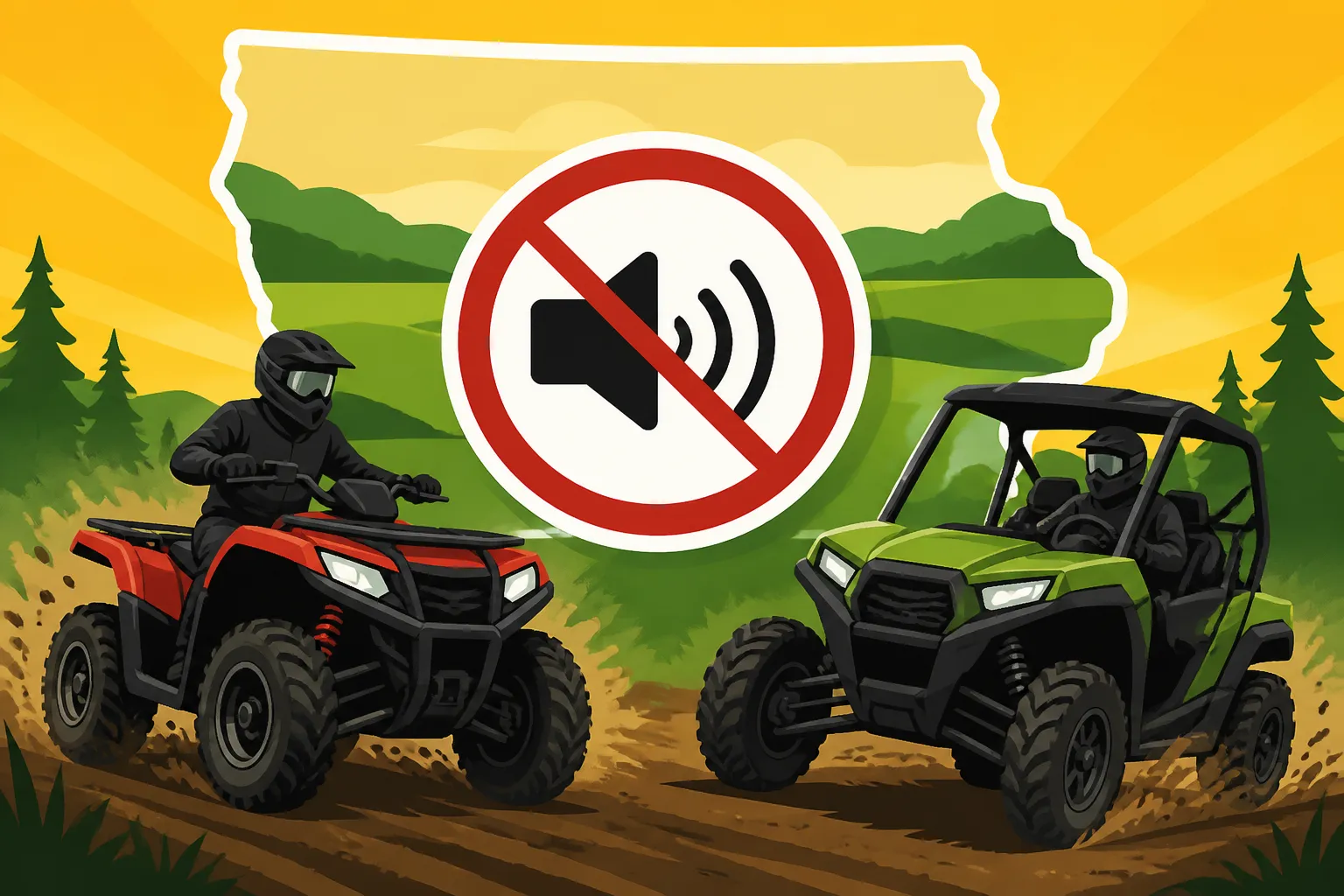
Noise rules at Iowa OHV parks can be hard to pin down because a single statewide decibel limit may not tell you what a particular park allows. Before loading your ATV or UTV, check the park’s current rules and make sure the exhaust is in good condition. This helps prevent gate problems and keeps noise down for other riders and nearby neighbors.
How Iowa OHV park sound limits work
There is not necessarily one sound limit that applies in the same way at every Iowa riding area. Parks may be managed by different clubs, counties, or other operators, and their posted requirements can differ. A park may address noise through an equipment rule, a restriction on excessively loud machines, or a specific sound-check procedure.
That makes the park itself the best place to confirm the rule. Check the operator’s current information before you travel, then read the signs or gate board when you arrive. A rule you remember from a previous visit may have changed, and requirements at one park should not be assumed to apply at another.
For a practical summary of riding-area rules, see Iowa Rules for Riding a Designated Riding Area. If sound requirements are not spelled out online, contact the park before you load. Ask whether the park has a noise limit, how it is measured, and whether a machine that fails a check can still enter or must leave.
| What to check | Why it matters |
|---|---|
| Current park rules | Operators may set or update site-specific requirements |
| Posted signs and gate instructions | They may explain a local check or equipment restriction |
| Exhaust condition | A damaged or modified system can make a machine much louder |
| Test method, if any | Distance, engine speed, and meter position affect a reading |
| Rules for your machine type | ATV and full-size UTV policies may not be identical |
Do not treat a quiet ride as proof that a machine meets a formal test. A sound reading depends on how and where it is taken, as well as the test conditions. If the park uses a meter, follow the operator’s procedure rather than comparing your own reading from a different setup.
Sound rules are also separate from other equipment rules. A machine could be quiet but still fail a requirement related to a spark arrester or other equipment. Check Iowa Spark Arrester Rules as well as the park’s noise policy.
What to do before you ride
A few checks before leaving home can reduce the chance of a problem at the entrance. Start with the exhaust system, then confirm the park’s rules and make a plan if your machine is near the edge of what the operator accepts.
- Check the park’s current information. Look for noise, muffler, exhaust, or sound-test wording. If it is unclear, contact the operator rather than relying on another rider’s account.
- Inspect the exhaust. Look for a missing or loose muffler, cracked parts, damaged seals, or signs that the system has been altered. Fix defects before riding.
- Consider the whole setup. A replacement exhaust, altered engine, or other modification may change how loud the machine is. Do not assume that a machine is acceptable just because it is a familiar make or model.
- Ask about the test before arrival. If the park measures sound, ask what conditions apply and what happens if the machine does not pass. That can help you avoid an expensive or frustrating trip.
- Follow instructions at the gate. If staff ask to inspect or test the machine, keep the area clear, follow their directions, and do not rev the engine unless asked.
A handheld sound meter can help you compare your machine’s noise before and after maintenance, but it is not a substitute for a park’s test. An app or meter used at home may give a different result because the microphone, distance, engine speed, surroundings, and measurement method differ. If you want a basic comparison tool, meters are available through retailers such as Amazon; use the reading as a rough diagnostic, not as proof of compliance.
Avoid trying to meet a rule by improvising at the gate. Packing material, exhaust components, and noise-control parts need to be appropriate for the machine and installed as intended. A poor repair can create safety or mechanical problems, and a temporary adjustment may not satisfy the park’s requirements.
Keeping a machine quieter without guesswork
The most dependable approach is to maintain the exhaust system as designed. A muffler that is loose, worn, damaged, or missing parts can be much louder than a properly maintained system. If you notice a sudden change in sound, treat it as a maintenance issue rather than assuming the park will accept it.
Check the parts that can make noise even when the main muffler appears intact. Exhaust joints can leak, heat shields can rattle, and loose brackets can vibrate. A mechanic familiar with your machine can help identify a problem if you cannot locate it safely. Do not inspect a hot exhaust, and do not run the machine indoors to assess its sound.
If you are considering an aftermarket exhaust, confirm both fit and park rules before buying or installing it. A product advertised as a performance upgrade may not be quieter than the original system. Keep any original parts you remove, and check whether the replacement system includes the components the park expects.
Riding habits matter, too. Revving repeatedly, holding high engine speed while stationary, and accelerating hard near the entrance or campground create avoidable noise. Ride at a controlled pace, avoid unnecessary throttle, and follow posted operating instructions. These habits do not replace equipment requirements, but they make the riding area more pleasant for everyone.
For machines used on shared trails, the noise of a full-size UTV may be experienced differently from that of a smaller ATV. Do not assume a machine is allowed simply because it fits on the trail. Check Iowa Rules for a Full-Size Rig on a Trail and the individual park’s rules, especially if you have a modified exhaust or unusually large machine.
Electric machines avoid engine and exhaust noise, but they still make sound from tires, drivetrain, and movement. They may also have separate access requirements. Confirm the park’s policy before bringing one; [Iowa Rules for an Electric Machine on Trails] can help you identify the questions to ask.
If a park says your machine is too loud
If staff say the machine does not meet the park’s noise rule, stay calm and ask what requirement applies. If a test was used, ask what procedure was followed and whether the park can explain the result. Do not argue over a reading based on a different test setup or try to continue riding after being told not to.
The available response depends on the park’s policy. Staff may refuse entry, ask you to correct a problem, or require you to stop riding. Do not count on being allowed to make a repair on site. If the issue is a loose or damaged exhaust part, you may need to haul the machine home or have it serviced before returning.
Keep a record of the park’s instructions if you need to follow up later. Note the date, machine type, what staff said, and whether a test was performed. If you believe a rule was applied incorrectly, contact the operator after the visit rather than escalating the disagreement at the gate.
Before another trip, review A Sound Check at an Iowa Park Gate and A Gate Board With Today’s Rules in Iowa for the practical details riders should confirm. Check Iowa Trail Conditions Before You Ride and Iowa Trail Closures to Check First as well; noise compliance will not help if the riding area is closed or operating under special conditions. When online information is incomplete, Calling an Iowa Park Office First is the simplest way to confirm current requirements.
The key is to separate three things: the park’s sound policy, the machine’s mechanical condition, and any other equipment rule. Confirm each one before you travel. A well-maintained exhaust and a quick call to the operator are more reliable than guessing from how loud the machine seems in the driveway.
Disclaimer
This article is for general informational purposes only and does not constitute professional advice. Laws, prices and regulations vary by location and change over time. Consult a qualified professional for guidance on your specific situation.