Iowa Rules for Campfires at a Park
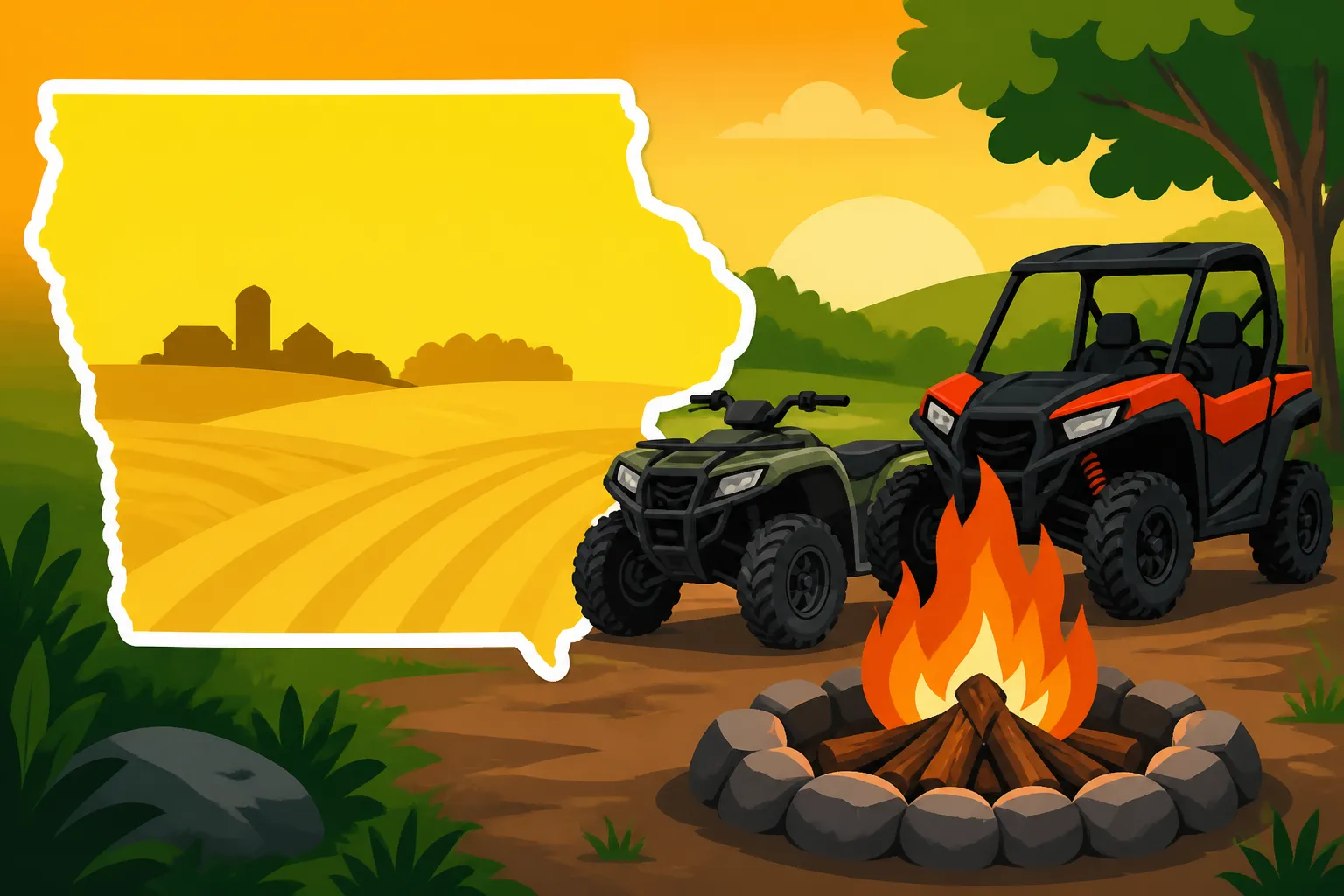
Campfires can make an Iowa OHV park camping trip more comfortable, but permission depends on the park and the conditions that day. A fire ring at one campground does not mean fires are allowed everywhere, or that a posted rule stays unchanged during dry, windy weather. Check with the park operator before lighting a fire, then use only the approved spot and put it out completely.
Check the park’s rules before you pack
Iowa OHV parks may be operated by different clubs, counties, or other local organizations, so campfire rules can vary from one property to another. Even within a campground, a fire may be permitted only in a designated ring or grill. Do not assume that a rule from one park applies at another.
Start with the park’s official information, then contact the operator if the instructions are unclear. Ask whether fires are permitted at your campsite, what type of fire container is allowed, and whether any temporary restrictions are in place. A phone call can resolve details that a general camping page may not cover.
Camping at an Iowa OHV Park explains what else to check when arranging an overnight stay. For fire-specific questions, a nearby A Fire Ring at an Iowa Campground can help clarify what the designated facility is for, but the rules at your chosen park still control.
| Before lighting a fire | What to confirm |
|---|---|
| Location | Is a fire allowed at your campsite, and where is the approved ring or grill? |
| Equipment | Must you use the park’s fire ring, or are portable fire containers allowed? |
| Fuel | Are wood, charcoal, or other fuels permitted? |
| Current conditions | Is there a temporary fire restriction, burn ban, or weather-related closure? |
| Quiet hours | When must the fire be extinguished or activity around it quiet down? |
| Supervision | Are there specific rules about keeping a person with the fire? |
If the park does not clearly say fires are allowed, treat that as a reason to ask—not as permission to make one. Do not build a fire directly on the ground, move rocks or park equipment to create a fire site, or burn material in a spot that looks convenient. A designated ring helps contain a fire, but it does not override a temporary prohibition.
Parks can also update instructions after a change in weather or local conditions. Check again close to departure, especially if you booked your campsite in advance. Why Iowa Parks Are Run by Clubs and Counties offers useful context for why the person or organization responsible for a park may differ by location.
Ask about more than whether fires are allowed
A simple yes-or-no question may leave important details unresolved. When you contact the park, ask whether the allowance applies to your campsite and whether it covers the kind of fire you intend to have. A charcoal grill, a contained campfire, and an open fire may be treated differently under park rules.
Confirm whether you need to bring your own firewood or whether wood is available on-site. If you bring wood, ask whether the park has restrictions on outside firewood. Do not collect branches, cut trees, or take wood from park property unless the operator explicitly allows it.
Also ask what the park expects when you leave the campsite. Some sites may have specific arrangements for ashes or coals. Do not dump hot material in a trash bin, on the ground, or into a wooded area. Follow the operator’s disposal instructions; if none are posted, ask before you leave.
Follow restrictions that change with conditions
A fire that is allowed under ordinary conditions may be prohibited temporarily. Dry vegetation, strong winds, and local fire-danger concerns can make a small campfire unsafe. A campground’s usual rules are not a guarantee that fires will be allowed on the day you arrive.
Check park notices shortly before loading your machine and again when you reach the property. If a restriction is posted at the entrance, campground, or fire ring, follow it even if an older page or reservation message says fires are normally permitted. If you cannot confirm that a fire is allowed, skip it.
Iowa OHV parks may also close or change access when weather affects the property. A trail closure is not automatically the same as a fire restriction, but both are reasons to check current notices. See Iowa’s Weather-Driven Trail Closures, Reading the Iowa DNR Alert Feed, and Checking an Iowa Alert Before You Load when making a last-minute plan. For riding conditions, Iowa Trail Conditions Before You Ride can help you prepare for other weather-related changes.
Wind deserves particular attention. Sparks and embers can travel beyond a ring, including onto dry grass, leaves, tents, or nearby equipment. If the wind is pushing smoke or sparks around, do not light the fire. If a fire is already going and conditions become unsafe, put it out promptly rather than waiting for the wind to calm down.
Rules at the site take priority
A posted instruction from the park operator is more relevant to your stay than a general assumption about campfires. If a sign says no fires, do not light one in a ring that appears unused. If a ring is full of ash, damaged, or surrounded by dry material, do not treat its presence as proof that it is safe to use. Report a damaged facility or unclear sign to the operator.
Do not use a fire to burn garbage, packaging, plastic, food containers, or other waste. Besides creating smoke and debris, burning trash can leave material that is difficult to remove and may violate park rules. Pack out what you bring in unless the park provides a suitable disposal method.
Build and supervise a fire safely
If the park permits a campfire and conditions are suitable, keep it in the approved ring or container. Clear loose items from around the fire without damaging plants or disturbing park property. Keep tents, sleeping bags, fuel cans, machines, and other combustible items well away from the flame and sparks.
Use a modest amount of fuel. A large fire is harder to supervise and extinguish, and it can send embers farther. Never use gasoline or another accelerant to start or enlarge a campfire. Do not leave a fire unattended, even briefly, and make sure children and pets stay at a safe distance.
A responsible adult should remain with the fire whenever it is burning. If everyone leaves the campsite, goes to bed, or heads out on the trails, extinguish it first. Do not assume that a fire will burn down safely on its own.
A compact vehicle-rated fire extinguisher can be a useful backup, but it does not replace prevention or proper extinguishing. If you need to replace one, local outdoor-safety retailers and Amazon carry options; check the product label and make sure it is suitable for the risks you expect. Keep it accessible rather than buried under camping gear.
Extinguish it completely
When you are done, use the park’s instructions for putting out the fire. If water is available and suitable for the site, add it carefully and stir the ashes and coals so water reaches material below the surface. Repeat as needed. Do not leave embers that are still glowing or hot enough to reignite.
Never pour water over a fire if the park has instructed campers to use another method, or if doing so could damage the ring or create another hazard. Ask the operator what to do if the ring is very hot, full, or difficult to extinguish. Do not bury hot coals; they can remain hot beneath the soil and later surface or catch nearby material.
Before walking away, check for heat with caution and make sure smoke and glowing embers have stopped. Keep children and pets clear while handling hot ashes. If the fire cannot be put out safely, alert the park operator or emergency services rather than leaving it unattended.
Keep campfires separate from riding and camping hazards
An OHV campground has hazards beyond the fire itself. Fuel containers, oily rags, hot exhaust parts, and charging equipment should not be set beside a fire ring. Store fuel only as the park allows, and keep it away from flames and heat. If you are carrying extra fuel for a ride, review Iowa Rules for Carrying Fuel and any park-specific instructions before setting up camp.
Park machines so that fire and vehicle activity do not overlap. A hot exhaust system can ignite dry grass or other combustible material, and a machine should not be parked where it blocks access to a fire ring or emergency route. Do not ride around a campground fire area unless the park allows it and the route is safe.
Respect quiet hours and neighboring campsites. A campfire does not grant permission to run loud equipment, gather in a way that disturbs others, or keep the campground noisy late into the night. Check Quiet Hours at an Iowa OHV Campground for related campground etiquette and rules.
If you see a fire spreading beyond its ring, smoke coming from a tent or vehicle, or another immediate danger, warn people nearby and contact emergency services. Do not put yourself at risk trying to handle a fire that is growing or spreading. Report a damaged ring, an unattended fire, or unclear restrictions to the park staff as soon as practical.
A safe plan is straightforward: confirm permission with the park, follow current restrictions, use only the approved fire location, supervise the fire, and extinguish it fully before leaving or going to sleep. When any part of that plan is uncertain, skip the campfire and ask the operator what is allowed.
Disclaimer
This article is for general informational purposes only and does not constitute professional advice. Laws, prices and regulations vary by location and change over time. Consult a qualified professional for guidance on your specific situation.