Iowa Reciprocity With Nebraska
If you’re bringing a Nebraska ATV or UTV into Iowa, the key question is whether its Nebraska registration is current and valid for the kind of riding you plan to do. Iowa reciprocity can spare a qualifying machine from a separate nonresident permit, but it does not make every trail or road open to ride.
How Iowa reciprocity works for Nebraska machines
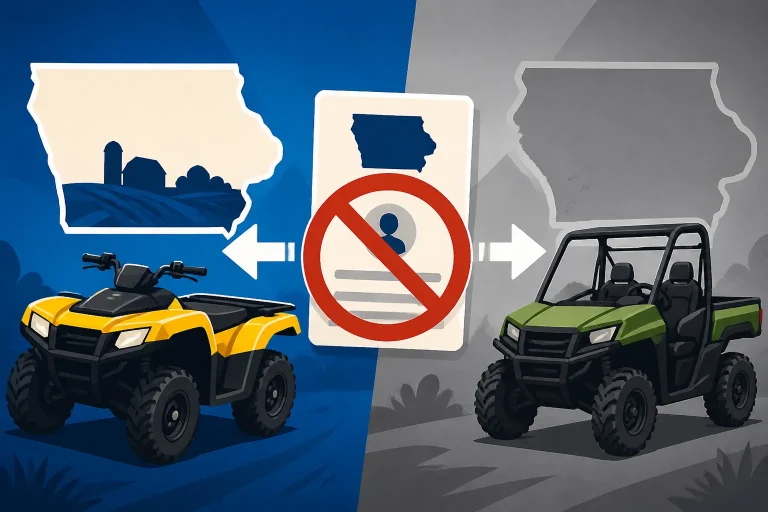
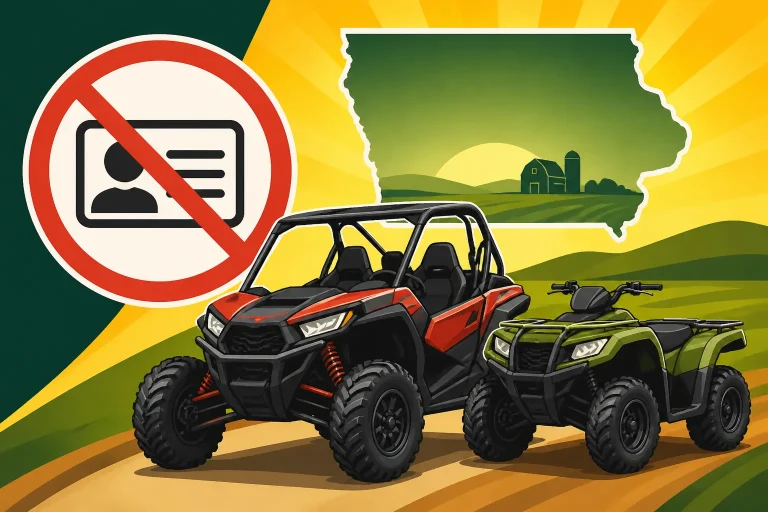
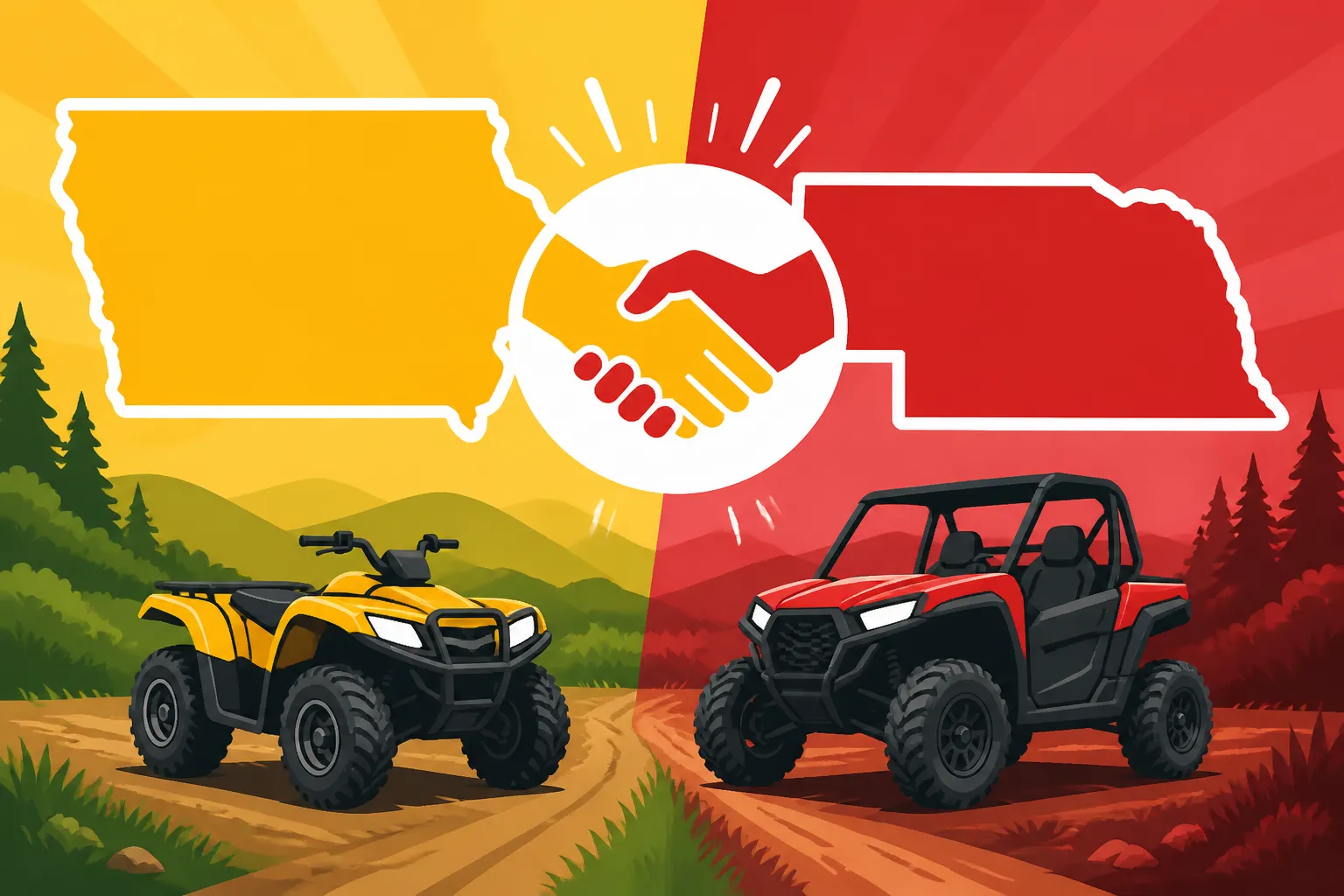
Iowa recognizes qualifying Nebraska off-highway vehicle registrations under its reciprocity rules. In practical terms, a visitor whose machine is properly registered in Nebraska generally does not need to buy Iowa’s nonresident user permit just to ride in Iowa. Reciprocity applies to the machine’s registration, not simply to the rider’s Nebraska address.
That distinction matters. A Nebraska resident bringing an unregistered machine should not assume that living across the state line qualifies the machine for reciprocity. The same caution applies if the registration has expired, the paperwork does not match the machine, or the machine does not meet Nebraska’s requirements for registration. In those situations, Iowa may treat it as a machine without qualifying out-of-state registration.
Iowa’s nonresident permit is a separate option for visitors whose machines do not qualify through registration or reciprocity. It is not the same as an Iowa resident registration. For the details that apply to visitors generally, see Iowa’s Nonresident User Permit and Iowa ATV Registration for a Nonresident.
| Your situation | What to check before riding in Iowa |
|---|---|
| Nebraska-registered ATV or UTV | Confirm the registration is current, belongs to the machine, and qualifies for Iowa reciprocity |
| Nebraska resident with no valid machine registration | Check whether an Iowa nonresident user permit is required |
| Machine has an expired or mismatched registration | Do not rely on reciprocity until the registration issue is resolved |
| You plan to ride an Iowa road | Check the separate Iowa road-use requirements; reciprocity does not make road riding legal |
| You plan to ride on private land | Get the landowner’s permission and check any other rules that apply |
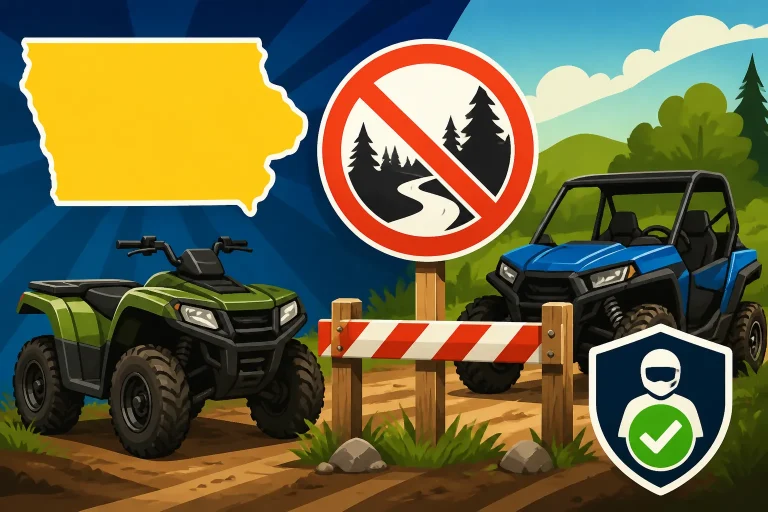
Reciprocity is a registration issue, not a general pass to operate anywhere. An Iowa park can have its own operating requirements, and a machine’s registration does not override closures, posted restrictions, landowner rules, or road-use laws. The practical starting point is to carry the Nebraska registration and confirm that it is valid before loading the machine.
For a broader explanation of how Iowa treats registrations from other states, see Does Iowa Honor Out-of-State Registration?. If your machine is not covered, What a Visitor Pays to Ride Iowa explains the separate visitor-permit question.
What to check before crossing into Iowa
Before you leave Nebraska, match the paperwork to the machine and the ride you have planned. A few minutes of checking can prevent uncertainty at a trailhead or during a roadside stop.
- Check the registration’s expiration date. Make sure it will still be valid on the dates you expect to ride. An old sticker or a past registration document is not a substitute for current registration.
- Match the record to the machine. Confirm that the identification information on the registration corresponds to the ATV or UTV you are hauling. If a machine was recently bought, transferred, or rebuilt, resolve any mismatch before the trip.
- Carry proof with you. Bring the registration document, not only a photograph of a sticker on the machine. Keep it somewhere protected but easy to reach.
- Confirm reciprocity for your machine and intended use. Requirements can depend on the vehicle and where you will operate it. Check the current Iowa DNR information if anything about the registration or machine is unusual.
- Check the destination’s rules. Trail status, allowed vehicle types, operating hours, and safety requirements can vary by riding area. Verify the specific park or property before you haul there.
A seller’s statement that a machine is “registered” is not enough if you cannot confirm the registration is current and associated with that machine. If you have just bought a used ATV or UTV, make sure the ownership and registration paperwork are in order before relying on reciprocity. Buying a Used ATV in Iowa covers paperwork issues that can also matter when a machine changes hands.
The same is true for a machine borrowed from someone else. Ask the owner for the registration document and check that it covers the machine you will take to Iowa. A Nebraska address, a bill of sale, or proof that the machine was once registered does not by itself establish that the registration qualifies now.
If the machine does not have qualifying Nebraska registration, check the Iowa nonresident permit requirements before riding. Do not assume that buying a permit resolves every other requirement: it addresses the visitor registration or permit issue, not whether you can ride a particular road, trail, or property.
What reciprocity does not allow
The most common mistake is treating reciprocity as permission to ride wherever an ATV or UTV can physically go. It is narrower than that. Reciprocity concerns whether Iowa accepts the machine’s Nebraska registration in place of an Iowa nonresident user permit. It does not grant access to land or change Iowa operating rules.
It does not open private property
A valid registration does not give you permission to ride on someone else’s land. Get the landowner’s permission before entering private ground, including farm fields, timber, and private trails. Iowa’s requirements for private land are explained in [Iowa Landowner Permission Requirements].
It does not make Iowa roads open to ATVs and UTVs
Road operation is governed separately. A Nebraska registration does not automatically authorize an ATV or UTV on an Iowa road, and a route that is open to some machines may still be closed to yours. Road access can depend on the type of road, local authorization, the machine’s equipment, and the rider’s eligibility. See Iowa Rules for Riding a Gravel Road and Iowa Rules for Riding a Paved Secondary Road before planning a road route.
A trail ride and a road trip are different questions. Confirm the status of each road segment rather than assuming a legal trail connection can be completed on public roads. If you need to travel between a staging area and a riding site, plan a route that is legal for your vehicle.
It does not replace a park’s operating rules
A riding area may set requirements for helmets, machine types, safety certificates, trail direction, or operating hours. It may also close trails when conditions are unsafe or would cause damage. Check the destination’s current information before heading out, even if your paperwork is in order.
Likewise, a registration or permit does not excuse riding off a marked trail or ignoring a closure. Conditions can change after rain, and access may be restricted to protect the trail. Verify the park’s status on the day of your trip rather than relying only on an older map or a past visit.
It does not settle every paperwork issue
A machine with a disputed ownership record, an incomplete transfer, or an identification number that does not match its documents may need more attention than a routine reciprocity check. If the Nebraska registration is not clearly valid for the machine, contact the relevant Iowa authority before riding rather than trying to resolve the issue at the trailhead.
A nonresident permit may be the right solution when the machine lacks qualifying out-of-state registration, but it is best to confirm that with the Iowa DNR before purchasing or traveling. For the general comparison between a home-state registration and an Iowa permit, see [Riding Iowa With an Out-of-State Registration].
For a straightforward trip, the useful rule is simple: bring current Nebraska registration for the specific machine, confirm that Iowa reciprocity applies, and check the rules for the exact place and type of riding you have planned. If any part of that chain is uncertain, resolve it before unloading.
Disclaimer
This article is for general informational purposes only and does not constitute professional advice. Laws, prices and regulations vary by location and change over time. Consult a qualified professional for guidance on your specific situation.