Where the Registration Fee Fund Spends
It's a question many of us have asked after shelling out the annual fee: "Where does all that money actually go?" You hand over your hard-earned cash to register your ATV or UTV in Iowa, get your new decal, and wonder if it just vanishes into a generic state fund. The good news is, your Iowa ATV and UTV registration fees are specifically earmarked for a critical fund that directly benefits the off-highway vehicle community you're a part of. This guide will meticulously break down how your registration dollars are collected and, more importantly, how they are invested back into the trails, safety, and future of riding across our beautiful state.
Understanding Your Iowa ATV Registration Fee
When you visit your county recorder's office, or even renew online, you're not just paying a single, flat fee for that shiny new sticker. Your Iowa ATV registration is actually composed of several distinct charges, each with its own purpose. It's a little like buying a bag of trail mix – you see one price, but inside are various ingredients, each contributing to the overall experience. Understanding these individual components helps clarify why the total amount is what it is, and how each piece contributes to the larger Off-Highway Vehicle (OHV) Fund.
More Than Just a Sticker: What You Actually Pay For
Let's peel back the layers of your registration bill. First, there's the [The $15 Base Fee Inside an Iowa Registration]. This is the core fee that gets your machine officially registered. Think of it as the foundational contribution. Then, you'll see [The $2 Writing Fee on Every Registration]. This modest charge goes directly to the county recorder's office for the administrative work involved in processing your paperwork, issuing the certificate, and getting your decal ready. It covers the overhead of keeping those offices running efficiently, ensuring that when you walk in, someone is there to help you.
Beyond that, there's also [Why a $1 License Agent Fee Is Added]. This fee is often associated with the system used by the Department of Natural Resources (DNR) to manage licenses and registrations. It helps maintain the online portal and the electronic processing systems that make it possible to register your machine, whether you're at home or at the counter. Finally, depending on the specifics of your registration, there can be a small [The Iowa NRC Administration Fee]. All these components, while seemingly small individually, add up and are crucial for the seamless operation of the registration system and the subsequent funding of OHV initiatives. It's a common misconception that all of these directly feed into the trail fund, but it's important to understand how they are channeled.
Why We Pay It: The Purpose of ATV & UTV Registration
At its heart, ATV and UTV registration serves multiple vital functions beyond just generating revenue. It provides a means of identification for your machine, which is crucial for law enforcement in cases of theft or accidents. It also helps the state track the number of off-highway vehicles in circulation, which in turn informs planning for trail development and maintenance. From a safety perspective, registration ensures a baseline level of accountability for machine owners.
However, the most significant purpose from a rider's perspective is its direct link to the Iowa Off-Highway Vehicle (OHV) Fund. This isn't just a general pot of money. It's a dedicated fund designed specifically to support the very activity you enjoy. Without these registration fees, the ability to build new trails, maintain existing ones, and promote safe riding practices would be severely hampered. It's an investment in the longevity and quality of the riding experience for everyone in Iowa.
The Iowa Off-Highway Vehicle (OHV) Fund: Where Your Money Lands
Once your registration fees are collected, a significant portion of those dollars are channeled directly into the Iowa Off-Highway Vehicle (OHV) Fund. This fund isn't some abstract government account; it's a living, breathing resource dedicated to enhancing and preserving OHV opportunities across our state. It's the engine that drives the improvements we see on the trails and the expansion of riding areas.
The Fund's Main Goal: Supporting Iowa's Riding Community
The primary objective of the OHV Fund is clear: to benefit Iowa's off-highway vehicle enthusiasts. This means providing financial assistance for the development, maintenance, and operation of designated OHV trails and parks. It also supports safety and educational programs, ensuring that riders of all ages and experience levels can enjoy the sport responsibly. Imagine if every time you rode a well-maintained trail, you knew a portion of your registration fee helped pay for that very experience. That's precisely what happens.
The fund isn't just about dirt trails; it also contributes to facilities like staging areas, restrooms, and signage that enhance the overall park experience. Without this dedicated funding mechanism, the beautiful parks and trails we cherish, like Gypsum City or Bluff Creek, would struggle to exist or expand. It’s a collective effort, where every registered machine contributes to the greater good of the riding community.
The Grant Program: Fueling Trail Development and Maintenance
The OHV Fund primarily operates through a grant program, acting as a direct pipeline for your registration dollars to reach the ground. Local OHV clubs, county conservation boards, and even some cities can apply for these grants. These grants are the lifeblood of new trail construction, critical maintenance on existing paths, and the installation of essential amenities. For instance, a local club might apply for a grant to repair storm damage on a popular loop, or a county might seek funds to acquire land for a brand-new riding area.
The application process is thorough, requiring detailed proposals outlining how the funds will be used to meet the objectives of the OHV Fund. This ensures accountability and that the money is spent wisely on projects that genuinely benefit riders. It's not uncommon to see specific grant announcements, such as [The Grant That Paid for a Webster County Trail], directly linking your registration fees to tangible improvements. This grant system empowers local organizations, who are often the closest to the trails and best understand the community's needs, to take an active role in shaping the future of Iowa's OHV landscape. When drafting official documents for their grant applications or organizational bylaws, many clubs might even turn to resources like LawDepot for reliable templates to ensure their paperwork is professional and legally sound.
Real-World Impact: Seeing Your Dollars at Work
It's one thing to talk about funds and grants, but it's another to actually see your money making a difference on the ground. Your Iowa ATV and UTV registration fees directly translate into tangible improvements and expanded opportunities for riders across the state. This isn't just theoretical; you can witness the results every time you hit a well-maintained trail or visit a park with updated facilities.
Examples of Funded Projects: From Dirt to Dollars
Think about the places where you love to ride, like [Iowa's Eight Designated OHV Parks]. These parks, which are often run by [Why Iowa Parks Are Run by Clubs and Counties], are prime examples of where your registration dollars are making a difference. Funds from the OHV program support the development of new trails, making sure there are fresh paths to explore. They also cover the ongoing, and often expensive, costs of maintenance – think about repairing erosion, clearing downed trees, or grading trails to keep them smooth and safe.
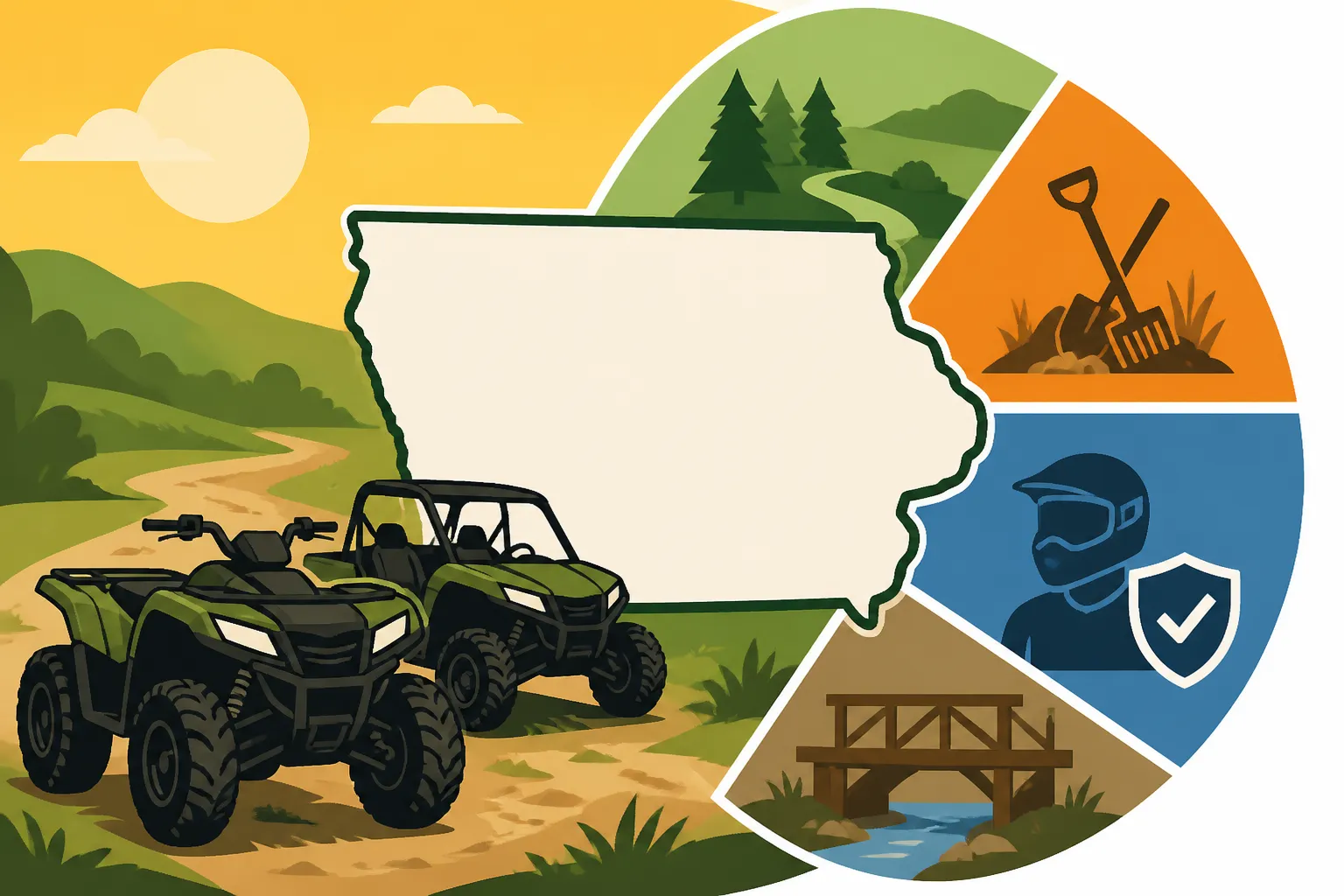
Beyond the dirt, these grants also fund the construction of critical infrastructure like bridges over streams, culverts to manage water flow, and clear, informative signage to guide riders. These improvements might seem small individually, but collectively, they significantly enhance the safety and enjoyment of your riding experience. Your fees have been instrumental in creating and sustaining the diverse riding environments that Iowa offers, from challenging hill climbs to scenic forested loops. For clubs applying for these grants, having professional documents, perhaps sourced from platforms like LawDepot, can be crucial in presenting a strong, organized application.
Beyond the Trails: Other Ways the Fund Supports OHV Riders
While trail development and maintenance are major beneficiaries, the OHV Fund's impact extends further. A portion of the funds goes towards promoting OHV safety and education, which is crucial for reducing accidents and ensuring responsible riding. This can include supporting educational materials, safety courses, and outreach programs aimed at new riders or specific age groups. When you see safety messages at a park or learn about a youth rider course, know that your registration fees are playing a part.
Additionally, the fund contributes to the administrative costs associated with managing the OHV program itself within the DNR. This includes personnel who oversee the grant process, conduct site visits, and work with local clubs and counties to plan for the future of OHV riding in Iowa. It's a holistic approach designed to create a vibrant, safe, and sustainable riding culture throughout the state. So, while you might just think about the trail itself, remember that the ecosystem of support around it also benefits from your annual contribution.
The Grant Application Cycle and Community Involvement
Understanding that your registration fees go into a dedicated fund for OHV projects is great, but knowing how those funds actually get dispersed to projects you care about takes that understanding a step further. The system relies heavily on local initiative and a well-defined application cycle, making community involvement absolutely essential.
How Clubs and Counties Access These Funds
The Iowa DNR manages the OHV Grant Program, and it operates on a specific timeline. Typically, applications for grants are accepted during a certain window each year, often with a deadline to [Applying for an ATV Grant by February]. This gives local entities – primarily OHV clubs and county conservation boards – time to develop their proposals, gather necessary documentation, and submit their requests. The DNR then reviews these applications, prioritizing projects that align with the fund's goals, demonstrate significant impact, and show a strong capacity for execution.
These projects can range from acquiring new land for an OHV park, like securing an easement for a new trail system, to purchasing equipment for trail grooming or even funding event insurance for a major club ride. To navigate this process successfully, organizations need to present clear project plans, detailed budgets, and often, formal agreements. For instance, a club might need a formal land use agreement from a private landowner to extend a trail; LawDepot offers various legal document templates that could assist clubs in formalizing such arrangements, ensuring all parties are protected and the grant application is robust. It's a competitive process, and thorough preparation is key. You can find out more about the process by looking up resources on [How a Club Applies for DNR Trail Money].
Your Role in the Process: Advocating for Your Riding Areas
As an individual rider, you might feel removed from the grant application process, but your involvement is actually incredibly valuable. One of the most impactful ways to influence where these funds are spent is by joining and actively participating in local OHV clubs. These clubs are the boots on the ground, identifying needs, drafting grant proposals, and often providing volunteer labor to complete projects once funded. Your membership, volunteer hours, and even just showing up to club meetings can directly support their efforts to secure grants for your favorite riding areas.
Furthermore, staying informed about the [Reading the Iowa Grant Cycle Dates] and providing feedback to your local county conservation board or DNR officials can highlight specific needs or opportunities in your area. Your voice, when combined with others, creates a powerful advocacy group. The more active and organized the riding community is, the more effectively the OHV Fund can be utilized to benefit everyone. It’s a direct feedback loop: your registration fees support the fund, and your community involvement helps direct those funds to the projects that matter most to you.
| Fee Component | Purpose | Direct Impact on OHV Fund |
|---|---|---|
| Base Registration Fee | Primary contribution to the state's OHV program. | Significant |
| Writing Fee | Covers county recorder's administrative costs. | Indirect (operational) |
| License Agent Fee | Supports online/electronic registration system maintenance. | Indirect (system support) |
| NRC Administration Fee | Specific administrative costs related to natural resource management. | Direct (program overhead) |
| Nonresident User Permit Fee | Allows out-of-state riders to use Iowa trails. | Significant |
This table illustrates how while all fees contribute to the overall system, the base registration fee and nonresident permit fee are the most direct contributors to the pool of money specifically allocated for trail grants and OHV program initiatives.
Disclaimer
This article is for general informational purposes only and does not constitute professional advice. Laws, prices and regulations vary by location and change over time. Consult a qualified professional for guidance on your specific situation.