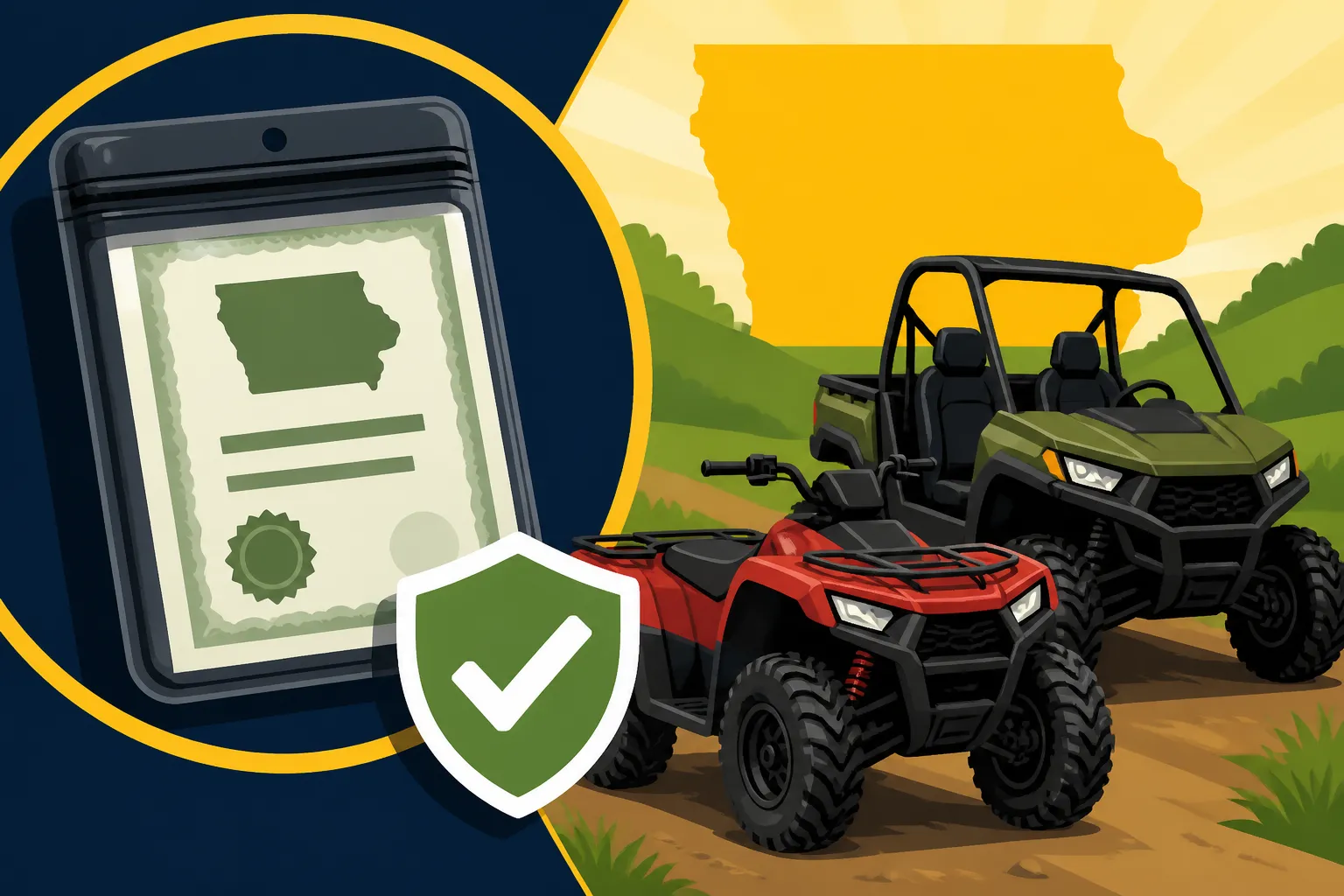
Keeping the Registration Certificate on the Machine
That moment when a conservation officer or sheriff's deputy signals you to pull over can send a jolt through any Iowa ATV or UTV rider. One of their first questions will likely be about your machine's registration. But where exactly are you supposed to keep that little piece of paper, especially when you're out bouncing across trails or cruising a gravel road? This guide will dive deep into Iowa's specific requirements for carrying your ATV or UTV registration certificate, ensuring you're always prepared and compliant, and helping you avoid unnecessary stress or fines.
Why Your Registration Certificate Needs to Be On Hand
It might seem like a small detail, but carrying your registration certificate with you when you ride your ATV or UTV in Iowa isn't just a suggestion—it's a requirement. This isn't about making your life harder; it's about ensuring accountability, verifying ownership, and proving that your machine is legally allowed on public lands or approved roadways. Think of it as your machine's ID card.
The Law's Demand for Proof
Iowa law explicitly states that the registration certificate must be carried on the machine whenever it's being operated. This isn't just for enforcement purposes; it's also a practical measure. If you're involved in an accident, even a minor one, having immediate access to your registration helps identify the machine and its legal owner. It streamlines the information exchange and can prevent delays or complications with any necessary reporting, such as the [Iowa Accident Reporting on Form 542-8093]. Without it, you might find yourself in a sticky situation, trying to explain to an officer why you don't have the required paperwork.
This also applies to situations where an officer might need to verify that your machine isn't stolen. The certificate directly links the machine's VIN to your name, acting as a critical piece of evidence for legitimate ownership. Imagine getting pulled over and not being able to prove the machine is yours; it could lead to a lot of questions and potentially having your ride impounded until proper documentation can be produced. It’s a hassle you definitely want to avoid.
Roadside Stops and Verification
Whether you're exploring one of Iowa's beautiful OHV parks like Gypsum City or simply riding down a designated gravel road, you could encounter law enforcement. During a routine stop, an officer will typically ask for your driver's license, proof of insurance (if applicable for road use), and your ATV or UTV registration. They're looking for that physical piece of paper that confirms you've gone through the proper channels and paid your annual fees.
If you don't have it, even if your machine is fully registered in the system, you could face a citation. It’s often an easy fix to prove registration later, but the initial fine and the time spent dealing with it are completely avoidable by simply having the certificate with you. This is one of those small compliance steps that saves you a big headache down the road. Remember, the officer can't just take your word for it; they need to see the official document.
Preventing Unregistered Operation Fines
The financial implications of not carrying your registration can be significant. Riding an ATV or UTV without a current, visible registration decal or, more importantly, without the certificate on hand, can lead to fines. These aren't just minor penalties; they can quickly add up and put a real damper on your riding season. Iowa wants to ensure that all users are contributing to the maintenance and development of trails, and the registration process is how that funding is managed.
Beyond the initial fine, not having your registration can sometimes trigger a deeper inspection or even temporary impoundment if there's suspicion about the machine's legitimacy. While most riders are law-abiding, the law is designed to catch those who aren't, and your easily accessible certificate is your quick ticket to proving you're doing everything by the book. It’s a much better scenario to present your certificate than to deal with the potential legal and financial repercussions of not having it.
What "On the Machine" Really Means for Iowa ATV & UTV Riders
When the law says your registration certificate must be "on the machine," it's not always as clear-cut as it sounds. We're not talking about taping it to the fender (please don't do that!). Instead, it refers to practical, secure, and accessible storage options that keep the document with the ATV or UTV itself, rather than in your wallet or back home in a drawer.
Practical Storage Solutions for Your Ride
For many riders, finding a good spot means utilizing the built-in storage features of their machine. Side-by-sides often have glove compartments, under-seat storage, or small cargo boxes that are perfect for keeping documents. These areas usually offer some protection from the elements, which is crucial for preserving the integrity of the paper certificate.
If your ATV has a small storage compartment, perhaps under the seat or in a front storage box, that’s an ideal location. For machines without integrated storage, you might consider aftermarket solutions like small, waterproof storage bags that can be securely strapped to a rack or handlebar. The key is to make sure it’s attached to the machine, not just tucked into your jacket pocket, as the latter might be separated from the machine if you step away from it or if it becomes necessary to move the machine without you.
Securing the Certificate from Elements and Loss
Iowa weather can be unpredictable, from dusty summer days to sudden downpours. Your registration certificate, being a piece of paper, is highly susceptible to damage from moisture, mud, or excessive sun exposure. To keep it legible and intact, investing in a small, waterproof document holder or a heavy-duty Ziploc bag is a smart move. This simple step can save you the hassle of needing a replacement down the line, and the small cost is well worth the protection it provides.
Beyond weather, you also need to consider security. While you probably won't be carrying your title or other sensitive documents on your machine, your registration certificate should still be protected from accidental loss. A secure, closed compartment or a tightly zipped and strapped bag ensures it won't bounce out while you're tackling rough terrain. Losing it out on the trail would be a frustrating experience, meaning you'd have to figure out [Iowa ATV Duplicate Registration Cost] and order another one.
Differences for ATVs, UTVs, and Dirt Bikes
The ideal storage location might vary slightly depending on the type of off-highway vehicle you operate. For a UTV, the glove compartment is often the most convenient and secure place. It's usually waterproof, easily accessible, and designed for small items.
For ATVs, which might have less enclosed storage, a small, waterproof pouch secured to the handlebars or a rear rack is a common solution. Some riders even use the tool kit compartment, if it's large enough and waterproof. Dirt bikes, with even less storage space, often require a small, purpose-built fender bag or a hydration pack that has a dedicated, waterproof pocket for documents. The important thing is that the certificate remains with the machine, whether it's a quad, a side-by-side, or a dirt bike, as required for all off-highway vehicles in Iowa.
Here's a quick look at common on-machine storage options:
| Machine Type | Common Storage Options | Pros | Cons |
|---|---|---|---|
| UTV/Side-by-Side | Glove compartment, under-seat storage, integrated cargo box | Weatherproof, secure, easily accessible | Can fill up with other gear |
| ATV/Quad | Under-seat storage, small front/rear storage boxes, handlebar bags | Offers some protection, integrated options | Limited space, may require aftermarket bags |
| Dirt Bike | Fender bag, small tool bag, hydration pack with document pocket | Minimalist, keeps weight central | Very limited space, may not be fully waterproof |
Best Practices for Securing Your Registration Certificate
Now that we understand why and where to carry your registration, let's talk about the best ways to ensure it's always ready when you need it. This goes beyond just tucking it into a compartment; it involves preparation and smart management.
Weatherproofing and Lamination
As we touched on earlier, the elements are the enemy of paper. While you might keep your registration in a waterproof bag, an extra layer of protection never hurts. Consider placing your certificate inside a clear, heavy-duty plastic sleeve or even laminating it. Lamination can be a fantastic way to extend the life of your document, making it impervious to water, mud, and tears. Just make sure the lamination doesn't obscure any important details or holograms, if present.
Some riders even opt to keep the original certificate in a safe, dry place at home and carry a high-quality, clear photocopy on the machine, especially if the original isn't easily replaced. However, always be prepared to produce the original if an officer specifically requests it, which means it should be readily available if you are just carrying a copy. It's often best to carry the original in a truly secure and waterproof fashion to avoid any ambiguity. Using a tool like LawDepot could help you keep digital copies of important documents secure, which could be helpful for your records, even if you can't present a digital copy roadside.
Accessibility for Roadside Checks
Having your registration on the machine is one thing; being able to access it quickly when requested is another. Imagine an officer is waiting, and you're fumbling through a muddy, overloaded storage compartment. It's not ideal. Choose a spot that's secure but also easy to get to without having to unload half your gear.
For example, if your UTV has a glove box, keep it in a top-level pocket or a small dedicated pouch within that compartment. For an ATV, a small, clearly marked pouch on the handlebars or within an easily opened storage box ensures you can present it without delay. The faster you can produce the document, the smoother the interaction will be. You want to make it as easy as possible for both you and the officer.
What to Do If Your Certificate Is Lost or Damaged
Things happen. Certificates get lost, or they get so mud-splattered and waterlogged they become unreadable. If this occurs, it's crucial to act promptly. You'll need to contact your local county recorder's office where your ATV or UTV is registered to request a duplicate. This process might involve a small fee and some paperwork, but it's far better than riding without the necessary proof. For details on how to do this, you might look into topics like [Ordering a Replacement Decal From the Recorder] or [Iowa ATV Duplicate Registration Cost].
While waiting for your replacement, it's generally advised to avoid riding on public lands or roads where registration is required. If you absolutely must ride, carry any proof of your duplicate request (like a receipt or confirmation email) and be ready to explain the situation to law enforcement. This shows due diligence on your part, even if it doesn't entirely exempt you from the requirement.
Digital Backups and Personal Records
While a digital copy on your phone usually isn't sufficient for official roadside verification (they generally want the physical document), having one can be a lifesaver for your personal records. Taking a clear photo of your registration certificate and storing it securely on your phone or in cloud storage can be invaluable if the physical copy is lost or stolen. It provides all the necessary information to request a duplicate and helps you fill out forms like [What Iowa's Registration Form Asks For] with accuracy.
You could also use platforms like LawDepot to create a structured personal record of all your vehicle documents, including your registration, title, and bill of sale. This creates a secure, organized system for all your important paperwork, making it easier to track renewal dates or provide details if you ever decide to sell your machine. Keeping track of documents like your [An Iowa Bill of Sale for an ATV] and the registration certificate together can prove invaluable for transfer of ownership.
Common Pitfalls and How to Avoid Them
Even with the best intentions, riders sometimes fall into common traps regarding their registration certificate. Understanding these pitfalls can help you steer clear of them.
Forgetting the Certificate at Home
This is perhaps the most common mistake. You're excited to hit the trails, you grab your helmet and gloves, but that small piece of paper slips your mind. It’s easy to do, especially if you don't have a dedicated spot for it that you check every time you ride. Building a habit of checking for your certificate, along with your driver's license and any safety certificates, before you load up can prevent this oversight. Imagine heading to a faraway OHV park like Bluff Creek, only to realize you left your certificate on your kitchen counter!
One strategy is to create a pre-ride checklist, either mental or physical, that includes all essential documents. Another is to simply always keep the registration certificate on the machine, in its designated, secure, and waterproof spot. That way, as long as you're taking your machine, the certificate is coming with it. It’s the simplest way to ensure you're never caught off guard.
Expired Registration and Renewal
Another pitfall isn't just forgetting the certificate, but having an expired one. Iowa ATV and UTV registrations expire on December 31st each year, with a renewal window opening in September. Forgetting to renew means that even if you have the certificate, it’s not valid, and you could face penalties. It's a bit like having an expired driver's license. You're still driving, but you're not legal. This is why understanding [Why Iowa Registrations Expire December 31] and [Iowa's September to December Renewal Window] is so important.
Always check the expiration date on your registration decal and certificate well before the end of the year. Many county recorders send out renewal reminders, but it's ultimately your responsibility to ensure your machine is current. If you miss the deadline, you might even incur an [Iowa's Late Registration Penalty], adding to the cost of riding. Renewing your [Iowa ATV Registration Renewal Cost] is a straightforward process, whether you choose [Renewing an Iowa Registration Online] or at a county recorder counter.
Confusing Registration with Title or Safety Certificate
While all important, your registration certificate is distinct from your machine's title or any safety certificate you might hold. The title proves ownership, the registration proves it's legally allowed to operate for the current year, and a safety certificate (like the [Iowa ATV Safety Certificate Requirements] for young riders) proves you've completed necessary training.
You don't typically need to carry your machine's title with you on every ride; that's generally a document kept in a safe place at home. However, you do need to carry your driver's license and, if applicable, your ATV safety certificate. Make sure you know which document is which and that you have the correct ones on your person or on your machine. This clarity prevents fumbling and ensures you're presenting exactly what's requested during a stop.
Incomplete or Illegible Information
Finally, sometimes people have their registration, but it's so worn, faded, or damaged that the information is illegible. This can be just as problematic as not having it at all, as an officer cannot verify the details. Mud, water, and sun can quickly take their toll on paper documents if not properly protected. This underscores the importance of the weatherproofing advice we discussed earlier.
Make sure your certificate is always clear, legible, and intact. If it starts to show significant wear or fading, don't wait until it's unreadable; proactively request a duplicate from your county recorder. Keeping these documents in pristine condition is a simple act of maintenance that saves you from potential trouble down the line. A clean, easy-to-read document makes everyone's day a little smoother.
Disclaimer
This article is for general informational purposes only and does not constitute professional advice. Laws, prices and regulations vary by location and change over time. Consult a qualified professional for guidance on your specific situation.