Where the Iowa Decal Mounts
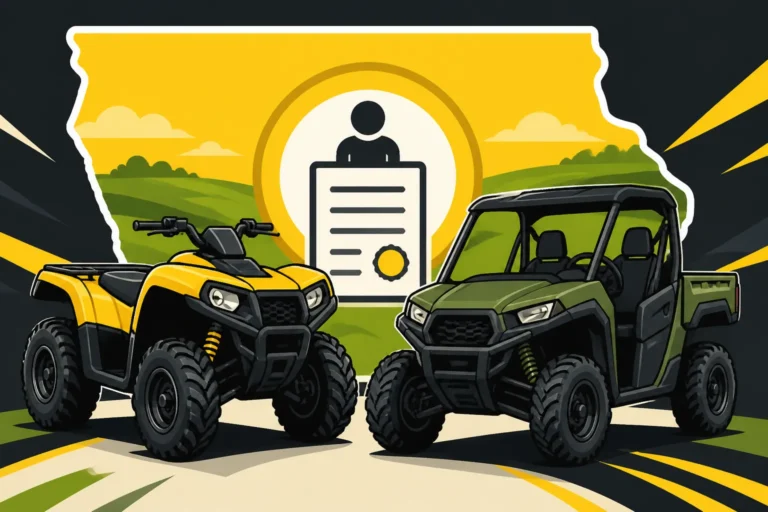
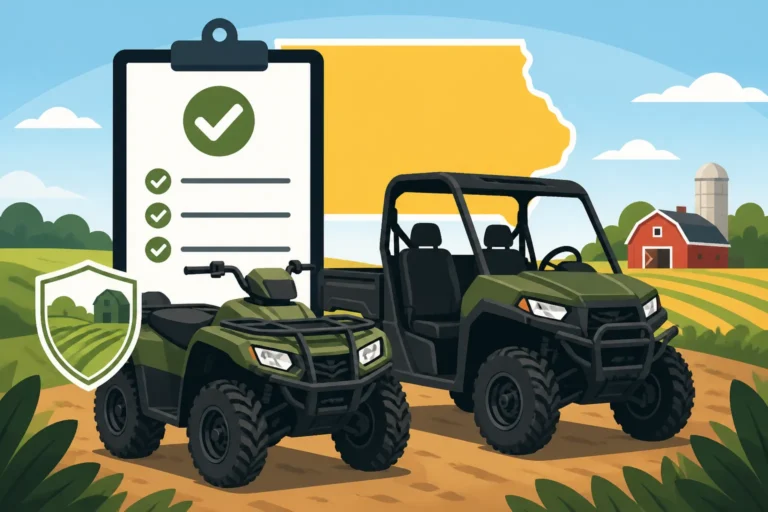
One of the most common head-scratchers for new and even seasoned ATV and UTV owners in Iowa is figuring out exactly where that all-important registration decal is supposed to go. It seems like a simple sticker, right? But the wrong placement can lead to questions from law enforcement or even a citation. This comprehensive guide is here to cut through the confusion and walk you through every detail of correctly mounting your Iowa ATV or UTV decal, ensuring you're always riding legally and confidently.
The Iowa ATV Decal: Your Machine's ID Tag
That little sticker might not look like much, but it's arguably one of the most critical pieces of visual proof that your off-highway vehicle (OHV) is legally registered and ready to hit the trails or designated riding areas in Iowa. Think of it as your machine's license plate, condensed into a small, weatherproof square. Without it, or with it improperly displayed, you're essentially riding an unregistered vehicle in the eyes of the law, even if you’ve paid all your fees.
What the Decal Represents: More Than Just a Sticker
At its heart, the Iowa ATV decal is a visual confirmation that you've completed the annual registration process with your local county recorder. Each decal is uniquely numbered and corresponds to your specific machine's registration record. It shows the current year of validity, immediately signaling to a conservation officer or sheriff's deputy that your machine is good to go. This isn't just a formality; it's part of a broader system designed to manage OHV use, fund trail maintenance, and ensure accountability on Iowa's trails. When you pay for your registration, a portion of those funds actually goes back into improving the very places you love to ride, making that decal a small but mighty contributor to the OHV community.
The decal also carries information that helps quickly identify your machine in case of theft or an accident. While the full registration certificate holds all the intricate details, the decal is the quick reference point. It’s a snapshot of compliance that helps keep Iowa's OHV riding safe and organized for everyone.
Why Proper Placement Matters: Legal and Practical Implications
The Iowa Department of Natural Resources (DNR) and related statutes have specific requirements for where the decal must be placed, and these aren't just suggestions. The primary reason for specific placement is visibility. Law enforcement needs to be able to quickly and easily see that your machine is registered without having to get too close or stop you unnecessarily. If your decal is obscured by mud, tucked away where it can't be seen from a reasonable distance, or placed on a non-approved part of the machine, it defeats its purpose.
Beyond legal compliance, proper placement helps prevent accidental damage or loss of the decal itself. These decals are designed to be durable, but they're not invincible. Placing them on a high-impact area, or a part of the machine that flexes excessively, could cause them to peel or tear. Losing your decal means you'll have to go through the process of obtaining a replacement, which is an extra step and cost you'd rather avoid. Making sure it’s applied to a clean, flat surface, as specified by the regulations, means it’s more likely to stay put and serve its purpose for the entire riding season.
Understanding the Annual Expiration: The December 31st Deadline
It's a common oversight that trips up many riders: the Iowa ATV registration year runs from January 1st through December 31st, regardless of when you actually registered or renewed your machine. This means that if you register your brand-new ATV in June, that decal is still only valid until December 31st of the same year. This fixed expiration date is standardized across all OHVs in Iowa to simplify the renewal process and enforcement. You can read more about this in [Why Iowa Registrations Expire December 31].
This annual cycle can be a source of frustration for those who register late in the season, feeling like they're paying for a full year of registration but only getting a few months of use. However, the system is designed to create a consistent renewal window for everyone. Knowing this deadline well in advance is crucial for planning your renewals and avoiding the hassle of riding an expired machine. Mark your calendars for December 31st each year as a hard stop for your current decal's validity.
The Specifics of Decal Placement in Iowa
Iowa law is quite explicit about where your off-highway vehicle registration decal needs to be displayed. This isn't a "put it wherever it looks cool" situation. Adhering to these rules is crucial for avoiding issues while you're out enjoying Iowa's scenic trails or working on your land. The general thrust is visibility and security, making sure that your machine's registration status is clear to anyone who needs to verify it.
The Rearward-Facing Requirement: Why It's Mandated
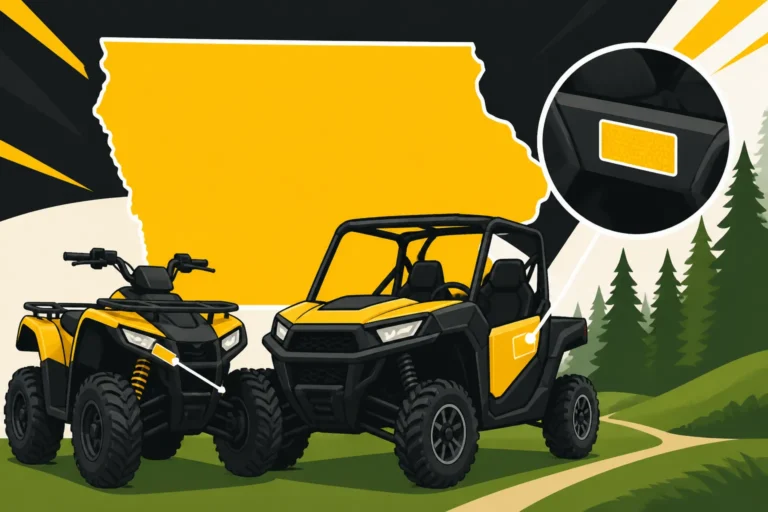
For ATVs and UTVs in Iowa, the official mandate is clear: the registration decal must be prominently displayed on the rear of the machine, facing rearward. This requirement is rooted in practical enforcement. When a conservation officer or sheriff's deputy is observing OHV traffic, especially on trails or staging areas, they often approach from behind or need to quickly assess machines as they pass by. A rear-facing decal makes this identification process quick and efficient, minimizing the need for unnecessary stops. You can dive deeper into the specific administrative code in [Iowa Admin Code 571-46.7 and Decal Placement].
Think about it: if the decal were on the front, it might be covered by equipment, a winch, or simply hard to see if the machine is parked facing away from a trail entrance. On the rear, it's generally unobstructed and easily visible. This placement also helps differentiate ATVs and UTVs from other types of vehicles that might have front-facing tags. It's about standardization and making the job of enforcement simpler, which ultimately benefits all riders by keeping the trails safer and more orderly.
Visible and Secure: What "Visible" Truly Means on Diverse Machines
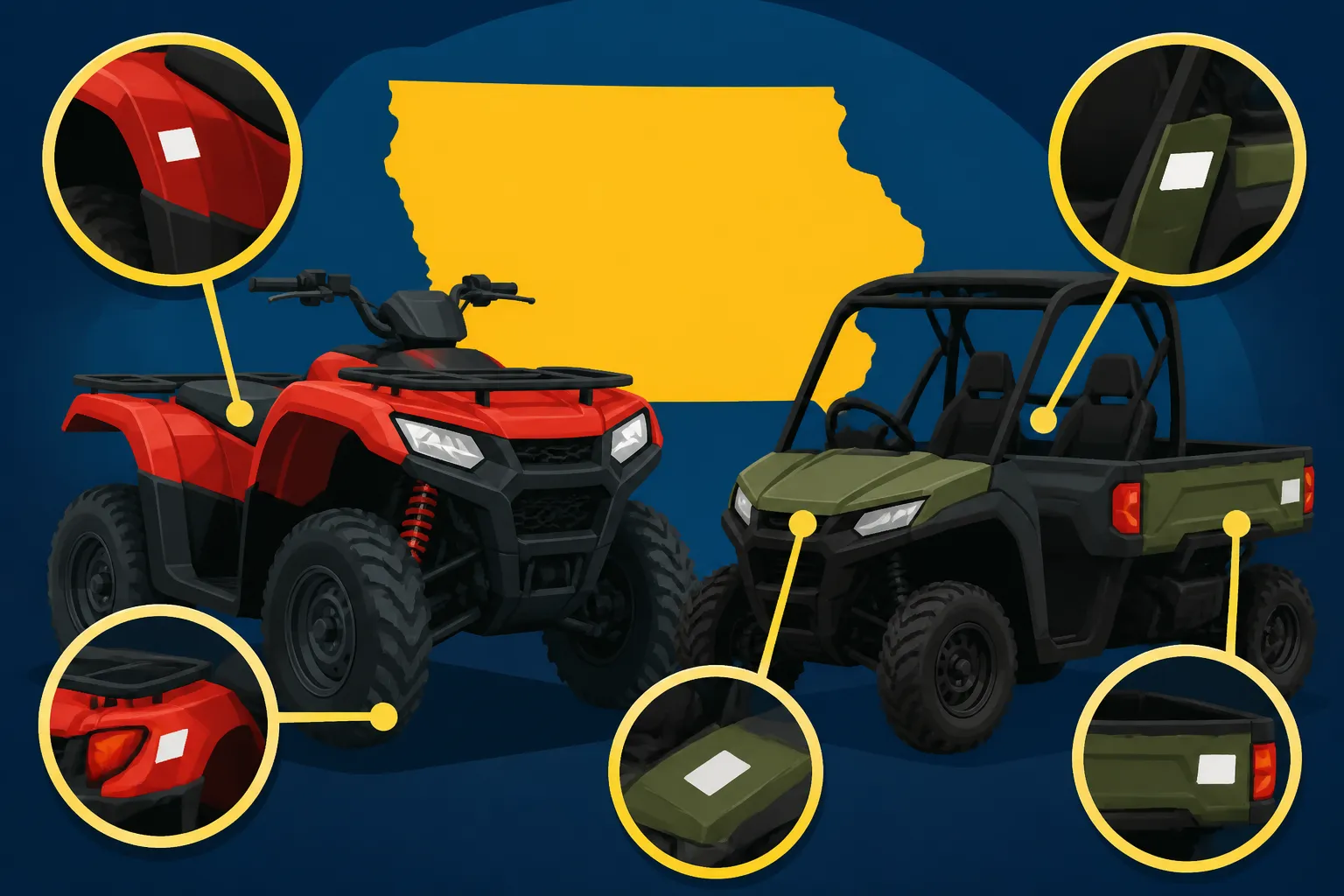
"Visible and secure" is not just a phrase; it's a critical directive. The decal must be mounted in a location that is easily seen by law enforcement personnel from a reasonable distance. This means no hiding it under a cargo rack, behind a spare tire, or on a part of the machine that is frequently covered in mud. It needs to be clean enough to be read and on a stable surface that won't easily dislodge it. For most ATVs and UTVs, the rear fender or a dedicated flat surface on the back of the cargo bed is the ideal spot.
Consider the diversity of machines out there. A sport quad might have a large, flat rear fender, while a utility UTV might have a more complex rear end with hitches and dump beds. The spirit of the law requires you to find the most prominent, flat, and durable rearward-facing surface available.
Here's a breakdown of common scenarios:
- Standard ATVs/Quads: The rear fender is almost always the go-to spot. Ensure it’s on a flat section, away from exhaust heat, and clean before application. The decal should not be wrapped around a curved edge or placed where it will be abraded by gear. [A Decal on the Rear of an Iowa Machine] goes into more detail on this specific application.
- Side-by-Sides/UTVs: These often have more options. A flat section on the tailgate, the rear of the cargo box, or a dedicated panel is usually best. Avoid placing it on parts that frequently move, like a dumping bed, unless that section is consistently in a visible, rearward-facing position when operating.
- Dirt Bikes/Off-Road Motorcycles: For these machines, which are also considered OHVs in Iowa, the rear fender or a dedicated flat plate (like a number plate area) is typically used. Again, it must face rearward and be clear of obstructions.
Examples of Correct and Incorrect Placement: Scenarios for Quads, Side-by-Sides, Dirt Bikes
Let's illustrate with some concrete examples to make this clearer. Understanding what not to do is often as helpful as knowing what to do.
Correct Placement Examples:
- Quad: John just bought a new Honda Foreman. He cleans off the upper, flat section of his rear fender, just above the taillight. He presses the decal firmly onto this clean, dry surface, ensuring it faces directly backward. When viewed from behind, the decal is instantly legible.
- Side-by-Side: Sarah owns a Polaris RZR. She chooses a flat panel on the rear of her UTV's bed, specifically designed for registration stickers, next to the taillight assembly. It's protected from direct impact but is perfectly visible from the rear.
- Dirt Bike: Mike's KTM dirt bike has a small, flat area on the rear plastic fender. He applies his decal there, making sure it isn't obscured by his backpack or any other riding gear he might carry.
Incorrect Placement Examples (and why they're wrong):
- Under the Seat/Inside a Storage Box: This is an absolute no-go. Even if it's technically "on the machine," it's not visible without manipulation, completely defeating the purpose of the decal. A deputy would have to stop you and ask to see it, which is precisely what the visible decal aims to prevent.
- Wrapped Around a Curved Fender Edge: While it might seem like a good spot, decals applied to highly curved surfaces often bubble, peel, or tear. They also become harder to read accurately, especially the year and number. The "secure" aspect is compromised here.
- On the Front Fender or Hood: The law specifies rearward-facing. A decal on the front of an ATV, while visible, does not meet the legal requirement for rear placement.
- Obscured by Accessories: Dave put his decal on the rear rack of his ATV, but then he installed a large cooler bag that completely covers it. Even though it's technically on the rear, it's no longer visible, making it an incorrect display. He'd need to move either the decal or the bag.
- On the Helmet: Your helmet is part of your gear, not the machine itself. The decal identifies the vehicle, not the rider. Never put your vehicle registration decal on your helmet.
| Feature | Correct Placement Examples | Incorrect Placement Examples | Why It's Wrong |
|---|---|---|---|
| Location | Rear fender (ATV), rear cargo bed panel (UTV), rear number plate (dirt bike). | Front bumper, side panel, inside a storage compartment, on the rider's helmet. | Law requires rearward-facing for quick identification. Obscures visibility. Doesn't identify the machine. |
| Visibility | Clearly legible from a reasonable distance, unobstructed. | Covered by gear, mud, spare tire, or wrapped around a tight curve. | Defeats the purpose of quick visual verification. Illegible or easily missed. |
| Security/Durability | Applied to a clean, flat, stable surface; away from extreme heat. | On a flexible part, susceptible to frequent impact, or uncleaned surface. | Decal may peel, tear, fall off, or become damaged, requiring replacement. Application issues compromise adhesion. |
Beyond the Sticker: Carrying Your Registration Certificate
While the decal proudly displayed on your machine is the first line of defense in showing you're legal, it's only one part of the equation. Just as you wouldn't drive a car with only a license plate and no physical registration card, your OHV also requires you to carry the actual registration certificate when you're out riding. This piece of paper is just as vital, providing all the detailed information about your machine and its legal status.
The Importance of the Physical Card: More Than Just the Decal
The physical registration certificate is the official document that proves ownership and registration with the county recorder. It contains important details such as your name, address, the machine's vehicle identification number (VIN), make, model, and the registration expiration date. While the decal confirms that your machine is registered for the current year, the certificate proves who registered it and the specific details that match the machine.
If you're stopped by law enforcement, they'll likely ask to see both your decal and your registration certificate. The decal allows for a quick visual check, but the certificate provides the comprehensive legal proof. It's the full story behind the sticker. This is particularly important in situations where a machine might be questioned, such as if there's a report of a stolen vehicle, or if an accident occurs. Having the certificate on hand ensures you can quickly verify your machine's legitimate status and expedite any necessary processes. For a more detailed look at the information required, you can refer to [What Iowa's Registration Form Asks For].
Where to Keep the Certificate: Practical Advice for the Trail
So, where's the best place to keep this important document? The key is to keep it accessible, protected from the elements, and on your person or securely on the machine. You don't want it getting wet, torn, or falling out on a bumpy trail.
Here are some practical options:
- Waterproof Wallet or Pouch: This is often the safest bet. Many riders carry a small, waterproof pouch specifically for documents like registration, ID, and maybe a small amount of cash. This can be kept in a jacket pocket, a fanny pack, or a secure storage compartment on the ATV/UTV.
- Secure Compartment on the Machine: Many modern ATVs and UTVs come with small, weatherproof storage compartments, often under the seat, in the dashboard, or in a dedicated glove box. If you choose this option, ensure the compartment is truly watertight and latches securely to prevent accidental loss on rough terrain.
- Within a Ziploc Bag Inside a Backpack: If you're carrying a backpack or hydration pack, a Ziploc bag provides an extra layer of protection against moisture. Just make sure the backpack is securely fastened to you or the machine.
What you shouldn't do is simply stick it in an open pocket where it could easily fall out, or leave it exposed to rain, mud, or dust. The goal is to keep it in pristine condition so that all information is legible if you need to present it. Remember, this certificate is required to be carried on the machine or on the person operating the machine. This means it must be readily available, not at home in a filing cabinet. You can find more details on this requirement in [Carrying the Certificate on an Iowa Ride].
Digital vs. Physical: Iowa's Stance
While many states are moving towards digital proofs of insurance and even registration for automobiles, when it comes to off-highway vehicles in Iowa, the emphasis remains on the physical document. As of the current understanding, Iowa law primarily requires the physical registration certificate to be carried.
While having a photo of it on your phone might be helpful in a pinch, it generally does not legally substitute for the actual paper document. The concern often lies with verifying the authenticity of a digital image and the ability for law enforcement to quickly process information from a screen that might be cracked, wet, or out of battery on the trail. Therefore, always err on the side of caution and carry the original paper certificate. It's a small inconvenience that can prevent a much larger headache if you're ever stopped.
Renewing Your Iowa ATV Registration and Getting a New Decal
The calendar rolls over every year, and with it comes the annual task of renewing your ATV or UTV registration in Iowa. It's a critical step that ensures your continued legal enjoyment of trails and designated riding areas. Understanding the process, the timing, and what to expect is key to avoiding an expired decal and potential fines. This routine helps fund the very trails you love, so it's a necessary part of being a responsible rider.
The Annual Renewal Cycle: Understanding the September-December Window
As we discussed, all Iowa ATV and UTV registrations expire on December 31st each year, regardless of when they were initially obtained. To give riders ample time to renew without feeling rushed at the end of the year, Iowa offers a generous renewal window. This period typically opens on September 1st and runs through December 31st. This is when you can process your renewal for the upcoming year's decal. Knowing this window, elaborated further in [Iowa's September to December Renewal Window], allows you to plan ahead and avoid the last-minute scramble.
Why September 1st? It's designed to provide a full four months to complete the process, giving everyone plenty of opportunity before the busiest holiday season kicks in. Renewing early within this window means you'll have your new decal in hand well before the new year, ensuring there's no lapse in your registration or any period where you're riding with an expired sticker. It also helps the county recorder offices manage the workload more effectively.
Online vs. In-Person Renewal: Pros and Cons, Process
Iowa offers a couple of convenient ways to renew your OHV registration, catering to different preferences and situations.
1. Online Renewal:
- Pros: This is often the quickest and most convenient option. You can do it from the comfort of your home, at any time of day or night. It's ideal for those with busy schedules or who live far from their county recorder's office. Many find the online system intuitive and easy to navigate. You can typically find the official online portal through the Iowa DNR website. [Renewing an Iowa Registration Online] offers a full walkthrough of this process.
- Cons: You'll need to wait for your decal to arrive in the mail, which can take a week or two. If you're planning a trip right at the turn of the year, this waiting period could be an issue. There might also be a small convenience fee for online transactions.
- Process: You'll typically enter your current registration number, personal information, and payment details. Once submitted, you'll receive a confirmation, and your new decal will be mailed to your registered address.
2. In-Person Renewal at a County Recorder's Office:
- Pros: The biggest advantage here is instant gratification. You'll walk out of the office with your new decal in hand. This is perfect if you're a procrastinator, realize your decal has expired right before a planned ride, or simply prefer face-to-face interaction. It also gives you an opportunity to ask questions if you have any unique circumstances. [Renewing at a County Recorder Counter] covers this method in detail.
- Cons: You're limited to the office's business hours and may encounter wait times, especially closer to the December 31st deadline. It requires travel and time out of your day.
- Process: Bring your current registration certificate (or at least your registration number and VIN) and a valid form of identification. The recorder's staff will process your renewal, collect the fees, and issue you the new decal and updated certificate on the spot.
Waiting for Your New Decal to Arrive: What to Expect
If you choose to renew online or by mail, there's a short waiting period before your new decal physically lands in your mailbox. Generally, you should anticipate it taking about one to two weeks for the decal to arrive after your renewal is processed. This waiting period accounts for processing time at the DNR or county recorder's office, as well as standard postal delivery. You can delve into the specifics of this timeline in [Two Weeks Before an Iowa Decal Arrives].
This is an important consideration for planning your riding activities. If you renew in mid-December and plan to ride on January 1st, you might find yourself without the new decal. It's always best to renew well in advance, ideally in September or October, to ensure you have your new sticker mounted before the old one expires. Riding with an expired decal, even if you've already paid for the renewal, technically puts you in violation until the new decal is properly displayed.
Common Decal-Related Challenges and How to Solve Them
Even with the best intentions, things can go wrong with your ATV or UTV decal. Whether it's the result of harsh trail conditions, an unfortunate accident, or simply the passage of time, dealing with a compromised decal can be a nuisance. Understanding the common issues and knowing how to rectify them quickly will save you headaches and keep you riding legally.
Lost, Damaged, or Faded Decals: How to Get a Replacement
Life on the trails can be tough on equipment, and your decal is no exception. It can get scuffed, peeled off by a branch, caked in mud to the point of illegibility, or simply fade over time under the relentless Iowa sun. If your decal is no longer clearly visible, or if it's completely gone, you need to replace it.
Here’s how to handle it:
- Contact Your County Recorder: The first step is to get in touch with the county recorder's office where your ATV or UTV is registered. They are the authority responsible for issuing these decals.
- Request a Duplicate Decal: You will need to request a duplicate registration decal. There is typically a small fee associated with this service, which covers the cost of the new decal and administrative processing.
- Provide Necessary Information: Be prepared to provide your machine's registration number, VIN, and possibly proof of ownership or your ID. The recorder's office will need to verify your existing registration to issue a duplicate.
- In-Person or Mail: You can usually obtain a duplicate either in person at the recorder's office (getting it immediately) or by mail (which will involve a waiting period similar to a new registration). [Ordering a Replacement Decal From the Recorder] provides specific steps for this process.
It’s crucial to address a damaged or lost decal promptly. Riding with an illegible or missing decal is the same as riding unregistered, which can lead to fines. Don't wait until the last minute or until you get stopped to take action.
What Happens If You Ride Without a Decal: Penalties and Enforcement
Riding an ATV or UTV in Iowa on public land (which includes designated OHV parks, trails, and certain public roads) without a valid and properly displayed registration decal is a violation of state law. This isn't just a slap on the wrist; it can result in penalties.
- Fines: The most immediate consequence is typically a monetary fine. The amount can vary, but it's always more expensive than the registration itself or a duplicate decal.
- Impoundment: In some cases, especially for repeat offenders or if other violations are present, law enforcement has the authority to impound your machine. This not only incurs additional towing and storage fees but also a massive inconvenience.
- Court Appearances: Depending on the severity or accompanying infractions, you might be required to appear in court.
Enforcement is primarily carried out by Iowa DNR conservation officers and county sheriff's deputies. They are trained to look for proper registration and decal placement. A common frustration is being cited for having an expired decal, even if you just renewed online and are waiting for the new one. This highlights the importance of renewing early and having the current year's decal affixed before hitting the trails. Riding on a decal that expired at New Year, even if you've renewed, is still technically a violation until the new decal is displayed.
Transferring a Decal (Spoiler: You Can't): Understanding Machine-Specific Registration
A common misconception, especially among those new to OHV ownership, is that a registration decal can be transferred from one machine to another, or from one owner to another. This is unequivocally not the case in Iowa.
Your ATV or UTV registration decal is specific to:
- The Machine: Each decal is tied directly to a unique VIN. It identifies that specific vehicle, not a generic "ATV."
- The Registration Period: The decal displays the year for which the registration is valid.
Therefore:
- Selling a Machine: When you sell your ATV or UTV, the current registration decal stays with the machine until its expiration (December 31st of that year). The new owner will need to transfer the title into their name and, in doing so, will likely be prompted to register the machine anew, receiving a fresh decal in their name for the next registration cycle. They cannot simply continue riding on your old decal indefinitely.
- Buying a New Machine: If you buy a new ATV or UTV, you cannot take the decal off your old machine and put it on the new one. The new machine will require its own separate registration and a new decal issued under its unique VIN.
This machine-specific registration system helps prevent fraud, ensures that each vehicle contributes its share to the OHV fund, and maintains clear records of ownership and compliance. This differs from some other states or vehicle types, so it's a critical point to understand for Iowa riders.
The Bigger Picture: Iowa's Registration System and Where Your Money Goes
Understanding where your decal mounts is important, but so is understanding the infrastructure behind it. Iowa's ATV and UTV registration system is a carefully structured process designed to manage recreational and utility off-highway vehicle use, ensure safety, and, crucially, fund the development and maintenance of riding opportunities across the state. It’s not just about a sticker; it's about contributing to the OHV community.
The Role of the County Recorder: Why They Handle It
Unlike some states where vehicle registrations are handled solely by a state-level Department of Motor Vehicles (DMV) or equivalent, Iowa delegates OHV registration to the individual county recorder's offices. You can read more about this in [Registering at an Iowa County Recorder]. There are 99 counties in Iowa, and each has its own recorder's office. This decentralized approach offers several benefits:
- Local Accessibility: It makes the registration process more accessible for residents, as they can go to their local county office rather than traveling to a distant state facility.
- Community Connection: The county recorders are familiar with their local communities and can often provide more personalized assistance.
- Historical Context: This system has deep historical roots in Iowa, where various local record-keeping functions, including property records and vital statistics, have traditionally been managed at the county level. OHV registration naturally fell into this existing structure.
So, while you might hear people refer to "DNR registration," the actual transaction happens at your county recorder's office. The DNR sets the regulations, but the county recorders are the ones who collect the fees, process the paperwork, and issue your decal. [Why a County Recorder and Not the DMV] clarifies this distinction further.
Understanding the Fee Breakdown: What You're Actually Paying For
When you register your ATV or UTV in Iowa, you’re not just paying a flat fee. The total amount is typically a combination of several smaller fees, each serving a specific purpose. Understanding this breakdown can help you appreciate where your money goes.
Here’s a typical breakdown of the fees you might encounter, though specific amounts can change, so always check with your county recorder for current figures:
- Base Registration Fee: This is the core annual fee for registering your machine. It's the largest component and directly contributes to the OHV fund. [The $15 Base Fee Inside an Iowa Registration] provides more detail on this specific fee.
- Writing Fee: A small administrative fee charged by the county recorder's office for processing the paperwork. [The $2 Writing Fee on Every Registration] explains this charge.
- License Agent Fee: Often a small, fixed fee added to the transaction, particularly if the recorder's office acts as a license agent for the state. [Why a $1 License Agent Fee Is Added] delves into its purpose.
- DNR Administration Fee (NRC): This fee contributes to the overall administration of natural resource programs, including those related to OHVs. [The Iowa NRC Administration Fee] gives a deeper look.
- Sales Tax (if applicable): If you're registering a newly purchased machine (new or used), you'll also pay Iowa sales tax at the time of registration if it wasn't collected by a dealer or if it's a private sale.
- Titling Fee: For new machines or transfers of ownership, there's also a separate fee for titling the vehicle in Iowa. This is a one-time fee per transfer. [Iowa's $13.50 ATV Title Fee] provides specifics on this.
It's common for these fees to be bundled into one total payment at the recorder's counter. While it might seem like a lot for a sticker, each component plays a part in funding the OHV ecosystem in Iowa.
Funding Iowa Trails: The Impact of Registration Fees
Perhaps one of the most compelling reasons to register your ATV or UTV is the direct impact your fees have on the availability and quality of riding opportunities. The vast majority of the base registration fee goes into the Iowa Off-Highway Vehicle Fund. This fund is specifically earmarked for projects that benefit OHV riders across the state.
What does that mean in practice?
- Trail Development: New trails are purchased, designed, and constructed using these funds.
- Trail Maintenance: Existing trails require constant upkeep—clearing brush, repairing erosion, maintaining signage, and ensuring safety.
- OHV Park Operations: Many of Iowa's designated OHV parks receive funding from this pool to cover operational costs, facility improvements (like restrooms, parking lots, and camping areas), and equipment.
- Safety & Education: Funds can also support OHV safety programs and educational initiatives, helping to create a more responsible riding community.
Without these registration fees, the state would have very limited resources to support OHV recreation. So, every time you pay your registration and affix that decal, you're directly contributing to the future of ATV and UTV riding in Iowa. It's an investment in your passion and the collective good of the riding community.
Navigating Special Circumstances with Decals
While the general rules for Iowa ATV and UTV decals apply broadly, there are always unique situations that pop up. Understanding these exceptions and special cases is crucial for both Iowa residents and visitors to ensure compliance and avoid unexpected issues. From out-of-state riders to machines used primarily for farming, Iowa's regulations account for a variety of scenarios.
Nonresident User Permits: Different Decals, Similar Display Rules
If you're visiting Iowa from another state and plan to ride your ATV or UTV on Iowa's public trails or designated OHV areas, your home-state registration typically isn't enough. Iowa requires nonresidents to obtain a [Iowa's Nonresident User Permit]. This is essentially a temporary registration for your machine to use Iowa's OHV facilities.
- The Permit Itself: This permit usually comes as a unique decal, distinct from the resident Iowa registration decals. It will clearly indicate its nonresident status and validity period.
- Display Rules: Even though it's a different decal, the display rules are largely the same: it must be prominently displayed on the rear of your machine, facing rearward, and be clearly visible. The principle of quick, easy identification by law enforcement remains paramount. You should also carry your home-state registration certificate and your nonresident permit certificate with you when riding.
- Where to Get It: Nonresident permits can typically be purchased online through the Iowa DNR's licensing system or in person at certain authorized vendors or county recorder's offices.
It’s important to clarify that this nonresident permit doesn't replace your home state's registration; it's an additional requirement for operating in Iowa. Always make sure both your home-state registration and the Iowa nonresident permit are current and properly displayed/carried.
Machines Exempt from Decals: Agricultural Use, etc.
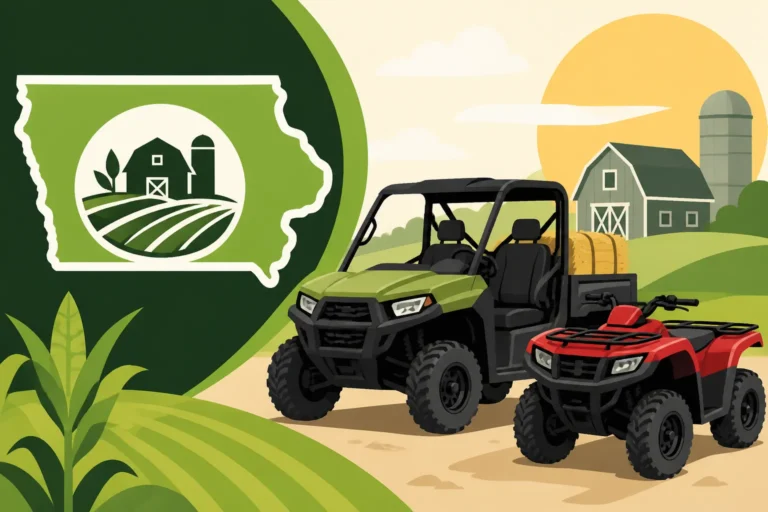
Not every off-highway vehicle in Iowa needs a registration decal. The state recognizes certain exemptions, most notably for machines used primarily for agricultural purposes. This exemption is crucial for farmers and agricultural workers who rely on ATVs and UTVs as essential tools for their livelihood.
- Implement of Husbandry Exemption: The most common exemption applies to ATVs and UTVs that are exclusively or primarily used as an "implement of husbandry" on private land or within a certain distance of the owner's farm. This means the machine is used for tilling, planting, harvesting, or other farming operations. If a machine qualifies as an implement of husbandry, it generally does not require an Iowa registration decal. However, there are strict rules about what constitutes an implement of husbandry and how it can be operated, especially when crossing public roads. For example, if you're riding your machine only on your own timber without ever touching public land, it also doesn't need a registration decal. You can get a much deeper understanding of this by reading [The Implement of Husbandry Exemption in Iowa] and [Riding Iowa Private Land Without Registering].
- Other Limited Exemptions: There might be other, less common exemptions for specific types of government or municipal machines, or for machines used exclusively in controlled, private, non-recreational settings.
Crucial Caveat: The moment an exempted machine is used for recreational purposes on public OHV trails or parks, or operated on public roads beyond the scope of the agricultural exemption (e.g., more than [2 Miles From the Farm in Iowa] for bona fide agricultural purposes), it immediately loses its exemption and requires a valid registration and decal. There's no gray area here; the intended use and location of operation dictate the registration requirement.
Temporary Permits and New Purchases: Getting on the Trail Quickly
When you've just purchased a new or used ATV or UTV, you're usually eager to hit the trails. However, the full registration and titling process can take a few days, especially if you buy privately or during a busy period. Iowa does not typically issue "temporary tags" in the same way that cars get paper plates from a dealer.
- Dealer Purchases: If you purchase from an Iowa dealer, they will often handle the initial titling and registration paperwork for you. They will submit it to your county recorder, and your official decal will be mailed to you. You are generally expected to wait for the physical decal to arrive before riding on public land. Dealers are typically well-versed in [Registering a Machine Bought at an Iowa Dealer].
- Private Sales: For a private sale, the responsibility falls squarely on the buyer to complete the titling and registration at their county recorder's office. This means taking the [An Iowa Bill of Sale for an ATV] and the assigned title (if applicable) to the recorder. Again, you'll generally wait for the decal to be mailed or be issued it on the spot if you visit the office. [Buying a Used ATV in Iowa] covers this process in depth.
- The Waiting Game: Because there isn't a widely available temporary permit system for OHVs, the best advice for new owners is to process their registration as quickly as possible and factor in the [Two Weeks Before an Iowa Decal Arrives] waiting period. Planning your first ride a couple of weeks after completing registration ensures you have your decal properly mounted and avoids any legal issues. Resist the urge to ride unregistered, even "just once," as the penalties can far outweigh the inconvenience of waiting.
Disclaimer
This article is for general informational purposes only and does not constitute professional advice. Laws, prices and regulations vary by location and change over time. Consult a qualified professional for guidance on your specific situation.