Two Tracks Beside the Cedar River
If you’re looking for a ride along the Cedar River and expect a long, continuous trail, it helps to know what Paul Huting Recreation Area actually offers: a compact off-highway riding area with two natural-terrain tracks near Waterloo. This guide explains how to plan a visit, what to check before loading up, and how to make the most of the ride without assuming every route or facility is open.
What to expect at Paul Huting Recreation Area
Two natural-terrain tracks, not a river-long trail
Paul Huting Recreation Area is the Waterloo riding area associated with the Cedar River. Its appeal is the chance to ride natural terrain in a designated OHV setting, rather than follow a lengthy trail corridor beside the river. The park is known for two natural-terrain tracks, so it’s worth setting expectations before you make the drive: this is a local riding destination, not a route that carries you for miles along the Cedar.
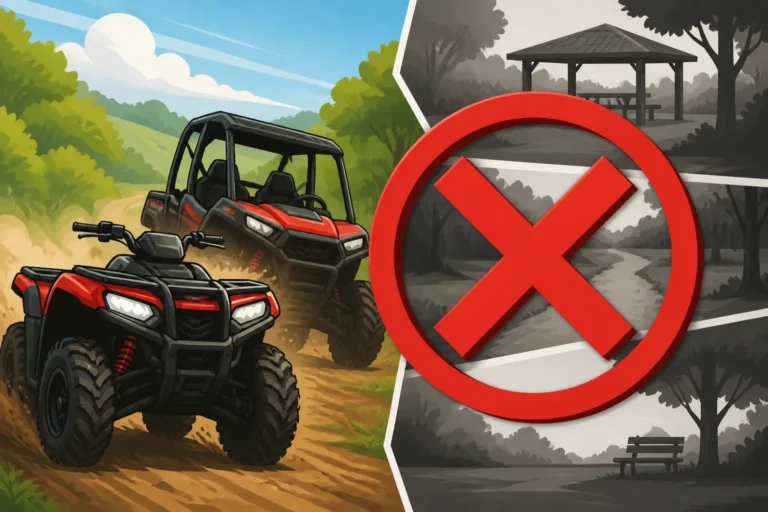
The river is part of the setting, but don’t treat the riverbank as an invitation to ride wherever you like. Stick to marked riding areas and follow posted signs. A path that looks like a shortcut may be closed, outside the riding boundary, or unsuitable after rain. The safest plan is to check the official park information and the signs at the entrance before unloading.
The area is also associated with the former Riverview OHV Park name. If you see older references to Riverview while researching a ride, that’s why. For related background on the site, see [Why Riverview Became Paul Huting Recreation Area] and [Paul Huting's 180 Acres].
A good fit for a focused ride
A park with two tracks can make for a satisfying outing, but it isn’t the same experience as a sprawling network of trails. Riders who enjoy repeating a route, comparing lines, or practicing at a natural-terrain facility may appreciate the format. If your group wants to cover a new trail loop for hours, make sure the park’s current layout and riding options match that plan.
That distinction matters when you’re bringing a mixed-experience group. A newer rider may want time to get comfortable with the terrain, while an experienced rider may prefer a more challenging pace. Agree on expectations before arriving, and don’t let the faster riders pressure someone into taking a line that feels beyond their ability. Ride within the posted rules and your own comfort level.
| Before the visit | What to keep in mind |
|---|---|
| Riding area | Paul Huting is known for two natural-terrain tracks |
| Setting | The park is near the Cedar River, but that does not mean riding is allowed along the riverbank |
| Park status | Check official information and posted signs before unloading |
| Riding conditions | Rain and soft ground can affect traction and trail access |
| Safety | Confirm the park’s current helmet and equipment rules |
| Navigation | Use maps as a planning aid, not as permission to ride outside marked areas |
Plan the ride before you leave home
Check access, closures, and current rules
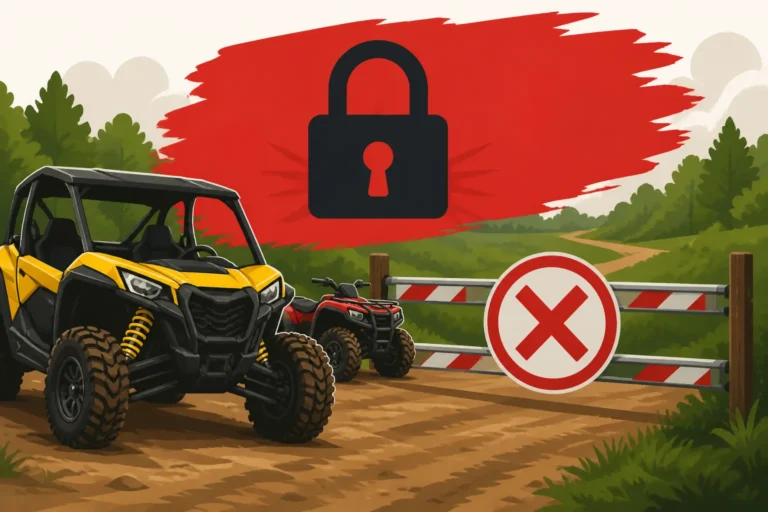
The frustrating version of a riding day is spending time securing a machine, loading the trailer, and driving to the park only to find the conditions have changed. Weather can affect natural terrain quickly. A wet surface may become slick, rutted, or vulnerable to damage, and park operators may close areas to protect the trails or tracks.
Before departure, look for official park updates and any Iowa DNR notices that apply. A mapping app such as onX Offroad can help you get oriented and plan your approach, but don’t rely on any third-party map as proof that a route is open or legal. Confirm the park’s status through official channels, then follow the signs you see onsite. For broader advice on checking conditions, see [Iowa Trail Conditions Before You Ride] and [Iowa Trail Closures to Check First].
Also check whether the rules have changed for the kind of machine you plan to bring. An ATV, UTV, dirt bike, or youth machine may have different requirements depending on the location and the applicable rules. Don’t assume that a machine allowed at one Iowa OHV park automatically has the same access at another.
Choose a route to the park, not an improvised ride to it
A GPS map can make nearby roads and tracks look like convenient connections. That doesn’t mean an off-road vehicle may legally use them. Plan to transport your machine to the designated riding area rather than riding it on public roads to reach the park. Iowa road-use rules can be different from the rules inside a designated OHV area. If you’re unsure about the distinction, review [Iowa Rules for Riding to an OHV Park] and [Iowa's Eight Designated OHV Parks].
Use onX Offroad or another mapping tool to help with general trip planning, then confirm the final approach using reliable road directions and park information. If the app shows a line near the Cedar River or across private land, treat it as a prompt to investigate—not as authorization to ride there. Property boundaries, public access, and approved riding routes are separate questions.
For a first visit, save the address or directions before you leave, especially if you’re towing and don’t want to be sorting out a phone signal from the driver’s seat. Share the plan with your group, identify a place to meet if someone gets separated, and keep the machine secured until you reach the approved staging area.
Ride safely on natural terrain
Helmets and protective gear matter here
Helmets are mandatory at Paul Huting Recreation Area. Check the park’s current requirements before your trip, and make sure each rider has a properly fitting helmet rather than assuming a passenger or younger rider can borrow one at the last minute. A loose helmet that shifts when the rider turns their head is not a good substitute for well-fitted protective gear.
Natural-terrain riding can change from one section to the next. A surface that looks straightforward from the entrance may include uneven ground, loose material, or a line that’s harder to manage than it first appears. Wear eye protection, gloves, sturdy footwear, and clothing suitable for a fall or flying debris. Keep the gear requirement in mind for every person in the group, not only the rider who owns the machine.
If you’re bringing a child or a rider who is new to OHV parks, talk through the basics before starting: how to stop, how to signal a problem, and when to wait for a clear path. Give them time to get used to the controls in an appropriate area, and don’t use another rider’s pace as a measure of what they should attempt.
Keep your group together and ride within your limits
Before setting out on a track, agree on a simple group routine. Decide who leads, who rides last, and where everyone will stop if someone needs help. A slower rider can feel pressured when faster machines disappear ahead, especially if the group hasn’t discussed what to do at a fork or staging point. Frequent check-ins are easier than trying to reconnect after someone has taken a wrong turn.
Give other riders room. Don’t stop in a blind spot or where a rider behind you may not have time to react. If you need to pause, move to a safe location and make your presence clear. Keep a respectful distance from people on foot and other park users, and follow any one-way or direction signs. If conditions make a section feel unsafe, turn back or wait rather than trying to prove the machine can get through.
For families and groups with different riding abilities, a conservative first lap is useful. It lets everyone see how the surface feels and gives the group a chance to adjust expectations. A machine’s power, width, tires, and rider experience can all affect how confidently someone handles a section. For more family-planning ideas, see [Riding With Children at an Iowa Park].
Make the Cedar River outing easier
Pack for the whole trip, not just the ride
A smooth visit starts with a few unglamorous checks. Make sure the trailer’s tie-downs are secure, the machine is in sound working condition, and everyone has water and the protective gear they need. Bring basic tools and any supplies appropriate for your machine, but don’t assume that a park will have fuel, repairs, or equipment available onsite. Plan those needs before leaving home.
Keep your phone charged, but don’t make it your only navigation or emergency plan. Save important directions, tell someone where you’re going, and agree on a meeting point. If you use onX Offroad to review the area, download or prepare the information you need before reaching a spot where your phone may have a weak signal. Again, use mapping to orient yourself—not to override park boundaries, signs, or official closure notices.
It’s also worth thinking about cleanup and transport. Mud and dust can accumulate quickly on a ride, and a machine that looks fine at the trailhead may need attention before it goes back on the road. Secure loose gear, check that the trailer load remains stable, and avoid carrying mud or debris onto public roads where it could create a hazard.
Protect the tracks for the next visit
Natural terrain is especially vulnerable when it’s wet. If the surface is soft enough to rut, spinning tires can damage the riding area and make it worse for everyone who follows. A closed track is a closed track—even if it appears passable, and even if another rider has gone through. Respect barriers and staff instructions, and don’t cut around a closure.
Responsible riding also means staying on designated routes. Don’t create a new line through vegetation or head toward the river because it looks like a quieter place to ride. A few minutes saved by leaving the marked area can create problems for land managers and other users, and may put you somewhere you’re not allowed to be.
Before planning a return trip, check the park’s status again rather than assuming conditions are unchanged. Keep official notices handy, review the posted rules on arrival, and be prepared to change plans if weather or maintenance affects access. For a wider look at options around the state, [Where to Ride an ATV in Iowa] can help you compare this focused riding area with other destinations.
Disclaimer
This article is for general informational purposes only and does not constitute professional advice. Laws, prices and regulations vary by location and change over time. Consult a qualified professional for guidance on your specific situation.