Looking for Riverview and Finding Paul Huting
If your map search for Riverview Recreation Area leads to confusing results, you may be looking for Waterloo’s Paul Huting Recreation Area, the OHV riding area associated with the former Riverview name. This guide explains how to identify the right destination, plan your approach, and check the details that matter before loading your ATV or UTV.
Why Riverview and Paul Huting can appear to be different places
Understand the name change before you navigate
Riders may encounter both “Riverview” and “Paul Huting Recreation Area” when searching for the Waterloo riding area. The names can appear in older references, saved map pins, or conversations among riders, which makes it easy to wonder whether they point to separate destinations. They refer to the same riding area, not two parks you need to choose between.
That matters when you are planning a first visit. If a friend says “Riverview” but a newer listing says “Paul Huting,” do not assume one name is wrong or that the trail system has moved. Search both names, compare the results, and look for information that clearly identifies the Waterloo OHV area. [Why Riverview Became Paul Huting Recreation Area] explains the naming history.
A saved pin can still be useful, but treat it as a starting point rather than proof that you have the right entrance. Map listings sometimes preserve older names, and a pin may mark a general area rather than the place where riders should enter. Before setting off, compare the destination with official park or local recreation information and check for entrance directions.
Distinguish the riding area from nearby destinations
The word “Riverview” is broad enough to appear in place names, businesses, and map results that have nothing to do with ATV or UTV riding. If your search returns several options, look for details that identify an OHV riding area in Waterloo. A result that simply includes “Riverview” is not enough to confirm you have found the right place.
It also helps to search the newer name, “Paul Huting Recreation Area,” rather than relying on an old link or a message that only says “Riverview.” When directions from different sources disagree, avoid trying to settle the issue while towing on unfamiliar roads. Confirm the destination before you leave, and make sure the route ends at the intended riding area rather than a nearby park, neighborhood, or river access point.
| Search result or clue | What it may tell you | What to check before leaving |
|---|---|---|
| Riverview Recreation Area | An older or alternate name associated with the riding area | Confirm it refers to the Waterloo OHV destination |
| Paul Huting Recreation Area | The name used for the Waterloo riding area | Check current entrance and access directions |
| A broad map pin labeled Riverview | A general location, or possibly an unrelated place | Compare it with official local recreation information |
| A route that ends near the Cedar River | The area may be nearby, but the pin alone is not confirmation | Verify the rider entrance and parking approach |
When you are comparing routes, onX Offroad may be useful for viewing your planned route and the surrounding area. Use it as a navigation aid, not as confirmation that a particular entrance is open or that every nearby road is appropriate for a trailer. [Riding Paul Huting at Waterloo] offers a closer look at the riding destination itself.
Plan your arrival before you tow
Confirm the entrance, not just the general area
A common trip-planning frustration is reaching the right part of town but not knowing which turn leads to the riding area. This is especially stressful when you are pulling a trailer, traveling with children, or arriving with a group whose machines are ready to unload. A map pin that appears close to the destination may not show the actual rider entrance.
Before leaving, check current local directions and look for information that specifically concerns OHV access. If your navigation app offers multiple search results, compare their labels and locations instead of tapping the first one. When you have an older address or saved pin, confirm it against a more recent park listing. If the directions are unclear, contact the local park or recreation office before you start the drive.
A practical approach is to save the confirmed destination, keep a second route option, and tell your group where you plan to meet. If one rider is following an older Riverview pin while another uses Paul Huting, agree on the destination name and arrival point in advance. This small check can prevent a convoy from splitting up around Waterloo.
Think through trailer parking and unloading
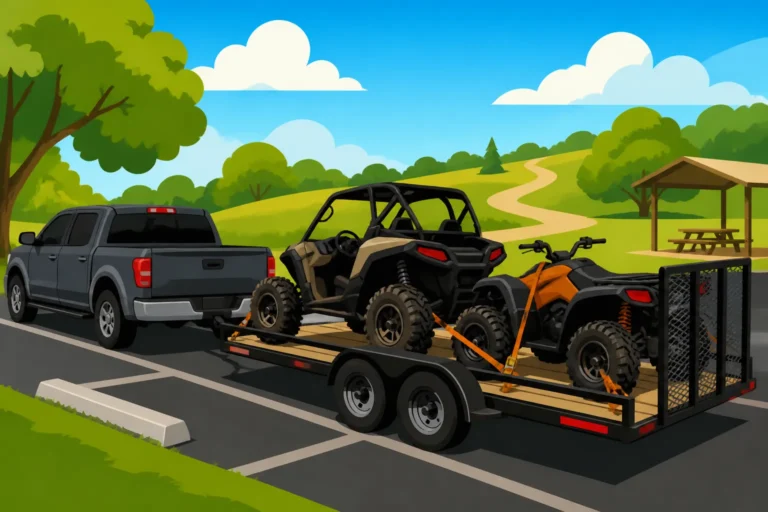
Finding the entrance is only part of the arrival plan. Consider whether your tow vehicle and trailer can maneuver in the parking or staging area, and avoid assuming that every space shown on a map is intended for trailers. If you are traveling with a wide UTV or several machines, allow room to unload without blocking other riders or access routes.
Try to arrive with the basics ready: machines secured for transport, riding gear easy to reach, and paperwork accessible. That way, you are not searching through bags while other riders wait. If you have a group, decide who will handle unloading and who will check the posted rules. A little organization matters when everyone is eager to ride and the parking area is busy.
For route planning, onX Offroad can help you review the broader trip and keep your navigation organized. Still, verify road access and park entry through local information. A trail map or navigation app does not necessarily show temporary restrictions, changes to an entrance, or the exact place visitors should stage.
Know what the riding area offers and what to verify
Expect a natural-terrain riding experience
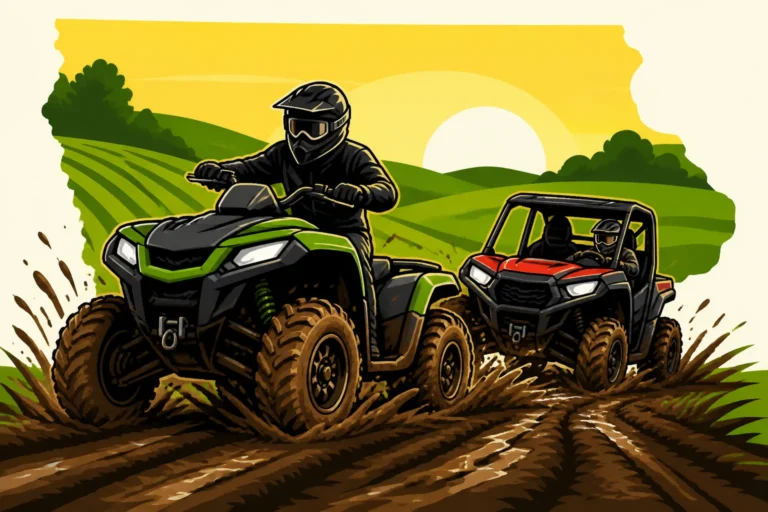
Paul Huting Recreation Area is known for natural-terrain tracks beside the Cedar River. That setting can make the ride feel different from a large, highly developed OHV park with many marked loops and extensive facilities. Before you go, make sure the type of riding matches what your group wants to do, especially if you are planning a full day or bringing less experienced riders.
Natural terrain also calls for a flexible mindset. Conditions may change with rain, seasonal maintenance, or other factors, and a route that looks easy on a map may feel different on the ground. Ride within your ability, follow posted signs, and do not treat an open-looking trail or track as permission to enter an unmarked area. [Two Tracks Beside the Cedar River] has more detail about the riding experience.
If you are visiting with a beginner, talk through expectations before unloading. Agree on a pace, make sure the rider knows how to stop and yield, and choose terrain that feels manageable. Experienced riders may be tempted to head straight for more challenging sections, but a new rider often has a better day when the first few minutes are about getting comfortable with the machine and the setting.
Check operating status and rules close to your visit
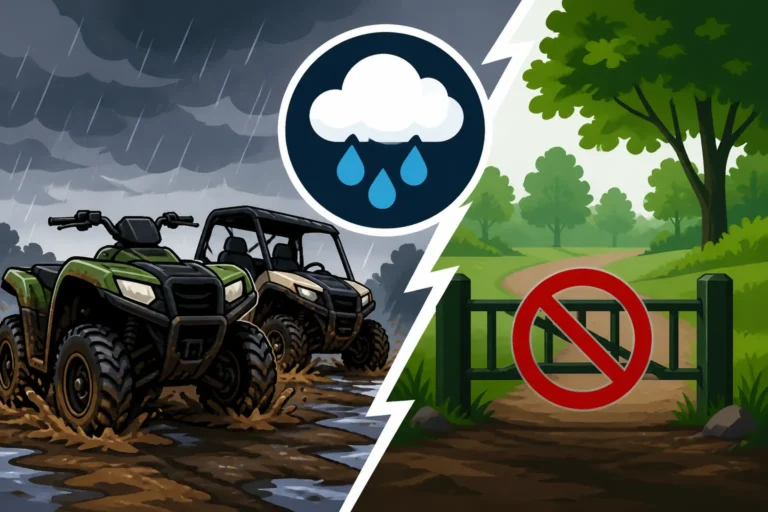
Do not assume the riding area is open simply because a map lists it or because someone rode there previously. Weather, maintenance, local conditions, and park decisions can affect access. Confirm the latest information before you tow, particularly after heavy rain or when the forecast suggests conditions may be changing. [Iowa Trail Conditions Before You Ride] and [Checking Whether Three Parks Are Shut] can help you build a sensible pre-trip check.
Look over the posted rules when you arrive. Confirm where riding is allowed, where to park, and whether protective equipment or other requirements apply. Helmets are required at Paul Huting; check the posted guidance for the details that apply to your machine and visit. [Helmets Required at the Paul Huting Gate] covers this point further.
Also confirm that your machine has the Iowa registration decal or other required authorization for the riding area. Do not assume that registration paperwork alone answers every access question, particularly if you are visiting from another state. [Your Registration Decal Is the Park Admission] explains how the decal relates to Iowa OHV park access.
Make the trip easier with a simple preparation routine
Use a short checklist before you load
A successful visit is not just about finding the right name in a search box. A quick checklist can catch the small problems that turn into frustrating delays: an outdated map pin, a missing registration document, or an assumption that the park is open after a storm.
Before you leave, confirm the destination name and entrance, check current access information, and review the rules that apply to your machine. Make sure your trailer is secure and that your riding gear is packed where you can reach it. If you are meeting another vehicle, share the confirmed destination details rather than simply forwarding an old map link.
For a first visit, it can also help to plan a backup. If conditions or access prevent riding at Paul Huting, knowing another option before you leave is less stressful than searching for alternatives from the parking area. Keep in mind that another park may have different conditions, rules, or access requirements, so check its information separately.
Keep navigation tools in their proper role
Digital maps are useful for route planning, but no app should be your only source for a park’s current operating status or entrance rules. onX Offroad can help you organize navigation and understand the surrounding area, while official local information is the better place to confirm whether the site is open and where visitors should enter. Checking both helps prevent confusion without expecting a map to answer questions it may not cover.
If you use onX Offroad, save the location only after checking that the result points to the Paul Huting riding area and not another place with a similar name. Share the verified destination with your group, then keep an eye out for on-site signs when you arrive. Posted instructions take priority over a route line on a screen.
The key is to treat “Riverview” as a clue to the older name and “Paul Huting Recreation Area” as the name to check when planning a Waterloo OHV visit. Confirm the entrance and operating details before towing, prepare for natural-terrain riding, and follow the posted rules once you arrive. That way, you can spend less time sorting out map results and more time getting ready for the ride.
Disclaimer
This article is for general informational purposes only and does not constitute professional advice. Laws, prices and regulations vary by location and change over time. Consult a qualified professional for guidance on your specific situation.