What Changes the Moment You Cross Onto Public Ground
It's a tale as old as time for many ATV and UTV enthusiasts in Iowa: you're enjoying a glorious ride on your own property, perhaps a sprawling field or a timbered back forty, feeling the freedom of the open air. But then, an opportunity arises—maybe you need to cross a short stretch of county gravel to get to another piece of private land, or you're heading out for a day at one of Iowa's fantastic OHV parks. The instant your tires touch that public ground, the rules of the game change entirely, and what was once a carefree ride can suddenly land you in a heap of trouble if you're not prepared. This guide is here to unravel that confusion, clearly outlining the significant shifts in regulations the moment you transition from private property to public ground in Iowa with your ATV or UTV.
The Fundamental Shift: Private Land vs. Public Ground Rules
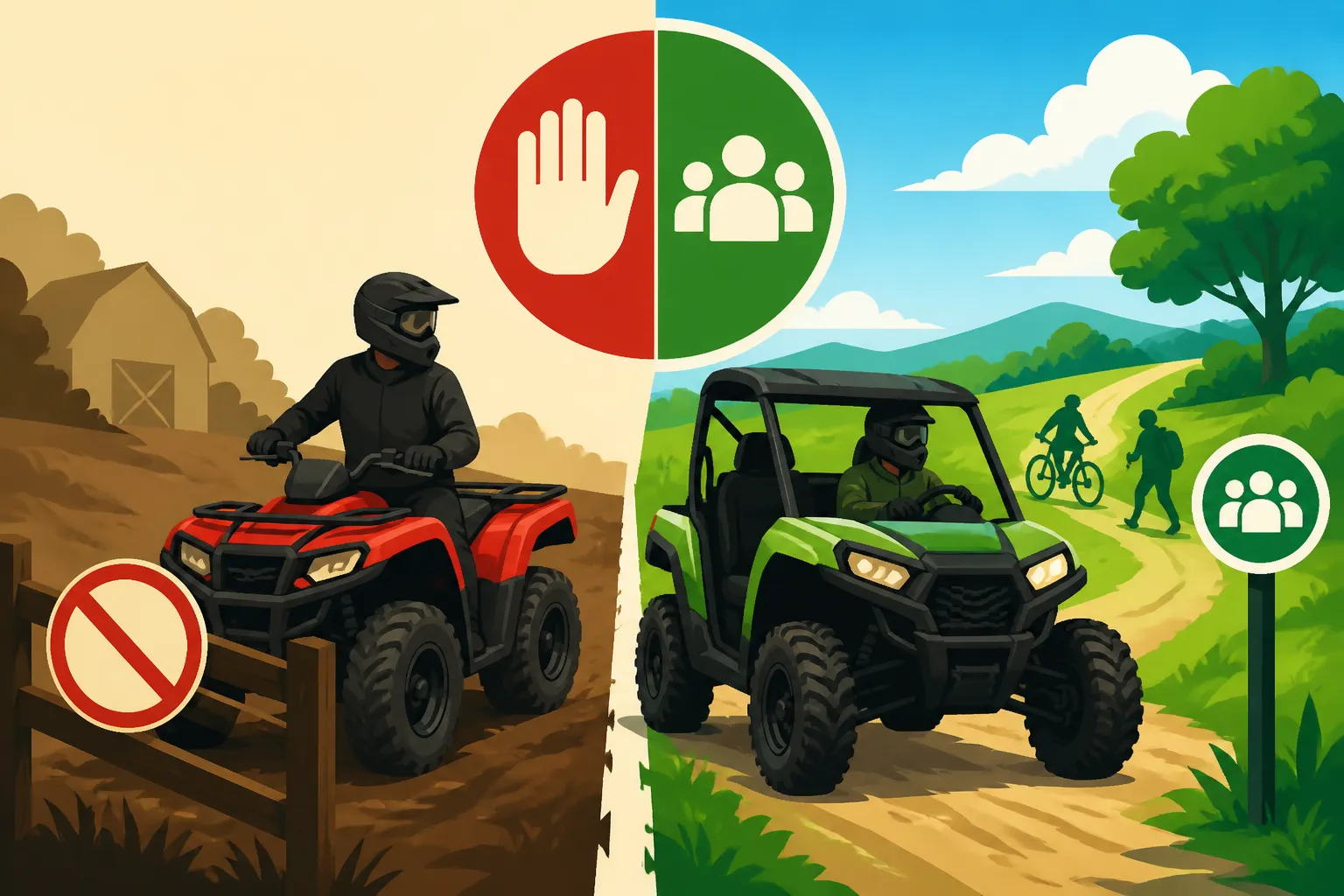
There's a massive difference in how Iowa views ATV and UTV operation based on whether you're on private land or public ground. It's not just a subtle nuance; it's a complete paradigm shift that dictates everything from registration to safety gear and even where you can legally put a tire. Many folks, especially those who primarily use their machines for farm work or recreational riding exclusively on their own property, are often caught off guard by these distinctions, assuming their personal freedom on private land extends further than it does.
Private Land: The Realm of Owner's Rules
When you're riding your ATV or UTV on private land that you own, or land where you have explicit permission from the landowner, the rules are significantly more relaxed. In essence, as long as you're not creating a nuisance or breaking any local noise ordinances, you largely operate under the landowner's discretion. This means you generally don't need to worry about state registration decals, age restrictions for operators (though common sense and safety still apply, of course!), or specific equipment requirements like mirrors or turn signals. It's your domain, and your rules prevail.
However, even on private land, it's crucial to have clear permission if you're not the owner. A simple handshake might feel sufficient, but for substantial use or if you're allowing others to ride, a written agreement can save a lot of headaches down the line. Resources like LawDepot can offer templates for land use agreements or permission forms, ensuring everyone is on the same page about what's allowed. This becomes especially important if there's an accident or if the scope of use ever comes into question. Always err on the side of clear communication and documentation, even when you're just enjoying a weekend ride with friends.
Public Ground: A New Set of Responsibilities
The moment your ATV or UTV leaves the confines of private property and enters public ground—whether that's a county gravel road, a state-designated OHV park, or even a ditch alongside a public thoroughfare—you are immediately subject to Iowa's comprehensive off-highway vehicle (OHV) laws. This isn't just about avoiding a ticket; it's about ensuring safety for yourself, other riders, and the general public, as well as preserving the trails and roads for everyone's enjoyment.
The shift means embracing a structured environment where specific regulations govern how your machine is equipped, who can operate it, and where it can go. Ignorance of these laws is rarely an acceptable excuse, and fines can be substantial. It's a responsibility that comes with the privilege of accessing public spaces, and understanding these requirements is the first step toward a hassle-free experience. This is where your machine transforms from a private recreational vehicle into a public-use asset, with all the regulatory baggage that entails.
Registration and Titling Requirements on Public Land
One of the most immediate and significant changes when you transition to public ground in Iowa is the requirement for your ATV or UTV to be properly registered and titled. This isn't just a suggestion; it's a non-negotiable legal mandate that every rider must adhere to if they wish to legally operate on public trails, parks, or designated roads. Without these essential pieces of paperwork and the accompanying visual identifiers, you're looking at potential fines and a very quick end to your ride.
Your Decal: The Ticket to Ride
For any ATV or UTV being operated on public land in Iowa, current registration is a must. This means getting your machine registered with the Iowa Department of Natural Resources (DNR) through your local County Recorder's office. Once registered, you'll receive a distinctive decal that must be prominently displayed on your machine. This decal is more than just a sticker; it's your visual proof that you've met the state's requirements and contributed to the funding that helps maintain Iowa's OHV trails and riding areas. Without this decal, you are effectively riding illegally.
The process of [Registering an ATV in Iowa] involves providing proof of ownership, typically a title or a bill of sale, and paying the associated fees. These fees are vital, as they directly support the development and maintenance of public riding opportunities across the state. The decal itself signals to law enforcement and DNR officials that your machine is recognized and compliant. Remember, the decal has a specific expiration date, typically December 31st each year, regardless of when you registered, so keeping it current is crucial. You can find detailed information about [Iowa ATV Decal Placement] to ensure it's mounted correctly.
Titling Your Machine for Public Use
While registration pertains to the right to operate, titling confirms ownership. In Iowa, [Titling an ATV in Iowa] is a requirement for most machines, especially when they are sold or transferred, and it's intrinsically linked to the registration process for public land use. A title serves as the official legal document proving who owns the ATV or UTV. If you've just bought a used machine, ensuring the title is properly transferred into your name is critical before you can even think about registering it for public adventures.
Without a title, or with a title that hasn't been correctly transferred, you'll hit a roadblock when trying to register. This is where a clear and legally sound bill of sale comes into play, especially for machines bought privately. Using a template from a service like LawDepot for your ATV bill of sale can provide a robust legal document, protecting both the buyer and seller and making the titling process smoother. This document is your bridge to proving ownership and getting that all-important title, which then allows you to complete your registration and get that decal.
The Nonresident Permit: For Our Visiting Friends
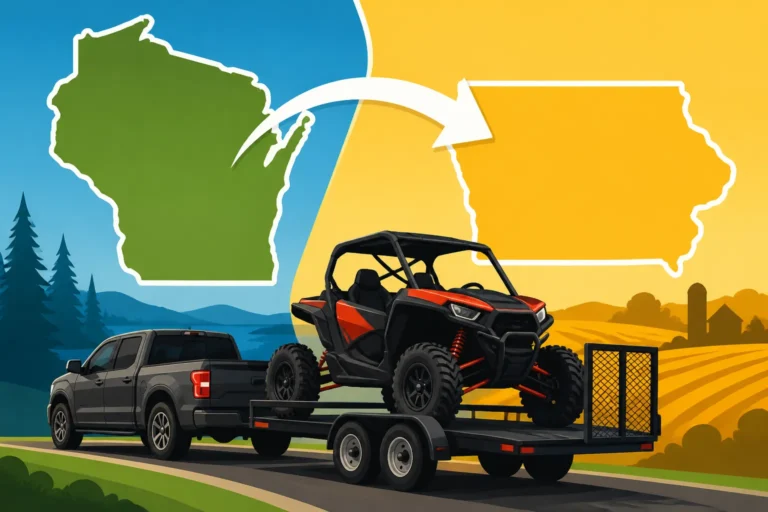
Iowa welcomes out-of-state ATV and UTV riders, but with a clear understanding: your home state's registration doesn't automatically grant you permission to ride on Iowa's public lands. Instead, nonresident riders must obtain an [Iowa's Nonresident User Permit] before hitting the trails or designated public roads. This permit serves the same purpose as an Iowa registration decal for residents, ensuring that everyone who uses the public riding areas contributes to their upkeep and adheres to state regulations.
The nonresident permit is usually a separate sticker that must be displayed alongside your home state's registration. It's a small investment that ensures you can enjoy Iowa's extensive OHV opportunities without the fear of a citation. Just like resident registrations, these permits have specific validity periods and must be renewed. Always check the current requirements and purchase options before trailering your machine across the state line, whether you're coming from Minnesota, Nebraska, or anywhere else. It’s a simple step that saves a lot of hassle.
Safety, Age, and Equipment Rules on Public Ground
Beyond registration and titling, the move from private to public land in Iowa introduces a host of rules governing who can ride, how they must ride, and what equipment their machine must possess. These regulations are primarily in place for safety, aiming to protect riders and other users of public spaces. Ignoring these can not only lead to fines but also significantly increase the risk of accidents and serious injury.
The Iowa ATV Safety Certificate: For Young Riders
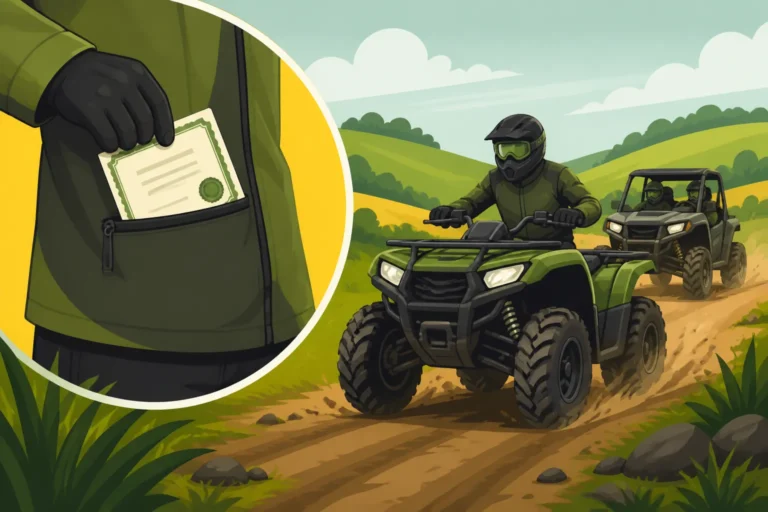
Iowa takes the safety of its younger riders seriously. While on private land, parental discretion largely rules, on public ground, specific age requirements and training mandates come into play. If you're between the ages of 12 and 17, inclusive, you are generally required to possess an [Iowa ATV Safety Certificate Requirements] to operate an ATV or UTV on public land, including state-designated OHV parks and secondary roads. This certificate demonstrates that the rider has undergone formal training on safe operation and rules of the trail.
The safety certificate program aims to instill good riding habits and a thorough understanding of Iowa's OHV laws from a young age. While adults aged 18 and over are not typically required to carry a safety certificate, supervising adults play a crucial role for riders under 12. If a rider under 12 is operating an ATV or UTV on public land, they must be under the direct supervision of a licensed, experienced adult. This adult must be riding an OHV themselves and be within clear sight and hearing distance. It's about responsible riding and ensuring that everyone, especially our youth, is prepared for the challenges of public trails.
Essential Equipment for Public Riding
Your machine, which might be perfectly adequate for a private pasture, will need specific equipment to be legal on public ground. This isn't about luxury; it's about visibility, safety, and environmental responsibility. For instance, a spark arrester is typically mandatory on all OHVs operated on public lands in Iowa to prevent wildfires. Without one, your machine could be deemed unsafe and illegal for public use.
Furthermore, if you're venturing onto designated public roads, even unpaved secondary ones, your ATV or UTV might need additional features like headlights, tail lights, a horn, and at least one rearview mirror. The specific requirements can vary based on the type of public ground and whether it's daytime or nighttime. These items are not just accessories; they are critical for allowing other motorists to see you and for you to safely navigate shared spaces. Always check the specific regulations for [What Iowa Requires of an ATV on a Public Road] before you embark on a road ride.
Passenger and Supervision Rules
The question of who can ride on your ATV or UTV, and whether they need supervision, also changes significantly on public land. Most ATVs are designed for single riders, and carrying a passenger on a single-rider ATV on public land is generally prohibited, unless the machine is specifically designed by the manufacturer for multiple riders (like many UTVs or some larger ATVs with designated passenger seats and handholds). Even then, passengers must often meet age and height requirements to safely use the seat belts or grab bars provided.
For younger riders, supervision remains a key theme. As mentioned, riders under 12 require direct adult supervision on public ground. This means the supervising adult must be capable of intervening if necessary and has a clear view of the younger rider at all times. These rules are in place to prevent accidents and ensure that less experienced riders have the guidance needed to stay safe. It's a significant departure from the more flexible rules of private property, where a parent might allow a child to ride unsupervised in a controlled environment.
Navigating Public Roads and Trails
The moment your wheels hit public ground, the question of where you can ride becomes paramount. Iowa has specific laws dictating permissible riding areas, distinguishing between designated OHV parks, certain public roads, and areas that remain strictly off-limits to ATVs and UTVs. Understanding these distinctions is crucial to avoid trespassing fines or operating illegally.
Specifics for Road Riding in Iowa
Iowa offers some unique opportunities for ATV and UTV riders on its extensive network of unpaved secondary roads, often referred to as gravel roads. However, this isn't a free-for-all. [Iowa Rules for Riding a Gravel Road] are quite specific: generally, ATVs and UTVs are permitted on unpaved county secondary roads, but they must follow all rules of the road, including speed limits, yielding to other traffic, and having proper lighting. There's usually an age requirement (18 years old with a valid driver's license), and your machine must be insured with minimum liability coverage. Many counties also have local ordinances that can further restrict or permit ATV/UTV use on paved roads or city streets, which you'll need to research specific to your location.
It's vital to remember that riding on paved primary highways or interstate roads is almost universally prohibited for ATVs and UTVs. Even crossing these types of roads usually needs to happen at designated intersections after coming to a complete stop and yielding to traffic. The "most direct route" rule often applies when using public roads to get from one private property to another, or to access a trail system, meaning you can't simply joyride on public roads. Always assume paved roads are off-limits unless explicitly stated otherwise by county or city ordinance.
Designated OHV Parks and Trail Etiquette
Iowa boasts several fantastic state-designated OHV parks, like Gypsum City OHV Park or Bluff Creek OHV Park, which are specifically designed and maintained for ATV and UTV riding. These parks provide miles of varied terrain, from challenging climbs to winding wooded trails. However, even within these sanctioned areas, there are specific rules and etiquette to follow. These might include designated one-way trails, speed limits, specific helmet requirements (especially for youth or certain types of riding), and strict rules against riding off marked trails.
Your Iowa registration decal serves as your admission ticket to these parks, meaning there's no additional day-use fee once you're registered. To find out more about these areas, refer to [Where to Ride an ATV in Iowa]. Before heading out, it's always a good idea to check the Iowa DNR's website or the park's specific page for any closures due to weather or maintenance. Riding on closed trails can not only cause environmental damage but also result in significant fines and jeopardize future access for all riders.
The Importance of Permission: Beyond the Trail
While public lands offer riding opportunities, it's crucial to understand where public land ends and private land begins. Just because a trail seems to continue beyond a marked park boundary, or a gravel road passes through someone's farm, doesn't mean you have implied permission to ride on adjacent private property. Trespassing is a serious offense, and it can sour relationships between landowners and riders, potentially leading to further restrictions.
Always seek explicit permission if you're unsure about land ownership or boundaries. This is especially true for field access, timber trails, or even ditch riding that extends onto private property. A simple conversation can prevent a lot of trouble. Resources like LawDepot can assist in creating simple written permission agreements if you frequently ride across specific private parcels, formalizing the understanding and protecting both parties. This due diligence ensures that you're respecting private property rights and maintaining a positive image for the entire riding community. Remember, [Iowa Landowner Permission Requirements] are strict, and verbal permission can be easily misunderstood or forgotten.
Summary of Private vs. Public Land Regulations in Iowa
To help clarify the various points we've covered, here’s a quick overview of how the rules change the moment you cross onto public ground with your ATV or UTV in Iowa. This table highlights the primary differences you'll encounter.
| Feature | Private Land | Public Ground (Trails, OHV Parks, Designated Roads) |
|---|---|---|
| Registration | Generally not required. | Required. Must display current Iowa DNR decal. |
| Titling | Recommended for ownership proof. | Required for ownership transfer and registration. |
| Nonresident Permit | Not applicable. | Required for out-of-state machines. |
| Safety Certificate | At owner's discretion (e.g., parents). | Required for riders aged 12-17. |
| Age Limits | At owner's discretion. | Under 12 requires licensed adult supervision. |
| Equipment | At owner's discretion. | Spark arrester required. Road use may require lights, horn, mirror, insurance. |
| Passengers | At owner's discretion. | Only on manufacturer-designed multi-rider machines. |
| Road Use | Only for direct access to fields/work. | Permitted on specific unpaved secondary roads, following traffic laws and local ordinances. |
| Trail Access | Owner's permission. | Only on designated OHV trails or parks. |
| Insurance | Not state required. | Required for road use (minimum liability). |
| Legal Documentation | Informal OK, but written permission advised (e.g., LawDepot forms). | Registration certificate, title, safety certificate (if applicable), and driver's license (for road use) must be carried. |
Crossing onto public ground in Iowa with your ATV or UTV is a definite shift from the freedoms of private land. It's a move from individual discretion to collective responsibility, governed by state and local laws designed to ensure safety, manage resources, and maintain harmonious access for all. By understanding and adhering to these regulations, you ensure not only your own safety and legal compliance but also contribute to the positive future of off-highway vehicle riding in our beautiful state. Always be prepared, know the rules, and ride responsibly.
Disclaimer
This article is for general informational purposes only and does not constitute professional advice. Laws, prices and regulations vary by location and change over time. Consult a qualified professional for guidance on your specific situation.