Riding Bluff Creek for Nothing
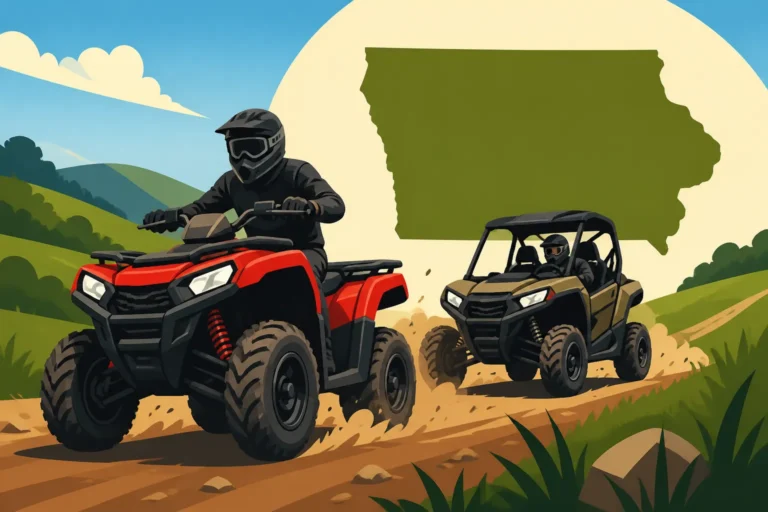
Bluff Creek OHV Park near Eddyville is a welcome change for riders who are tired of paying a day-use fee every time they unload. But “free to ride” does not necessarily mean you can arrive without paperwork, preparation, or costs of your own. This guide explains what the free access means, what to check before leaving home, and how to plan a smoother day on the trails.
What “free to ride” at Bluff Creek actually means
There is no day-use charge at the gate
Bluff Creek is known for letting riders use its trails without paying a separate admission fee each time they arrive. That can make it easier to fit in a spontaneous ride or bring along a group without budgeting for a per-person or per-machine gate charge.
Still, it helps to separate the park’s day-use policy from the rules that apply to your machine. A free gate does not automatically waive Iowa registration or nonresident permit requirements, and it does not guarantee that every trail or facility is open on the day you visit. For a closer look at the park itself, see [Bluff Creek OHV Park at Eddyville] and [Why Bluff Creek Costs Nothing to Ride].
Your machine may still need the right Iowa paperwork
Before loading up, check that your ATV or UTV has the registration or permit required for its rider and machine status. Iowa residents and visitors can face different requirements, and a home-state registration does not by itself answer every question about riding in Iowa. If you’re visiting, review [Iowa's Permit for a Visiting Machine] and [Does Iowa Honor Out-of-State Registration?].
For an Iowa-registered machine, confirm that the registration is valid and that the decal is mounted as required. If you’re unsure what applies to your situation, [Iowa ORV Permits Explained] is a useful place to start. A no-charge park entrance is much less helpful if you arrive and discover your paperwork is incomplete.
| Before you go | What to confirm | Why it matters |
|---|---|---|
| Park access | Whether Bluff Creek is open and which areas are available | Weather or trail conditions may affect access |
| Machine paperwork | Registration or permit requirements for your machine | Free day use does not automatically remove legal requirements |
| Decal | Whether it is current and properly displayed | A decal or permit may be required for riding |
| Camping | Whether the area you plan to use is open and available | Free camping does not guarantee a site or specific amenities |
| Route | Your parking, unloading, and trail access plan | A little planning can prevent delays when you arrive |
“Free” does not mean every part of the trip costs nothing
Even without a gate fee, a day at Bluff Creek still has practical costs: fuel for the tow vehicle and machine, food, riding gear, and any maintenance the trip brings. If you camp, you may also need to plan for your own supplies and comfort. A free park can be a budget-friendly destination, but it is not a cost-free outing.
This distinction also helps avoid a common disappointment: expecting a free park to operate like a staffed, full-service resort. Check what facilities are available and bring what your group needs rather than assuming there will be a particular service, store, or amenity on site.
How to plan a ride at Bluff Creek
Check conditions before you load the trailer
Rain can change an Iowa trail day quickly. Clay and soft ground may become difficult to ride, and a park may restrict access to prevent trail damage. A trail that looked fine during a dry stretch can become slick or deeply rutted after a wet weekend. Before you set out, check [Iowa Trail Conditions Before You Ride] and [Iowa Trail Closures to Check First].
This matters even if you live nearby. The drive from Eddyville may be manageable, but a longer trip with a trailer is frustrating when you arrive to find that conditions have changed. A quick check can help you decide whether to go, wait, or choose a backup destination. You can also compare park notices through [Iowa's Weather-Driven Trail Closures].
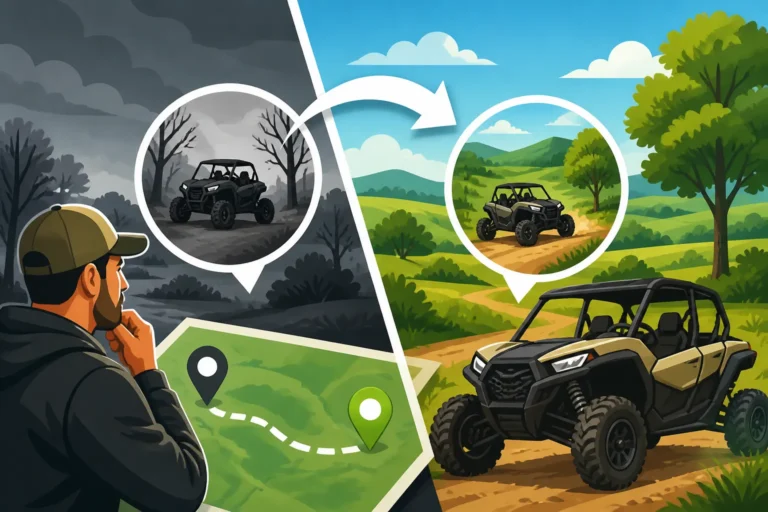
If you use a navigation app such as onX Offroad, treat it as a planning aid rather than a live confirmation that a trail is open. A mapped route can help you understand the area and organize a trip, but local notices and park information should guide decisions about current access. The same applies to any saved trail line: a route on a screen is not permission to ride a closed or unmarked area.
Plan your route and arrival
For a straightforward approach to the park, review [Driving to Bluff Creek OHV Park at Eddyville] before you leave. Check the route with your trailer in mind, especially if you are unfamiliar with the area. Your preferred navigation route may include roads or turns that are awkward with a long trailer, and stopping to recheck directions after unloading is never ideal.
If you use onX Offroad or another mapping tool, save the relevant map or route before you travel in case cell reception is unreliable. Make sure everyone in your group knows where you intend to park and how to regroup if riders become separated. Keep the plan flexible: wet conditions, a crowded staging area, or a change in access can make the day look different from what you expected.
A few simple checks make arrival easier:
- Confirm the park’s status and any current notices.
- Check that everyone’s machine paperwork is in order.
- Decide where the group will meet before unloading.
- Bring basic tools, water, and supplies for the ride.
- Agree on a plan if someone needs to return to the staging area.
Choose trails that suit your group
Riders may arrive with very different expectations: one person wants a relaxed outing, while another is looking for a more challenging ride. Before splitting up, talk about experience, machine type, and how comfortable everyone is with changing terrain. Agree on a regrouping point and a simple way to communicate if someone needs help.
If your group includes children or first-time riders, avoid assuming that everyone will be comfortable with the same route. Starting conservatively gives riders time to get familiar with the park and with one another’s pace. Newer riders can build confidence without feeling pressured to follow someone onto terrain that is beyond their comfort level.
Camping without a campsite fee
Free camping can still require planning
Bluff Creek is also associated with free camping, which can make an overnight trip more affordable. But free does not mean you can assume a particular campsite will be available, that the area will be open, or that every amenity is provided. Check current park information and be prepared to camp with the supplies your group needs. For more detail, see [Why Bluff Creek Costs Nothing to Camp] and [Camping Free at Bluff Creek].
Think about arrival time, sleeping arrangements, meals, drinking water, and how you will handle waste. If you are bringing a trailer, confirm that your setup is practical for the available space. It is also wise to have a backup plan in case the camping area is unavailable or your group decides not to stay overnight.
Bring what makes the site work for you
A low-cost camping trip can still become uncomfortable if the essentials are missing. Pack based on the weather and the needs of your group, and keep riding gear separate from sleeping supplies so muddy or wet items do not take over your tent or trailer. A simple checklist can prevent an avoidable late-night run for something you left at home.
Consider bringing:
- Drinking water and food for the whole stay
- Bedding suited to the forecast
- A flashlight or headlamp
- Trash bags and supplies for leaving the site tidy
- A first-aid kit and any personal medication
- Chargers or backup power if your group relies on phones
- Dry clothes and a way to store wet gear
Respect for the site matters, too. Keep noise considerate, use only designated areas, and leave the place as you found it. Free access depends on people treating the park responsibly, and careless use can create problems for the riders who come after you.
Common mistakes to avoid
Assuming free access means no rules
The biggest planning mistake is hearing “free” and interpreting it as “no requirements.” Park access, machine paperwork, trail closures, and riding-area rules are separate issues. Confirm each one rather than relying on a single detail you heard from another rider.
If you are riding with a group, make sure everyone understands the plan before arriving. One person may have current paperwork while another does not, or a visitor may assume their home-state documents automatically settle the Iowa requirements. A quick check before the trip is easier than sorting it out at the staging area.
Treating an online map as a current trail report
A mapping app can be useful for orientation, but it may not reflect a temporary closure or a recent change in conditions. That is true whether you use onX Offroad, a downloaded map, or a route someone shared with you. Always pair a map with current park information, and do not ride beyond posted boundaries because a digital route appears to continue.
Trail surfaces also change. A line that was manageable in dry weather may become difficult after rain, and a group’s ability can vary from one weekend to the next. Give yourself permission to turn around or change plans. Protecting the trail—and avoiding a recovery situation—is more important than completing a route.
Arriving without a backup plan
A free riding area is a great destination, but weather and closures can disrupt any trip. Before loading, know what you will do if Bluff Creek is unavailable. Check [Checking Whether Three Parks Are Shut] and consider another suitable option before you leave.
For a group driving from a distance, a backup plan reduces the pressure to ride in poor conditions or ignore a closure after an already-long haul. Keep the day flexible, verify the access information, and treat the free admission as one useful part of the trip—not a promise that every part of the outing will go exactly as planned.
Disclaimer
This article is for general informational purposes only and does not constitute professional advice. Laws, prices and regulations vary by location and change over time. Consult a qualified professional for guidance on your specific situation.