Picking a Backup Park an Hour Down the Road
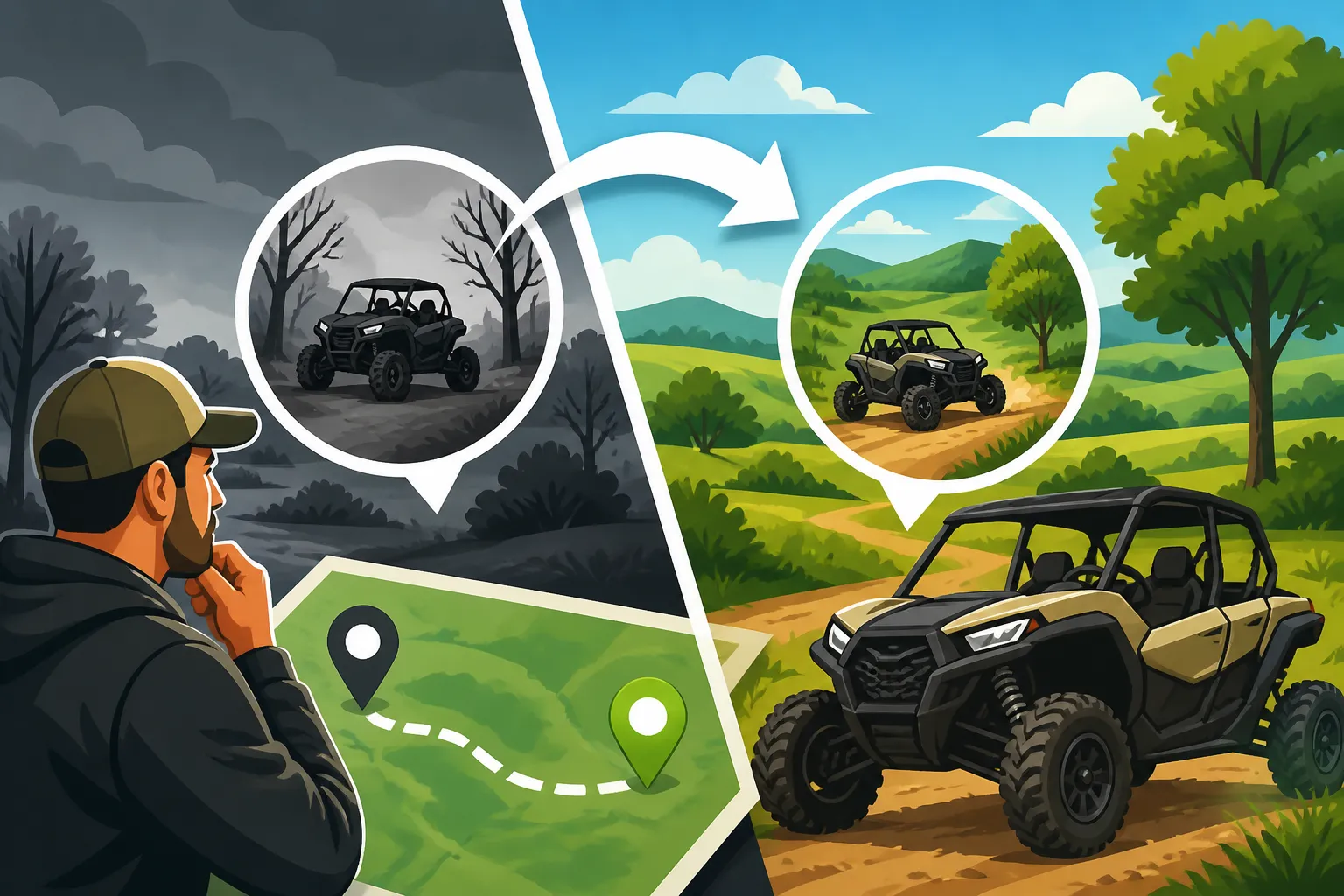
When Iowa rain turns a ride into a muddy mess, or a park closes just as you finish loading the trailer, having a second destination can save the day. The trick is choosing a genuinely usable backup—not simply the nearest dot on a map. This guide explains how to pair Iowa riding areas, check conditions, and make a last-minute switch with less guesswork.
Choose a backup based on where you are starting
A backup park is useful only if it fits the trip you have already planned. Think about your starting point, the direction you are driving, and how much extra road time your group will accept. “About an hour away” is a planning target, not a promise: roadwork, weather, the route you take, and where you start can all change the drive.
Build pairs around the main areas you ride
For a ride near Waterloo, compare Paul Huting Recreation Area with Nicholson-Ford OHV Park near Marshalltown. They are plausible alternatives to investigate when you are planning in that part of Iowa, but don’t assume they will have the same trail conditions or be open at the same time. Check both destinations before you commit to one.
If your plans center on southeast or south-central Iowa, consider comparing Rathbun OHV Area near Plano with Bluff Creek OHV Park at Eddyville. The right choice depends on your starting point and route, so check the actual drive rather than relying on a broad regional label. For riders near Solon, Riding Lakeview Outside Solon can help you think through that area, while Riding Nicholson-Ford at Marshalltown offers a separate destination to assess if your planned trip takes you toward central Iowa.
These pairings are starting points, not guarantees that two parks are always within an hour of each other. Put your actual driveway or meeting place into a map, then compare the door-to-staging-area trip for each park. A park may look close on a state map and still be a poor backup if the route requires a long detour or your group is already tired of driving.
Define what “a good backup” means for your group
Before you choose a second park, agree on what matters most. One family may prioritize an easy trail and a nearby place to eat. A group of experienced riders may care more about varied terrain or a place that suits their machines. If children are riding, consider whether the backup gives them a manageable experience rather than simply offering the shortest detour.
Also account for practical details that can make a destination workable or frustrating: parking space for your trailer, campground arrangements if you are staying overnight, fuel along the route, and the park’s current operating information. A nearby park is not a useful substitute if it doesn’t suit the group, machine, or schedule.
Write down one main park and one backup before you leave. For example: “We’ll try our first-choice park if the trails are open and conditions look suitable. If it is closed or not a good fit today, we’ll check the backup’s status and drive there only if it confirms.” That simple agreement helps avoid a parking-lot debate after everyone has already unloaded their gear.
Check whether the backup is actually rideable
A park can be open in a general sense while still having conditions that make it a poor choice for your day. Rain may affect some sections more than others. A park may have temporary restrictions, changing hours, or other details that matter to your group. Confirm the situation for the date you plan to ride rather than assuming that a destination was open the last time you visited.
Use official park updates before map listings
Start with the park’s own current information, such as an official website, posted alert, or direct phone contact where available. If a club, county, or other operator manages the riding area, check the operator’s updates too. The details can be more useful than a general map result, especially after rain or when conditions are changing quickly.
Statewide resources can provide additional context. Iowa Trail Conditions Before You Ride and Iowa Trail Closures to Check First are useful reminders to check the latest information before setting out. You can also review Reading the Iowa DNR Alert Feed for guidance on looking for public alerts. Treat a general alert as one part of your decision, not as a substitute for checking the specific park you intend to visit.
If the status is unclear, call the park or responsible operator before you point the truck toward it. Ask direct questions: Is the riding area open today? Are any trails or sections closed? Are there conditions that could affect a full-size machine, a youth rider, or a group with trailers? Calling a Park Before You Load is a good habit even when the drive seems short.
Treat recent rain as a real planning factor
Iowa trail conditions can change quickly after a downpour. Clay and soft ground may become difficult to ride, and tires can leave deep ruts that damage a trail. A park may close to prevent further damage, or its operator may advise riders to stay away until conditions improve. Don’t interpret a quiet update page as proof that the ground is ready.
Before switching parks, ask whether the backup is likely to have the same weather problem. If both destinations have received similar rain, the extra drive may not solve anything. Iowa’s Weather-Driven Trail Closures and Iowa Trails Closed After Rain offer more context on why weather can change a riding plan.
A practical rule is to avoid treating “open” and “good for our group” as identical. A park might be technically open but not suit your riders or machines that day. If your group is inexperienced, you’re riding with children, or you want to avoid heavy mud, ask about the conditions that matter to you rather than asking only whether the gate is open.
Compare parks by the ride you want, not just distance
A backup should be close enough to reach, but distance alone is a weak way to choose. The better question is whether it provides the kind of day your group can enjoy. Different parks can have different terrain, layouts, facilities, and expectations, so check those details before making the switch.
Match the park to machines and rider experience
Confirm that the destination suits the machines in your group. If you are riding a wide side-by-side, don’t assume every trail will be suitable. If you have youth riders, consider whether the park offers an appropriate place for them to ride and whether supervision or other requirements apply. A backup that works for experienced adults may not be the best option for a family group.
Think about terrain, too. A rider who enjoys technical trails may be disappointed by an easier outing, while a newer rider may feel overwhelmed by steep or challenging sections. Read the park’s own description and maps, then ask the operator if the information does not answer your question. The goal is not to find the park that sounds most exciting in general; it’s to choose one that makes sense for the people and machines making the trip.
onX Offroad can be one tool for looking at the route and surrounding area while you compare options. Use it as a planning aid rather than the final authority on access, park status, or rules. Check the operator’s current information separately, and confirm any important detail that affects where you can ride.
Compare practical trip details before you turn around
For a last-minute switch, small details matter. Consider whether the backup has a suitable staging area for your trailer, whether your group can arrive during operating hours, and whether there is fuel available along the route. If the trip includes camping, confirm that overnight arrangements work for your dates rather than assuming a campsite is available because the park itself is open.
Use a simple comparison to keep the decision grounded:
| What to check | Why it matters | What to confirm |
|---|---|---|
| Current park status | A closure can make the trip pointless | Whether the riding area is open on your planned day |
| Trail conditions | Recent rain or maintenance can affect the ride | Whether conditions suit your group and machines |
| Route and drive time | A close-looking park may require a detour | The actual trip from your starting point |
| Machine suitability | Trail width and terrain may not fit every rig | Whether your machines are allowed and appropriate |
| Rider experience | One park may be a better match for beginners or children | Trail options, supervision needs, and any age-related rules |
| Staging and facilities | A difficult unload or missing overnight plan can spoil the switch | Parking, camping details, and other relevant facilities |
| Official updates | General map data may not reflect a same-day change | The park operator’s latest information |
When plans change, run through the same checks for both the original park and the backup. A quick comparison is more reliable than driving to the first location, seeing a closure notice, and immediately choosing the nearest alternative without checking it.
Make the switch without creating a second problem
A backup plan should reduce stress, not create a rushed decision. Give your group a clear point at which you will reassess, decide who will check the information, and agree on what conditions would make you call off the ride entirely. Sometimes the sensible choice is to postpone rather than drive farther in search of another open trail.
Set a decision point before you leave
Choose when you will confirm the park: before loading, before leaving home, or at a planned stop along the way. If weather is unsettled, check again closer to arrival. One person can monitor park updates while another handles the route and trailer, but make sure everyone knows who has the latest information.
Keep a second destination in mind, but don’t treat it as automatic. If the first park closes, confirm the backup is open, suitable, and reachable before you begin the detour. Checking Two Iowa Parks Before You Drive is a useful approach: compare both places early enough that you can make a calm decision rather than scrambling after the group has already made most of the trip.
Use onX Offroad or another mapping tool to compare routes and estimate how the change affects your day. Then check the route itself and the park’s official updates. If the backup would add more travel than your group is willing to accept, it may be better to change the plan entirely—perhaps choosing a different activity rather than turning a short riding trip into a long haul.
Keep a plan for a no-ride day
Not every closure has a nearby substitute. If wet conditions affect multiple parks, moving from one area to another may only add miles and frustration. Make a simple no-ride plan too: stay overnight, visit another local attraction, or head home and reschedule. That can be especially helpful when children are involved, since a clear alternative is easier than a long, uncertain drive.
If you’re traveling from farther away, think about what you need to avoid wasting the day. Call ahead about any relevant facilities, confirm that your machines and riders fit the destination, and don’t rely on old screenshots or saved listings for same-day status. A planning app such as onX Offroad may help you compare route options, but current park information should guide the final choice.
After the ride, note which backup worked and what you would change next time. Keep track of how long the route really took, how the trails suited your group, and whether the facilities matched your expectations. The next time a park closes, you’ll have a more useful answer than “we’ll see what’s nearby.” You’ll know which alternative is worth checking first, what questions to ask, and when staying home is the better call.
Disclaimer
This article is for general informational purposes only and does not constitute professional advice. Laws, prices and regulations vary by location and change over time. Consult a qualified professional for guidance on your specific situation.