Packing a Deer Out of an Iowa Timber
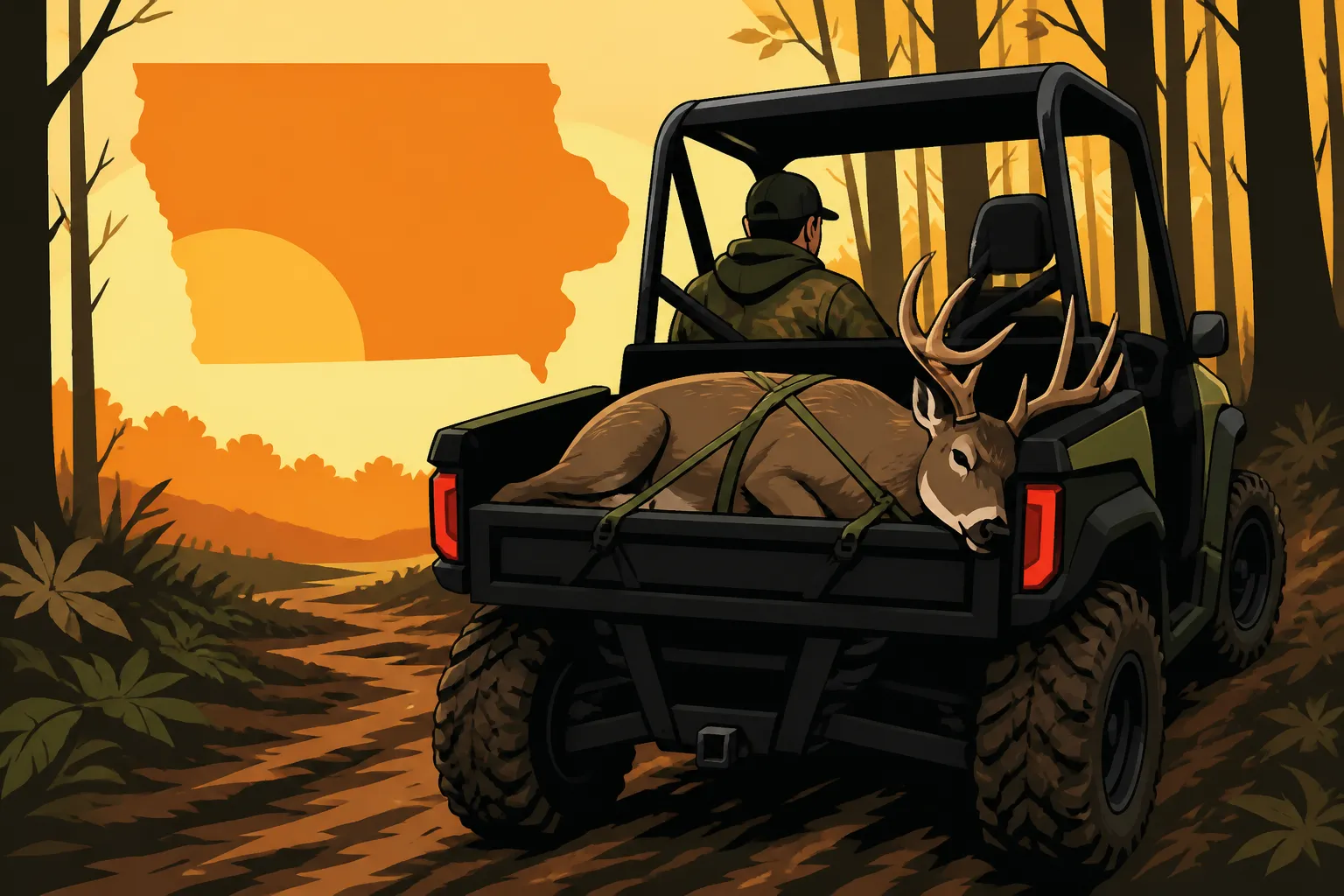
Packing a deer out of an Iowa timber can save a long carry, but it does not automatically make every trail or field open to an ATV. Before you ride, confirm who controls the land, whether motorized access is allowed, and what Iowa’s current game-retrieval rules require. Then plan a route and secure the deer so the trip out is safe for you, the machine, and the meat.
Check permission, access rules, and permits first
The first question is not whether your ATV can reach the deer. It is whether you may ride that route with a motorized vehicle. A hunting permission, a harvested deer, and an ATV registration or permit are separate issues. Permission to hunt does not necessarily include permission to drive across the property, and a machine’s decal does not grant access to land.
If the timber is private, get permission from the landowner or the person authorized to manage the property before riding in. Be specific: ask whether you can use the ATV, which route you may take, and whether you may leave established lanes to reach the deer. If the property is leased, clarify who can grant motorized access; a hunting lease does not always give you the right to drive wherever you choose. For more on the distinction, see Iowa Landowner Permission Rules and Iowa Rules for Riding Private Property.
On public land, do not assume that hunting access includes ATV access. Wildlife areas and county conservation areas can have their own vehicle restrictions, designated routes, seasonal closures, and rules for retrieving game. Check the rules for the exact property and the current season before you unload your machine. A trail shown on a map may be open to foot travel but closed to motor vehicles. Start with Iowa Rules for Riding a Wildlife Area, Iowa Rules for Riding a County Conservation Area, and Iowa Rules for Retrieving Game by ATV.
The route matters just as much as the destination. A narrow opening between trees, a mowed lane, or an existing tire track is not proof that motorized travel is allowed. Avoid widening a trail, driving around a gate, crossing planted ground, or cutting through brush to shorten the trip. If the permitted route ends before the deer, stop there and use another recovery method. Riding off a designated route can damage habitat and create problems for other hunters, land managers, and the next person using the property. See Iowa Rules for Riding Off the Trail and Iowa Rules for Riding a Closed Trail.
Also check the rules that apply to your machine and your status as a rider. Iowa registration and nonresident requirements are not the same thing as a hunting license or deer tag. A visitor should confirm whether their home-state registration is recognized for the intended use or whether an Iowa nonresident permit is required. The answer can depend on where and how the machine will be operated, so check Iowa’s Permit for a Visiting Machine and the relevant Iowa Reciprocity With Minnesota, Iowa Reciprocity With Missouri, Iowa Reciprocity With Nebraska, or Iowa Reciprocity With Wisconsin information as appropriate.
Before leaving, make sure your hunting paperwork is in order too. Follow the current tagging, reporting, and transport instructions for the deer. Do not assume that an ATV permit covers hunting requirements, or that a valid deer tag gives you permission to ride on restricted land. When in doubt, ask the land manager or the appropriate state office before the hunt rather than trying to resolve an access question beside a downed animal.
| What to confirm | Why it matters | Practical next step |
|---|---|---|
| Landowner or manager permission | Hunting permission may not include motorized access | Ask specifically about ATV use, route, and off-trail travel |
| Property-specific vehicle rules | Public land may restrict motorized travel or game retrieval | Check current rules for the exact area |
| Open route and closures | A familiar path may be closed or not authorized for ATVs | Verify gates, signs, and current notices |
| Machine registration or permit | A deer tag does not satisfy ATV requirements | Check Iowa rules for residents or visitors |
| Hunting and transport requirements | Game regulations govern tagging and handling | Review current Iowa deer-season instructions |
Plan the recovery before you start the machine
A short plan can prevent a difficult recovery from turning into a stuck ATV, damaged timber, or spoiled meat. Before riding in, identify the legal route back to the staging point and choose a place to load that is firm, level, and clear of low branches. If the deer is far from an authorized route, consider whether a hand drag, sled, cart, or help from another person is safer than taking the ATV closer.
Tell someone where you are going if you are hunting alone, especially if the timber is remote or cell service is unreliable. If you are hunting with a partner, agree on who will guide the machine and who will handle the deer. Do not stand directly behind an ATV that is climbing, winching, or backing on uneven ground. Keep people clear of the cable and the load, and stop if anyone is in a position where a slip or sudden movement could cause an injury.
Check the terrain on foot before driving it. Leaf cover can hide holes, roots, rocks, fence wire, and soft ground. A route that was easy on the way in may be harder when the machine is carrying extra weight or when the ground is wet. Avoid steep side slopes, deep mud, and water crossings you have not assessed. If the ground is too soft, riding through it can leave deep ruts and make the route worse for everyone. Waiting, walking the deer out, or taking a longer established route may be the better choice.
Make sure the ATV is suitable for the job. Check the tires, brakes, lights if you may be riding near low light, and the condition of any rack or hitch you plan to use. Know the machine’s cargo limits and keep the deer’s weight within them. A large deer can weigh more than it looks, particularly after field dressing, and an awkward load can affect steering, braking, and stability. Do not assume that a rear rack can safely hold any load just because the deer fits on it.
Bring suitable equipment, but keep it simple. Depending on the terrain and the machine, useful items may include gloves, a sharp knife, a tarp or game bag, tie-down straps, a cargo net, and a recovery strap or winch rated for the task. A product from Amazon may be convenient to source, but check its rated capacity and intended use rather than choosing by appearance. A light bungee cord is not a substitute for a proper load restraint or recovery strap.
If you use a winch, follow the machine and winch manufacturer’s instructions. Keep bystanders away from a tensioned cable or strap, use the correct attachment point, and avoid using a tree in a way that damages its bark. Never wrap a winch cable around your hand or body. Do not pull the ATV from an unstable position or use a recovery setup that could drag the machine toward a drop, ditch, or tree.
Weather and timing should shape the plan. Rain can turn a firm lane into slippery clay; snow or frost can conceal ruts and make a slope harder to control. Darkness makes it more difficult to see obstacles and judge the load. If the route is deteriorating, or you are tired and losing daylight, stop and reassess rather than pushing on just because the deer is already loaded.
Load the deer securely and ride out carefully
Field dress and handle the deer in a way that keeps dirt, leaves, and exhaust residue away from the meat. Wear gloves, use a clean surface where practical, and avoid letting exposed tissue drag across the ground. If you use a tarp, keep the meat side protected from mud and debris. Follow current game-handling guidance for cooling and transport, especially in warm weather; a long, slow ride with the carcass exposed can compromise meat quality.
There is no single loading method that suits every ATV, deer, or trail. A smaller animal may fit securely on a rack when properly restrained. A larger deer may be safer on a sled or a purpose-built carrier, provided the route and land rules allow it. Keep the load low and centered where possible. A high or off-center load can make a machine easier to tip, particularly on uneven ground or a side slope.
Use straps or a cargo net to prevent the deer from shifting. Secure the load to appropriate rack or carrier points, not to controls, plastic body panels, brake lines, or other parts not meant to hold cargo. Check that straps cannot reach the tires, exhaust, chain, or moving suspension parts. Keep the animal’s legs, antlers, and loose gear from snagging on branches or catching in the wheels. After a short distance, stop in a safe place and check that the load has not loosened.
If the deer is too large or awkward to carry on the ATV, do not solve the problem by piling it on until the machine is unstable. Make another trip, use a suitable trailer or sled, or ask for help. Keep passengers off the machine unless it is designed and equipped for them and the added load remains within its limits. An extra person can make balance and control worse, especially on rough ground.
Before setting off, take a few seconds to check:
- The deer is restrained at more than one point if the carrier requires it.
- The load does not block the rider’s view, controls, lights, or ability to turn.
- No strap or loose material can reach a hot exhaust or moving part.
- The load is within the machine’s stated capacity.
- The route remains authorized and is firm enough for the added weight.
Ride slower than you would on an unloaded machine. Make turns gradually, leave more room to stop, and avoid abrupt acceleration or braking. Keep the ATV upright on slopes instead of traversing a steep sidehill with a heavy, shifting load. If you feel the machine become unstable, stop in a safe place and adjust the load before continuing. Do not tow a deer in a way that allows it to snag, bounce unpredictably, or damage the ground.
When you reach the staging area, unload on stable ground. Keep hands and feet clear of pinch points, and ask for help with a heavy carcass rather than trying to catch it if it shifts. Clean the machine and equipment afterward, paying attention to racks, straps, and any surface that contacted the deer. Store the meat promptly and follow the applicable hunting and food-handling instructions.
If the machine becomes stuck or the load shifts, do not keep applying throttle in the hope that it will work free. That can dig deeper, damage the trail, and make the machine harder to recover. Remove or reposition the load if you can do so safely, use suitable recovery equipment, and get help when the terrain or setup is beyond your ability. A safe recovery is more important than getting back to the truck quickly.
A good rule is to plan the recovery as part of the hunt, not as an afterthought. Confirm access before entering, stay on a route you are allowed to use, and carry the deer in a way that does not compromise control of the ATV. If any part of the route or rules is uncertain, pause and verify before riding. That small delay is easier to manage than a citation, damaged land, spoiled meat, or an avoidable injury.
Disclaimer
This article is for general informational purposes only and does not constitute professional advice. Laws, prices and regulations vary by location and change over time. Consult a qualified professional for guidance on your specific situation.