Gypsum City’s Motocross Track and Who Rides It
A motocross track can look like the obvious place to open the throttle, but not every rider, machine, or riding day is a good match for it. At Gypsum City OHV Park near Fort Dodge, the track offers a different experience from winding trail loops. This guide explains who it may suit, how to prepare, and what to check before unloading.
What Makes the Gypsum City Motocross Track Different
A track ride is not the same as a trail ride
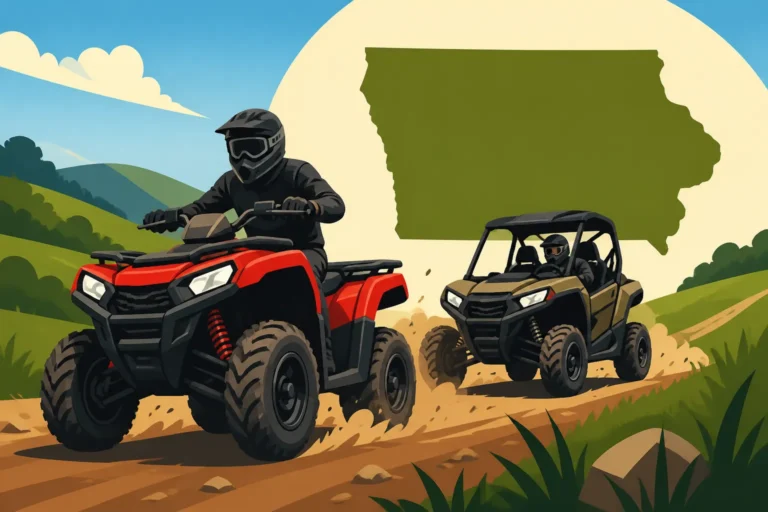
A motocross track is a purpose-built riding area, so the experience differs from following a wooded or natural-terrain trail. Riders generally encounter a defined course and repeated sections rather than a route that steadily carries them through a larger park. That makes the track appealing if you want to practise technique in a more concentrated setting, but it may feel less relaxing if your ideal ride is a slow cruise with frequent stops.
The name “motocross track” can also lead riders to assume it is only for motorcycle-style riding. Before you take a quad or side-by-side onto any course, confirm which machine types are allowed on that specific track and whether there are separate areas or rules for different vehicles. Park layouts and posted rules—not the name alone—should guide your decision. If your machine is wide or unusually heavy, ask before unloading rather than discovering a mismatch at the entrance.
If you are trying to picture the park as a whole, start with [Gypsum City OHV Park at Fort Dodge]. The track is one part of a larger riding destination, not a substitute for checking the rest of the facility. [65 Miles in Webster County] gives useful context for the broader riding experience, while the motocross course serves a different purpose and calls for a different kind of preparation.
Who may enjoy the track most
The track may suit riders who already feel comfortable controlling their machine over changing terrain and who want a more active, focused ride. Someone who enjoys working on cornering, acceleration, braking, and body position may find repeated laps more satisfying than a long route through the park. It can also be a useful setting for experienced riders to practise smooth, deliberate control—provided the course is open to their machine and skill level.
A beginner might still enjoy watching the action or trying a suitable designated area, but should not feel pressured to start on the most demanding-looking course. A rider can be confident on gravel roads and still find a track unfamiliar. Turns, uneven ground, other riders, and the pace of a busy session can all make the environment more challenging than a casual trail loop. It is perfectly reasonable to ride elsewhere in the park first, observe the track, and decide later.
Families should make the same distinction for younger riders. A child’s confidence, size, machine fit, and experience matter more than simply being eager to follow an adult onto a course. Gypsum City has a dedicated youth area covered in [Gypsum City's Kids' Track for Young Riders]. Check the park’s current rules and directions to confirm where a young rider should go, and avoid treating the adult track as a shortcut to a bigger challenge.
Choosing the Right Rider and Machine
Match the course to ability, not bravado
A common mistake is to judge readiness by how fast someone can ride in a straight line. Track riding asks for more than speed. Riders need to manage their approach into turns, keep control when the ground changes, leave room for others, and make good decisions when they feel tired or surprised. Smooth control is a better sign of readiness than a willingness to push harder.
Think about how the rider responds when something unexpected happens. Can they slow down without panic? Can they hold a predictable line and give another rider space? Do they know when to pull off and take a break? If those skills are still developing, a lower-pressure area or an easier trail is a better starting point. Nobody needs to prove anything by riding beyond their comfort zone.
A useful comparison is to ask whether the rider can repeat a controlled lap while staying attentive, not just complete one exciting lap. Fatigue can creep up quickly when someone is concentrating hard or riding more aggressively than usual. Set a modest first session, pause to check in, and leave room to stop early. A good day does not have to end with every available minute spent on the track.
Check the machine before you ride
The right machine depends on the park’s rules and the course’s intended use. Do not assume that every ATV, UTV, dirt bike, or youth machine is accepted on every feature at Gypsum City. Ask park staff or check posted information before riding. This matters especially for wide or full-size machines: a vehicle that feels manageable on open trails may be difficult to place around tighter sections or among smaller machines.
Before riding, give the machine a practical walk-around. Check the tyres for obvious damage and suitable inflation, confirm the brakes respond normally, look for loose parts, and make sure the throttle returns as expected. On a UTV, secure loose cargo and confirm passengers are seated and using the required safety equipment. If the machine has recently been repaired or has been sitting for months, a cautious test in a permitted, low-pressure area is wiser than heading straight onto a course.
Bring only what you need for the riding session, but do not leave basic essentials behind. Eye protection, gloves, suitable footwear, and a properly fitting helmet are sensible choices for off-road riding; follow the park’s posted requirements and the equipment maker’s guidance. If you are riding with a group, agree on a meeting point and a simple plan if someone stops or separates. A phone-based mapping tool such as onX Offroad may help with general trip planning, but it does not replace park signs, staff directions, or the marked route.
| Rider or machine | Questions to answer before using the track | A sensible starting point |
|---|---|---|
| Experienced track rider | Is the course open, and is the machine type permitted? | Check the conditions and begin with a controlled lap |
| Trail rider new to track riding | Can you manage the pace, turns, and other riders comfortably? | Watch first, then try only an appropriate area |
| Youth rider | Is the rider directed to a youth area, and does the machine fit? | Use the designated youth space when permitted |
| Full-size UTV | Is its width and type suitable for this course? | Confirm with park staff before unloading |
| New or recently repaired machine | Are the controls, tyres, brakes, and safety items in good order? | Test carefully in an allowed low-pressure area |
Planning a Better Day at Gypsum City
Check conditions before driving to Fort Dodge
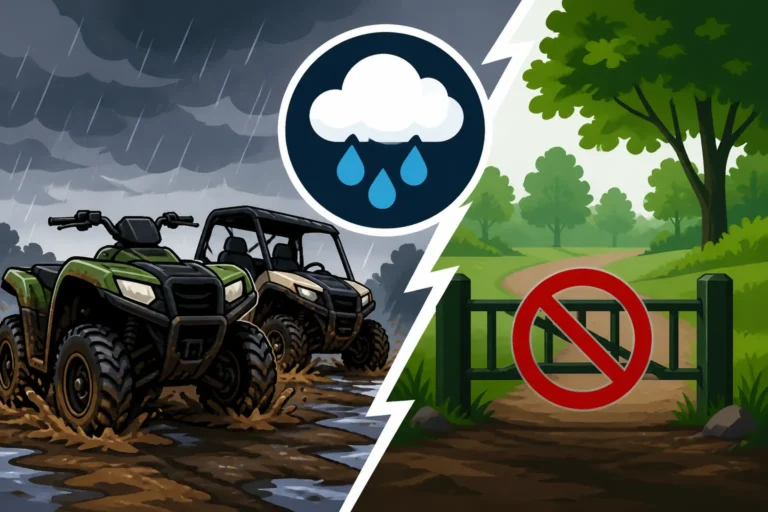
A long drive to a riding area is frustrating enough without arriving to find that conditions have changed. Weather, maintenance, and trail conditions can affect which areas are open, so check the park’s current notices before leaving. Recent rain can make some riding surfaces slick or vulnerable to damage. Even if the track appears rideable from a distance, the facility may have limits designed to protect the course or keep riders safe.
Use [Iowa Trail Conditions Before You Ride] and [Iowa Trail Closures to Check First] as reminders to make a conditions check part of your routine. These checks are especially useful when the forecast has changed overnight or when you are planning a weekend trip with friends. If the information online is unclear, contact the park or managing organization before you load the trailer. It is better to ask one extra question than to base the whole outing on an old assumption.
An app such as onX Offroad can be useful for broader trip planning and keeping track of where you intend to go, but treat it as a planning aid rather than the final authority on access. Follow signs at the park and any instructions from staff. A mapped route may help you orient yourself; it cannot tell you that a particular feature has just closed, that a course is restricted to certain machines, or that the surface is unsuitable today.
Prepare for the parts of the day around the riding
A smooth ride starts before the engine does. Check that your trailer, tie-downs, tow vehicle, fuel, and basic tools are ready before you leave. If you are travelling with more than one machine, think about how you will unload without blocking other visitors. [Staging Early at Gypsum City] is a useful topic to consider when planning arrival, particularly if you want time to get oriented before riding.
Plan for breaks, water, and changing conditions. Riders often focus on the machine and forget that a warm, dusty, or physically demanding session can wear them down. Take a pause before anyone feels exhausted, and let the group know that stopping is part of the plan—not a sign that someone is holding everyone back. If a rider becomes uncomfortable, confused, or unusually tired, call the session rather than trying to squeeze in another lap.
If you are staying overnight, check the campground details separately from the riding plan. [Camping at Gypsum City in May] can help you think through the park’s camping side, but verify the facility’s current arrangements before travelling. Packing food, water, a change of clothes, and basic first-aid supplies can make the day more comfortable whether you are camping or heading home after riding.
Riding Etiquette and Safety on a Shared Course
Give other riders predictable space
On a shared course, predictable riding helps everyone. Avoid sudden changes in direction, stopping in an active riding line, or attempting a manoeuvre you have not practised. If you need to pull over, move to a safe place only when you can do so without cutting across another rider’s path. Make sure the group understands where to wait and how to regroup rather than stopping wherever someone happens to feel like taking a break.
Pay attention to riders who may be moving at a different pace. A newer rider can feel pressured when faster machines approach, while a faster rider may become impatient when the course is busy. Neither response improves safety. Keep space, ride within your control, and follow any passing rules posted at the park. If you are unsure how traffic is meant to work on the course, ask before joining in.
Machine size adds another layer to shared-space etiquette. A full-size rig can take up more room and may have different handling characteristics from a smaller ATV or dirt bike. The topic [Sharing Gypsum City With Full-Size Rigs] is a helpful prompt to think about how vehicle dimensions affect a shared riding area. Confirm what is permitted on the track itself, and do not assume that permission to use one part of the park means permission to use every feature.
Use posted rules and trail ratings as practical guidance
Follow park signs even when you have visited before. Course markings, access rules, and temporary restrictions may differ from what you remember. If a route or feature is closed, do not ride around a barrier or search for a way in. Closures can protect both riders and the ground, and an unofficial detour can create hazards for people who are unaware of it.
For trail sections beyond the motocross track, [Iowa Trail Difficulty Ratings] offers a useful way to think about how route difficulty should fit a rider’s experience. Ratings are a planning aid, not a guarantee that every section will feel easy on a particular day. Mud, visibility, traffic, and fatigue can change the ride. Choose conservatively, especially when travelling with children or people who have not ridden together before.
Keep an eye on the group rather than focusing only on your own lap. Agree on a check-in point, and make sure everyone knows how to get help or return to the staging area. A navigation app such as onX Offroad may be part of your planning toolkit, but remain attentive to physical markers and posted instructions. When a map, memory, and sign seem to disagree, stop safely and ask for clarification instead of guessing.
Making the Track Part of a Broader Gypsum City Visit
Choose your riding focus before you unload
It helps to decide what kind of day you want before arriving. Some visitors come specifically to spend time on the motocross track; others are mainly interested in exploring the park’s trail network and may only want to look at the course. A mixed group should agree on priorities early so nobody feels dragged into a type of riding they did not plan for.
If people in your group have different experience levels, you can still make the outing work. One rider might prefer trail loops while another chooses a suitable track session, with a clear time and place to meet afterward. Keep the plan flexible enough to account for closures, fatigue, and changing conditions. A ride is more enjoyable when the group can adjust without treating every change as a disappointment.
Before choosing an order, confirm which areas are open and appropriate for each machine. It may make sense for newer riders to start in a calmer area, while experienced riders can assess whether the course suits them. Do not treat a motocross track as the automatic first stop simply because it sounds like the most exciting feature. A gradual warm-up gives riders time to get comfortable with their machines and the park environment.
Leave room for a different kind of visit next time
Not every trip has to include the same amount of track riding. On one visit, you may be eager to practise laps; on another, you may prefer a relaxed trail day, a family outing, or an overnight stay. The broader park experience is one reason to look at [Gypsum City OHV Park at Fort Dodge] as a destination in its own right rather than planning around a single feature.
If a course is closed or the conditions do not suit your group, that does not mean the trip has to become a wasted effort. Check for other areas that are open and appropriate, or decide to return on a better day. Do not ride a closed feature just to justify the drive. A cautious change of plan protects the course and helps keep the day enjoyable for everyone.
Afterward, take a minute to note what worked: which machine felt comfortable, how long riders stayed focused, what gear was missing, and whether the group’s plan was clear. Those small observations make the next visit easier to organize. If you used onX Offroad or another planning tool, compare your intended route with the signs and directions you encountered, then keep park-specific information separate from general mapping notes.
Disclaimer
This article is for general informational purposes only and does not constitute professional advice. Laws, prices and regulations vary by location and change over time. Consult a qualified professional for guidance on your specific situation.