Ticks on a Summer Trail in Appanoose County
A summer ride near Rathbun can leave you thinking about mud, heat and fuel—not the tiny ticks waiting in grass along the trail edge. This guide explains how to reduce tick exposure in Appanoose County, what to pack, how to check yourself and your gear after riding, and what to do if you find a tick attached.
Where tick exposure happens on an Appanoose County ride
Trail edges deserve as much attention as brush
Ticks are more likely to be picked up where vegetation brushes against clothing or exposed skin: tall grass, leafy undergrowth, brushy trail margins and wooded edges. A wide, open section of trail may feel low-risk, but a short stop to move a branch, take a photo or help another rider can put you in closer contact with vegetation.
That matters on a ride near the Rathbun area, where a group might move between open stretches and shaded, brushier sections. You do not need to avoid every green trail to be sensible about ticks. Instead, notice when vegetation is close enough to touch you or your machine, and be especially deliberate about checking clothing and skin afterward.
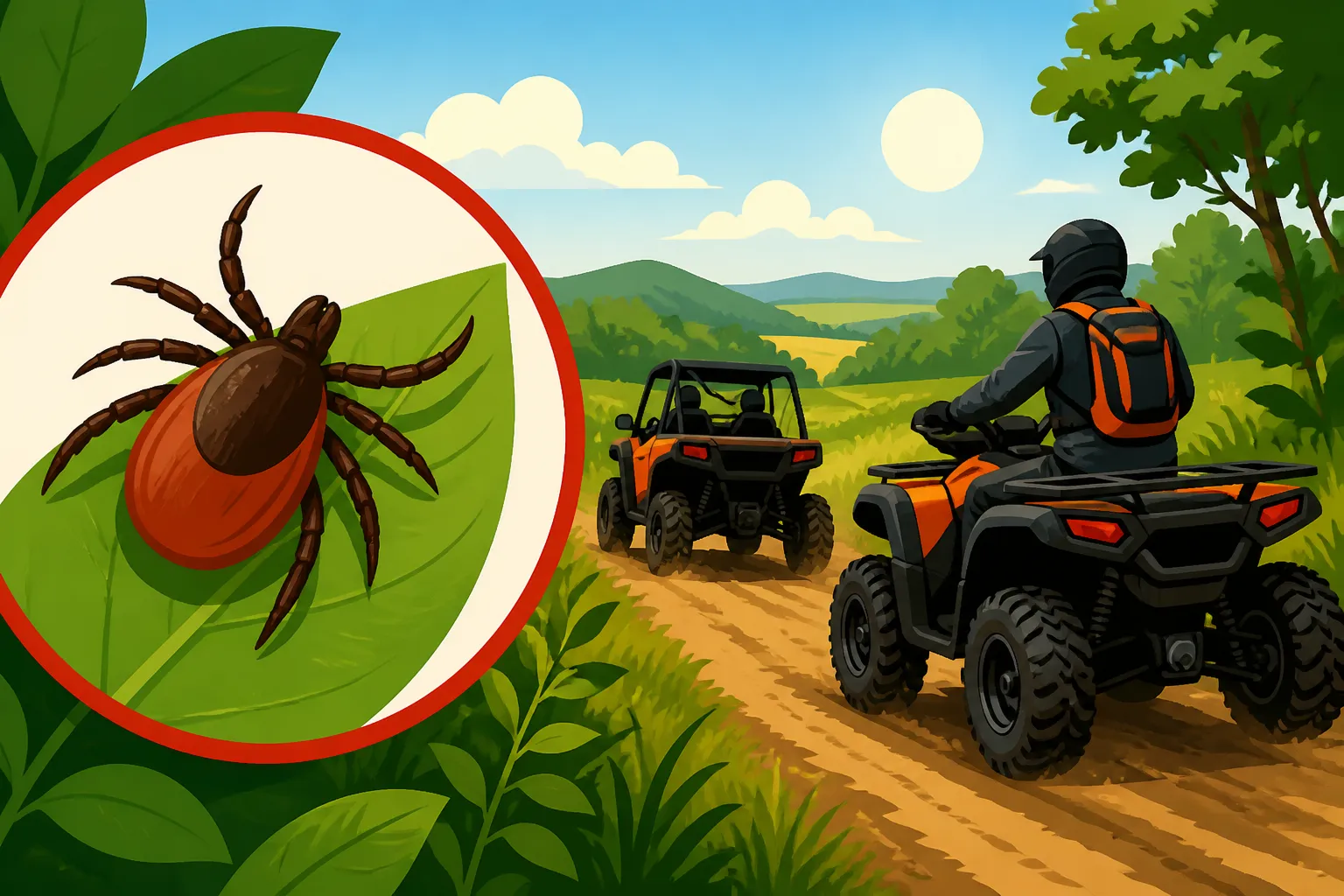
Ticks do not usually leap or fly onto a rider. They can wait on grass or low vegetation and attach when a person or animal brushes past. A tick may crawl for a while before it finds a place to attach, so a quick check at the truck is useful—but it is not a substitute for a more complete check once you are home.
Heat, gear and stops can complicate prevention
Summer riding already means dealing with sweat, dust and layers of protective equipment. Heavy clothing can feel uncomfortable on a hot day, but bare skin is not automatically the more comfortable option if you are moving through brush. Choose riding clothes that cover as much skin as practical without interfering with ventilation, visibility, movement or protective gear.
Plan for stops, too. Riders often remove helmets, gloves or outer layers at a staging area, then set them on grass or against brush. Keep clothing and equipment on a clean surface when possible, and avoid placing a backpack or jacket directly in vegetation. A tick can travel on gear and be found later, even if it was not attached during the ride.
If you are planning a route or checking which areas are open, review Iowa Trail Conditions Before You Ride and Rathbun OHV Area at Plano. Conditions and access information can help you plan the day, but a trail map is not a tick-risk map. Whether you use the Iowa DNR’s trail information or onX Offroad to orient yourself, make tick precautions part of the ride plan rather than assuming one route will be completely clear.
How to prepare before you leave home
Choose clothing and repellent with the label in mind
Wear clothing that makes it easier to spot a tick and harder for one to reach skin. Light-colored fabric can make small dark ticks easier to notice. Tuck pants into socks or boots if that is comfortable and compatible with your riding gear, and keep shirt openings secured as practical. These steps are not a guarantee, but they can reduce gaps where ticks may crawl through unnoticed.
Use an insect repellent that is labeled for the way you plan to use it. Some products are intended for skin, while permethrin products are for clothing or gear and should not be applied directly to skin. Read and follow the product label, including directions for application, reapplication and age restrictions. Do not assume that a product is suitable for every person or every piece of riding equipment.
When applying repellent, take care around eyes, mouth, cuts and irritated skin, and avoid spraying near food or water bottles. If you are riding with children, an adult should handle application and follow the label’s instructions. Repellent is one layer of prevention; clothing, tick checks and sensible habits still matter.
Pack a small tick-check kit
A compact kit can make a tick discovery less stressful. Consider packing fine-tipped tweezers, a small sealable container or bag, hand sanitizer or wipes, and a phone for taking a clear photo of a tick or a skin change. Keep the kit somewhere easy to reach, such as a first-aid pouch, rather than buried beneath tools and spare clothing.
For a group ride, agree on a simple routine before anyone is hot, tired or eager to get home. For instance, riders can check each other’s backs and hairlines at the staging area, then do a fuller check at home. It is easier to remember when it is part of the return routine—along with securing straps, checking fuel and cleaning mud from the machine.
A map can help you keep the ride organized, especially if a group needs to regroup or return to the staging area. onX Offroad can be one way to review a route and orient yourself, while the Iowa Trail Maps From the DNR can help with trail-planning context. Download or save useful map information before you reach a place with weak reception, and carry the basic tick-removal supplies regardless of which navigation tool you use.
| Ride moment | Tick-smart habit | Why it helps |
|---|---|---|
| Before loading | Apply repellent as directed and check that clothing covers skin where practical | Prevention is easier to manage before you are dusty, sweaty or already on the trail |
| At the staging area | Keep jackets and bags off grass and brush | Ticks can crawl onto gear left in vegetation |
| During a stop | Check exposed skin and clothing after brushing through vegetation | A tick may be crawling before it attaches |
| At the truck | Inspect clothing, hair and gear before changing or loading up | You can catch a tick before it travels home |
| At home | Do a careful full-body check and shower when practical | A second check can find ticks missed during the quick trail check |
What to do during the ride and at the trailhead
Make checks part of natural breaks
You do not need to stop every few minutes to inspect yourself. A more workable approach is to check after a meaningful exposure: walking through tall grass, clearing brush from a trail, helping someone recover a machine or spending time in a shaded area with vegetation close to the trail. Look over clothing and exposed skin, especially around sock lines and cuffs.
Pay attention to gear as well as people. Check gloves, boots, helmet straps, backpacks and any clothing you removed. If a rider finds a tick crawling on a sleeve, that is a useful reminder to check more carefully; it does not mean everyone must end the ride. Move to a clear area, remove the tick from clothing, and continue with the group’s normal precautions.
Keep route decisions separate from assumptions about ticks. A drier route, a wider trail or a quick ride does not guarantee that you will not encounter them. If wet or muddy conditions are part of the day’s plan, use Iowa Trails With Mud and Iowa Riding After Heavy Rain for trail-condition planning, and stay alert where vegetation grows near the riding surface. onX Offroad may help a group follow its planned route, but it cannot tell you that a particular patch of grass is tick-free.
Remove an attached tick promptly and carefully
If you find a tick attached to skin, use fine-tipped tweezers if available. Grasp it as close to the skin as possible and pull upward with steady, even pressure. Try not to twist, crush or jerk the tick. After removal, clean the bite area and your hands. If a small part appears to remain, avoid digging deeply into the skin; ask a healthcare professional for guidance if you are concerned.
Do not use a lit match, nail polish, petroleum jelly or another substance to make the tick detach. These approaches can delay removal and may irritate or injure skin. The practical goal is to remove the tick promptly with a suitable tool, then clean the area and keep an eye on how you feel.
If you want to keep the tick for possible identification, place it in a sealed container or bag and note when and where you think the exposure happened. A clear photo may also be useful. Identification can be difficult, and a tick’s appearance alone cannot tell you whether an illness will develop, so do not rely on a photo or a home identification attempt as a substitute for medical advice.
After the ride and when to seek medical advice
Do a full-body check, not just a quick glance
Before heading home, look over visible clothing and exposed skin. At home, check more carefully, including the scalp and hairline, behind the ears, under the arms, around the waist, behind the knees, and around the groin. Ticks can be small and easy to miss, so use a mirror or ask someone you trust to check areas you cannot see.
Inspect clothing, towels, bags and protective equipment. Put worn riding clothes aside for appropriate laundering or drying, following the garment and equipment care directions. If you shower after returning, use that time to check your skin; a shower can help wash away unattached ticks, but it should not replace a hands-on inspection.
Families can make this routine less awkward by agreeing on privacy and boundaries before the ride. Parents can check younger children while explaining what they are looking for, and adults can check one another only with clear consent. If a child rode in a group, remind them to tell an adult if they notice a tick or a new bite rather than brushing it off because the ride is over.
Watch for symptoms and contact a clinician when needed
After a tick bite, pay attention to how you feel and watch the bite area for changes. Some tick-related illnesses can cause fever, headache, fatigue, muscle or joint aches, or a rash. A rash does not always look identical from person to person, and not every tick bite causes illness. If you develop a concerning rash or symptoms after a possible tick exposure, contact a healthcare professional and mention the ride and the approximate date of the bite.
Seek prompt medical guidance if the tick was attached and you are unsure what to do, if removal was difficult, or if you have concerns about a child, pregnancy, an existing health condition or a possible illness. Do not wait for a dramatic symptom to appear before asking a clinician about a bite that worries you. Keep notes about when the ride happened, where you were, when you noticed the tick and any changes that follow.
A tick check is a small part of a broader return-home routine. Riders who already review Iowa Trail Seasons and Conditions, Iowa Trails Good for Kids or Cell Dead Zones in Appanoose County while planning can add repellent, tweezers and a post-ride check to the same preparation list. If you use onX Offroad for navigation, treat it as a route-planning aid—not a substitute for local trail information, tick precautions or medical care.
Disclaimer
This article is for general informational purposes only and does not constitute professional advice. Laws, prices and regulations vary by location and change over time. Consult a qualified professional for guidance on your specific situation.