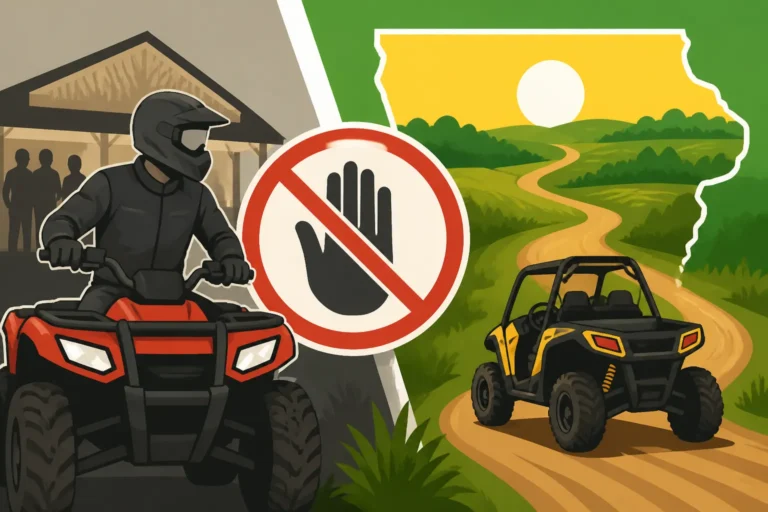
Riding Paul Huting at Waterloo
Paul Huting Recreation Area can be a satisfying ride near Waterloo, but it’s worth checking trail status and park rules before you load the trailer. The Cedar River setting, natural-terrain tracks, and required helmets make this a different outing from a casual gravel-road ride. This guide covers what to check, what to bring, and how to plan a smoother visit.
What to expect at Paul Huting Recreation Area
A Waterloo riding area with a river setting
Paul Huting Recreation Area is an OHV riding area in Waterloo beside the Cedar River. Riders may know the location by its former name, Riverview Recreation Area, so older directions or informal references may use both names. If a map, sign, or local recommendation uses Riverview, confirm that it points to the Waterloo riding area you intend to visit.
The setting is part of the appeal: instead of a long cross-state trail network, you’re looking at a local riding destination with natural terrain and tracks. The number and style of available routes can make it a good fit for a focused ride, practice session, or stop on a broader trip. Don’t assume that a compact park means every trail will suit every machine or rider. Terrain, conditions, and posted rules matter.
The area includes two natural-terrain tracks beside the Cedar River. Before heading out, check the park’s current information and the Two Tracks Beside the Cedar River for details about the riding layout. The Paul Huting's 180 Acres overview can also help set expectations about the scale of the recreation area. Treat online maps and older trip reports as planning aids, not a guarantee that every route is open or unchanged.
Plan for a riding area, not an unrestricted trail system
A destination label such as “OHV park” doesn’t mean you can ride anywhere inside the boundary. Stick to designated routes, follow signs at the entrance and along the trails, and keep out of closed sections. That’s especially important near water, where tempting shortcuts can lead onto sensitive ground or areas that aren’t part of the riding route.
The experience can also vary from one visit to another. Recent rain may leave Iowa soil slick or rutted, while dry stretches can bring dust and loose footing. A track that feels manageable in firm conditions may be much more demanding after a wet spell. Check Iowa Trail Conditions Before You Ride and Iowa Trail Difficulty Ratings, then choose a route that matches the least-experienced rider in your group.
If this is your first visit, leave time to orient yourself before unloading. Read the entrance board, locate the permitted riding areas, and agree on a meeting point with your group. A quick discussion in the parking area is much easier than trying to sort out where everyone went after riders have spread across the property.
Check rules, access, and trail status before leaving
Confirm that the park is open for your planned ride
The most frustrating kind of riding trip is the one where the machines are fueled, the trailer is packed, and the gate or trail is closed when you arrive. Park access can change because of weather, maintenance, events, or other operational decisions. Check the Reading the Iowa DNR Alert Feed and Iowa Trail Closures to Check First before you set out.
Look for information specific to Paul Huting rather than relying only on general statements about Iowa parks. If an alert is unclear, call the park or the responsible local contact before making the drive. That matters even more if you’re traveling from outside Waterloo or planning to coordinate a group. A quick confirmation can save you a wasted trip and help you decide whether you need a backup destination.
Use a map app to plan the drive, but don’t treat it as the final word on park access. For example, onX Offroad can be useful as a supplemental way to organize your route and keep the destination handy. Still, compare your plan with official park information, especially if an app displays a line or access point that hasn’t been confirmed by current signs or park guidance. A mapped route is not permission to ride a closed trail.
Understand the helmet and riding requirements
Helmets are required at Paul Huting. Pack a helmet for every rider, including passengers if they are permitted under the rules that apply to your machine and the riding area. Don’t leave it to the morning of the trip to discover that someone’s helmet is missing, damaged, or doesn’t fit properly. The park’s specific requirement is covered in Helmets Required at the Paul Huting Gate.
Also check the rules that apply to your machine and rider before arrival. Iowa requirements can differ depending on whether you’re riding an ATV, UTV, dirt bike, or another off-highway vehicle, and age-related safety requirements may apply. Keep required registration or permit information available, and follow any posted conditions for the park. The Iowa Trail Maps From the DNR can help with broader orientation, but entrance signs and current park instructions take priority for on-site decisions.
If you’re visiting from outside Iowa, don’t assume your home-state paperwork automatically answers every Iowa requirement. Review the information for Iowa's Permit for a Visiting Machine and Riding Iowa With an Out-of-State Registration before traveling. A few minutes spent checking eligibility and paperwork is much less stressful than trying to resolve a question at the entrance.
| Before you leave | What to verify | Why it matters |
|---|---|---|
| Park status | Confirm the riding area is open and check for closures | Prevents a wasted drive |
| Trail choice | Match the route to rider experience and machine type | Helps reduce avoidable risks |
| Required gear | Pack a properly fitting helmet for each rider | Helmets are required at Paul Huting |
| Machine paperwork | Check applicable Iowa registration or permit rules | Requirements can depend on the machine and rider |
| Directions | Confirm the entrance and final approach | Older references may use the Riverview name |
| Backup plan | Identify another suitable riding option | Weather or maintenance can disrupt plans |
Get your machine and group ready for the ride
Prepare for changing Iowa terrain
A little preparation makes a noticeable difference on natural-terrain routes. Check your tires for damage and appropriate pressure, confirm that the brakes work, and make sure the throttle returns smoothly. Look for loose parts, leaks, and anything that could become a problem once you’re away from the staging area. If a machine has been sitting since last season, test it before the trip rather than discovering a weak battery or sticky control at the park.
Bring basic items that match your machine and the length of your outing: water, a small first-aid kit, communication devices, and any tools or recovery equipment you know how to use. Keep gear secured so it can’t shift or fall onto the trail. If you ride with a group, decide who has the tools, who carries the first-aid supplies, and how you’ll respond if a machine has to stop.
onX Offroad may help you keep your trip information organized alongside your driving route, but don’t rely on a phone screen as your only navigation or safety plan. Cell coverage and battery life can vary, and digital maps may not show real-time closures. Save important information before you leave, keep your phone charged, and take note of the park’s posted layout once you arrive.
Set expectations for children and newer riders
For a family outing, choose the route and pace around the rider who needs the most support—not the most experienced person in the group. A child or beginner may need more time to get comfortable with the machine, practice controlled starts and stops, and learn how to respond to changing ground. Don’t pressure a new rider to follow a group onto terrain they aren’t ready for.
Before the ride, agree on simple group rules: keep a safe following distance, stop in a predictable place if someone needs help, and wait at agreed checkpoints. Tell younger riders not to follow a different group or take an unplanned turn. The guide to Riding With Children at an Iowa Park is a useful companion when you’re planning a day with young riders.
Give everyone a chance to understand the rules before the machines start. Check age-related requirements, make sure each rider can operate their machine safely, and confirm that everyone knows where to stop if the group becomes separated. If anyone is uncomfortable, it’s fine to shorten the ride or stay with a familiar section. A successful outing isn’t measured by how many miles you cover.
Make the Waterloo visit easier from arrival to departure
Use the entrance and staging area as your starting point
When you arrive, take a few minutes to look around before unloading. Find the posted rules, identify the designated riding area, and check where trailers and vehicles should be parked. The right place to stage may depend on signs or local instructions, so don’t assume that a convenient patch of ground is an approved parking spot. Parking a Trailer at an Iowa Park Lot offers broader planning advice for hauling a machine to a riding area.
Once your machine is ready, do a final check of your helmet, fasteners, fuel, and any carried gear. Confirm that the group understands where you’ll regroup and what to do if someone has a mechanical issue. Keep the route conservative until you’ve seen the terrain for yourself. Familiarity with a park’s name or a previous visitor’s description doesn’t replace checking conditions on the ground.
If your navigation app is useful for reaching the park, use it for that job—but confirm the correct entrance rather than following an uncertain pin onto a private drive or restricted access. onX Offroad can be part of that planning routine, while official signs and park instructions remain the authority for where you may enter and ride.
Leave the trails in good shape for the next visit
Stay on marked routes and avoid riding when conditions are so wet that tires are cutting deep ruts or damaging the surface. Iowa soil can become slick and easily disturbed after rain. If the trail is deteriorating, turn back rather than trying to push through; a short ride today is better than contributing to damage that may affect access later.
Be considerate around other riders. Slow down where visibility is limited, give people room, and avoid spraying dirt or crowding someone who is learning. Carry out your trash, secure anything that could blow away, and follow campground or staging-area rules if you’re using those spaces. The park is shared by riders, local managers, and the people who help maintain the trails.
Before you head home, make sure your machine and trailer are secure, check that nothing has been left behind, and look over the equipment for damage. If you noticed a blocked section, damaged sign, or other concern, report it through the appropriate park contact rather than trying to repair or mark the area yourself. That small bit of care helps keep Paul Huting a better place to ride for the next group.
Disclaimer
This article is for general informational purposes only and does not constitute professional advice. Laws, prices and regulations vary by location and change over time. Consult a qualified professional for guidance on your specific situation.