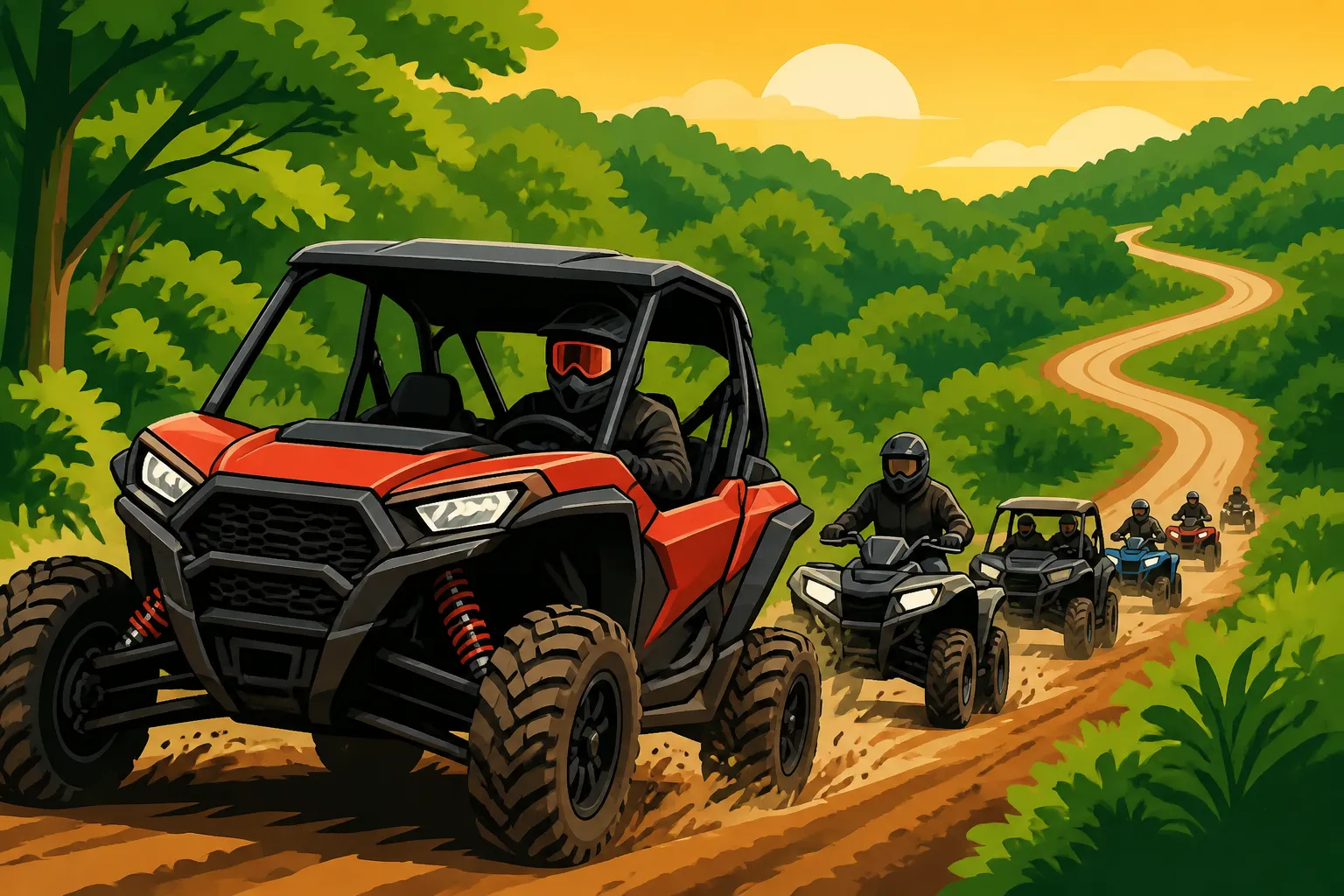
Iowa Trails That Fill Up on Weekends
Weekend crowds can turn an Iowa ATV ride into a long wait to unload, a crowded staging lot, or a drive to a park that has already closed its trails after rain. This guide explains when and where busy conditions are most likely, how to prepare for them, and how to choose a practical backup before you hitch up.
Why Iowa OHV parks get busy on weekends
The same good riding days bring everyone out
When the forecast looks dry and comfortable, riders from nearby towns and farther across Iowa often make the same plan: load up, meet friends, and spend the day on the trails. That can concentrate traffic at a small number of designated riding areas, especially on sunny Saturdays, holiday weekends, and the first stretches of pleasant weather after a long winter.
A busy park does not necessarily mean every trail is packed. The pressure may be concentrated at the entrance, unloading area, campground, or a popular loop while other parts of the riding area feel quieter. Still, a full staging lot can affect your whole visit. You may spend extra time parking and gearing up, and it can be harder to keep a family or group together while machines are unloaded.
Weather adds another wrinkle. Iowa clay can become slick or rutted after rain, and parks may limit access or close trails when conditions are too wet. Then, when the ground dries and riding resumes, many people may choose the same first available weekend. Before making a long drive, check [Iowa Trail Conditions Before You Ride] and [Iowa Trail Closures to Check First]. A clear forecast alone does not tell you whether a trail is open or in good shape.
Parks near population centers can be convenient and popular
Some riders choose an area because it fits easily into a day trip; others are willing to travel farther for a particular terrain or facility. Parks such as Gypsum City near Fort Dodge, Bluff Creek near Eddyville, Lakeview near Solon, Nicholson-Ford near Marshalltown, Rathbun near Plano, and Paul Huting Recreation Area near Waterloo may each attract visitors from their surrounding region. The drive time, trail character, campground options, and family-friendly facilities all influence where riders gather.
It helps to think of “busy” as a mix of factors rather than a fixed ranking. A park can feel crowded because several groups arrive at once, because the main staging area is compact, or because wet-weather closures elsewhere funnel riders toward the places that remain open. Conditions can vary from weekend to weekend, so treat any general expectation as a planning clue—not a guarantee.
For an overview of the designated areas and how they fit into the state’s riding network, see [Iowa's Eight Designated OHV Parks]. If you are comparing destinations, check the park’s own information for access, riding rules, facilities, and current conditions before setting out.
Busy weekends are predictable, but not perfectly
Certain patterns are worth planning around. Saturdays often draw more day riders than weekdays. A three-day holiday weekend can bring both day visitors and campers. The first dry weekend after rain may be especially popular, while persistent wet weather can leave people waiting for trails to reopen.
Those patterns are not a reliable crowd calendar. A local event, a change in weather, a closure elsewhere, or a maintenance project can shift attendance quickly. Instead of asking only, “Which park is least crowded?” ask, “What will I do if my first choice is busy, wet, or closed?” That second question leads to a more resilient trip plan.
How to choose a park and time your arrival
Match the destination to your group
A good destination is not simply the one with the biggest reputation or the most miles. Consider who is riding, what machines you are bringing, how far you are willing to travel, and how much time you have. A family with newer riders may care more about suitable terrain and a manageable staging setup than about covering the most ground. A group with a wide machine should confirm that the trails and facilities suit its equipment before leaving home.
Use a practical comparison rather than relying on a vague promise that one park is always quieter than another:
| Planning factor | What to check | Why it matters on a busy weekend |
|---|---|---|
| Travel time | Drive distance and likely arrival window | A long trip makes a backup plan more important |
| Trail conditions | Recent rain, surface conditions, and closure alerts | Wet trails may be restricted or unavailable |
| Staging | Parking layout and space for trailers | A full lot can delay unloading or complicate group meetups |
| Rider experience | Terrain and rules appropriate for everyone in your group | Crowds can make unfamiliar or challenging trails feel more stressful |
| Facilities | Restrooms, camping, and other available amenities | Popular facilities may have more demand during peak periods |
| Machine fit | Trail and park rules for your vehicle | Avoid arriving with a machine that does not meet requirements |
For a multi-park trip, check each destination separately rather than assuming that similar names or nearby locations mean similar access and conditions. A few minutes confirming the plan can prevent a frustrating arrival with the wrong expectations.
Arrive early, but plan for more than the parking lot
Getting to the park early can give you more time to unload, review rules, and start riding before the busiest part of the day. It is particularly helpful if your group includes children, first-time riders, or people who need extra time to secure gear and check machines. Early arrival also makes it easier to choose a place to park without rushing.
But “arrive early” is not a complete plan. Check when access begins, whether the park has any posted operating hours, and whether the information you have is current. Do not assume you can enter or ride before posted hours simply because the lot appears open. Keep your group together during unloading, and agree on a meeting point in case someone gets separated.
If Gypsum City is your destination, [Staging Early at Gypsum City] is a useful reminder to think through arrival logistics ahead of time. At any park, a trailer needs room to maneuver, and a crowded lot can make backing or turning awkward. Review [Parking a Trailer at an Iowa Park Lot] before you arrive, and avoid blocking traffic while your group gets organized.
Use maps for planning, not as proof that a trail is open
A mapping app can help you orient yourself, think through a route, and plan the drive between destinations. Riders may use onX Offroad as one trip-planning reference, especially when preparing a route or comparing the general layout of an area. But an app should not be treated as the final authority on whether a particular Iowa trail is open, whether a route is legal to ride, or what rules apply at the park.
Check official park or DNR information for closures, access, and posted rules. Then use your map as a supplement to that information, not a replacement for it. Download or save the details you need before you leave if mobile coverage may be unreliable, and make sure everyone in the group understands the planned meeting points.
A useful routine is to compare the map with the park’s current information the evening before your trip, then check for changes again before loading. onX Offroad may help with trip organization, but a closure notice or gate sign takes priority over a route shown in an app.
How to avoid the most common weekend hassles
Confirm conditions and access before loading
It is tempting to check the forecast, see sunshine, and assume the ride is on. Yet rain earlier in the week can leave trails soft, and parks may close or restrict riding to protect the surface. Conditions can also change between the time you plan the trip and the time you arrive.
Before loading, check the park’s official updates and any available Iowa DNR notices. If details are unclear, contact the park or managing organization directly. [Calling a Park Before You Load] is especially sensible when you are traveling a long distance, planning to camp, or bringing a group that would be difficult to redirect at the last minute.
The last check should cover more than trail status. Confirm hours, permitted machines, required registration or permits, helmet or safety rules, and any park-specific restrictions. Make sure the information applies to your intended riding area and not just another nearby facility. Keep required documents and equipment accessible rather than buried under supplies in a trailer.
Make a backup plan that is actually usable
A backup park is useful only if you can reach it, its trails are appropriate for your machines, and it is open. Choose an alternative before departure, check its status, and know how long the detour would take. If you are riding with children or less-experienced members, confirm that the alternative suits them too. A distant option with difficult terrain may not be a helpful substitute just because it has space.
If you are considering [Riding Two Iowa Parks in One Weekend], plan the transitions carefully. Account for driving, unloading and loading, meal breaks, and the time needed to check in at each location. Two destinations can add variety, but hurriedly driving between them may leave your group with less riding time and more fatigue.
A practical plan might look like this:
- Choose a first-choice park and verify its current status.
- Select one alternative that fits your machines, riders, and drive-time limit.
- Check the alternative’s access and conditions separately.
- Agree on a decision point, such as checking again before leaving home.
- Tell the whole group what happens if the first choice is unavailable.
For a simple “Plan B” strategy, see [Picking a Backup Park an Hour Down the Road]. The key is to decide before the first parking lot is full—not while everyone is waiting in the truck.
Keep the group coordinated in a crowded staging area
Crowded parking can be stressful even when the trails themselves are manageable. Agree on where to meet, who is responsible for the trailer, and how the group will communicate if riders arrive separately. If you are meeting friends, share the park entrance or an agreed staging point rather than relying on everyone to find each other after unloading.
Be patient when backing trailers or moving machines through shared areas. Keep access lanes open, watch for children and pedestrians, and avoid leaving gear where another vehicle needs to turn. If the park has posted parking directions, follow them even if a different spot looks more convenient.
On the trail, ride at a pace that lets you respond safely to other users and changing conditions. Do not assume every rider in a group has the same experience or comfort level. Set a regrouping point before entering the trail system, and make sure each person knows what to do if the group becomes separated. A map app such as onX Offroad can be part of that preparation, but everyone should know the agreed plan even if a phone battery dies or reception drops.
Build a weekend plan that can bend
Use a checklist the day before
A short checklist can prevent the familiar scramble of looking for a tie-down, checking a machine, or searching for a permit just as the trailer is ready to go. The night before, confirm the destination, check park and trail updates, review the forecast, and make sure the machine and trailer are ready for the trip. If your route or destination may change, save the relevant information for both options.
Pack with the park and the people riding in mind. Bring appropriate protective gear, water, basic tools, and any required documents. Make sure each rider knows the park rules and the group’s plan for breaks and regrouping. If a child or beginner is coming along, allow time to go over expectations before the first ride rather than trying to explain everything in a noisy staging area.
For navigation, onX Offroad can be one of several tools used to organize the trip, but check important information against official park guidance. Keep a note of the park’s contact details and the backup destination, too. That way, the plan does not depend on one app, one phone, or a single source of information.
Know when to change the plan
Sometimes the best call is to leave later, choose the backup, or skip the ride. A long drive to a closed trail is disappointing, but pushing ahead after an official closure notice is not a good solution. Likewise, a crowded staging area may be manageable for some groups and overwhelming for others. Decide what conditions are acceptable for your riders before you arrive.
If the first-choice park is open but crowded, consider whether your group can still have a safe, enjoyable day. If you cannot park without blocking access, if young riders are getting tired before you start, or if trail conditions are not suitable for your machines, take a pause and reassess. A ride does not have to go exactly as planned to be worthwhile; it does need to remain safe and within park rules.
A little flexibility is what makes weekend riding easier. Check conditions, arrive with enough time to get organized, and keep a realistic alternative in reserve. That preparation cannot guarantee an empty trail, but it can spare you the avoidable frustration of arriving unprepared when Iowa’s popular riding areas are at their busiest.
Disclaimer
This article is for general informational purposes only and does not constitute professional advice. Laws, prices and regulations vary by location and change over time. Consult a qualified professional for guidance on your specific situation.