When the Gypsum City Gate Shuts on October 15
The frustrating part of planning a late-season ride at Gypsum City is that a mild October afternoon can look perfect while the park is already at the end of its riding season. This guide explains what the October 15 closing date means, how to avoid arriving at a closed gate, and what to check before you load your ATV or UTV for a final ride.
What the October 15 closing date means at Gypsum City
Treat October 15 as the end of the riding season
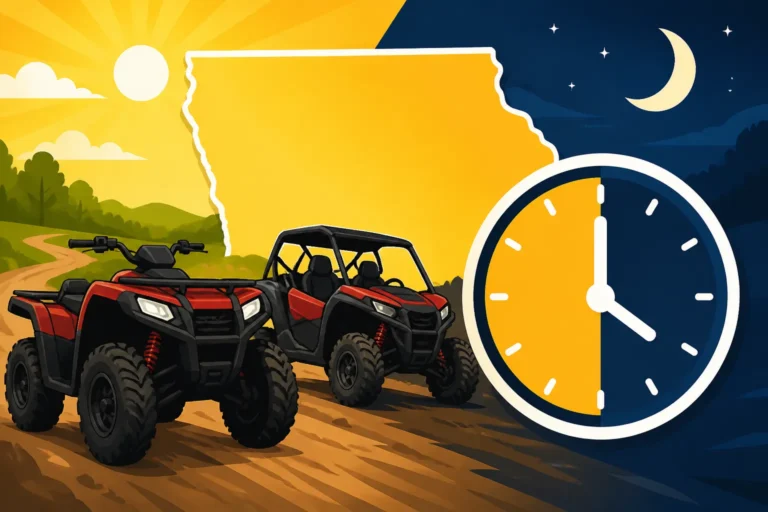
Gypsum City OHV Park near Fort Dodge has a listed operating season that runs from April 15 to October 15. That date is important for trip planning: it marks the scheduled end of the season, not a promise that the park will remain open until a particular hour that day. If you’re hoping for one last ride, don’t assume you can arrive late on October 15 and still get on the trails.
The practical approach is to plan your final visit for before the closing date, then confirm the park’s status shortly before you leave. Park conditions, seasonal schedules, and posted notices can affect whether a planned trip is possible. The dates are a useful starting point, but the current park information should guide your decision on the day.
For a fuller look at the seasonal dates, see [April 15 to October 15 at Gypsum City]. If your schedule is tight, treat the last few days as a period to verify—not as a guaranteed extension of the season.
A closed gate means the trails are closed too
When the gate shuts, don’t treat the closure as a parking inconvenience or an invitation to find another way in. A closed entrance means you should not ride into the park, even if you can see a trail, a staging area, or another possible access point. Riding around a gate can put you on closed property and may damage trails or create problems for the people responsible for maintaining them.
This can be especially tempting when the weather is dry and the park looks rideable. But a trail’s appearance doesn’t tell you whether it is officially open. Seasonal closures may be in place for reasons that aren’t obvious from the entrance, and driving past a closure barrier can undermine work done to protect the trail system.
The same caution applies if you’re camping nearby or have already unloaded your machine. A campsite or a nearby road does not create permission to ride closed park trails. Check what remains open, if anything, and follow posted instructions rather than relying on what other visitors appear to be doing.
The calendar closing date is not the only possible closure
The scheduled end of the season is one reason a park may close, but trail conditions can also affect access before that date. Wet ground is a common concern in Iowa: clay and soft soil can become deeply rutted under tires, and damage left by a wet weekend can take time and volunteer effort to repair. A park may close trails or the whole riding area when conditions call for it.
That means a warm, sunny forecast does not necessarily mean the trails are open. Rain from earlier in the week, saturated ground, or a posted closure can matter more than the conditions you see when you arrive. Keep [Iowa's Weather-Driven Trail Closures] in mind, particularly during fall, when the forecast can shift quickly and daylight gets shorter.
Before heading out, look for park notices and official closure information. [Reading the Iowa DNR Alert Feed] can help you check for posted alerts, but don’t rely on a single general source if the park provides its own instructions. When the status is unclear, contact the park or its managing organization before loading up.
How to confirm the gate status before you leave
Check official park information close to your trip
Make the final status check close enough to departure that it reflects the latest information you can find. A closure announced after you first planned the ride can turn an otherwise organized day into a long drive for nothing. Check the park’s official information, any posted alerts, and the instructions shown at the entrance or by the managing organization.
If you’re traveling from outside Fort Dodge, this matters even more. A rider driving across Iowa with a trailer may have fuel, food, and family schedules built around the trip. A quick check before departure can save the hassle of arriving at a closed entrance with a machine that cannot be used there.
If online information is unclear, call before you load. [Calling a Park Before You Load] is a sensible habit in any season, and it’s especially useful near the end of Gypsum City’s scheduled season. Ask a straightforward question: Is the riding area open for riding on the day you plan to visit, and are there any restrictions or conditions you should know about?
Check trail conditions, not just the weather
A weather app can tell you whether rain is expected. It cannot tell you whether park trails are open, whether the ground has recovered from recent rain, or whether a closure is in effect. Use the forecast as one part of the decision, then look for trail-specific updates and park notices.
The last ride of the year can feel worth squeezing in, but riding wet or closed trails can leave ruts that linger after the season ends. If a club or park operator asks riders to stay off, respect that request. A postponed ride is frustrating; damaged trails can affect everyone who hopes to return when the park reopens.
For a practical pre-trip checklist, use [Iowa Trail Conditions Before You Ride] and [Iowa Trails Closed After Rain]. Those topics help frame the right questions: Is the park open? Are conditions suitable? Is the area you want to ride available? If you cannot confirm the answer, make a backup plan instead of assuming the gate will be open.
Use mapping tools as a planning aid, not proof of access
A mapping app can help you understand where the park is, plan your drive, and keep track of a route while riding in places where access is permitted. For example, onX Offroad may be useful for organizing a trip and reviewing map information before you leave.
But a map is not an opening notice. A trail shown in an app does not necessarily mean that trail is currently open, and a route line does not grant permission to enter a closed area. Check official park information separately, and follow signs and closures on the ground even if a map appears to show a usable route.
If you use onX Offroad to save a planned trip, include the entrance, your staging area, and a possible alternative destination in your notes. That preparation can make a change of plan easier, but it should never replace checking the official status of Gypsum City before departure.
Planning a final Gypsum City ride before the gate closes
Choose a date with room for a change of plan
Instead of building your whole fall riding schedule around October 15, aim to visit earlier in the season. That gives you more room to adjust if the park closes temporarily because of weather or if a family commitment, mechanical issue, or travel delay gets in the way. It also avoids the pressure of trying to make a single final date work.
If you’re bringing children or organizing a group, confirm the plan with everyone before loading. Tell riders that the trip depends on the park being open, and agree on a backup activity or destination. This avoids the awkward scene of arriving at the entrance, discovering a closure, and having no idea what to do next.
The park’s size and trail network can make an earlier visit worthwhile in its own right. If you’re deciding whether to spend a day or make a weekend of it, [65 Miles of Trail at Gypsum City] offers useful context for planning how much time you might want to set aside.
Plan camping and lodging around the closure
A place to sleep near Fort Dodge does not guarantee that you can ride at Gypsum City. If you’re arranging an overnight trip, confirm both the riding status and the status of the camping option you intend to use. Ask whether the campground is operating during your planned visit and whether the closure affects access to any facilities you expect to use.
This distinction matters when a trip involves a trailer, several machines, or a family that has planned meals and overnight gear around the park. Don’t assume that all services remain available until the exact calendar closing date. Confirm the details with the relevant operator, and avoid arriving after hours expecting to sort out access at the gate.
For practical trip preparation, see [Camping With a Trailer at Gypsum City]. If your ride depends on a particular campsite or facility, make that confirmation separately from the question of whether the trails are open.
Prepare a nearby alternative before you tow
A backup destination is useful even when you’re confident that Gypsum City will be open. Fall weather can change, a closure notice can appear, or a mechanical issue can cut a trip short. Decide in advance whether you’ll reschedule, visit another open riding area, or turn the day into a non-riding visit to the Fort Dodge area.
When comparing alternatives, check each destination’s rules, access, and operating status independently. A park that is open on a map or listed in an old trip plan may have its own seasonal dates and weather-related closures. Don’t assume that an alternative stays open later than Gypsum City without checking.
A simple fallback plan can be as modest as choosing another date and keeping the trailer hooked up until the park confirms its status. If you’re willing to travel farther, [Picking a Backup Park an Hour Down the Road] can help you think through how to choose an alternate destination without making an unplanned drive across the state.
A practical checklist for the October 15 cutoff
Before you leave home
Use this checklist on the day before the trip and again before departure:
- Check the scheduled season dates and confirm the park’s current opening status.
- Look for closure or trail-condition notices from the park or its managing organization.
- Call if the status is unclear, especially if you are towing a trailer or traveling a long distance.
- Confirm that any campground or other facility you plan to use is operating.
- Check your machine, fuel, tie-downs, and required riding gear so a preventable problem doesn’t shorten the day.
- Pick a backup plan in case the park is closed or conditions change.
- Save useful maps for navigation, but treat official notices and posted signs as the authority on access.
The key is to verify two different things: the seasonal schedule and the park’s actual status for your planned visit. The scheduled October 15 end date gives you a planning boundary. A separate status check tells you whether a ride is allowed on the day you hope to go.
| What you need to know | Why it matters | What to do |
|---|---|---|
| Scheduled season end | October 15 is the listed end of Gypsum City’s operating season | Plan your ride before the cutoff rather than counting on a late arrival |
| Current park status | Weather or other conditions may affect access before the seasonal end | Check official notices close to departure |
| Gate and trail access | A closed entrance means you should not ride into the park | Do not bypass barriers or use an unofficial entry |
| Camping and facilities | Services may not follow the same assumptions as your riding plan | Confirm availability with the relevant operator |
| Backup destination | A closure can derail a long tow if there is no alternative | Choose another date or verify another open riding area |
If you arrive and the gate is closed
Stop at the entrance and read the posted information. Don’t unload in a way that blocks access, and don’t try to enter around a gate or barrier. If a phone number or official notice is provided, use it to clarify the closure and ask whether there is any approved alternative for that day.
If the closure is seasonal, the right move is to reschedule for the next operating season. If the closure is temporary, wait for an official reopening notice rather than relying on a gap in the barrier or an informal comment from another visitor. Be courteous to staff, volunteers, and other riders; they may be handling a closure that protects the trails or addresses a safety concern.
Most of all, don’t let a disappointing drive persuade you to ride somewhere you don’t have permission to use. A closed park is not a cue to take a machine onto a neighboring field, a private lane, or an unapproved trail. Respecting the closure helps protect access for the next season.
Make the cutoff part of the trip plan
The October 15 date is easiest to manage when it is built into your plans from the start. Choose an earlier ride date, confirm the park’s status before you tow, and decide what you’ll do if a weather or seasonal closure changes the plan. That small bit of preparation can prevent a wasted journey and helps keep the trails in good shape.
If your goal is to ride Gypsum City one last time before the season ends, focus on a confirmed open day—not on trying to beat the gate. Check the notices, follow the park’s instructions, and leave enough flexibility to reschedule. A good final ride is one that happens while access is permitted and the trails are ready for riders.
Disclaimer
This article is for general informational purposes only and does not constitute professional advice. Laws, prices and regulations vary by location and change over time. Consult a qualified professional for guidance on your specific situation.