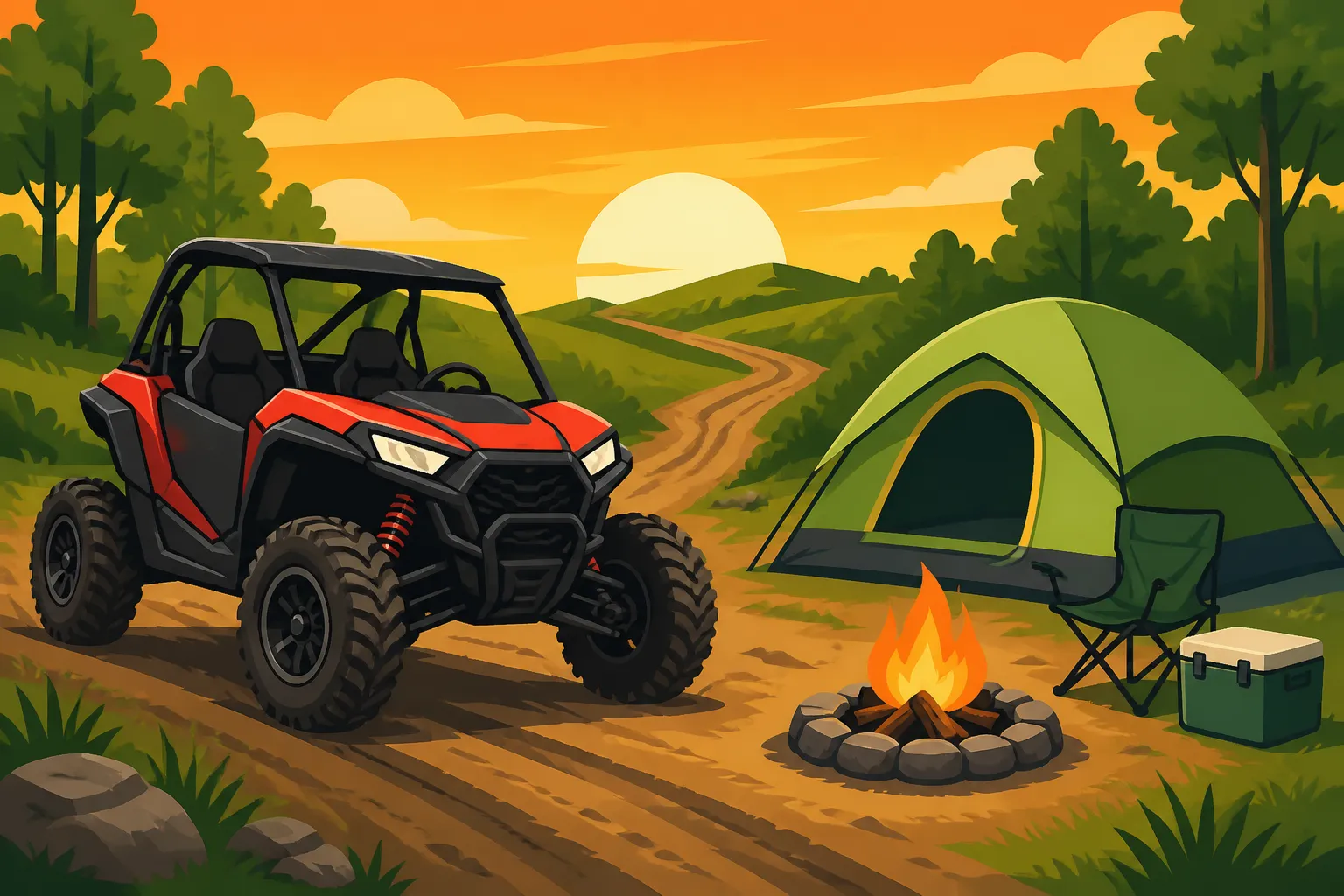
Camping Near an Iowa OHV Park
A ride day can end with a muddy machine, tired kids, and a long drive still ahead. Camping near an Iowa OHV park can make the weekend easier, but campsites, facilities, access rules, and trail conditions vary from one area to another. This guide explains how to compare on-site and nearby camping, choose a practical base, and plan the details before you load the trailer.
Decide whether to camp inside the OHV park or nearby
On-site camping keeps the ride day simple
When a park has camping, staying on-site can cut down on morning driving and make it easier to take breaks between rides. That can be especially helpful with children, a group of riders, or a machine that needs attention after a muddy loop. You can unload once, settle in, and focus on the park instead of coordinating a second destination at the end of the day.
On-site camping is not automatically the best fit, though. A park campground may have limited spaces or amenities, and the camping area may operate under rules that differ from the riding area. Before planning around a specific site, confirm whether overnight stays are allowed, what kind of accommodation is available, and whether you need to reserve or arrange access in advance. A campground being mentioned in an old trip report does not guarantee a particular site or service will be available for your dates.
The key distinction is whether camping and riding are managed together. Even if the campground is beside a trail system, ask whether campers can access the riding area directly, whether machines may be driven between the site and trail entrance, and where trailers should be parked. If the rules require you to haul the machine to a staging area, factor that extra setup into your plan. [Camping at an Iowa OHV Park] is a useful companion topic when you are comparing what to confirm before a trip.
A nearby campground can offer a better overnight setup
Camping outside an OHV park may be a better choice if you need a particular type of site, want more room for a trailer, or prefer facilities that the park does not offer. Depending on the area, your alternatives may include a public campground, a county conservation area, or a private RV campground. The tradeoff is additional travel between camp and trailhead, so check the route and parking arrangement before assuming the two locations will work smoothly together.
Think about the whole group, not only the machine. A basic campsite may suit riders who plan to spend most of the day on the trails, while a family may value a quieter place to sleep, accessible washrooms, or a separate activity for people who are not riding. If you are towing a large trailer, a narrow campground entrance or tight site can turn arrival into a stressful exercise. Ask about site dimensions and turning room rather than judging suitability by a campground name alone.
Nearby camping also means you should be clear about where riding is permitted. A machine’s registration or a campground reservation does not grant permission to ride on connecting roads, private property, or unmarked trails. Plan to transport the ATV or UTV between the campground and the park unless the operator confirms a legal, designated connection. Review [Iowa Rules for Riding Public Land] and the park’s own directions before treating a nearby trail or road as a route.
Compare Iowa riding areas and camping options
Different Iowa OHV areas suit different kinds of weekends. Some riders want to camp as close as possible to the trailhead; others are happy to stay farther away if the campground better matches their trailer, family, or equipment needs. Use the table as a starting point, then confirm current arrangements directly with the park or campground operator.
| Riding area | Nearby reference point | Camping considerations | Best planning question |
|---|---|---|---|
| Gypsum City OHV Park | Fort Dodge | The park is associated with a campground; confirm availability, site type, and access rules | Can your trailer and camping setup fit the site you want? |
| Bluff Creek OHV Park | Eddyville | Camping is discussed as a park option; verify the current setup and rules | What camping facilities are open for your planned dates? |
| Rathbun OHV Area | Plano | Look at camping options around the Rathbun area as well as the riding area | How far is the campground from the riding entrance, and how will you move the machine? |
| Lakeview OHV Park | Solon | Compare park-area camping with nearby alternatives | Are overnight stays permitted at the park, or should you book elsewhere? |
| Nicholson-Ford OHV Park | Marshalltown | Confirm whether camping is available at the riding area or requires a separate campground | Is there suitable trailer parking at the chosen campsite? |
| Paul Huting Recreation Area | Waterloo | Check the recreation area’s rules and nearby lodging or camping options | What are the current access and overnight-use arrangements? |
Gypsum City offers a strong option for a park-centered weekend
Gypsum City OHV Park near Fort Dodge is a natural place to investigate if you want to combine riding and camping. The park is associated with a thirty-three-site campground, but that does not mean every site will fit every rig or be open for every trip. Verify the current reservation process, site details, operating conditions, and any rules about parking a machine or trailer. [Gypsum City's Thirty-Three Site Campground] provides a useful starting point for that specific planning.
A park-centered stay can be especially convenient when your group expects to ride for much of the day. Still, convenience depends on the exact arrangement. Ask whether the campsite has the hookups or facilities your group expects, whether the trailer can remain at the site, and whether riders must use a separate staging area. For a family with a small tent, the answers may be different from those for a crew arriving in a large RV with multiple machines.
Fort Dodge can also serve as a practical base for supplies and backup plans, but do not assume every need can be handled at the trail entrance. Bring the food, riding gear, tools, and machine supplies you will need, and identify where you could get fuel or basic provisions before departure. If conditions change, check [Iowa Trail Conditions Before You Ride] and [Iowa Trail Closures to Check First] before making the drive.
Bluff Creek and Rathbun call for different kinds of planning
Bluff Creek OHV Park near Eddyville is another area to consider if you want camping connected with a riding weekend. The park is associated with no-cost camping, but “free” does not tell you whether the site suits your setup or what facilities are available. Confirm the current camping rules, arrival expectations, sanitation arrangements, and any limits on trailers or overnight parking. The details in [Why Bluff Creek Costs Nothing to Camp] can help you frame the questions to ask.
Rathbun OHV Area near Plano is worth comparing with campgrounds around the Rathbun Lake area. A nearby campground may offer a different overnight experience from the OHV site itself, but distance and transport matter. Check the drive between camp and the staging area, how long it takes to load and unload, and whether your route crosses roads where the machine cannot legally be operated. See [Rathbun OHV Area at Plano] for more context about the riding destination.
The same approach applies to Lakeview near Solon, Nicholson-Ford near Marshalltown, and Paul Huting near Waterloo. Do not assume that because a park appears on a map, it has an on-site campground or that a nearby campground allows machines to be ridden to the trail. Contact the operator and confirm the arrangement. [Lakeview OHV Park at Solon], [Nicholson-Ford OHV Park at Marshalltown], and [Paul Huting Recreation Area at Waterloo] offer starting points for comparing those areas.
Choose a campground that fits your group and equipment
Check site size and access before booking
A campsite that works for a tent and one small vehicle may not work for a long trailer, tow vehicle, and two machines. Before you reserve, describe your complete setup: tow vehicle, trailer length, number of machines, and whether you need room to unload. Ask about turning space, the surface at the site, and whether the trailer can stay connected or must be parked separately. A quick phone call can prevent arriving after dark and discovering that backing into the site will be difficult.
Consider the route into the campground, too. Rural entrances can be narrow, uneven, or difficult to navigate with a long rig. If you are traveling with another family, confirm whether both vehicles can park near the site or whether overflow parking is available. Do not count on leaving a trailer in a staging lot overnight unless the park or campground explicitly permits it.
Machine security deserves a little attention as well. Ask where trailers may be left while you ride and whether the campground has any restrictions on securing equipment. Bring suitable locks and tie-downs, and avoid leaving essential documents or loose gear visible in an unattended vehicle. These are basic trip-planning steps, not a substitute for the campground’s own guidance.
Match the campground facilities to your comfort level
A remote or simple campsite can be a good fit if you are prepared for it. A family expecting showers, electrical hookups, or easy access to supplies may have a very different experience from riders who are comfortable with a more basic overnight setup. Find out what is actually available rather than relying on vague descriptions such as “camping nearby.” Ask about potable water, restrooms, waste disposal, electricity, and whether facilities are seasonal.
The weather can change what counts as a comfortable site. After rain, a grassy area may become difficult for a trailer, while a gravel or paved pad may be easier to manage. In hot weather, shade and ventilation matter; in cooler conditions, check what your sleeping setup can handle. Pack for the forecast, but also consider the possibility that a wet ride will leave clothing and equipment damp overnight.
For families, the campsite is part of the experience even when riding is the main event. Think about sleeping arrangements, meal preparation, quiet hours, and whether younger riders will have a safe place to relax away from the machines. If the group includes non-riders, ask what they can do nearby and how they will get there. A camping plan that works for everyone often makes the ride itself more enjoyable.
Plan the ride, transport, and campsite as one trip
Keep machine movement legal and uncomplicated
The easiest mistake is to book a campground close to a park and assume you can ride between the two. A short distance on a map does not necessarily mean there is a legal route. Public-road rules, local permissions, private property boundaries, and park access rules all matter. If the campground is not directly connected to an authorized riding area, transport the machine on a trailer or in a tow vehicle.
Before leaving home, identify the campground entrance, the OHV staging area, and the route you will drive between them. Save the locations in a mapping tool and keep an offline map available in case cell service is unreliable. onX Offroad can help you review mapped trail areas and orient yourself, but a digital map should not be treated as permission to use a route. Confirm access and closures with the land manager or park operator.
Also plan for the day you arrive. If check-in and trail access have different schedules or procedures, coordinate them before you set out. Know where to park while unloading, where the machine should be secured, and whether the campground or park has separate check-in instructions. A little preparation can save you from trying to sort out two sets of rules while the trailer is blocking a narrow entrance.
Prepare for changing trail and campground conditions
Trail conditions can affect both your ride and your campsite plan. Iowa clay can become slick after rain, and a trail closure may change the area you can ride or whether a trip makes sense at all. Check the park’s official updates before loading, then check again before you leave. If your first-choice park is closed, having a backup riding area or a flexible campground plan can spare you a wasted drive.
Use onX Offroad or another mapping resource to organize waypoints, but pair digital planning with current information from the operator. Mark the campground, staging lot, fuel stops, and a backup destination. If several vehicles are traveling together, share the plan with everyone so no one is relying on a single phone or driver to know where to go. Downloading or saving route information before arrival is helpful when coverage is spotty.
For a longer trip, build in time for weather and mechanical delays. Pack recovery gear suited to your machine and the terrain, basic tools, water, and a way to communicate with the group. Keep the campground contact details and park information accessible. [Trailering an ATV Across Iowa] can help with the transport side, especially if the trip involves a long haul or more than one machine.
Make a camping checklist before you leave
Confirm the details that can disrupt a weekend
Call or check directly with the campground and park shortly before departure. Confirm that camping is allowed for your dates, whether reservations are needed, what the site can accommodate, and how to check in. Ask about current access conditions, any temporary restrictions, and whether the riding area is open. A plan based on last season’s experience may not fit the conditions of your next visit.
It is also worth asking about the practical details that are easy to forget: where to park the trailer, whether machines may be run near campsites, quiet hours, campfire rules, waste disposal, and whether dogs are permitted. Rules can differ between a campground and the OHV park beside it. If you have a large group, ask whether there are limits on vehicles or whether you need to arrange multiple sites.
Write the answers down or save the relevant information to your phone. Do not rely on one person remembering every instruction from a call. Share the arrival address, staging instructions, and backup plan with the rest of the group, especially if people are driving separately.
Pack for riding and overnight comfort
Separate riding equipment from camping supplies so that a late arrival does not become a full trailer search. Keep helmets, protective gear, registration documents, and machine essentials together. Put sleeping gear, cooking items, lighting, and weather layers in a separate place. If the ride leaves you muddy, having a change of clothes and a towel easy to reach can make camp setup much more pleasant.
Plan meals and water around the facilities you have confirmed. If the campground does not provide the services your group needs, bring what is appropriate and know how you will manage waste responsibly. Pack a first-aid kit, chargers or backup power, and basic repair supplies. For a family trip, bring a few simple activities for time at camp, especially if weather or trail conditions shorten the riding day.
Finally, leave room in the schedule for cleanup and loading. A machine that is covered in wet dirt may need attention before transport, and a crowded departure can create avoidable frustration. Follow posted wash and disposal rules, secure the machines properly, and do a final check of the campsite before leaving. A smooth return trip is part of a well-planned weekend.
Disclaimer
This article is for general informational purposes only and does not constitute professional advice. Laws, prices and regulations vary by location and change over time. Consult a qualified professional for guidance on your specific situation.