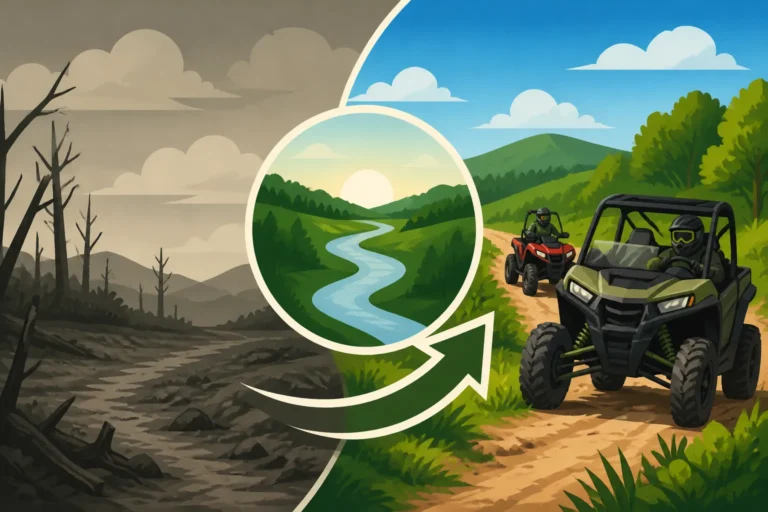
April 15 to October 15 at Gypsum City
Gypsum City OHV Park near Fort Dodge has a defined riding season: April 15 to October 15. That calendar window helps you plan a trip, but it does not guarantee every trail will be open on every day. Weather, trail conditions, maintenance, and park notices can change the ride, so it pays to check before loading your machine.
What the April 15 to October 15 season means
The dates mark the park’s riding window
The April 15 to October 15 season gives riders a useful starting point for planning at Gypsum City OHV Park in Webster County. It helps answer the first practical question: when might a trip be possible? If you are arranging time off, coordinating with friends, or booking a campsite, those dates are the boundaries to keep in mind.
They are not, however, a promise that the park will be open on every day within that period. A trail system can be affected by rain, maintenance, safety concerns, or other temporary closures. A date inside the season is a reason to investigate conditions, not a substitute for checking them.
That distinction matters most when you have a long drive or a trailer full of machines. Before leaving Fort Dodge or heading in from another part of Iowa, look for current park notices and trail updates. For an overview of the location and riding area, start with [Gypsum City OHV Park at Fort Dodge].
The park’s calendar is not the same as trail readiness
A seasonal opening date and a trail’s physical condition are two different things. Spring rain can leave Iowa soil soft and vulnerable to rutting, while a dry stretch later in the season may make trails dusty. Conditions can also vary across a large riding area, so a single day’s weather does not necessarily describe every loop.
When trails are saturated, riding can cause damage that lasts long after the mud dries. Deep ruts change the surface for the next riders, and repeated traffic on wet ground can make repairs more difficult. A park may limit access or close routes to protect the trails, even when the season has begun and the gate is otherwise operating.
If a recent storm has passed through Webster County, give the park’s notices a careful look before you go. A broader guide to closures and changing conditions is [Iowa's Weather-Driven Trail Closures]. It helps put a temporary closure in context: the season may be underway, but the ground still has to be ready.
Treat the end date as a planning boundary
October 15 is useful for planning, but it should not be treated as a reason to squeeze in one last ride without checking details. As the date approaches, daylight is shorter, temperatures can change quickly, and a wet fall weekend may leave trails in poor shape. A ride that looks straightforward on a summer calendar can require more preparation in autumn.
If you are considering a late-season visit, verify that the park is open for the date you have in mind and check for any specific restrictions. Do not assume that a previous trip’s access, trail layout, or conditions will carry over. [When the Gypsum City Gate Shuts on October 15] is a helpful related topic for riders planning around the seasonal cutoff.
A little flexibility can save a frustrating trip. Choose a backup date, let your riding group know that conditions may change, and avoid making nonrefundable arrangements unless you have confirmed the details directly with the park or campground.
How the riding experience changes through the season
Spring brings fresh trails and unpredictable ground
Early-season riding can be appealing after a long winter. The trails are back on the calendar, vegetation is beginning to grow, and riders are eager to get their machines out. But spring is also the time when damp ground deserves the most respect. A trail can look firm from the staging area and still be soft in shaded or low-lying sections.
Pay attention to recent rain, not just the forecast for the day of your ride. If the area has had a wet spell, the ground may need time to drain. Riding into a closed or visibly vulnerable section can damage the trail and create trouble for other visitors. When in doubt, stay on routes that are clearly open and follow posted directions.
This is also a good time to keep your expectations modest. The first trip of the season does not need to be a marathon. Start with a manageable loop, check how the machine and tires handle the surface, and be prepared to turn back if the trail becomes unsafe or unusually soft. For a closer look at the risks after heavy rain, see [Riding the Week After a Downpour].
Summer often rewards preparation more than speed
Summer gives riders longer days and more opportunity to plan an extended visit. At a park with many miles of trail, it is tempting to assume you can cover a large area in one outing. In practice, the ride can take longer than expected when your group includes newer riders, children, machines with different capabilities, or frequent stops.
Heat, dust, and changing weather deserve attention even when the trails are dry. Bring water, plan rest breaks, and make sure everyone knows where the group will regroup if riders become separated. Before setting out, check fuel, tires, lights, and basic recovery equipment. A small mechanical issue is much easier to handle near the staging area than after a group has spread out across the park.
The trail network is often described by its scale, but mileage alone does not tell you how long a ride will take. [65 Miles of Trail at Gypsum City] gives useful context for why it helps to plan a route rather than simply head out and see how far you get. Use a map and choose a realistic distance for the slowest or least experienced rider in your group.
Fall calls for an earlier finish and a weather check
Fall riding can be comfortable and scenic, but shorter daylight changes the way you should plan. A route that felt easy to finish in midsummer may leave little margin later in the season, especially if your group stops often or has to address a repair. Set a turnaround time before you start and leave enough daylight to return, load safely, and travel home.
Keep an eye on temperature swings and rain. A clear morning can turn into a chilly, damp afternoon, and muddy ground can become more difficult as temperatures drop. Pack an extra layer, keep essential items dry, and make sure your phone or navigation device has enough charge for the day.
The seasonal cutoff makes fall logistics particularly important. Do not let a planned trip become a rushed trip just because the riding window is nearly over. Confirm the park’s status, make a conservative route choice, and follow posted closing instructions. A good last ride is one that ends with enough time to load up calmly.
| Part of the season | Common planning concern | Practical approach |
|---|---|---|
| Spring | Soft ground after rain | Check recent conditions and avoid riding wet or closed trails |
| Summer | Heat, dust, and ambitious route plans | Carry water, plan breaks, and choose a realistic loop |
| Fall | Shorter daylight and changing weather | Set a turnaround time and confirm the seasonal closing details |
| Any time | Temporary notices or closures | Check park updates before leaving home |
Planning a trip around the season dates
Confirm the park status before you load
A quick check before departure can prevent the familiar disappointment of arriving to find a closure notice or unsuitable trail conditions. Look for updates from the park and the Iowa DNR, and pay attention to the date and time of any notice. A report from earlier in the week may not reflect heavy rain that fell afterward.
Do not rely only on a general map or an old social post. Maps are valuable for orientation, but they cannot always tell you whether a particular trail is open today. A tool such as onX Offroad can help with route planning and understanding the surrounding area, but use official park information for access status and closures.
If you are travelling with a group, make the status check part of the plan rather than leaving it to one person at the last minute. Share the update with everyone, agree on a backup plan, and decide whether you will postpone if trails are closed or too wet. [Iowa Trail Conditions Before You Ride] offers a useful checklist-style perspective for making that decision.
Choose a route that fits the group
The best route is not necessarily the longest one. A family outing with a young rider, a mixed group of ATVs and side-by-sides, and an experienced group seeking a longer day all need different plans. Start by considering the least experienced rider and the machine that is least suited to rough or technical sections.
Before leaving the staging area, agree on how the group will handle turns, stops, and separation. Pick clear regrouping points and make sure everyone knows what to do if they lose sight of the rider ahead. Keep the pace comfortable, especially when the trail surface is unfamiliar or visibility is limited by dust, trees, or terrain.
For navigation, onX Offroad can be one planning aid alongside park maps and posted signs. Look at the route before the ride, but do not let a digital line override a closure marker or an on-the-ground instruction. If a trail is closed, turn around and choose an open route rather than trying to find a way around the barrier.
Plan for the details beyond riding
A successful trip involves more than the time spent on the trails. Check what the park provides, what you need to bring, and whether your group plans to camp or travel home the same day. If you are camping, confirm the relevant arrangements separately rather than assuming a campsite is available simply because the riding season is open.
For a May visit, for example, you might be eager to ride after the park’s seasonal window begins. But spring weather can still bring chilly evenings and wet ground. Pack clothing for changing conditions, and have a plan for drying gear and securing equipment if rain moves in. [Camping at Gypsum City in May] can help you think through the camping side of an early-season visit.
Before leaving home, check the machine itself. Confirm tire condition and pressure, fuel, brakes, lights, and secure cargo. Carry the basics your group may need, such as water, a first-aid kit, a charged phone, and suitable recovery items. These preparations do not guarantee a trouble-free day, but they can make a small problem far less stressful.
Reading closures, maps, and on-site information
Use official notices for day-of decisions
A park’s seasonal dates provide the broad framework; current notices help you decide whether to ride on a particular day. Pay attention to messages about temporary closures, wet trails, maintenance, or changes in access. If wording is unclear, contact the park or the relevant managing agency before you make the drive.
A closure is not merely an inconvenience to route around. It may be in place to protect the trail surface, address a safety issue, or allow work to take place. Do not ride around gates, barriers, or signs, and do not assume a route is open because it appears on a map. Posted instructions at the park take priority over a planned route.
If you are comparing more than one possible destination, use the same habit for each park. [Checking Whether Three Parks Are Shut] is a helpful reminder to check the status of your intended destination and any backup before you commit to the trip.
Combine maps with signs and common sense
A map can help you understand the general layout, identify where you are, and plan a route that suits your group. onX Offroad may be useful as one part of that preparation, particularly when you want to review the area before arriving. But no mapping app should be treated as a live guarantee that every marked trail is open or passable.
At the park, look for posted rules and trail markers. Conditions can change, and signs may communicate a closure or reroute that a digital map does not show. If a route marker is damaged or unclear, stop and reassess rather than guessing. When riding with others, make sure the lead rider and the last rider both understand the plan.
You can also use a paper or downloaded map as a backup if phone service or battery life becomes an issue. Before the trip, save the information you may need, bring a charging option, and tell someone outside the group where you are riding and when you expect to return. These are simple habits, but they matter when a ride runs longer than planned.
Respect the trail if conditions deteriorate
Conditions can shift during the day. A shower may make a previously firm section slick, and a dry trail may become difficult when traffic has loosened the surface. If the trail starts to feel unsafe or is showing signs of damage, slow down and reconsider whether continuing is sensible.
Riders sometimes feel pressure to keep going because the group has travelled a long way or has already planned a full day. That is understandable, especially when everyone is excited to ride. Still, turning around is often the better choice than forcing a machine through a soft section or adding deep ruts that other riders will encounter later.
Follow the park’s instructions, stay on designated routes, and avoid creating a new path around mud or obstacles. The point is not to finish every loop on the map; it is to leave the trails in good shape and get everyone back safely. That approach helps protect the riding area for the rest of the season.
Making the most of the April to October window
Build flexibility into the calendar
If your schedule allows, avoid making one date the only possible riding day. Spring rain, summer storms, or a fall closure can disrupt plans, so a second date gives your group options. This is especially helpful if people are travelling from different parts of Iowa or bringing children who need a predictable schedule.
When you pick a date, set a reminder to check park updates again shortly before leaving. Check the forecast for the area, not just your home town, and give extra attention to recent rainfall. If conditions look poor, postponing can be less frustrating than hauling a trailer several hours only to discover that riding is not advisable.
Keep your backup plan realistic. It might mean choosing a different date, shortening the ride, or visiting another open riding area after checking that park’s rules and status. Avoid assuming that another park will be open simply because Gypsum City is closed; verify each destination directly.
Make the ride manageable for everyone
A group trip is more enjoyable when the plan accounts for different experience levels. New riders may need more frequent breaks and a shorter route, while experienced riders may be comfortable covering more ground. Agree on the day’s pace before starting, and make it easy for someone to speak up if they are tired or uncomfortable.
For families, check age, supervision, machine, and safety requirements before the trip. Bring suitable protective gear, establish clear riding boundaries, and keep young riders within the level of supervision they need. A calm, well-paced ride is usually more rewarding than trying to cover too many trails in one outing.
Use the same courtesy with other park visitors. Keep a safe distance, be alert at intersections, and leave room for different kinds of machines and riding styles. Good group communication and considerate riding help make a busy weekend safer for everyone.
End the season with a good plan, not a rushed one
As October 15 approaches, check the park’s closing information and make sure your trip fits within the authorized season. Do not assume that arriving near closing time leaves enough room for a full ride. You need time to finish the route, return to the staging area, load your equipment, and follow any posted instructions.
A late-season visit is also a good opportunity to inspect your machine before winter storage. Clean off mud and dust, check for damage, and note any maintenance that should be done before the next riding season. If the machine developed a problem during the trip, address it before storing it rather than hoping it will sort itself out by spring.
The dates are a helpful guide, but the best trip depends on more than the calendar. Check the park status, respect trail conditions, match the route to your group, and leave room for weather to change your plans. That combination makes the April 15 to October 15 window much easier to enjoy.
Disclaimer
This article is for general informational purposes only and does not constitute professional advice. Laws, prices and regulations vary by location and change over time. Consult a qualified professional for guidance on your specific situation.