Riding Home After an Iowa Sunset
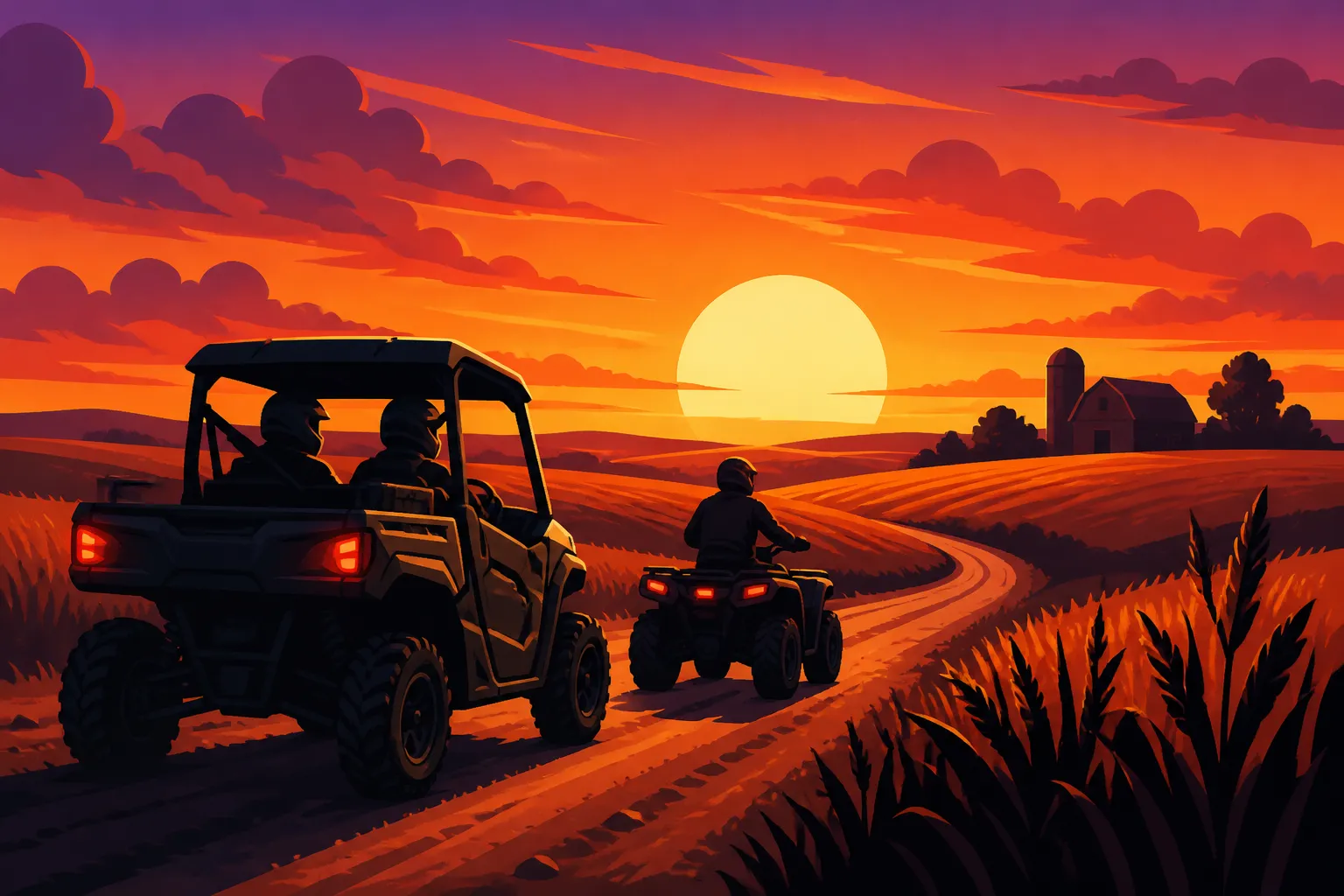
It's happened to every Iowa ATV and UTV rider at some point: you're out enjoying the trails or traversing the designated gravel roads, having a fantastic day, and then you look up. The sun is dipping below the horizon, painting the sky in fiery oranges and purples, and you realize you're still a good distance from home. Suddenly, that relaxed ride turns into a scramble of questions: "Am I even allowed to be on the road after dark? What lights do I need? Am I going to get a ticket?" This guide is here to shed light on those concerns, walking you through everything you need to know to safely and legally ride your ATV or UTV home after an Iowa sunset.
Navigating Iowa's Roads After Dark on Your ATV or UTV
Riding an ATV or UTV on Iowa's public roads comes with a specific set of responsibilities, and these don't magically disappear when the sun goes down. In fact, many of them become even more critical. Understanding the foundational rules for road use during daylight hours is the first step, as these regulations remain in effect and are supplemented by additional requirements for night operations.
Understanding Iowa's General Road Use Rules for ATVs/UTVs
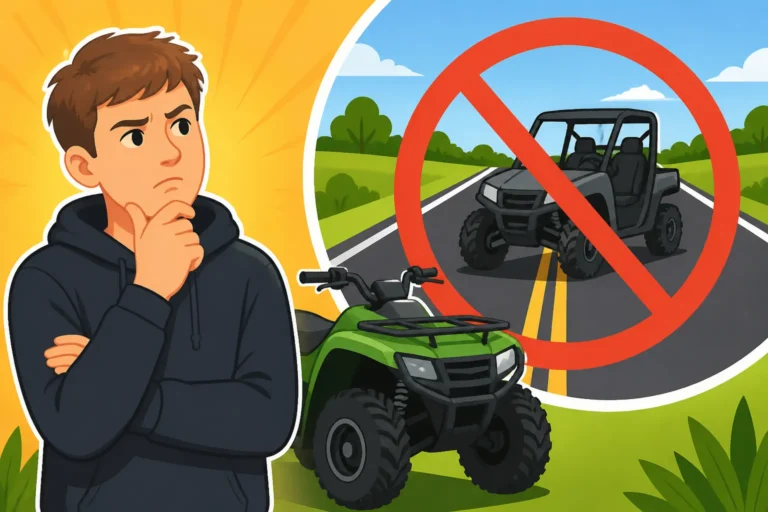
Before we even consider the dimming light, it's crucial to remember that riding your ATV or UTV on public roads in Iowa is a privilege, not an inherent right for off-highway vehicles. There are specific conditions that must be met regardless of the time of day. Generally, you're restricted to unpaved secondary roads, and sometimes certain paved secondary roads if the county has specifically authorized them. You must also be taking the [Most Direct Route to an Iowa OHV Park] or, in this case, home. Trying to take a scenic detour through a town that hasn't authorized ATV use on its streets, for example, could land you in hot water even before night falls.
The core principle here is that ATVs and UTVs are designed for off-road adventures, and their presence on public roadways is carefully regulated to ensure safety for all users. This means you can't just cruise down any street or highway you please. For instance, while you might be able to cross certain state highways at intersections, continuous travel on [Undivided Two-Lane Primary Highways in Iowa] is typically prohibited, regardless of how quickly the sun is setting. It’s a common misconception that if a road isn’t paved, it’s fair game; always confirm the specific road type and any local ordinances to avoid an unpleasant encounter with law enforcement.
Beyond the type of road, your machine itself needs to be legally recognized. You absolutely need to have a valid [Registering an ATV in Iowa] decal affixed to your machine. This decal serves as your annual permission slip to use designated public lands and, by extension, travel on authorized roads. Without that current decal, even a quick jaunt down a familiar gravel lane after sunset could lead to a citation for [Iowa Fines for an Unregistered ATV]. Furthermore, it’s not enough just to have the decal on your machine; you must also be [Carrying the Certificate on an Iowa Ride] – that physical proof of registration should always be with you, ready to present if an officer pulls you over.
Essential Lighting Requirements for Night Riding
This is where riding after sunset really brings a new set of rules into play. Once natural light diminishes, your ATV or UTV transforms from a machine primarily used in daylight to a vehicle that needs to both see and be seen. Iowa law is quite clear: if you're operating on public roads between sunset and sunrise, or anytime visibility is less than 500 feet, your machine must be equipped with proper lighting. This isn't just a recommendation for safety; it's a mandatory legal requirement designed to protect you and other road users from potential hazards in low light conditions.
Specifically, your machine needs at least one functional headlight that projects a white light and is visible from a distance of 500 feet to the front. You'll also need at least one red tail lamp on the rear, clearly visible from 500 feet behind. Many modern ATVs and UTVs come standard with these, but if you have an older machine, or one that’s endured some rough trail use, it’s absolutely vital to check that all bulbs are working, clean, and properly aimed. Dust and mud can significantly reduce their effectiveness, so a quick wipe-down before dark is always a good idea. For those looking to significantly improve their forward vision, aftermarket LED headlights from companies like SuperATV can dramatically enhance your ability to spot obstacles and navigate safely in the dimming light.
It's not just about what you can see; it's equally about being seen by others. The tail lamp is non-negotiable for anyone approaching from behind. While auxiliary lighting such as light bars or floodlights can be fantastic for off-road use, remember that these often need to be covered or switched off when on public roads to avoid blinding oncoming traffic. The goal is to meet the minimum legal requirements while maximizing your overall visibility and safety during those rides when you've misjudged the time and find yourself Riding Home After an Iowa Sunset.
Visibility Beyond Lighting: Reflectors and Slow-Moving Vehicle Signs
While active lighting is paramount for night riding, Iowa law also requires passive visibility aids to further enhance your machine's presence on the road. Even with bright headlights and tail lights, your ATV or UTV, especially a smaller model, can still blend into the background after dark, particularly on those less-traveled gravel roads where streetlights are non-existent. The regulations mandate specific reflective devices to further ensure you are noticeable to other drivers, whether their headlights are directly on you or not.
You must have at least one red reflector on the rear of your machine, which must be visible from 50 feet to 300 feet when illuminated by another vehicle's headlights. This acts as a crucial safety backup if your tail light fails or becomes obscured by mud, snow, or cargo. Beyond that, and critically important for any public road use, your ATV or UTV must prominently display a slow-moving vehicle (SMV) triangle on the rear. This bright orange fluorescent triangle with a reflective red border is a universal, highly recognizable sign to other drivers that you are traveling at a speed significantly slower than typical road traffic. It's a non-negotiable item for any public road travel in Iowa.
Positioning the SMV triangle correctly is vital for it to be effective. It needs to be mounted base down, at a height that is clearly visible and not obstructed by cargo, a passenger, or any part of your machine. Make sure it's clean and undamaged, as a faded or dirty triangle loses its effectiveness, especially as the last vestiges of daylight disappear. When you're Riding Home After an Iowa Sunset, these seemingly small details become huge safety factors. An SMV sign clearly communicates your presence and slower speed, allowing other drivers ample time to react and adjust their speed and position. You might even consider additional reflective tape on your machine or helmet for extra measure, though the SMV triangle is the legal minimum.
Legal Considerations and Safety Tips for Night Rides
Operating an ATV or UTV on public roads in Iowa after dark isn't just about turning on your lights; it's about adhering to a complete set of legal requirements that encompass everything from operator qualifications to the state of your machine and your documentation. Ignoring any of these can lead to serious consequences, making that journey home much more complicated than it needs to be.
Age, License, and Speed Limits for Evening Travel
The general rules of the road for ATVs and UTVs concerning operator age, licensing, and speed don't magically change just because the sun has gone down. If anything, these regulations become even more critical when visibility is reduced. In Iowa, to operate an ATV or UTV on public roads, you must be [Eighteen Years Old Behind the Bars] and possess a valid driver's license. This is a crucial point, as younger riders, even those with safety certificates, are generally restricted from public road use. The darkness only amplifies the risks for inexperienced drivers, making this age requirement non-negotiable for everyone's safety.
Speed limits are also strictly enforced and become paramount after sunset. While your machine might be capable of much higher speeds, Iowa law caps the speed for ATVs and UTVs on public roads at [Iowa's 35 mph Cap]. This limit is in place for a very good reason, acknowledging the different handling characteristics of off-highway vehicles compared to cars and trucks. At night, especially on unfamiliar or unlit gravel roads, exceeding this speed can be incredibly dangerous. Your effective reaction time is significantly reduced, and hazards like potholes, fallen branches, wildlife, or other slow-moving vehicles become much harder to spot until it's almost too late.
Always err on the side of caution. Even if the posted speed limit for the road is higher than 35 mph, you must still adhere to the ATV/UTV-specific cap when operating your machine on public roads, particularly after dark. A licensed, adult driver is expected to exercise sound judgment, and that includes reducing speed even further if conditions warrant it, such as heavy fog, rain, or an especially winding or dusty gravel road that obscures visibility. Remember, the primary goal is to get Riding Home After an Iowa Sunset safely, not to set any land speed records.
Insurance and Documentation You Must Carry
Just like any other vehicle on Iowa's public roads, your ATV or UTV needs to be properly insured, especially if you're operating it after dark. Iowa law requires liability insurance for any off-highway vehicle used on public roads. This isn't just a recommendation; it's a mandatory requirement designed to protect yourself and others in the event of an accident. The minimum coverage requirements are specific: [Twenty Thousand for One Injury], [Forty Thousand for Two], and [Fifteen Thousand for Property Damage]. Without this essential coverage, you could face significant penalties, including [Iowa Fines for No Proof of Insurance], which can add up quickly.
Beyond simply having the insurance, you must carry proof of it with you whenever you ride on public roads. This usually means an insurance card or a declaration page from your policy. Keep it secured with your registration certificate – perhaps in a waterproof pouch on your machine, or on your person if you prefer, as long as it’s easily accessible. An officer conducting [What an Iowa Deputy Checks Roadside] after dark will almost certainly ask for proof of insurance, along with your driver's license and registration. Don't be caught unprepared; a simple check of your documents before you head out can save a lot of hassle.
Having all your documentation in order is a simple but absolutely vital step for any road use, and it becomes even more pronounced when you're out late. Imagine getting pulled over at 10 PM on a deserted county road because your tail light went out, and then not being able to produce your insurance or registration. That minor equipment violation could quickly escalate into multiple citations and even further complications. Make a habit of checking your documentation before every ride, ensuring everything is current and on hand, so you can focus on the trail or the road ahead, not the contents of your wallet.
Practical Tips for a Safe Journey Home After Sunset
Even when all legal requirements are met, riding an ATV or UTV on public roads after dark introduces unique challenges that demand extra caution. Your natural senses are inherently dulled, and the environment itself presents more hidden dangers than in daylight. One crucial tip is to always wear appropriate gear. While Iowa doesn't mandate helmets for adults on public roads, it's highly recommended, especially when night riding. A good helmet, clear eye protection (as tinted lenses would obviously be counterproductive), and sturdy riding gear can make a huge difference if something goes wrong. Visibility is also key for your personal gear, so consider reflective elements on your clothing, vest, or helmet to make yourself more visible to other drivers.
Another practical consideration is your machine's overall condition. Before heading out, especially if there's even a remote chance your ride will extend past sunset, do a quick pre-ride inspection. Check your tires for proper pressure, test your brakes, and most critically, ensure all your lights are functional, clean, and properly aimed. Make sure your fuel tank is topped off – running out of gas on a dark, unfamiliar road is definitely not an experience you want to have. Carrying a small toolkit, a flashlight, and a first-aid kit can also be invaluable for unexpected situations that arise after dark.
Finally, drive defensively and be extra vigilant. Other drivers might not expect to see an ATV or UTV on the road after dark, even on authorized routes. Be acutely aware of your surroundings, constantly scan for wildlife that might dart out, and anticipate turns, potholes, or other obstacles that become significantly harder to spot until it's too late. If you're riding with a group, maintain safe distances and communicate effectively. Consider adding aftermarket mirrors from a brand like SuperATV for better rearward visibility, helping you keep track of both your riding companions and approaching traffic. All these layers of preparedness and heightened awareness are crucial when you find yourself Riding Home After an Iowa Sunset.
What Happens If You're Stopped After Dark Without Proper Setup?
No rider wants to imagine the flashing lights in their rearview mirror, especially when it’s late and dark on a quiet Iowa road. But it’s a reality that can quickly turn a peaceful ride home into a stressful and expensive ordeal if your machine or documentation isn’t in order. Understanding the potential consequences and what an officer will look for can help you prepare and, hopefully, avoid these situations entirely.
Potential Fines and Citations for Non-Compliance
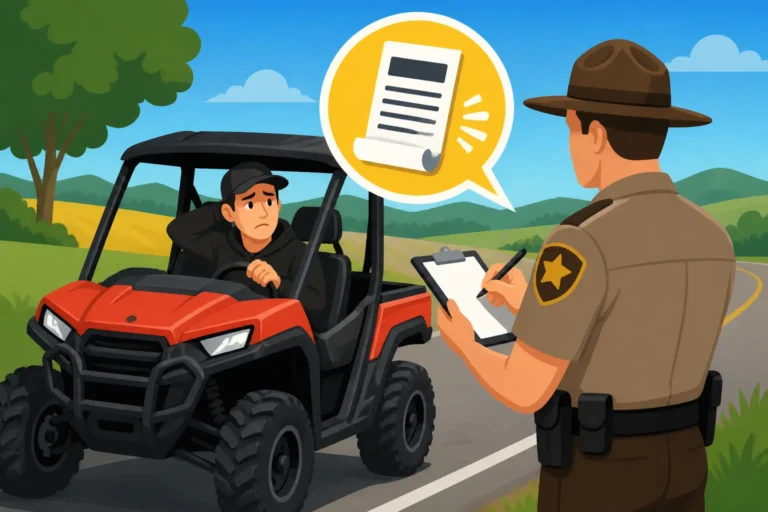
Getting stopped by law enforcement at any time of day can be stressful, but it can feel even more intimidating when it's dark and you're unsure of the specific rules. If you're caught riding your ATV or UTV on public roads after sunset without meeting Iowa's specific requirements, you could be looking at a range of fines and citations. These aren't minor inconveniences; they can significantly impact your wallet and potentially lead to further legal complications or even impoundment of your machine. For instance, operating without proper lighting (e.g., a non-functioning headlight or tail light) or without a slow-moving vehicle triangle are equipment violations that typically carry specific fines.
Beyond equipment issues, more serious infractions like lacking proper registration, no proof of insurance, or operating without a valid driver's license (if you're under 18 or don't possess one) can result in even stiffer penalties. [Getting Cited for Riding Without a Recorder Decal] is a very real possibility, as is a citation for [Iowa Fines for No Proof of Insurance]. These aren't just one-off tickets; they can accumulate, potentially affecting your driving record, leading to increased insurance premiums, or even resulting in your machine being towed and impounded in severe cases.
The consequences can extend beyond just financial penalties. In the unfortunate event of an accident involving an uninsured or improperly equipped ATV or UTV, you could be held personally liable for significant damages and injuries to others, which can be financially devastating. It's simply not worth the risk to cut corners on safety and legal compliance, especially when you're navigating the inherent challenges of reduced visibility after dark. Always ensure your machine and your paperwork are in order before you venture out, particularly if there's any chance your ride will extend into the evening hours.
Equipment Checks During an Iowa Roadside Stop
When an Iowa deputy, a state trooper, or a DNR conservation officer pulls you over, particularly after sunset, their primary concern will be ensuring your safety and compliance with the law. They will perform a thorough check of your machine's setup, focusing intensely on the items required for night operation. First and foremost, they'll verify that your headlights and tail lamps are functional, properly aimed, and visible from the required distances. They'll also check for the presence and condition of the red rear reflector and, critically, your slow-moving vehicle triangle, ensuring it's mounted correctly and not obscured.
Beyond the essential lighting and visibility aids, the officer will also scrutinize other mandatory road-use equipment. Do you have a horn that works to alert others? Is there at least one mirror on your machine, allowing you to see traffic approaching from the rear? While Iowa doesn't mandate helmets for adult ATV/UTV operators on public roads, they will still be looking for a safe and responsible rider. Any tinted windshields will be checked against legal limits for visibility; knowing [How Dark a Windshield May Legally Be] is a detail you might not think about until you're pulled over late at night.
Don't be surprised if they also ask for your driver's license, proof of insurance, and your ATV/UTV registration certificate. [Carrying the Certificate on an Iowa Ride] is crucial, as is your insurance card. Being able to produce these documents promptly and having all your required equipment in good working order will make the roadside stop much smoother and significantly increase the likelihood of it ending with a warning rather than a citation. Proactive preparation is always your best defense against unexpected trouble when Riding Home After an Iowa Sunset.
Planning Ahead: Avoiding the Rush When the Sun Sets
The stress of unexpectedly finding yourself riding after dark on public roads is something every ATV and UTV enthusiast would prefer to avoid. The good news is that with a little foresight and preparation, you can largely eliminate this anxiety and ensure that every journey home, regardless of the time, is safe and legal. It's all about proactive planning and equipping your machine for every eventuality.
Knowing When the Sun Will Set and Planning Your Route
The absolute best way to avoid the stress and potential legal issues of riding after dark is to plan. Check the sunset time before you head out, especially during different seasons when day length can vary dramatically. A simple weather app on your phone or a quick online search can give you this crucial information. If your planned ride, whether it's on trails or simply traversing authorized roads, is likely to push close to or past that sunset window, factor in a generous amount of extra time for your return trip. It's far better to arrive home a little early in daylight than to rush in the dark, potentially cutting corners on safety or legal compliance.
Think about your route home carefully. Is the most direct path home predominantly on authorized gravel roads, or does it involve stretches of paved secondary roads that might have higher speed limits and more traffic? Are there any unlit sections or areas known for wildlife activity that become particularly hazardous after dark? Planning a route that prioritizes safety, good visibility, and familiar terrain can make all the difference. Perhaps an extra five minutes on a well-maintained, familiar gravel road is a much better option than a quicker sprint down an unfamiliar, unlit paved section with unknown hazards. This foresight helps riders manage their time and environment more effectively, ensuring a safer journey regardless of the time of day.
Consider the capabilities of your machine and your own riding experience. If you're on an unfamiliar machine, or if you're a newer rider, intentionally planning to finish your ride well before sunset is always a smart move. Even experienced riders can be caught off guard by rapidly fading light and the increased difficulties it presents. Always have a mental backup plan or an alternative route that avoids the most challenging sections if you find yourself running late. It's about respecting the reduced visibility and increased risks that come with Riding Home After an Iowa Sunset, and giving yourself plenty of leeway.
Equipping Your Machine for Any Time of Day
Even with the best intentions and meticulous planning, rides sometimes run long. Maybe you discovered an amazing new trail loop, stopped to help a fellow rider in need, or simply lost track of time enjoying the beautiful Iowa scenery. This is precisely why equipping your ATV or UTV for both day and night riding from the start is such a smart investment. Think of it as preparing for the unexpected, ensuring you're ready for anything the day (or night) throws at you.
Beyond the minimum legal lighting requirements, consider proactively upgrading your headlights to brighter LED units. Products from manufacturers like SuperATV offer superior illumination and a wider beam pattern compared to many stock halogen lights, dramatically improving your ability to see the path ahead. While not always legal for continuous public road use, having powerful auxiliary lights that can be switched on for off-road segments or emergency situations can be invaluable when the sun dips below the horizon. Ensure your tail lights are not only functional but also consistently clean and free of mud or debris that can obscure their visibility.
Beyond lighting, ensuring your machine has a properly installed and easily visible slow-moving vehicle triangle is fundamental. Some riders even go a step further, adding reflective tape to their machines in strategic locations to increase passive visibility from all angles. A functioning horn, a sturdy mirror (or two), and robust tires suitable for varied terrain (including the gravel roads you might use to get home) are also essential components of a well-equipped machine. Investing in quality equipment means you're not just ready for the trail, but also thoroughly prepared for those unexpected journeys when you find yourself [Riding After an Iowa Sunset] on the way home, transforming potential stress into confidence.
Iowa ATV/UTV Night Riding Requirements Summary
| Requirement | Description | Visibility / Distance | Notes for Night Riding |
|---|---|---|---|
| Headlight(s) | White light, front | Visible 500 ft ahead | Must be on sunset to sunrise. Check aim, cleanliness. LED upgrades recommended for improved visibility. |
| Tail Lamp(s) | Red light, rear | Visible 500 ft behind | Must be on sunset to sunrise. Ensure working, not obscured by mud/cargo. |
| Rear Reflector | Red | Visible 50-300 ft behind (by headlights) | Crucial backup if tail light fails. Keep clean and unobstructed. |
| SMV Triangle | Orange fluorescent, reflective red border | Clearly visible to rear | Mandatory for public road use. Mount base down, keep clean, unobstructed. |
| Horn | Audible signal, working | N/A | Essential for warning others of your presence. |
| Mirror(s) | Rearview, minimum one | N/A | For visibility of traffic approaching from behind. |
| Driver's License | Valid, full license | N/A | Operator must be 18+ for public roads. Carry with you. |
| Registration | Current decal on machine, certificate carried | N/A | [Carrying the Certificate on an Iowa Ride] is legally required. |
| Proof of Insurance | Current liability coverage | N/A | Iowa minimums apply (20/40/15). Carry proof. |
Disclaimer
This article is for general informational purposes only and does not constitute professional advice. Laws, prices and regulations vary by location and change over time. Consult a qualified professional for guidance on your specific situation.