Riding the Streets of Waukon
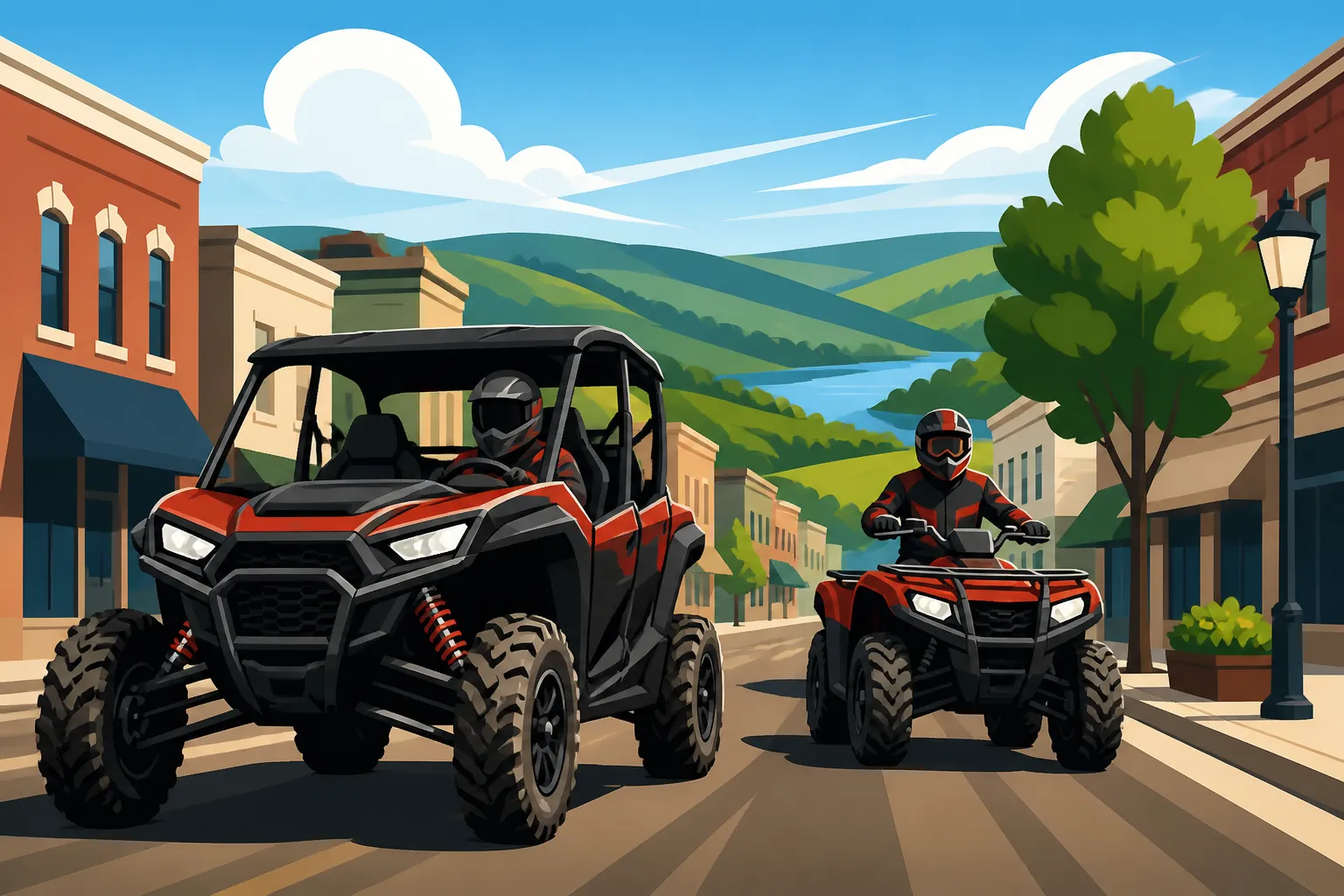
Riding your ATV or UTV through town, maybe to grab a quick coffee, head to the hardware store, or just connect trails, sounds like a dream for many Iowa riders. But the reality is, navigating the patchwork of state and local laws can feel like trying to solve a Rubik's Cube blindfolded. Many cities in Iowa keep their streets strictly off-limits to off-highway vehicles, leaving riders feeling frustrated and restricted. However, some forward-thinking communities, like Waukon in Allamakee County, have carved out exceptions, offering a glimmer of hope. This guide will cut through the confusion and walk you through everything you need to know to legally and safely ride your ATV or UTV on the streets of Waukon, ensuring you understand both the state-level mandates and the specific local nuances.
Waukon's Unique Approach to ATV and UTV Road Use
Iowa's general stance on ATVs and UTVs on public roads can be a real buzzkill for enthusiasts. The state primarily sees these machines as off-highway vehicles, designed for trails, fields, and private property, not for mixing with cars and trucks on paved city streets or highways. This default position often leaves riders feeling like they're unwelcome, forced to trailer their machines even for short distances within their own communities. It’s a common frustration to look at your perfectly capable side-by-side sitting in the driveway and know you can't just hop on it to run an errand a few blocks away.
However, Iowa law does provide a pathway for individual cities and counties to create their own ordinances, essentially overriding the state's general prohibition within their specific jurisdictions. This is where places like Waukon step in, acknowledging the community's interest in ATV and UTV use and responding to the local culture. Instead of a blanket "no," Waukon's city council has gone through the process of deliberating, drafting, and passing an ordinance that specifically allows these machines on certain city streets under particular conditions. This kind of local decision-making is why it's so critical to investigate the rules of each town you plan to ride in, because what's permissible in Waukon might lead to a hefty ticket just a few miles down the road in another municipality. Unfortunately, as many riders discover, [Iowa Publishes No List of City Ordinances], making this research a necessary but sometimes tedious step.
The decision to open up city streets to ATVs and UTVs isn't made lightly. It involves public hearings, input from residents and law enforcement, and careful consideration of safety, traffic flow, and noise concerns. For Waukon, this meant balancing the desires of local residents and riders with the need to maintain public safety and order. The resulting ordinance usually outlines specific parameters, like which types of streets are open, during what hours, and what equipment requirements apply. It's a localized solution to a statewide restriction, demonstrating how [City Streets and Iowa Council Authorization] can empower communities to tailor rules to their unique circumstances, offering a refreshing contrast to the more rigid statewide regulations.
State-Level Requirements You Still Need to Meet in Waukon
Even when a city like Waukon opens its streets to ATVs and UTVs, it's crucial to remember that you're not operating in a vacuum. State laws don't magically disappear at the city limits; they form a foundational layer of requirements that every rider must still adhere to. Think of it like a pyramid: the city ordinance adds a specific top layer, but the base—the state law—remains firmly in place. Ignoring these statewide mandates, even if you're following Waukon's local rules, can still land you in hot water with law enforcement.
First and foremost, your machine must be properly registered and titled with the Iowa Department of Natural Resources (DNR) through your county recorder's office. This isn't just a suggestion; it's a legal necessity for any off-highway vehicle (OHV) operated on public lands or, in this case, public roads. When you go to [Registering an ATV in Iowa] or [Titling an ATV in Iowa], you'll ensure your machine has the necessary legal identity. Once registered, you'll receive a registration decal that must be conspicuously displayed on your machine. Iowa law is quite specific about this: the decal needs to be mounted on the rear of your machine, clearly visible. So, make sure that [A Decal on the Rear of an Iowa Machine] is not peeling off or obscured by mud or gear before you head out.
Next up is the operator. Iowa has specific age and licensing requirements for anyone operating an ATV or UTV on public roads. You can't just let anyone hop behind the wheel. To legally operate an ATV or UTV on an Iowa public road, including within Waukon, you must be at least 18 years old and possess a valid driver's license. This means [Iowa Minimum Age to Ride a Road] is a non-negotiable threshold, and you'll need to carry your driver's license with you, just as you would when driving a car. The idea here is that if you're going to be sharing the road with other traffic, you need to be a fully licensed and experienced driver, capable of making sound judgments and understanding traffic laws. [Iowa Driver's License Rules for ATVs] are designed to ensure a minimum level of competence and responsibility.
Then there's insurance—a big one. Iowa mandates that any ATV or UTV operated on a public road must carry liability insurance. This isn't optional; it's a critical safeguard for everyone on the road. The minimum coverage limits are often expressed as 20/40/15, meaning $20,000 for bodily injury to one person, $40,000 for bodily injury to two or more people, and $15,000 for property damage. Not having this coverage can lead to significant fines and penalties if you're caught, let alone if you're involved in an accident. You'll want to review [Iowa ATV Insurance Requirement] thoroughly and ensure you meet at least [Iowa's Twenty, Forty and Fifteen Thousand Minimums]. Carrying proof of insurance is also essential, so have your insurance card handy, perhaps with your [Carrying the Certificate on an Iowa Ride] in a waterproof compartment.
Finally, your machine itself must be properly equipped for road use. This goes beyond just having an engine and wheels. Iowa law specifies certain safety features that are mandatory for any ATV or UTV operating on public roads. These include a working headlight, tail light, brake light, at least one rearview mirror (mounted to provide a clear view of the road to the rear), and a horn. Furthermore, you'll need a slow-moving vehicle (SMV) triangle securely affixed to the rear of your machine. This triangle alerts other drivers that you're traveling at a reduced speed, which is particularly important given the [Iowa's 35 mph Cap] for OHVs on roads. For those looking to upgrade their machines to meet these requirements, companies like SuperATV offer a wide range of aftermarket parts, from DOT-approved lights and mirrors to complete horn kits and turn signal setups, making it easier to ensure your machine is fully compliant. You need to ensure your [Headlights On All Day in Iowa] are functioning, that you have [A Horn and a Mirror for Iowa Road Use], and clearly display [A Triangle on the Back of an Iowa Machine]. These aren't just minor details; they're vital for your safety and the safety of everyone else on Waukon's streets.
Waukon-Specific Rules and Restrictions for ATVs and UTVs
While state law sets the baseline, Waukon's local ordinance adds specific layers of rules that are tailored to the community. These are the details that truly define how and when you can ride your ATV or UTV within the city limits, and they often address concerns unique to urban environments. It’s not enough to just know the state rules; you must understand and follow Waukon’s specific mandates to avoid issues.
One of the most common local restrictions revolves around hours of operation. Many cities that open their streets to ATVs and UTVs do so with limitations on when these vehicles can be ridden. Waukon is no exception. While state law might permit certain road use from sunrise to sunset in some contexts, a city ordinance can tighten that window. For instance, [Waukon's Midnight to Five Ban] means that even if you're heading home after a late dinner, you might find yourself in violation if you're still on city streets in the wee hours. It's crucial to know the exact permissible times. Often, riding is restricted to daylight hours or specific extended periods, ensuring that residential areas aren't disturbed by engine noise late at night and that visibility is at its best. Always check the official city ordinance for the precise timing.
Another critical aspect of local ordinances is the designation of which streets are actually open. It's rare for a city to open every single road to ATVs and UTVs. Typically, they will exclude state highways that pass through town, major arterial roads, or certain heavily trafficked areas. Waukon's ordinance likely specifies a list of eligible streets or, conversely, a list of prohibited streets. Understanding [Waukon's Open Streets and Alleys] is paramount. You might find that while residential streets and alleys are fair game, trying to cruise down a state route that dissects the city could quickly lead to a citation. Pay close attention to signage as well; some cities use specific street signs to indicate where OHVs are permitted or prohibited.
Speed limits are also a key consideration. While Iowa law sets a general [Iowa's 35 mph Cap] for ATVs and UTVs on public roads, a city like Waukon might impose even lower speed limits on its local streets, especially in residential zones or school areas. It’s always safest to adhere to the posted speed limits, which will usually be much lower than 35 mph in a city environment. Remember, you're sharing the road with cars, bicycles, and pedestrians, so responsible and measured driving is essential.
Passenger rules are another area where local ordinances can differ or reinforce state guidelines. While many ATVs are designed for a single rider and UTVs can carry multiple passengers, cities sometimes have specific rules about carrying passengers on their streets, especially concerning minors. Even if state law doesn't require helmets for adults on roads, a city might encourage or even mandate them for younger riders or within specific areas. While [Why Iowa Leaves Helmets to the Rider] for adults on roads, it's always smart to promote helmet use, especially for children. Ensure your machine is designed to safely carry any passengers you transport and that everyone adheres to seatbelt requirements for UTVs.
Finally, you should check if Waukon requires any local permits in addition to your state registration. While most Iowa cities that open their streets don't add an extra local permit fee on top of the state registration, it's not unheard of. It's a question worth asking the city clerk's office. This ensures you have all necessary documentation before you hit the streets. Knowing these specific, localized rules prevents misunderstandings and helps you integrate smoothly into Waukon's traffic flow, making your riding experience enjoyable and free from legal headaches.
Practical Tips for Riding Legally and Safely in Waukon
So, you've done your homework, your machine is registered, insured, and equipped, and you understand the basic state and local rules. Now it's time to actually hit the streets of Waukon! But before you twist the throttle, there are a few more practical tips that can help ensure your ride is not only legal but also safe and enjoyable for everyone.
First and foremost, your best defense against confusion and potential tickets is to get a copy of the actual Waukon city ordinance that governs ATV and UTV use. Don't just rely on hearsay or what a friend told you. Call the Waukon City Clerk's office or check the city's official website. Reading the ordinance yourself clarifies any ambiguities and provides the definitive word on allowed streets, hours, and equipment. Having a digital copy on your phone or a printed copy in your machine's glove box can even be helpful if you encounter a law enforcement officer who might not be fully up-to-date on all local nuances. This proactive step truly solidifies your understanding.
Before every ride, especially one that involves public roads, perform a quick but thorough pre-ride inspection of your machine. This isn't just about making sure it runs; it's about confirming all your road-legal equipment is functioning perfectly. Check your headlights, tail lights, and brake lights – are they bright and visible? Test your horn – does it give a clear, audible sound? Make sure your rearview mirror is clean, properly adjusted, and securely mounted. Confirm your slow-moving vehicle (SMV) triangle is still firmly attached and not obscured. For riders who put their machines through tough off-road conditions, these components can sometimes get damaged or knocked loose. Investing in durable aftermarket parts, like those from SuperATV, can provide extra peace of mind that your essential safety equipment will hold up to the rigors of both trail and street.
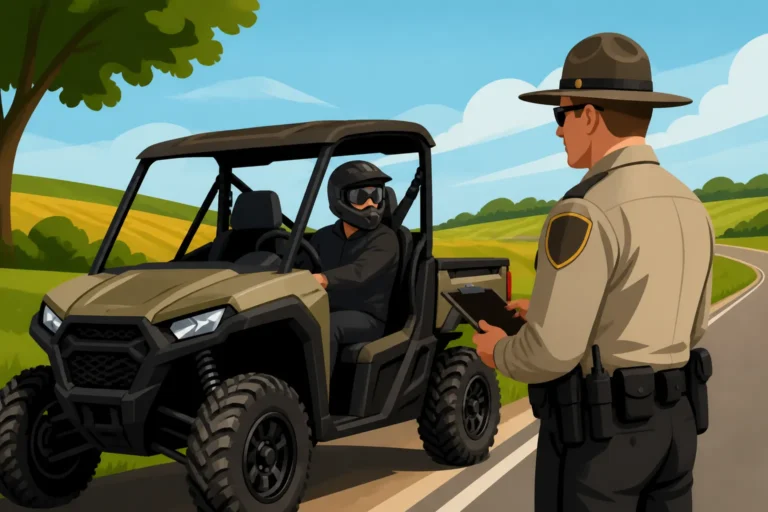
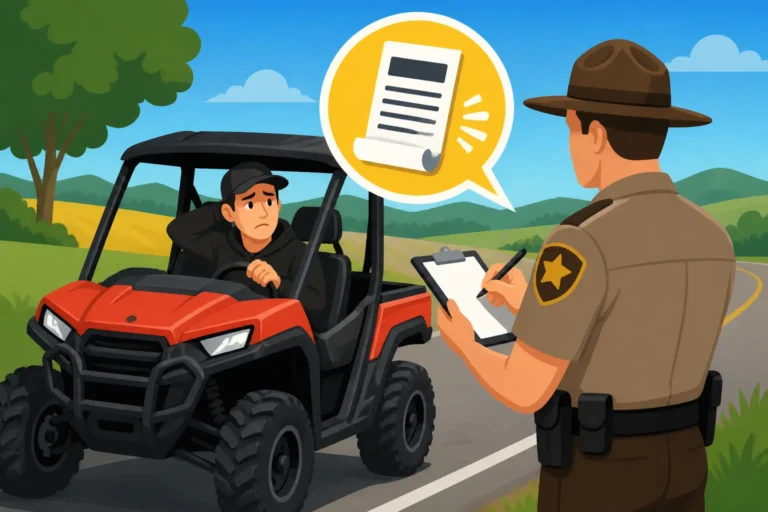
Always carry your essential documentation with you. This includes your ATV or UTV's state registration certificate, your proof of liability insurance, and your valid driver's license. Keep them in a waterproof pouch or a secure compartment on your machine. When [What an Iowa Deputy Checks Roadside], these are the first things they'll ask for. Being able to quickly and clearly present these documents can make a roadside stop much smoother. Think about it: when [Showing a Decal at a Waukon Stop], it's not just about the sticker; it's about the paperwork backing it up.
When riding in Waukon, always be a courteous and cautious driver. You're representing the entire ATV and UTV community, and your actions reflect on all riders. Obey all traffic laws, including stop signs, traffic lights, and yield signs. Signal your turns clearly and give other vehicles plenty of space. Remember that ATVs and UTVs handle differently than cars, especially on pavement, so adjust your speed and braking accordingly. Be mindful of pedestrians and cyclists, especially near parks, schools, or busy commercial areas. Keep your speed well below the [Iowa's 35 mph Cap] when appropriate for city streets, and always be prepared to stop.
Finally, understand what to expect from law enforcement. Most deputies and police officers want to see riders enjoying their machines safely and legally. If you're pulled over, remain calm, polite, and cooperative. Have your documents ready and follow the officer's instructions. If you have questions about the ordinance, it's a good time to ask respectfully. Most importantly, avoid any behavior that could be perceived as reckless or disrespectful to other residents. Your positive presence on Waukon's streets helps ensure that the privilege of riding there continues for everyone.
| Requirement | Iowa State Law (General) | Waukon City Ordinance (Likely Specifics) |
|---|---|---|
| Registration/Title | Required for all public land/road use. | Required (state registration applies). |
| Decal Placement | Rear of machine, clearly visible. | Rear of machine, clearly visible (state rule reinforced). |
| Operator Age | 18+ years old for road use. | 18+ years old for road use (state rule reinforced). |
| Driver's License | Required, valid driver's license. | Required, valid driver's license (state rule reinforced). |
| Insurance | Mandatory liability (20/40/15 minimums). | Mandatory liability (state rule reinforced). |
| Headlights | Required (on all day for road use). | Required (state rule reinforced). |
| Taillights/Brakes | Required. | Required (state rule reinforced). |
| Mirror | At least one rearview mirror. | At least one rearview mirror (state rule reinforced). |
| Horn | Required. | Required (state rule reinforced). |
| SMV Triangle | Required on rear. | Required on rear (state rule reinforced). |
| Speed Limit | Max 35 mph on eligible roads. | Max 35 mph, but city limits or posted signs may be lower. |
| Hours of Use | Generally sunrise to sunset on eligible roads/shoulders. | Specific daily hours, e.g., no [Waukon's Midnight to Five Ban]. |
| Eligible Streets | Unpaved secondary roads, specific paved by county/city. | Specific city streets and alleys, typically excluding state highways. |
| Local Permit | Not typically state-mandated. | Unlikely, but verify with City Clerk. |
| Helmets | Not required for adults 18+ for road use. | Not required for adults (though always recommended); may have minor rules. |
Disclaimer
This article is for general informational purposes only and does not constitute professional advice. Laws, prices and regulations vary by location and change over time. Consult a qualified professional for guidance on your specific situation.