Using a Two-Lane Highway on the Direct Route
It’s a common scenario for many of us in Iowa: you’re out enjoying a ride, maybe connecting two sections of timber or trying to get to a public riding area, and suddenly you realize the most straightforward path involves a stretch of two-lane highway. The thought of riding your ATV or UTV on a paved state road can feel like navigating a minefield of regulations. This guide is here to untangle the complexities, clearly outlining when and how you can legally use a two-lane highway as part of a "most direct route" in Iowa, helping you avoid unnecessary detours and potential penalties.
Understanding Iowa's "Most Direct Route" Rule for Highways
Iowa law isn't designed to make it impossible to get your machine where it needs to go; rather, it aims to balance convenience for riders with safety for all road users. The "most direct route" rule is a key component of this balance, allowing limited use of certain paved roads under specific conditions. Many riders get frustrated when they see a perfectly good paved road that would cut their travel time in half, only to worry about whether they’re breaking the law. It’s a valid concern, as the rules aren't always immediately intuitive.
The spirit of the law is to facilitate necessary travel, not recreational cruising on roads meant for cars and trucks. This means if you have a legitimate reason to get from one legal riding area to another, or from private property to a trail, and a two-lane highway is truly the most direct way, you might be able to use it. However, it's critical to understand the nuances of what "most direct" really entails and what types of roads are included.
What Exactly Counts as a "Two-Lane Highway" in Iowa?
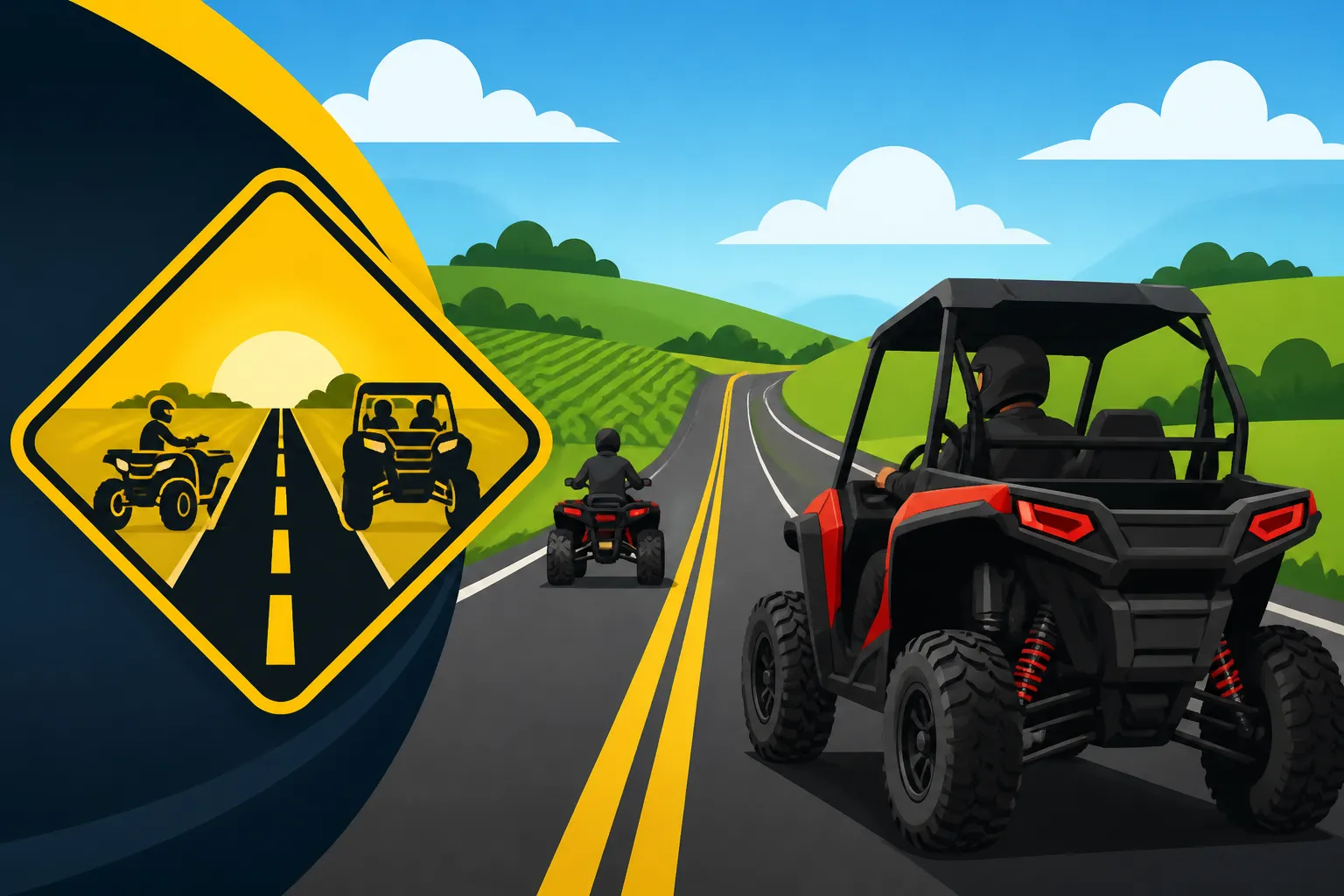
When we talk about using a "two-lane highway" for a direct route in Iowa, we're specifically referring to undivided paved roads that have one lane of travel in each direction. These are typically the state or county highways you might encounter between smaller towns or stretching through rural areas. Think of the roads you drive on that don't have a median or multiple lanes going the same direction.
It's crucial to distinguish these from multi-lane highways or interstates. Multi-lane highways, like those with four or more lanes or divided sections, are generally off-limits for ATVs and UTVs. The law makes a clear distinction here, recognizing the vastly different speeds, traffic volumes, and safety implications of operating a slower-moving off-highway vehicle on such major arteries. If you’re ever in doubt about whether a road qualifies, err on the side of caution. Always remember that the intent is about necessary, brief transit, not extended travel. You'll find more details on this distinction in [Iowa Rules for Crossing a Four-Lane Road].
The "Most Direct Route" Principle: Getting From A to B
The core idea behind the "most direct route" principle is straightforward: your use of a paved two-lane highway should be the shortest, most efficient way to get from one legal point to another legal point. This isn't an invitation to take your ATV out for a joyride on a state highway just because it's a sunny afternoon. The emphasis is on necessity and minimizing your time on these types of roads.
Consider scenarios like moving from your private hunting land to another piece of property across the highway, or transporting your machine from a gravel county road to the entrance of an approved OHV park that happens to be just a mile down a two-lane highway. In these cases, the highway portion serves as a brief, unavoidable connector. If there's a legal, non-highway alternative—even if it's a little longer—you should probably take it. The "most direct" doesn't necessarily mean "fastest" if the faster route involves a longer stretch of paved highway than a slightly longer route on a gravel road. A good resource for this is [The Most Direct Route to an Iowa OHV Park].
You are legally obligated to use the shortest possible distance on the highway to achieve your goal. This means you can't weave around or take scenic detours once you're on the highway. Plan your route meticulously, identifying your entry and exit points, and stick to that path. Any deviation could be seen as an abuse of the privilege and lead to penalties.
Navigating the Legalities of Two-Lane Highway Travel
Beyond simply having a "most direct route," there are specific legal requirements you and your machine must meet before you can even think about touching pavement. These rules are in place for safety, ensuring that your ATV or UTV is visible and controllable, and that you as the operator are qualified. It's not enough to just know the path; you need to know the rules that apply to you and your machine.
Many riders, especially those who primarily ride off-road, might not realize their machine needs to be equipped in a certain way to be road-legal, even for a short stretch. The consequences of not meeting these requirements can be severe, ranging from hefty fines to having your machine impounded. It’s always better to be prepared than to face an unexpected roadside stop.
Machine Requirements for Highway Use
For your ATV or UTV to be legally operated on an Iowa two-lane highway, even for that "most direct route," it needs to be properly equipped. This isn't just about good practice; it's the law. Your machine must have:
- Headlights and Taillights: These must be illuminated at all times while on a public road, regardless of the time of day. This is crucial for visibility to other motorists. You can read more in [Iowa Lighting Requirements for ATVs].
- Brake Lights: These are essential for signaling your intentions to traffic behind you.
- Horn: A working horn is necessary for alerting other drivers or pedestrians.
- Mirror(s): At least one rearview mirror is required. This helps you monitor traffic approaching from behind. Many aftermarket companies, like SuperATV, offer a variety of robust mirror options designed for off-road vehicles that can easily meet road-legal requirements while also standing up to tough trail conditions.
- Slow-Moving Vehicle (SMV) Triangle: This red-orange reflective triangle must be mounted on the rear of your machine, clearly visible to any vehicle approaching from the back. It signifies that your vehicle will be traveling at a slow speed. You can find specific guidelines in [Iowa Slow-Moving Vehicle Sign Rules].
Additionally, there's a strict 35 mph speed limit for ATVs and UTVs on any public road in Iowa, including these two-lane highways. This speed limit is non-negotiable and exists for the safety of both the ATV rider and other motorists. Exceeding this limit is not only illegal but extremely dangerous.
Finally, you absolutely must carry proof of liability insurance. Iowa law mandates specific minimum coverage amounts (typically referred to as 20/40/15, for personal injury and property damage). Riding without this insurance can result in significant fines and other penalties. Learn more about the specific requirements in [Iowa ATV Insurance Requirement].
Rider Requirements for Iowa Highways
It's not just your machine that needs to be up to snuff; you, as the operator, also have specific legal requirements to meet when riding an ATV or UTV on an Iowa two-lane highway. These rules ensure that the person behind the controls has the necessary experience and qualifications to operate safely in a road environment.
First and foremost, the operator must be 18 years of age or older. There are no exceptions to this rule for highway travel; minors, even with a safety certificate, cannot legally operate an ATV or UTV on a public road in Iowa. This is a crucial distinction from off-road riding, where younger riders are permitted under certain conditions. For further information, check [Iowa Minimum Age to Ride a Road].
Secondly, you must possess a valid driver's license. This isn't just about knowing how to drive a car; it signifies that you've passed a knowledge and driving test and are recognized by the state as a competent driver. Your standard automobile driver's license is sufficient. Details on this can be found in [Iowa Driver's License Rules for ATVs].
While Iowa law does not require a helmet for ATV or UTV operators on public roads, it is highly, highly recommended for your safety. Head injuries are devastating, and a helmet provides a critical layer of protection in the event of an accident, especially when sharing roads with larger, faster vehicles. Just because it's not mandated doesn't mean it's not smart.
Lastly, you must carry your ATV or UTV registration certificate and proof of insurance with you at all times when operating on public roads. This allows law enforcement to quickly verify your compliance if you are stopped. Having these documents readily accessible can make a roadside stop much smoother.
Practical Considerations and Safety on Iowa's Two-Lane Highways
Even when you meet all the legal requirements for riding on a two-lane highway as part of a direct route, there are significant practical and safety considerations you need to keep in mind. Paved roads are fundamentally different from trails or gravel roads, and operating an ATV or UTV in this environment presents unique challenges. Your safety, and the safety of others, depends on your awareness and responsible riding habits.
It's easy to get complacent, especially if you're only on the highway for a short stretch, but this is precisely when vigilance is most important. Unlike off-road trails where you might only encounter other riders, on a paved highway, you're sharing the space with heavy, fast-moving traffic, and drivers who may not be expecting to see an ATV.
Anticipating Traffic and Road Conditions
Riding an ATV or UTV on a paved two-lane highway in Iowa means you'll be operating a smaller, slower machine in an environment dominated by cars and trucks. This dramatically changes the dynamics of your ride:
- Traffic Speed Differentials: Most vehicles on highways will be traveling much faster than your 35 mph limit. This means you need to constantly monitor your mirrors and be prepared for vehicles to approach quickly from behind. Always be predictable in your movements and stay as far to the right side of the lane as safely possible.
- Visibility: While your machine needs to have proper lighting, you are still a relatively small target. Consider wearing bright, high-visibility clothing to make yourself even more noticeable. Some riders even add additional amber or white lights for enhanced visibility, and brands like SuperATV offer a range of auxiliary lighting options that can significantly improve your presence on the road.
- Road Surface and Debris: Paved roads can have potholes, cracks, loose gravel, or debris, especially on the shoulders. These can be more hazardous for ATV tires, which are designed for off-road traction, not necessarily high-speed pavement grip. Be vigilant for hazards that could cause a loss of control.
- Weather Conditions: Rain, snow, or ice can make paved roads extremely slippery for ATV and UTV tires, which have limited contact patches and tread patterns not optimized for wet pavement. Always check the forecast and road conditions before you ride, and if conditions are poor, find an alternative route or delay your travel.
Planning Your "Direct Route" Carefully
Successful and safe navigation of a two-lane highway relies heavily on pre-ride planning. Don't just wing it; take the time to map out your precise route:
- Identify Legal Entry and Exit Points: Know exactly where you plan to get onto the highway and where you will immediately exit. These points should ideally be at intersections or where you can safely pull off without obstructing traffic. Avoid blind curves or hill crests for entry and exit if possible.
- Map the Shortest Path: Use a GPS or a physical map to ensure the highway segment you've chosen is truly the "most direct." Having this mapped out can help you demonstrate your compliance if questioned by law enforcement. Many GPS units designed for off-road use can also show road networks, helping you plan these short connectors.
- Avoid Peak Traffic Times: If possible, schedule your highway travel during off-peak hours when traffic volumes are lower. Early mornings, late evenings, or mid-day on weekdays are often less congested than rush hour or busy weekend periods. Less traffic means fewer potential interactions and generally a safer environment.
- Communicate Your Intentions: If you're riding with a group, ensure everyone understands the planned route, the rules of the road, and the safety protocols for highway travel. Use hand signals or communication systems to alert others to turns or hazards.
Common Misconceptions and What to Avoid
Despite the clear rules, some common misconceptions persist about what's allowed when it comes to ATVs and UTVs on Iowa roads. It's vital to clear these up, as acting on misinformation can lead to legal trouble and unsafe situations. The "most direct route" is a specific exception, not a blanket permission slip for general road use. Understanding what not to do is just as important as knowing what you can do.
Many riders, fresh from the trails, might assume that because they're momentarily on a road, all road rules apply equally, or conversely, that none of them do. Neither extreme is correct. There are specific limitations that differentiate ATV/UTV road use from standard vehicle operation, and ignoring these can have significant repercussions.
When "Direct Route" Doesn't Apply
While the "most direct route" rule offers some flexibility, it's critical to understand its limitations. This rule is not a loophole for general road riding:
- No Recreational Cruising: You cannot use two-lane highways for leisurely rides or simply to enjoy the scenery. The purpose must be transit from one legitimate off-highway point to another. If you're just out for a ride, stick to gravel roads or designated OHV trails.
- Four-Lane and Divided Highways are Out: As mentioned earlier, the "most direct route" rule specifically applies to undivided two-lane primary highways. This means multi-lane highways (four lanes or more, or those with a median) are generally off-limits. These roads present too high a speed differential and risk for ATVs and UTVs. A quick look at [Iowa Rules for Riding a State Highway] will reinforce this.
- City Streets Require Local Approval: Even if a two-lane highway passes through a town, you typically cannot ride your ATV or UTV on city streets without explicit permission from the local city council. Many Iowa cities have specific ordinances either permitting or prohibiting off-highway vehicle use on their streets, and these vary widely. Never assume city streets are open; always check with the city clerk or local authorities first. Learn more about this in [Iowa Cities That Allow ATVs on Streets].
- Interstates are Strictly Forbidden: Under no circumstances are ATVs or UTVs permitted on Iowa's interstate highway system. These are high-speed, controlled-access roads designed for heavy, fast-moving traffic, and off-highway vehicles are simply not safe or legal in that environment.
Penalties for Non-Compliance
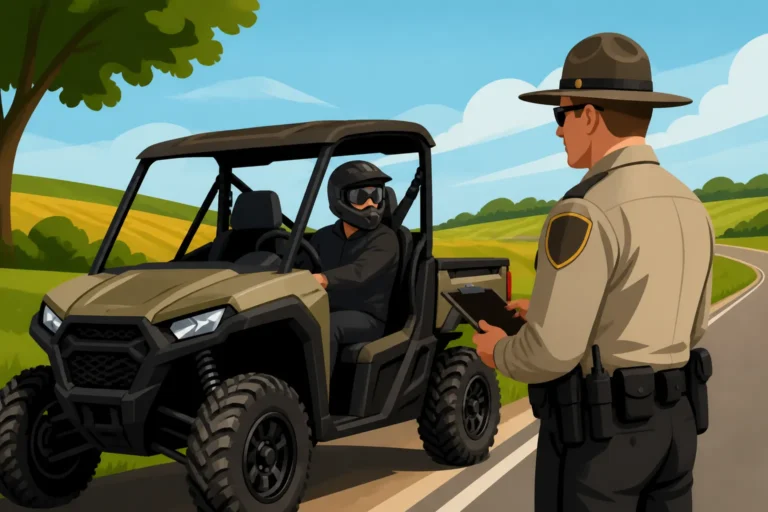
Ignoring the rules for ATV and UTV use on Iowa's two-lane highways can lead to serious consequences. Law enforcement, including county sheriffs and Iowa DNR conservation officers, are vigilant about enforcing these regulations to ensure public safety.
- Fines: The most common penalty is a monetary fine, which can vary depending on the specific infraction. Riding without proper equipment, insurance, or a valid driver's license can result in separate citations, quickly adding up to a substantial sum. You can find more information about these costs in [Iowa Fines for Illegal ATV Road Use].
- Vehicle Impoundment: In more severe cases, or for repeat offenders, your ATV or UTV could be impounded. This means not only paying fines but also impound fees and retrieval costs, which can be very expensive and inconvenient.
- Loss of Riding Privileges: Repeated violations could lead to a suspension of your driver's license or even restrictions on future ATV/UTV registration. The state wants to ensure that riders are responsible and adhere to the safety guidelines.
- Increased Insurance Premiums: Citations for illegal road use can negatively impact your insurance record, potentially leading to higher premiums for your ATV/UTV policy or even your automobile insurance.
It's crucial to remember that these laws are in place for everyone's safety. By adhering to them, you not only protect yourself from legal and financial headaches but also contribute to a positive image for the ATV/UTV riding community in Iowa, helping to preserve access to the limited public riding opportunities we do have.
Summary of Iowa ATV/UTV Highway Rules
To help clarify the requirements for using a two-lane highway on a "most direct route" in Iowa, here’s a quick overview of the essential rules for both your machine and the operator. Remember, this applies only to undivided two-lane primary highways for the shortest, most direct path between two legal points.
| Requirement | Machine | Operator |
|---|---|---|
| Eligibility | ATV/UTV must be equipped for road use | Must be 18 years of age or older |
| Lighting | Headlights, taillights, brake lights (all on at all times) | N/A |
| Signaling | Horn required | N/A |
| Visibility | At least one rearview mirror, Slow-Moving Vehicle (SMV) triangle on rear | N/A |
| Speed Limit | Maximum 35 mph | Must adhere to 35 mph limit |
| Licensing | N/A | Must possess a valid driver's license |
| Insurance | Proof of liability insurance (minimum 20/40/15 coverage) | Must carry proof of insurance |
| Documentation | N/A | Must carry valid ATV/UTV registration certificate |
| Route Specifics | Only undivided two-lane primary highways, for the "most direct route" between legal riding points | Purpose of travel must be direct transit, not recreational cruising |
| Prohibitions | No riding on multi-lane (4+ lanes) or divided highways, interstates, or city streets without local ordinance | No riding if under 18 years old, without a valid driver's license, or without required machine equipment, insurance, or registration. |
Disclaimer:
This article is for general informational purposes only and does not constitute professional advice. Laws, prices and regulations vary by location and change over time. Consult a qualified professional for guidance on your specific situation.