Iowa Rules for Riding a Township Road
It’s a common question that buzzes through the minds of Iowa ATV and UTV owners: "Can I actually ride my machine on that gravel road that leads to my favorite fishing spot, or even the paved stretch between my farm fields?" The patchwork of Iowa’s road laws, especially concerning township roads, can feel like a bewildering maze, leaving many riders unsure of their rights and responsibilities. This guide aims to clear up that confusion, diving deep into the specific regulations that govern ATV and UTV use on Iowa's township roads, helping you understand precisely when and how you can legally traverse these often-overlooked routes.
Understanding Iowa's Township Roads for ATV/UTV Use
First things first, let’s get a handle on what a "township road" actually is in Iowa. When we talk about these roads, we're generally referring to the vast network of local, often gravel or dirt, roads that crisscross our rural landscape. These aren't the primary state highways or even always the main county paved roads you see everyday. Township roads are typically maintained by the individual counties, but they derive their name from an older system of local governance where townships had more direct control over their infrastructure. Today, they form the backbone of rural access, connecting farms, small communities, and private properties.
Imagine you're out scouting for deer season, and that perfect timber block is just a mile down a quiet gravel road from your property. Is that road fair game for your UTV? Or you've just picked up a new side-by-side, maybe one with some impressive aftermarket upgrades from SuperATV, and you want to take it for a spin on a less-trafficked route. Understanding the legal classification of these roads is crucial because it dictates what you can and cannot do with your off-highway vehicle (OHV). These roads are generally considered "public roads" under Iowa law, even if they see minimal traffic, meaning they fall under specific regulations for ATV and UTV operation, distinct from private land.
Key Requirements for ATV and UTV Road Use on Iowa Township Roads
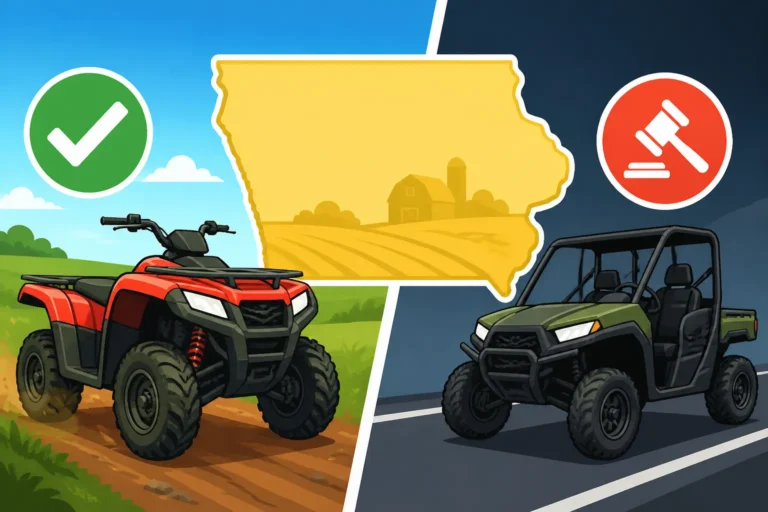
Iowa law allows ATVs and UTVs on certain public roads, and this generally includes township roads, but it comes with a strict set of conditions. It's not a free-for-all; rather, it’s a privilege tied to responsibility and safety. Neglecting these rules can lead to significant fines and a potentially dangerous situation. It's really about ensuring that these powerful machines, designed primarily for off-road environments, can safely coexist with other vehicles and road users.
One of the most critical aspects is the driver's age and licensing. To legally operate an ATV or UTV on a public road in Iowa, including township roads, the operator must be at least 18 years old and possess a valid driver's license. This isn't just a suggestion; it's a hard and fast rule. A 16-year-old with a valid driver's license might be able to drive a car, but they cannot legally pilot an ATV or UTV on a public road. This age restriction is in place because of the unique handling characteristics of OHVs, which can be less forgiving than a car, especially in mixed traffic conditions. This requirement helps ensure that operators have the experience and maturity to make sound judgments on public roadways. You can find more details on this in [Iowa Minimum Age to Ride a Road].
Next up is the speed limit, which is capped at 35 mph for ATVs and UTVs on Iowa roads. This applies universally, regardless of whether the posted speed limit for cars is higher. Even if you're on a wide-open gravel township road that feels like you could easily go faster, you absolutely cannot exceed 35 mph. This specific speed restriction acknowledges the different dynamics of ATVs and UTVs compared to conventional automobiles. Their suspension, braking, and tire compounds are optimized for off-road terrain, not high-speed road travel, and exceeding this limit drastically increases the risk of losing control. This limit is outlined in [Iowa's 35 mph Cap].
Perhaps one of the most overlooked, yet vital, requirements is insurance. Just like any other motor vehicle operating on public roads, your ATV or UTV must be covered by liability insurance. Iowa requires specific minimum coverage: twenty thousand dollars for bodily injury to one person, forty thousand dollars for bodily injury to two or more people, and fifteen thousand dollars for property damage. Carrying proof of this insurance is mandatory, and if a law enforcement officer pulls you over, you must be able to present it. Riding without the proper insurance can lead to a significant fine, so it's essential to check your policy before you ever hit the township road. This is covered in depth by [Iowa ATV Insurance Requirement].
Finally, while township roads often feel remote, they are still considered "public." This means you can't just weave through fields or cut across private property to get to them. You must use the most direct route to get to a public OHV park, a designated riding area, or from one piece of private property to another. This "most direct route" rule is critical. It's not an invitation for joyriding down every township road in the county. The intent is to facilitate necessary travel, not recreational cruising on public thoroughfares. Understanding [Iowa's Most Direct Route Rule] is key to staying legal.
Here’s a quick summary of these essential requirements:
| Requirement | ATV/UTV on Iowa Township Roads |
|---|---|
| Operator Age | 18 years or older |
| Driver's License | Must possess a valid driver's license |
| Speed Limit | Maximum 35 mph, regardless of posted limit for other vehicles |
| Insurance | Minimum liability coverage required (20/40/15) |
| Proof of Insurance | Must be carried and presented upon request |
| Route Restriction | Must take the most direct route for permitted travel |
Mandatory Equipment for Riding on Iowa Township Roads
Beyond age, licensing, and insurance, your ATV or UTV needs to be properly outfitted with specific equipment to be considered "street legal" on Iowa township roads. These requirements are primarily focused on visibility and safety, ensuring your machine can be seen and heard by other motorists, especially in dusty rural conditions or at dawn and dusk. Just because your machine is fantastic for tearing up trails doesn't mean it's ready for road use straight from the factory floor. Many riders will need to add or upgrade certain components to meet state statutes.
First off, lighting is non-negotiable. Your ATV or UTV must be equipped with at least one headlight that is illuminated at all times while operating on a public road, including township roads. This isn't just for nighttime use; it’s a continuous requirement, even during broad daylight, to enhance visibility. Additionally, you need at least one tail lamp that displays a red light visible from a distance of 500 feet to the rear. If you're riding after sunset or before sunrise, these lights become even more critical, and you'll also need proper brake lights. When considering upgrades or additions, ensure any aftermarket lighting, like those available from SuperATV, meets these visibility standards. For more information, check out [Headlights On All Day in Iowa].
Mirrors and a horn are also essential. You must have at least one rearview mirror mounted on the left side of the machine, positioned to give the operator a clear view of the road to the rear for at least 200 feet. A functional horn is also required, capable of emitting a sound audible under normal conditions from a distance of at least 200 feet. These items are crucial safety features, allowing you to be aware of surrounding traffic and alert others to your presence, which can be especially important on winding or dusty gravel township roads where other vehicles might not expect an OHV. [A Horn and a Mirror for Iowa Road Use] covers these specifics.
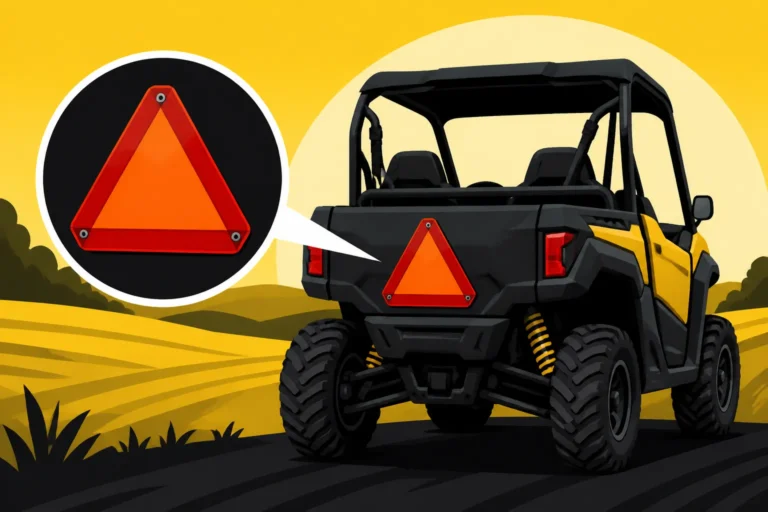
Another vital piece of safety equipment, particularly for slower-moving vehicles, is the slow-moving vehicle (SMV) triangle. This reflective, fluorescent orange-red triangle must be affixed to the rear of your ATV or UTV, visible from at least 500 feet. Since your machine is capped at 35 mph on public roads, it's inherently a slow-moving vehicle compared to typical car traffic. The SMV triangle serves as a clear visual warning to approaching drivers, giving them ample time to react and safely pass. This simple, yet effective, device significantly reduces the risk of rear-end collisions. Details on this can be found in [A Triangle on the Back of an Iowa Machine].
While not strictly required by Iowa law for ATVs and UTVs on roads, some riders choose to install windshields for comfort and protection from dust and debris. If you do have a windshield, Iowa has regulations regarding its tinting. It cannot be tinted in a way that obstructs the driver's clear view of the road. Any modifications, like those from SuperATV, should prioritize visibility and safety. Finally, remember that while helmets are not legally mandated for adults operating ATVs or UTVs on Iowa roads, they are always a highly recommended safety measure, offering crucial protection in the event of an accident.
Navigating Private Land Access from Iowa Township Roads
Iowa's landscape is a mosaic of private property, and township roads often border these lands. While you might be legally riding your ATV or UTV on the township road itself, this does not grant you permission to ride on adjacent private property. This distinction is paramount to avoid trespassing charges and maintain good relationships with landowners. The rules for riding on township roads are strictly for the road surface and, in some very specific instances, the adjacent ditch lines.
Let's clarify the "ditch" rule. Generally, ATVs and UTVs are not allowed to be operated in the ditch line of public roads, including township roads. The primary exception to this rule is when the ditch is used as the most direct route to gain access to private property or to cross a highway, but even then, strict conditions apply. This isn't an invitation to cruise the ditches for fun. The intention is to provide a very limited access point where no other reasonable option exists. If you're simply riding down the township road and decide to take a scenic detour into the ditch, you're likely breaking the law and potentially damaging county property. [Iowa Rules for Riding a Ditch] can offer more guidance here.
Accessing private land directly from a township road requires explicit permission from the landowner. Just because you have a buddy who owns land near a township road doesn't mean you can cut across his neighbor's field to get to it. You must stick to the road until you reach the specific point of entry to the property where you have permission. This might seem like common sense, but it’s a point of frequent misunderstanding and conflict. Always obtain [Written Permission From an Iowa Landowner] before crossing any private ground.
Consider a common scenario: you want to access your hunting ground, which is a mile off the main blacktop, down a gravel township road. You can legally ride your UTV down that township road, adhering to the 35 mph speed limit and all equipment requirements, until you reach your property line. At that point, you can turn off the road and enter your private land. However, if your hunting ground is landlocked by other private properties, and you need to cross a neighbor's field to get to it from the township road, you absolutely must have their express permission to do so. Without it, you are trespassing, even if it's only for a few yards.
Riding an ATV or UTV on Iowa township roads offers a fantastic way to connect to rural areas and private properties, but it's a privilege that comes with strict legal responsibilities. By understanding and adhering to the age, licensing, speed, insurance, and equipment requirements, and respecting private property boundaries, you can ensure your rides are both enjoyable and entirely legal. Always err on the side of caution, and if in doubt, verify the local ordinances or consult with local law enforcement to ensure you're compliant.
Disclaimer
This article is for general informational purposes only and does not constitute professional advice. Laws, prices and regulations vary by location and change over time. Consult a qualified professional for guidance on your specific situation.