Iowa Rules for Towing With a UTV
Navigating the rules for using your UTV on Iowa roads can feel like slogging through mud after a spring thaw – confusing, frustrating, and often leaving you stuck. When you add towing into the mix, it just piles on more questions. You want to use your machine to help out around the farm, or haul a small trailer to the lake, but you're worried about getting pulled over or, worse, causing an accident because you weren't clear on the legalities. This guide is here to untangle the complexities of Iowa's UTV towing regulations, helping you understand what you can tow, where you can tow it, and how to do it safely and legally on public roads.
Understanding Iowa's General UTV Road Use Rules
Before we even hook up a trailer, it’s crucial to understand the baseline rules for operating a UTV on Iowa’s public roads. These rules are the foundation, and if you're not compliant with these, towing anything will only amplify your troubles. Many riders assume that because their UTV can handle rough terrain, it automatically translates to carefree road use, but that’s simply not the case in Iowa.
Age and License Requirements for UTV Operators on Roads
One of the most common misunderstandings revolves around who can actually drive a UTV on a public road in Iowa. It’s not like riding on your own private land where a younger, supervised rider might be just fine. When you're on a public road, Iowa is pretty clear: the operator must be at least 18 years old. This isn't just a suggestion; it's a hard and fast rule. Furthermore, that 18-year-old operator needs to possess a valid driver's license. This isn't an ATV safety certificate we're talking about; it's the same driver's license you'd need to drive your pickup truck. This means if you're letting a 16-year-old use the UTV to pull a small utility trailer across the road, even if they have a safety certificate, you're looking at a potential citation. The state wants to ensure that anyone operating these machines on public thoroughfares has demonstrated a baseline level of driving competence and responsibility. Always carry your driver's license with you when operating your UTV on any public road, just as you would in any other vehicle. [Iowa Driver's License Rules for ATVs] also apply to UTVs when on a public road.
Speed Limits and Road Types Permitted for UTVs
Iowa's regulations for UTVs on public roads also come with strict limitations on speed and the types of roads you can use. Generally, UTVs are capped at a maximum speed of 35 mph on approved roadways. This isn't just a guideline; exceeding this limit can lead to a ticket. It's designed to keep UTVs from becoming a hazard on roads not designed for their typical operating characteristics.
Speaking of roads, not all roads are created equal for UTV use. While [Iowa Rules for Riding a Gravel Road] are generally more lenient, allowing UTVs on unpaved county secondary roads, things get trickier with paved surfaces. For paved secondary roads, the county Board of Supervisors must explicitly authorize UTV use. City streets require a similar authorization from the city council. Interstate highways and four-lane primary highways are almost universally off-limits. You're typically allowed to use the "most direct route" to get from one point to another, often for agricultural purposes or to reach a designated OHV park like Gypsum City. This "most direct route" typically implies taking the shortest, most practical route to avoid extended road travel. Understanding these road distinctions is crucial before you even think about putting a trailer behind your UTV.
Essential Equipment for Road-Legal UTVs
Operating a UTV on an Iowa public road, with or without a trailer, requires specific safety equipment to make it visible and safe for other motorists. Your UTV needs to be equipped with working headlights that are on even during daylight hours, as well as taillights and brake lights. A functional horn is required to alert others, and at least one mirror (typically on the left side) is necessary for rearward visibility. Furthermore, a slow-moving vehicle (SMV) triangle must be displayed on the rear of the UTV, especially critical when you're moving slower than the flow of traffic, which you likely will be when towing.
Beyond the physical equipment, Iowa law mandates that any UTV operating on a public road must carry liability insurance. This isn't optional; it's a legal requirement. The minimum coverage limits are typically 20/40/15, referring to $20,000 for bodily injury per person, $40,000 for bodily injury per accident, and $15,000 for property damage. If you're pulled over and cannot provide proof of insurance, you could face significant fines. Remember, while a helmet is not required by Iowa law for an adult UTV rider on the road, it is still a highly recommended safety measure, especially when towing, which can alter the machine's handling. [Iowa ATV Insurance Requirement] for road use is strict and must be followed.
Specific Iowa Rules for Towing with a UTV on Public Roads
Now that we’ve covered the basic requirements for UTV road use, let’s delve into the specifics of towing. This is where things can get particularly nuanced, as the type of load, the trailer itself, and how it’s secured all come into play. It’s not just about hooking up and going; there’s a distinct art and science to safe and legal UTV towing.
Permissible Types of Loads and Trailers
When it comes to what you can actually tow with your UTV in Iowa, the law primarily focuses on utility and safety. Generally, UTVs are permitted to tow smaller, utility-style trailers. Think about the kind of trailers you might use to haul a small amount of firewood, a few bags of feed, hunting gear, or perhaps a small boat or a couple of kayaks to a nearby river access point. Agricultural implements, as we’ll discuss shortly, have their own specific rules.
The critical factor is that the load and trailer must be appropriate for the UTV's towing capacity and designed for safe operation on the road. This means avoiding oversized or overweight trailers that could compromise the UTV's stability, braking, or control. Many UTV manufacturers provide specific towing capacity ratings for their machines, and it's imperative to stay within those limits. Overloading not only risks a fine but, more importantly, can lead to dangerous situations like jackknifing, loss of control, or trailer sway. For those who frequently tow or need a more robust connection, considering an aftermarket hitch designed for heavy-duty use from a company like SuperATV can provide peace of mind and enhanced capability, ensuring your machine can handle the intended load securely.
Safety Equipment and Practices for Towing
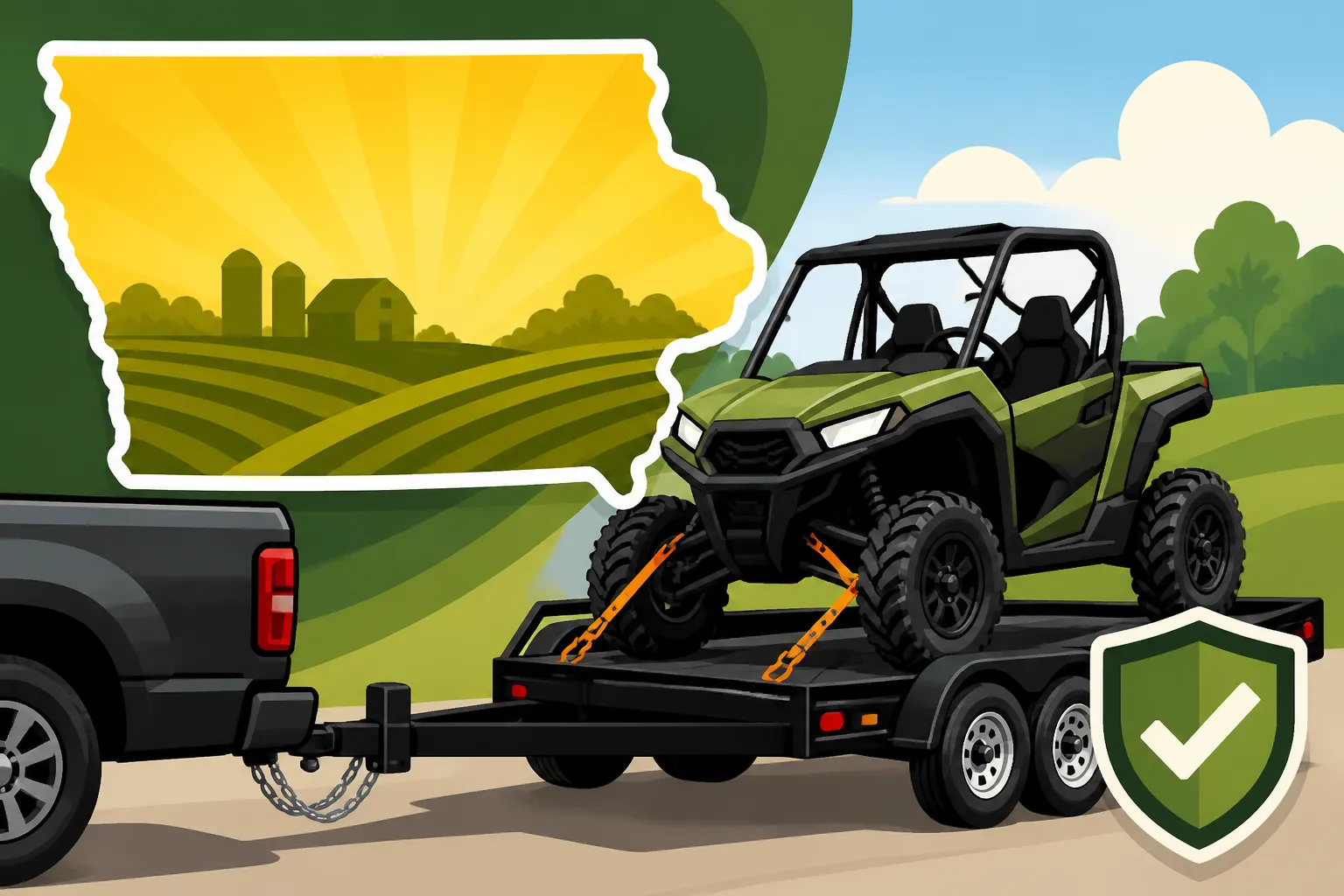
Towing significantly changes the dynamics of your UTV, making proper safety equipment and practices even more critical. Any trailer you tow on a public road must be properly equipped. This means having functioning brake lights, taillights, and turn signals that mirror those of your UTV. If your trailer obscures the UTV's lighting, the trailer must have its own set. Safety chains are also non-negotiable; these serve as a backup connection between your UTV and the trailer in case the primary hitch fails. They should be crossed under the tongue of the trailer to cradle it if it detaches.
Beyond the equipment, responsible towing practices are paramount. Always ensure the load is balanced over the trailer's axle to prevent excessive tongue weight (which can push down on your UTV, affecting steering and stability) or negative tongue weight (which can cause the trailer to lift the rear of your UTV, leading to sway). Secure all cargo to prevent shifting during transit. A shifting load can suddenly unbalance your trailer, making it incredibly difficult to control. Remember that towing increases your stopping distance and makes your UTV less agile, so anticipate turns and stops much further in advance.
Speed and Maneuvering Considerations While Towing
The 35 mph speed limit for UTVs on Iowa roads becomes even more critical when you're towing. In fact, it's often wise to travel well below that limit, especially on uneven roads, during windy conditions, or with a heavy load. Faster speeds amplify any instability in the trailer, increasing the risk of sway or loss of control. [Iowa ATV Speed Limit on Roads] applies, but common sense dictates a slower pace.
Maneuvering with a trailer attached requires more space and planning. Turns need to be wider to accommodate the trailer's path, and reversing becomes a whole new skill to master. Always take your time, make wide, deliberate movements, and use your mirrors to keep an eye on the trailer's position. When going uphill, your UTV will experience more strain, and you'll need to account for reduced acceleration. Downhill, the added weight of the trailer can push your UTV, requiring more braking and potentially downshifting to use engine braking. Understanding how the trailer affects your UTV's center of gravity and braking capability is key to staying safe on Iowa's roads.
Navigating Common Towing Scenarios in Iowa
Iowa riders often tow for a variety of reasons, from moving equipment on the farm to hauling recreational gear. Each scenario can have slightly different legal implications, so let's break down some common situations you might encounter. Understanding these differences can save you a headache (and a ticket) down the road.
Towing Agricultural Equipment
One of the most frequent reasons Iowans hitch a trailer to their UTV is for agricultural work. Iowa law has specific provisions for what are called "implements of husbandry," which include farm equipment like planters, sprayers, or grain carts. If your UTV is primarily used for farming purposes and is towing such an implement, certain exemptions from typical road use rules may apply. For instance, the "2 miles from the farm" rule often comes up, allowing these machines to operate on public roads within that radius for direct agricultural purposes from sunrise to sunset. [2 Miles From the Farm in Iowa] specifically addresses this.
However, it's crucial to understand when an implement of husbandry stops being exempt. If you're towing a utility trailer with hunting gear to a deer stand, that's not an implement of husbandry. If you're hauling a small trailer full of tools from your farm to a repair shop beyond the two-mile radius, the general UTV road rules will likely apply in full, meaning your UTV and trailer must meet all lighting, insurance, and operator requirements. The key is the purpose of the trip. If it’s directly and solely related to farming operations, the exemptions might apply. If it’s for anything else, even if you’re a farmer, you’re usually subject to standard road rules.
Towing for Recreational Purposes
When you're towing for fun – like bringing a small fishing boat to the dock, pulling a camping trailer to a state park, or hauling your dirt bike behind your UTV to an OHV park – the "implement of husbandry" exemptions generally do not apply. In these cases, your UTV and trailer must meet all the standard road-legal requirements we've discussed. This includes proper lighting on both the UTV and the trailer, safety chains, the SMV triangle, a valid driver's license for the operator, and proof of insurance.
For recreational towing, it's often a good idea to consider specific UTV accessories that enhance safety and convenience. For example, some UTVs might benefit from an upgraded hitch receiver if you’re frequently towing different types of recreational trailers. SuperATV offers a range of UTV parts and accessories, including hitches and cargo solutions, that can make your recreational towing safer and more efficient. Always ensure your trailer tires are properly inflated and the wheel bearings are well-maintained before heading out on any recreational trip, as these are often overlooked components that can cause big problems on the road.
What to Do If Stopped by Law Enforcement
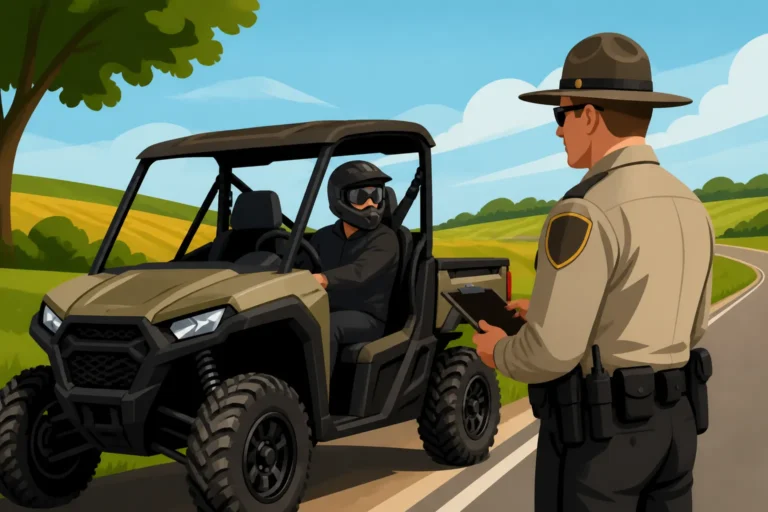
No one enjoys seeing those flashing lights in their rearview mirror, especially when you’re trying to navigate Iowa’s UTV towing laws. If you are stopped by law enforcement while towing with your UTV on a public road, the most important thing is to remain calm and cooperative. Pull over safely to the side of the road, turn off your engine, and keep your hands visible.
The officer will likely ask for your driver’s license, UTV registration, and proof of insurance. Make sure these documents are easily accessible. They may also inspect your UTV and trailer to ensure compliance with equipment regulations – checking lights, safety chains, hitch connection, and the SMV triangle. If you’ve followed all the rules laid out here, you should be able to confidently demonstrate that you are operating legally. If there’s an issue, calmly listen to the officer’s explanation and follow their instructions. Understanding your rights and the rules proactively is the best defense against potential citations, but always be respectful during any interaction. [A Deputy at an Iowa Roadside Stop] will expect you to know and follow these rules.
Potential Penalties and Avoiding Common Mistakes
Ignoring Iowa's UTV towing rules isn't just about risking a minor inconvenience; it can lead to significant financial penalties, legal trouble, and, most importantly, dangerous situations on the road. Understanding the consequences and actively working to prevent common mistakes is key to safe and legal UTV operation.
Fines for Non-Compliance
Iowa takes its road safety seriously, and that includes the safe operation of UTVs and any trailers they might be pulling. If you're caught operating a UTV on a public road without proper registration, you could face fines. Similarly, lacking the required liability insurance for road use can lead to substantial financial penalties and potentially even suspension of your driving privileges. Violations related to improper equipment, such as missing headlights, taillights, brake lights, a horn, a mirror, or the essential slow-moving vehicle triangle, can also result in citations.
When it comes to towing specifically, issues like an unsecure load, missing safety chains, or non-functional trailer lights can also incur fines. The exact amounts for these penalties can vary based on the specific violation and whether it's a first offense, but rest assured, they are designed to be deterrents. It’s far cheaper and less stressful to ensure your UTV and trailer are fully compliant before you ever hit the public road. Remember, these fines aren't just about revenue; they're about ensuring everyone on Iowa's roads, including UTV operators and those they share the road with, remains safe. [Iowa Fines for an Unregistered ATV] or UTV can be costly.
Best Practices for Safe and Legal Towing
Beyond merely avoiding fines, adopting best practices for towing ensures your safety and the safety of others. First and foremost, always perform a pre-trip inspection. Check your tire pressure on both the UTV and the trailer, test all lights (headlights, taillights, brake lights, turn signals on both the UTV and trailer), confirm the hitch is securely latched, and ensure safety chains are correctly attached and crossed. Make sure your cargo is evenly distributed and firmly secured with straps or tie-downs to prevent any shifting during transit.
Match your trailer to your UTV's capabilities. Don't try to tow a large, heavy trailer with a UTV designed for light utility work. If you find your UTV struggling or feeling unstable, it's likely overloaded or improperly balanced. Investing in quality towing accessories, such as a robust hitch from a reputable brand like SuperATV or specialized trailer braking systems if your UTV and trailer setup warrant it, can significantly enhance safety and control. Finally, adjust your driving. Maintain slower speeds, leave extra stopping distance, and make wide, deliberate turns. Drive defensively, always anticipating potential hazards and giving other motorists ample warning of your intentions.
By understanding and adhering to these rules and best practices, you can confidently and legally use your UTV for towing on Iowa's public roads, making your life easier and your adventures safer.
| Feature | Implement of Husbandry Towing (Agricultural Use) | General Recreational Towing (Non-Agricultural) |
|---|---|---|
| Primary Purpose | Direct use in farming or agricultural operations (e.g., pulling a hay wagon, sprayer, small plows). | Hauling personal items, recreational equipment (e.g., kayaks, camping gear, small utility trailers for hunting). |
| Road Type | Primarily unpaved county secondary roads; limited use on other roads for direct access. | Unpaved county secondary roads generally allowed; paved secondary and city streets require specific local authorization. |
| Distance Restrictions | Often subject to "most direct route" or "within 2 miles of the farm" rules for specific agricultural movements. | No specific distance restrictions beyond general road use rules; aim for "most direct route" to specific destinations if applicable. |
| Time of Day | Generally limited to sunrise to sunset for most exemptions related to implements of husbandry. | No specific time of day restrictions beyond general road lighting requirements for nighttime operation. |
| Operator Age & License | Operator must be 18+ with a valid driver's license (unless specific farm exemption applies for a minor on farm land). | Operator must be 18+ with a valid driver's license. |
| Required Equipment | SMV triangle, headlights (if after dark), taillights/brake lights. Specific equipment for larger implements. | SMV triangle, headlights (on at all times), taillights, brake lights, horn, mirror, safety chains on trailer, trailer lights (if UTV lights obscured). |
| Insurance | Required for road use, even if agricultural. | Required for road use (minimum 20/40/15 liability). |
| Speed Limit | 35 mph cap; often operating well below due to nature of implements. | 35 mph cap for UTVs; advisable to drive slower when towing. |
Disclaimer
This article is for general informational purposes only and does not constitute professional advice. Laws, prices and regulations vary by location and change over time. Consult a qualified professional for guidance on your specific situation.