Iowa Rules for Riding With a Dog
Bringing your beloved canine companion along for an ATV or UTV adventure in Iowa sounds like a dream for many outdoor enthusiasts. Who wouldn't want their best friend by their side, enjoying the fresh air and scenery? But before you load up Fido, there's a real maze of unspoken rules, safety considerations, and legal ambiguities that can make planning a dog-friendly ride surprisingly complicated. This guide aims to cut through the confusion, helping you understand the practicalities and responsibilities of safely and legally taking your dog on Iowa's off-road trails and secondary roads.
General Considerations for Riding with Your Canine Companion
Let's face it, our dogs are family. We want them to share in our adventures, but the unique environment of an ATV or UTV ride presents challenges that a leisurely walk in the park simply doesn't. You're dealing with speed, noise, vibrations, dust, and varying terrain. Ignoring these factors isn't just irresponsible; it can be downright dangerous for your furry co-pilot.
The biggest hurdle for many owners is understanding that while Iowa law is pretty clear on human riders, it's often silent when it comes to animal passengers on ATVs or UTVs. This silence doesn't mean "anything goes." Instead, it means we must apply common sense, animal welfare principles, and general public conduct rules, which can feel like navigating a minefield when you just want to hit the trails.
Safety First: Protecting Your Pet on the Trails
The number one priority, above all else, must be your dog's safety. Just as you wouldn your helmet and protective gear, your dog needs appropriate safeguards. This isn't just about preventing them from jumping out; it's about protecting them from impacts, debris, sun, and the elements.
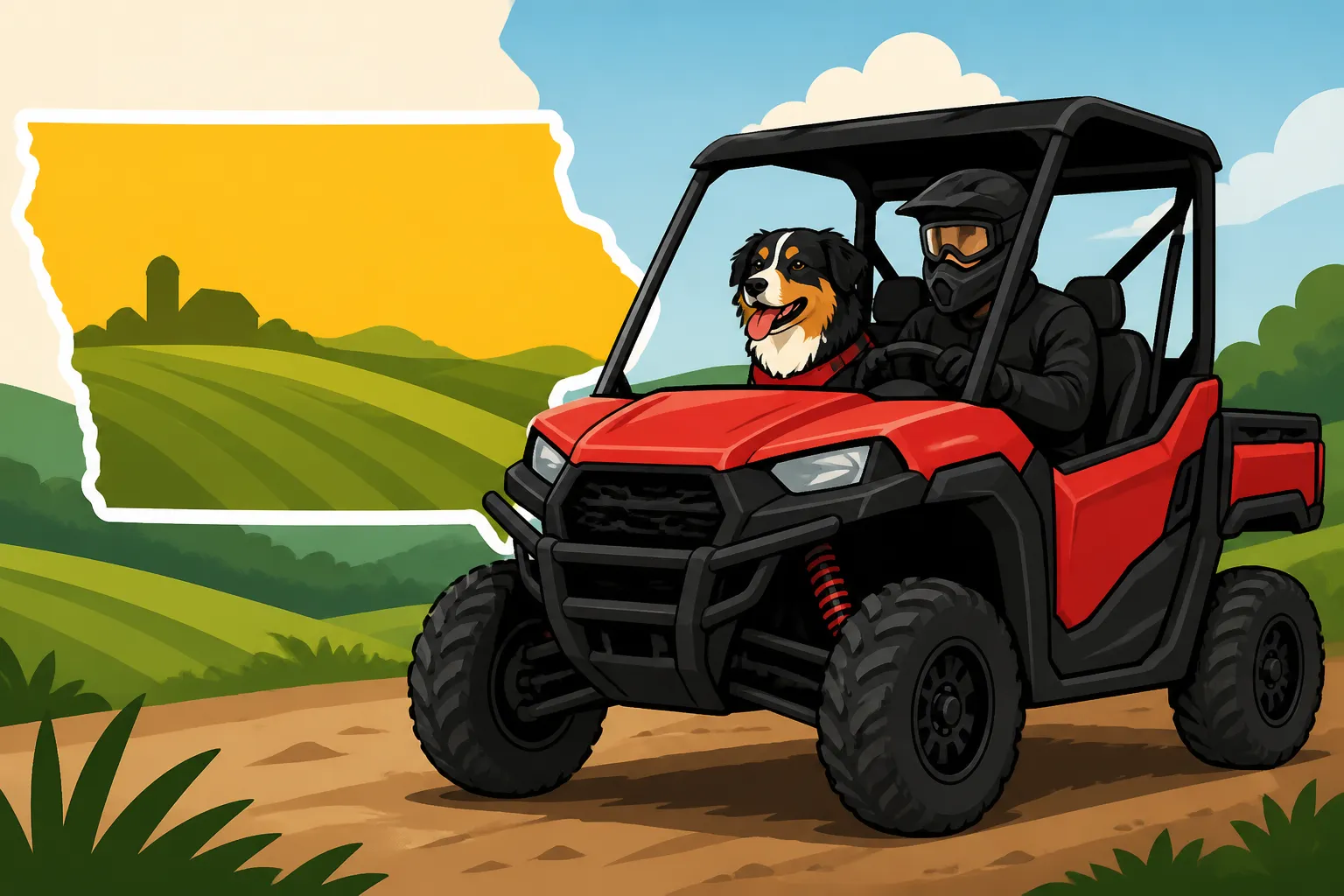
For UTVs, a securely mounted crate or a specialized dog box is often the safest bet. It provides a contained space, protecting them from bumps and jolts, and preventing them from interfering with your driving. If using a crate, ensure it's firmly strapped down to prevent it from shifting or tipping, even on rough terrain. Harnesses specifically designed for vehicle use, often attaching to seatbelt anchors, can work for calmer dogs who can sit in a passenger seat, but they offer less protection from impact or rollovers than a sturdy crate. For ATVs, options are more limited. Smaller dogs might fit into specialized front- or rear-mounted carriers or even backpacks, but these need to be incredibly secure and comfortable, not just for a short stroll but for the dynamic forces of an off-road ride.
Beyond containment, think about their eyes and ears. Dust, flying gravel, and low-hanging branches can cause serious eye injuries. Dog goggles, often called "Doggles," are a smart investment. Similarly, the engine noise and wind can be irritating or even damaging to their sensitive ears over time, especially on longer rides. Ear protection, such as canine earmuffs, can help. Lastly, never underestimate the risk of heatstroke, especially during Iowa's humid summers. Ensure constant access to water, plan shade breaks, and be aware that the excitement of the ride can make dogs overheat faster than you realize. Gear from companies like SuperATV can often include durable cargo boxes or enclosures that could be adapted to safely secure a pet crate.
Legal Basics: What Iowa Law Says (and Doesn't Say) Directly
This is where things get a bit murky. Iowa's off-highway vehicle (OHV) statutes, primarily found in Iowa Code Chapter 321I, detail requirements for [Registering an ATV in Iowa], safety certificates, and rules of operation. However, they are largely focused on the human operator and the machine itself. You won't find a specific statute that says, "Thou shalt not carry a dog on an ATV unless…"
This legal silence doesn't grant carte blanche, though. Instead, you'll need to consider other general animal welfare laws, traffic laws if you're on a public road, and most importantly, the specific rules of any public or private land you plan to ride on. For instance, while not ATV-specific, Iowa's general animal neglect or cruelty laws could be invoked if a dog is transported in an unsafe manner leading to injury or distress. Furthermore, if your dog is loose and causes an accident on a public road, you, as the owner, would likely be held liable. The lack of direct prohibition means you must err on the side of extreme caution and responsibility, anticipating potential issues rather than reacting to them.
Preparing Your Dog for the Ride
Just like you wouldn't jump on a powerful machine without some practice, your dog shouldn't be thrown into an off-road adventure cold. Gradual introduction is key. Start by simply letting your dog get comfortable around the parked ATV or UTV, perhaps with the engine off, then running at idle. Let them explore the vehicle, rewarding calm behavior.
Next, try very short, slow rides in a secure environment, like your own yard or private land. Observe their reactions closely. Are they anxious? Are they panting excessively? Do they seem to enjoy the movement and sounds? Build up the duration and intensity of the rides slowly over several sessions. Always use positive reinforcement, treats, and plenty of praise. Some dogs simply aren't cut out for ATV/UTV riding due to anxiety, motion sickness, or temperament, and recognizing this early is an act of kindness. A quick vet check before you start these adventures can also confirm your dog is healthy enough for the excitement and potential physical demands of riding.
Riding on Iowa Roads and Public Land with Your Dog
The rules for riding ATVs and UTVs in Iowa change dramatically depending on whether you're on private land, a designated OHV park, or a public road. When you add a dog into the mix, these distinctions become even more critical, introducing new layers of responsibility and potential restrictions. It's not just about what your machine can do, but what is permissible with a living, breathing passenger.
Iowa's approach to OHVs on public roads is quite specific, generally allowing them on unpaved secondary roads, and sometimes on paved secondary roads or city streets if authorized by local ordinances. However, the presence of an animal passenger can introduce further considerations that might not be explicitly stated in the OHV code but fall under general public safety or animal control regulations.
Navigating Paved and Unpaved Roads
If you plan to ride your ATV or UTV on any public road in Iowa, even for a short distance, you need to be acutely aware of the comprehensive rules governing this activity. This includes understanding [Iowa Rules for Riding a Gravel Road] or [Iowa Rules for Riding a Paved Secondary Road], which dictate everything from machine requirements to driver age and insurance. All these baseline requirements must be met before you even consider adding a dog to the equation.
When a dog is present, their securement becomes paramount. An unsecured dog in the bed of a UTV or on an ATV could easily fall out, causing injury to themselves or an accident with other vehicles. Furthermore, a dog that is restless, barking, or attempting to climb out can be a significant distraction to the driver, compromising safety. Iowa law requires a driver to be 18 or older to operate an ATV/UTV on a public road, emphasizing the need for mature, undistracted operation. [Why Iowa Requires a Driver 18 or Older] speaks to this responsibility. Ensure your vehicle has all the necessary equipment for road use—headlights, taillights, mirrors, and a horn—and that your dog's presence doesn't obstruct these or your view. Insurance is also mandatory for road use; make sure your policy covers your specific use case. [Iowa ATV Insurance Requirement] is not something to overlook, especially with an additional passenger.
Designated OHV Parks and Wildlife Areas
Iowa boasts several fantastic OHV parks, like Gypsum City and Bluff Creek, that offer miles of trails for enthusiasts. These parks are governed by specific rules set by the Iowa DNR or the clubs that manage them. While many parks are generally dog-friendly for visitors (e.g., on a leash in staging areas or campgrounds), their policies on dogs on the actual trails or within moving vehicles can vary widely. It is absolutely crucial to check the specific rules of any park you plan to visit before you load up your dog. Some parks may explicitly forbid pets on trails, or require them to be contained in a specific way. [Where to Ride an ATV in Iowa] lists these parks, and a quick call to their respective offices or a check of their websites can save you a wasted trip.
Wildlife areas, state forests, and other natural lands often have much stricter regulations regarding pets, especially concerning off-leash activities or presence in specific zones, to protect native wildlife. In many cases, dogs might be prohibited entirely, or only allowed on designated foot trails, not OHV trails. These regulations are often much more stringent than those in general OHV parks. Always assume restrictions exist in wildlife areas unless explicitly stated otherwise. Your general [Carrying the Certificate on an Iowa Ride] rule applies here too; always have your registration paperwork handy, as park rangers or conservation officers will enforce these rules.
Understanding Local Ordinances and Landowner Permissions
Beyond state statutes and park rules, local control plays a significant role in Iowa. Individual counties and cities have the authority to enact their own ordinances regarding OHV use on local roads and, by extension, how animals might be transported within their jurisdiction. What's allowed in one county or town might be prohibited in another. This "patchwork" of rules means you can't assume consistency across the state.
If you're riding on private land, the rules become simpler: it's up to the landowner. However, you absolutely must have explicit permission. [Iowa Rules for Riding Private Land] states that riding without permission is trespassing. When you're bringing a dog, it's wise to specifically discuss this with the landowner. They might have concerns about their livestock, other pets, or general liability. Always respect their wishes, as getting permission is a privilege, not a right. Some landowners may be perfectly fine with your dog joining the ride, provided they are well-behaved and safely secured; others may have a strict no-pet policy. A quick conversation can prevent misunderstandings and ensure continued access to their property.
Essential Gear and Best Practices for Dog-Friendly ATV/UTV Adventures
Embarking on an ATV or UTV ride with your dog isn't just about following rules; it's about being prepared for anything and ensuring their comfort and well-being. Thinking ahead about the gear you'll need and establishing best practices can make the difference between a joyful outing and a stressful, or even dangerous, experience.
The environment of off-roading is inherently unpredictable. Dust, mud, sudden stops, uneven terrain, and changing weather are all part of the fun for us, but they can be overwhelming or hazardous for an unprepared animal. Investing in the right equipment and adopting responsible habits is just as important as your machine's maintenance or your own safety gear.
Securing Your Dog in a UTV or on an ATV
The most critical piece of the puzzle is how you'll keep your dog safe and secure. For UTVs, the options are generally better. A hard-sided kennel or a specialized UTV dog box is highly recommended. These provide a contained, protected space that can be securely strapped into the bed or passenger area. Look for models that are well-ventilated and durable. Companies like SuperATV offer robust cargo boxes and accessories that can often be integrated or modified to create a safe space for a pet crate, ensuring it won't slide around or tip over on rough trails.
Alternatively, for dogs who are calm and accustomed to car rides, a safety harness designed for vehicle travel can be used in conjunction with a seatbelt in a UTV. This prevents them from moving freely around the cabin and becoming a projectile in a sudden stop, but it offers less protection from external impacts or rollovers than a crate. Never simply let a dog roam free in a UTV cabin or, worse, sit on your lap while driving. On ATVs, securing a dog is much more challenging due to the open nature and lack of passenger space. Small dogs might be carried in a specialized, secured backpack or a very robust, front-mounted soft carrier, but this is generally only advisable for very calm dogs and very gentle, slow rides on flat terrain. The risk of injury to both rider and dog is significantly higher on an ATV.
Packing for Your Pet's Needs
Just like you pack a first-aid kit and water for yourself, your dog needs their own provisions. Always carry an ample supply of fresh water and a portable bowl. ATV/UTV riding is physically demanding and often takes place in dusty, dehydrating conditions. Even if your dog isn't actively running, the excitement and exposure can lead to rapid dehydration.
A small first-aid kit specifically for dogs is also a smart addition. This should include items like antiseptic wipes, gauze, vet wrap, tweezers (for thorns or ticks), and any prescription medications your dog might need. Don't forget waste bags; practicing "leave no trace" applies to pet waste too, especially in public areas or OHV parks. A sturdy leash and collar with identification tags are also essential for when you stop for breaks or need to walk your dog outside the vehicle. You might also consider a reflective vest for your dog, especially if you're riding near dusk or in wooded areas where visibility can be low.
Recognizing and Responding to Your Dog's Signals
Your dog can't tell you in words if they're uncomfortable, scared, or overheating. It's up to you to be a vigilant observer of their body language. Look for signs of stress or anxiety: excessive panting, drooling, yawning, lip licking, tucked tail, flattened ears, or attempts to hide. If you see these signals, it's time to take a break, offer water, and reassess whether your dog is truly enjoying the experience.
Similarly, be aware of signs of overheating: heavy panting, bright red gums, lethargy, or stumbling. If you suspect heatstroke, get your dog to a cool, shaded area immediately, offer water, and cool them down with wet towels. These situations can escalate quickly, so early recognition is vital. Pay attention to how they interact with the machine and the environment. Some dogs genuinely love the adventure and the bond with their owner; others tolerate it out of loyalty but would be happier at home. Your responsibility as a dog owner extends beyond the legal requirements to ensuring their emotional and physical well-being throughout the ride.
| Item | Why It's Essential | Notes |
|---|---|---|
| Secure Crate/Dog Box | Safety from impacts, prevents distraction, containment | Must be firmly secured; ventilated. Better for UTVs. |
| Vehicle Safety Harness | Limits movement, prevents becoming a projectile | For calm UTV passengers; less impact protection than a crate. |
| Dog Goggles (Doggles) | Protects eyes from dust, debris, branches, sun | Ensure a comfortable, secure fit. |
| Ear Protection (Muffs) | Reduces noise irritation/damage from engine/wind | Important for sensitive ears and prolonged exposure. |
| Ample Water & Bowl | Prevents dehydration, especially in dust/heat | Consider a spill-proof travel bowl. |
| Dog First-Aid Kit | For minor injuries, cuts, insect bites, thorns | Include antiseptic, gauze, vet wrap, tweezers. |
| Leash & ID Tags | Required for stops, identification if separated | Sturdy, non-retractable leash; current ID info. |
| Waste Bags | Essential for responsible clean-up | Leave no trace, especially in public areas. |
| Reflective Vest (Optional) | Increases visibility in low light or dense cover | Good for hunting season or dawn/dusk rides. |
| Paw Protection (Boots) | Protects paws from hot surfaces, sharp objects, salt | Especially useful on rocky trails or in extreme weather. |
Riding an ATV or UTV with your dog in Iowa is certainly possible, but it demands careful planning, a strong commitment to safety, and a thorough understanding of the nuanced rules and best practices. While Iowa law might not explicitly lay out dog-specific regulations for off-road vehicles, the principles of animal welfare, general safety, and adherence to specific land-use rules remain paramount. By prioritizing your dog's safety and comfort, preparing them adequately for the experience, and always checking local ordinances and park rules, you can create wonderful, shared adventures on Iowa's trails and roads.
Disclaimer
This article is for general informational purposes only and does not constitute professional advice. Laws, prices and regulations vary by location and change over time. Consult a qualified professional for guidance on your specific situation.