Iowa Rules for Riding a Farm Lane
It’s a scene played out on farms across Iowa every single day: you hop on your ATV or UTV to zip down the farm lane, maybe check on livestock, grab a tool from the machine shed, or just get from one field to another. You’re on your own property, so surely the rules are different, right? The question of whether your trusty quad or side-by-side needs all the official bells and whistles just to traverse your private lane can be a real head-scratcher. This guide is here to clear up that confusion, diving deep into Iowa's specific rules for riding ATVs and UTVs on farm lanes, and what happens the moment those lanes meet public roads.
The Basics of Farm Lane Riding in Iowa
Riding an ATV or UTV on a farm lane in Iowa feels inherently different from tearing up a designated OHV park trail. The stakes, the purpose, and often the rules are indeed distinct. But understanding these distinctions is key to staying legal and safe.
What Constitutes a "Farm Lane" in Iowa?
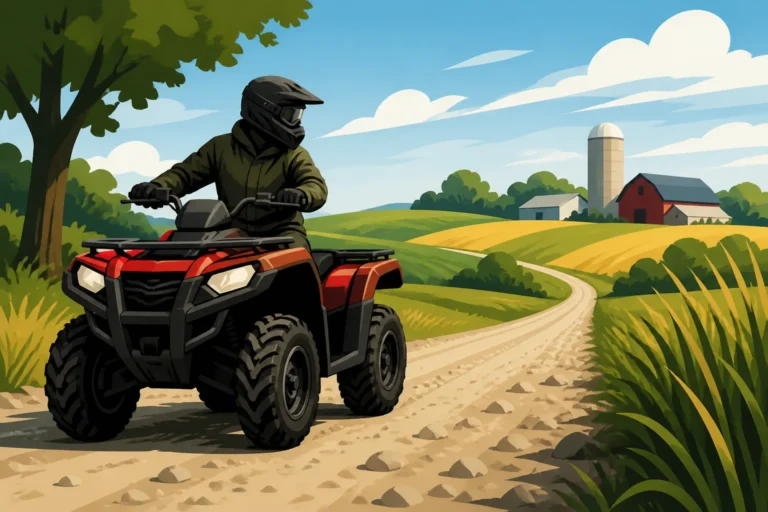
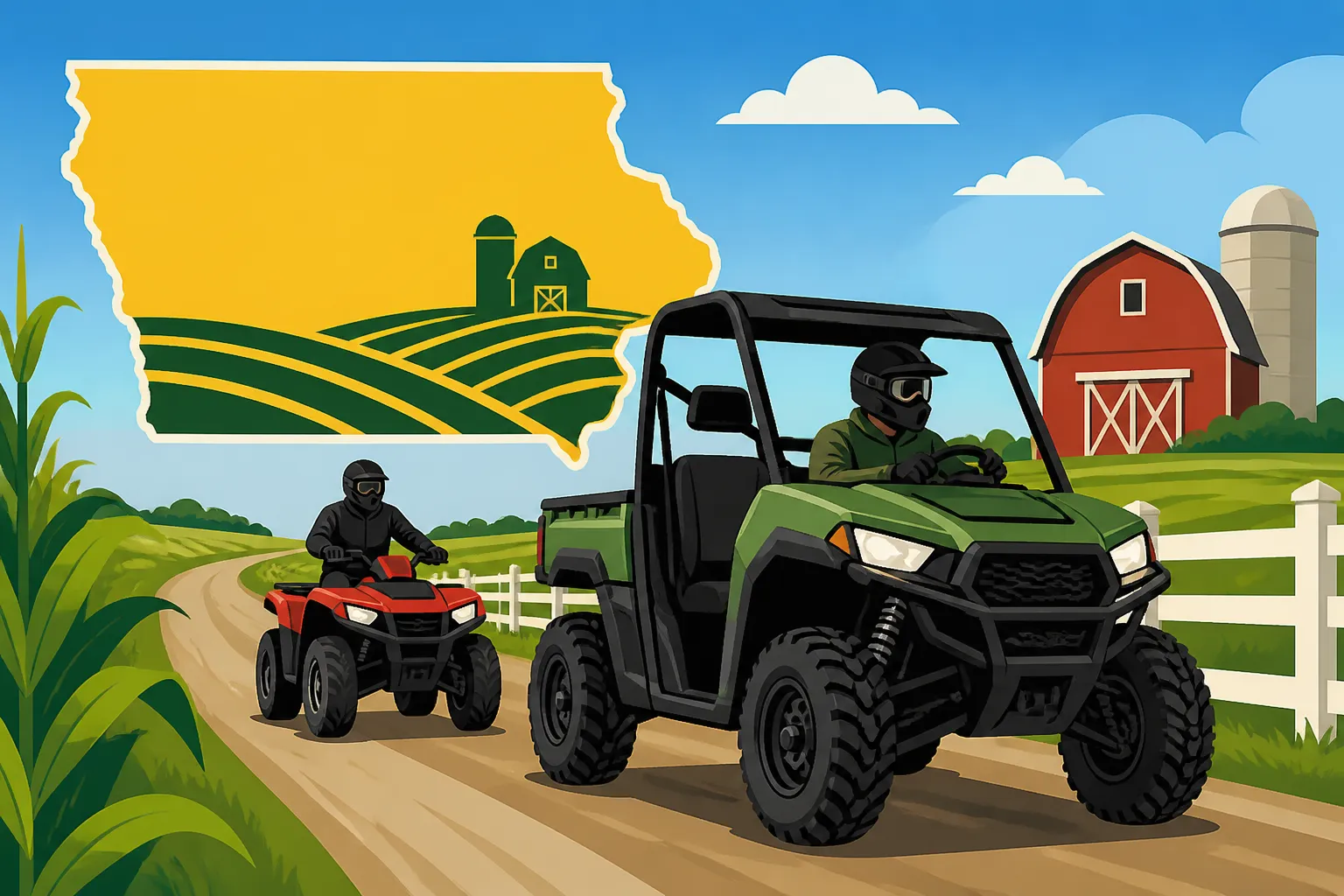
When we talk about a "farm lane" in Iowa, we're generally referring to a private access road or path that is entirely contained within private property and used primarily for agricultural or farm-related purposes. Think of those gravel drives leading to the main house, the dirt paths winding through cornfields, or the access routes connecting different barns or pastures. These aren't public roads, nor are they typically maintained by the county or state. They are extensions of your private land, serving the needs of your farming operation.
It’s crucial to distinguish a private farm lane from a public "Level B road" or a regular "township road." While both might be unpaved, a farm lane’s defining characteristic is its private ownership and purpose. You won't find public road signs on a true farm lane, and it's not intended for general public thoroughfare. The understanding is that permission to be on a farm lane comes from the landowner, not from public access rights. If your "farm lane" is actually a public easement, or if it's maintained by the county, then it might fall under different regulations entirely.
The General Rule: Private Land, Private Rules
Here’s the good news that often brings a sigh of relief to Iowa farmers: generally speaking, if your ATV or UTV never leaves your private property, including your private farm lane, then many of Iowa’s public road regulations regarding registration, titling, and operator licensing do not apply. This means you can use your machine to haul feed, move equipment, check fences, or simply get around your property without needing to secure an Iowa registration decal or a safety certificate.
This freedom on private land is fundamental. As the property owner, you set the rules for what happens on your land. You can allow family members, farmhands, or visitors to operate ATVs and UTVs on your farm lanes, provided they have your permission. However, it's important to remember that this "private rules" philosophy doesn't negate the importance of safety. Even on your own land, operating an ATV or UTV carries risks, and responsible riding practices, including proper supervision for young riders, are always recommended. But from a legal standpoint, the state isn't typically dictating who can ride what on your truly private farm lane.
When a Farm Lane Blurs the Lines with Public Roads
The moment your farm lane connects with, crosses, or even briefly uses a public road, Iowa's off-highway vehicle laws become very relevant. This is where the rules can get a bit tricky and require careful attention.
Crossing or Briefly Using a Public Road
It’s one thing to ride exclusively on your private lane. It's quite another if that lane requires you to cross a county gravel road to get to another part of your property, or if it temporarily merges with a paved secondary road. The instant your ATV or UTV makes contact with any publicly maintained road, even for a few feet, you're no longer solely on "private property." At this point, Iowa law typically classifies your machine as being on a public thoroughfare, and specific regulations kick in.
For example, if your farm lane comes to a T-intersection with a county gravel road, and you need to turn left to access another field further down, you are now operating on a public road. This is where the concept of the [Most Direct Route Rule] comes into play for legally permitted road use. You must take the shortest, most direct route to your destination when crossing or riding on public roads for agricultural purposes. This isn't an invitation to take the scenic route or run errands in town. The intent is strictly functional for farm operations.
The "Implement of Husbandry" Exemption and Farm Lanes
This exemption is a lifesaver for many Iowa farmers. An ATV or UTV, when used primarily for agricultural purposes on a farm, can often qualify as an "implement of husbandry." This means it’s treated more like a tractor or combine than a recreational vehicle for certain limited road uses. If your machine's main job is hauling tools, spraying fields, checking livestock, or tending to crops, it stands a good chance of meeting this definition, especially if you've outfitted it with practical accessories like cargo beds, plows, or sprayers – the kind of utility-focused upgrades you might find from a brand like SuperATV.
The "implement of husbandry" exemption allows you to operate the machine on public roads for short distances when directly related to agricultural work. This is particularly relevant for those farm lanes that necessitate brief ventures onto county roads. However, there are strict limitations: you can generally only use it on public roads for a maximum of [2 Miles From the Farm in Iowa] and only from sunrise to sunset. It's not a blanket pass for recreational riding on public roads, even if your machine could technically be used for farm work. The purpose of the ride is what matters here. If you’re just joyriding, the exemption likely won't apply.
Equipment Requirements for Road Use (Even Brief)
If your farm lane use means you’ll be touching a public road, even for a moment, your ATV or UTV needs to meet certain basic equipment requirements. It's not just about the type of machine or its purpose; it's also about visibility and safety for other road users. This is a commonly overlooked detail that can lead to unexpected fines.
Here’s what [What Iowa Requires of an ATV on a Public Road] for even brief road use:
- Headlights and Taillights: These must be on, even during daylight hours, to make your presence known.
- Brakes: Your machine needs functioning brakes.
- Muffler: It must have a muffler that keeps noise levels within legal limits.
- Mirrors: At least one rearview mirror is typically required.
- Horn: A working horn is necessary to signal other drivers.
- [Slow-Moving Vehicle Triangle]: This bright orange triangle must be displayed on the rear of your machine, clearly visible to traffic approaching from behind. This signals that your vehicle will be traveling at a slow speed, giving other drivers time to react.
Failing to have these basic items in place, even for a short hop across a county road, could result in a citation. It’s a good idea to ensure any ATV or UTV used for farm work that might touch public roads is properly equipped before you even consider leaving your private lane.
Registration, Titling, and Safety on Farm Lanes
The questions of registration, titling, and safety certification are often the source of the most confusion for ATV and UTV owners using their machines on farm lanes. Let's break down these critical aspects.
Do You Need to Register an ATV on Private Land in Iowa?
This is a straightforward answer with a crucial caveat: No, you do not need to register an ATV or UTV in Iowa if it never leaves private land. If your machine lives its entire life on your farm, traversing only your own fields, pastures, and farm lanes, then the state of Iowa does not require you to register it or get a registration decal. This is a relief for many farmers who simply use their machines as tools around the property.
However, the moment your machine touches a public road – even just to cross it, or if your farm lane doubles as a permitted public access way – that exemption disappears. If you’re going to operate on any public road, whether it's a gravel county road, a paved secondary road (if authorized by the county), or even a short jaunt permitted under the implement of husbandry rule, then your machine must be registered and titled. You would need to follow the process for [Registering an ATV in Iowa] and ensuring you have completed [Titling an ATV in Iowa]. This distinction is critical and often trips up even seasoned riders. For example, if you bought a used machine from a neighbor and plan to use it strictly on your property, you don't need to go to the County Recorder's office. But if you then decide to take it down the public road to check the mail, you're suddenly in violation.
Iowa ATV Safety Certificate and Farm Lane Use
Similar to registration, the Iowa ATV Safety Certificate requirements primarily apply to public land use. If you or a family member are riding an ATV or UTV exclusively on your private farm lane and other private areas of your farm, then the state of Iowa does not legally require the operator to hold an ATV safety certificate. This offers flexibility for farm families, allowing younger, supervised riders to gain experience in a controlled environment.
However, the minute that same rider ventures onto a public road, even if only briefly for agricultural purposes, the safety certificate requirements snap back into effect for those in the mandated age range. Specifically, any person aged 12 to 17 operating an ATV or UTV on public land (which includes public roads) in Iowa must possess an [Iowa ATV Safety Certificate Requirements]. While not legally mandated for private farm lane riding, it is highly recommended for all riders, especially youth, to take an approved safety course. These courses teach critical riding skills, awareness, and judgment that are invaluable no matter where you ride, helping to prevent accidents and injuries. You don't want a moment of convenience to turn into a regrettable incident because a young rider wasn't prepared for unexpected public road hazards.
Insurance Considerations for Farm Lane Riding
When it comes to insurance, the lines can get a little blurred. For strictly private farm lane use, Iowa does not mandate specific ATV or UTV liability insurance. However, this doesn't mean you're off the hook entirely. Many farm liability insurance policies will cover accidents or damages that occur on private property, and it's always a good idea to check with your insurance provider to understand your coverage for ATV/UTV use within your farming operation. After all, accidents can happen anywhere, and being prepared is always the best policy.
The situation changes dramatically if your farm lane use ever involves a public road. If you operate your ATV or UTV on any public road in Iowa, even briefly for farm purposes, you are legally required to carry liability insurance. The minimum coverage limits are typically set at $20,000 for bodily injury to one person, $40,000 for bodily injury to two or more people, and $15,000 for property damage. This [Iowa ATV Insurance Requirement] is serious, and failing to have proof of insurance on public roads can result in significant fines. It's crucial to distinguish between what your general farm liability might cover and the specific motor vehicle liability required for public road use. Always confirm with your insurance agent if your current policy extends to these scenarios.
Here's a quick summary table of requirements for farm lane riding:
| Requirement | Exclusively Private Farm Lane Use | Farm Lane + Brief Public Road Use (Agricultural) |
|---|---|---|
| Registration | No | Yes (Unless Exempt as Implement of Husbandry AND not going on public roads) |
| Titling | No | Yes (If registration is required) |
| Safety Certificate | No (But recommended) | Yes (For ages 12-17) |
| Liability Insurance | No (But general farm liability advised) | Yes |
| Headlights/Taillights | No (But recommended) | Yes (Must be on) |
| Horn | No (But recommended) | Yes |
| Mirror | No (But recommended) | Yes |
| SMV Triangle | No (But recommended) | Yes (On rear) |
| Speed Limit | Owner's discretion | Max 35 mph on public roads |
| Road Type | Private | Gravel/Paved Secondary (County Authorized) |
Best Practices for Riding Your Farm Lane
Even with the exemptions and specific rules for farm lanes, adopting best practices ensures safety, prevents misunderstandings, and protects everyone involved. Your farm lane might feel like an extension of your living room, but treating it with respect and caution is always wise.
Communication and Signage
It's your farm, your rules, but clear communication is always essential. If you have employees, family members, or even occasional visitors who might use ATVs or UTVs on your farm lanes, make sure everyone understands your expectations. This includes discussing safe operating speeds, specific paths to take (or avoid), and any areas with particular hazards. Consider posting simple signs, especially at points where your private lane meets a public road, to remind riders of the transition and the change in rules. For example, a sign that says "Private Farm Lane – Enter Public Road Ahead, State Rules Apply" can be incredibly helpful.
This also extends to potential trespassers. While Iowa has rules regarding [Iowa Trespass Rules for Riders], clear "No Trespassing" signs can help reinforce that your farm lane is private property, discouraging unauthorized recreational use that might not adhere to your safety standards or the specific implement of husbandry rules you operate under.
Maintenance and Safety Gear
The fact that you're riding on private land doesn't make an accident any less severe. Regular maintenance of your ATV or UTV is crucial. This means checking tires, brakes, fluid levels, and lights (even if not strictly mandated for private use, they are fundamental safety features). A well-maintained machine is a safer machine. Products like rugged tires or robust skid plates (from a brand like SuperATV) can improve durability and safety, particularly if your farm lanes involve rough terrain or heavy loads.
Beyond machine maintenance, personal safety gear is paramount. Always, always wear a helmet, even for short trips down the farm lane. Eye protection, gloves, and appropriate footwear are also highly recommended. These items drastically reduce the risk of serious injury in the event of an accident. It's easy to get complacent when you're on familiar territory, but a quick tip-over on a gravel lane can still lead to a concussion or broken bones. Set a good example for anyone else who might ride on your property by making safety gear non-negotiable.
Educating Young Riders
A farm lane can be an excellent, controlled environment for teaching young riders the ropes of ATV and UTV operation. However, this informal training needs to be paired with rigorous education on safety and the stark difference between private and public land rules. While a child under 12 might be able to ride on your private farm lane under direct adult supervision, they cannot legally operate on public roads. Similarly, once a child turns 12, even if they're still on the farm lane, they will need an [Iowa ATV Safety Certificate Requirements] if they ever venture onto a public road.
Emphasize to young riders that the "farm rules" end at the property line. They need to understand the importance of speed limits, signaling, and checking for traffic when nearing or crossing a public road. The farm lane provides a fantastic opportunity for practical instruction, but that instruction must include the critical lesson of when and why state laws come into play. It's about instilling a deep respect for both the machine and the law, ensuring they can ride safely and responsibly, no matter the terrain.
Disclaimer
This article is for general informational purposes only and does not constitute professional advice. Laws, prices and regulations vary by location and change over time. Consult a qualified professional for guidance on your specific situation.