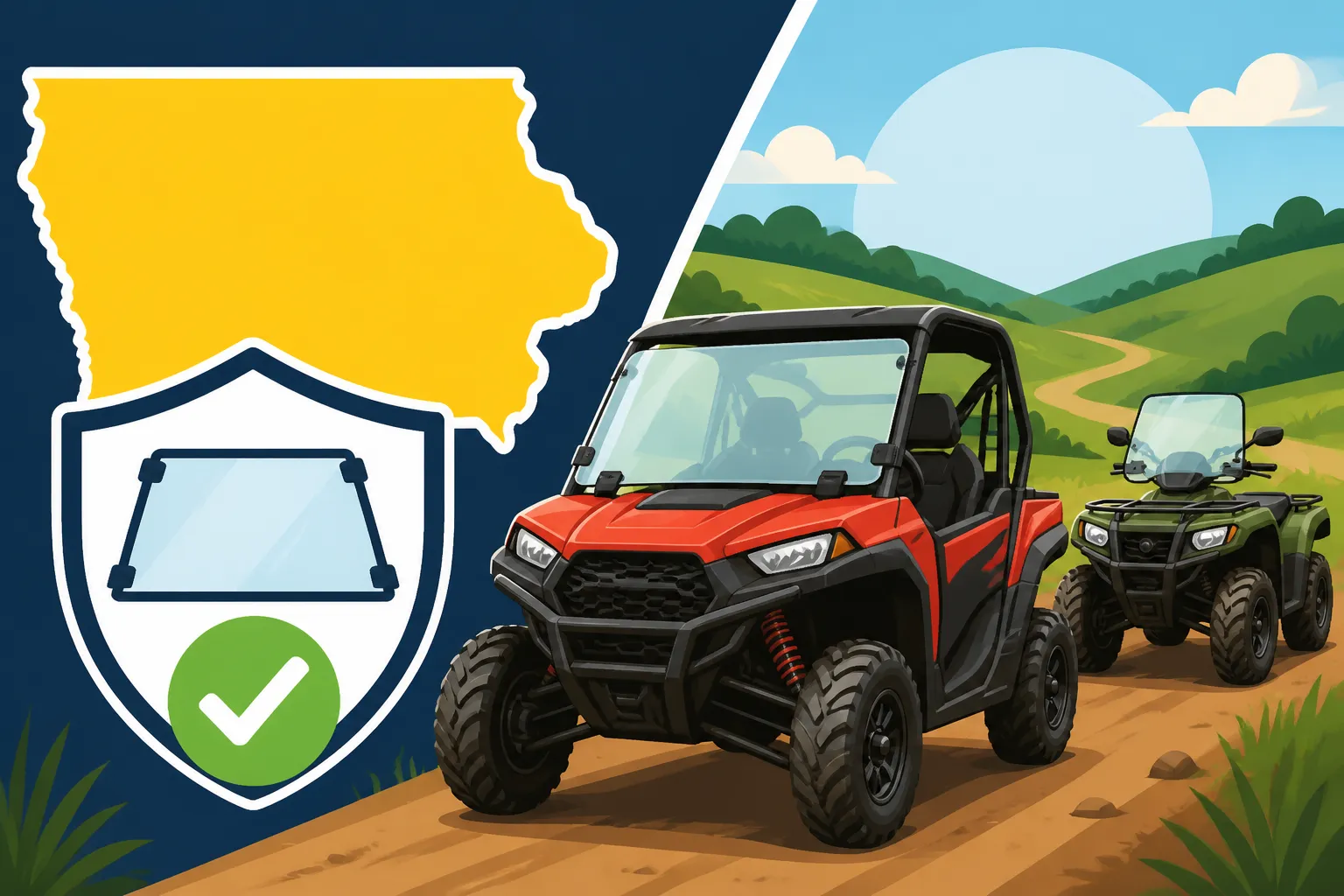
Iowa Windshield Rules for Road Use
Navigating the specific requirements for making your ATV or UTV legal for road use in Iowa can feel like deciphering a cryptic code. It's not just about slapping a license plate on your machine; there are numerous equipment standards you need to meet, and one area that often causes confusion is the windshield. Many riders are left scratching their heads, wondering if they even need one, and if so, what kind is acceptable. This guide will cut through the confusion, clearly outlining Iowa's rules for windshields on off-highway vehicles when you're cruising down a public road.
The Foundation: When Your ATV or UTV Hits Iowa's Roads
Before we even dive into windshield specifics, it's crucial to understand the foundational rules that allow your ATV or UTV to be on an Iowa public road in the first place. These machines aren't universally welcome on all asphalt, and the equipment requirements kick in the moment you leave private property. It’s a common misconception that if you own an off-road machine, you can just drive it anywhere. Iowa law carves out specific allowances, but they come with a responsibility to equip your machine correctly.
What Roads Are Even Open to ATVs and UTVs in Iowa?
Iowa isn't a free-for-all when it comes to ATV and UTV road use. The state has specific rules about where you can ride, and these rules are critical because they dictate when your windshield (and other equipment) needs to be compliant. Generally, you’ll find the most leeway on [Unpaved County Secondary Roads in Iowa]. These are your classic gravel roads that crisscross much of the rural landscape. Many counties have embraced this, recognizing the utility of these machines for local travel and agricultural purposes.
However, once you venture onto paved roads, things get a bit more localized and require explicit authorization. [Iowa Counties That Allow ATVs on Paved Roads] do so through specific county board resolutions. It’s not a blanket approval, and a paved road in one county might be open while a similar one in the next county is strictly off-limits. Similarly, [Iowa Cities That Allow ATVs on Streets] must pass their own ordinances. You can't assume a city street is open just because a county road is. This patchwork of rules means you need to do your homework for every jurisdiction you plan to ride in, understanding that the moment you leave a designated OHV park or private land, these road rules suddenly apply. Riding on a [Iowa Rules for Riding a Gravel Road] is one thing; navigating urban streets is an entirely different matter.
Key Equipment Iowa Requires for Road-Legal Machines
When your ATV or UTV is legally on an Iowa public road, it must transform from a purely off-road machine into something that can safely share the road with other traffic. This means meeting a specific list of equipment requirements that go far beyond just having an engine and wheels. Think of it as preparing your machine for a driver's license test, but for the vehicle itself. Iowa's laws are designed to ensure visibility, control, and safety for everyone on the road.
Beyond the windshield, you're looking at requirements such as properly functioning headlights that are turned on even during daylight hours, ensuring your machine is always seen. [Iowa Lighting Requirements for ATVs] also mandate tail lamps and brake lights to indicate your presence and intentions to traffic behind you. A working horn is not just a courtesy but a safety necessity, allowing you to alert others when needed, as outlined in [Iowa Horn Requirement for Road Use]. You’ll also need at least one mirror to give you a clear view of the rear, detailed in [Iowa Mirror Requirement for Road Use]. Perhaps one of the most distinctive requirements is the [Iowa Slow-Moving Vehicle Sign Rules], the bright orange triangle that must be affixed to the rear of your machine, signaling to faster traffic that you’re moving at a lower speed. All of these elements, including the windshield, contribute to making your off-road machine a predictable and visible participant in road traffic.
Iowa's Specific Windshield Rules for ATVs and UTVs on Roads
Now, let's get down to the brass tacks of windshields. While some off-road riders might view a windshield as an optional accessory for comfort or protection from trail debris, when you take your machine onto an Iowa public road, it becomes a regulated safety component. The law isn't just concerned with whether you have a windshield, but also with its condition and characteristics, particularly when it comes to visibility. This is where many riders can inadvertently fall afoul of the regulations, simply by not knowing the precise details.
The Tinting Conundrum: How Dark is Too Dark?
One of the most common questions regarding windshields on any vehicle, including ATVs and UTVs, revolves around tinting. It’s easy to assume that if you have a windshield, any tint is fine, especially since many aftermarket options offer various levels of shading. However, Iowa law is quite specific about [How Dark a Windshield May Legally Be] on any vehicle used on public roads, and this absolutely extends to your off-highway machine. The core principle here is clear visibility for the driver.
Iowa law generally states that the windshield should not be so dark as to "unreasonably obstruct the driver's clear view through the windshield." While this phrasing might seem a bit subjective, for the windshield itself, the expectation is essentially full transparency. Unlike side windows or rear windows where some tinting is permitted within certain percentages, the windshield is critical for safe operation. Any film or treatment that significantly reduces light transmission or causes distortion can be considered a violation. This means those heavily tinted aftermarket windshields that look cool on the trail might land you a citation on a county road. Enforcement officers are trained to spot these visual impairments, and a quick glance can tell them if your windshield is too dark or obscured to meet the legal standard for safe road travel.
Material and Condition: Beyond Just Tint
Beyond tinting, the material and physical condition of your ATV or UTV windshield are equally important under Iowa law for road use. It’s not enough to simply have a piece of clear material in front of you; that material needs to meet certain safety standards and be maintained in a way that doesn't impair your vision. Imagine trying to drive down a gravel road with a spiderweb of cracks obscuring your view, or a heavily scratched surface catching the glare of the sun – it's a recipe for disaster.
Iowa regulations implicitly require that a windshield must be made of safety glass or a similar transparent material that does not shatter into dangerous shards upon impact. Many modern ATV and UTV windshields, especially from reputable brands like SuperATV, are made from polycarbonate or acrylic, which are incredibly durable and shatter-resistant, often surpassing the performance of traditional glass in off-road environments. However, even with tough materials, wear and tear happen. Chips, cracks, and deep scratches can significantly impair visibility, especially in varying light conditions or during rain. An officer conducting a roadside check won't just look for tint; they'll also assess if the windshield's condition poses a safety hazard by blocking your clear line of sight. Replacing a damaged windshield, even a small crack, is not just about avoiding a fine but about ensuring your own safety and the safety of others on the road.
Practical Considerations for Windshields on Iowa Roads
Meeting legal requirements is one thing, but making practical choices that enhance your riding experience and safety is another. Iowa’s diverse weather and riding conditions mean that the "best" windshield might change depending on the season or your specific use case. When you're making your ATV or UTV road-legal, thinking about the long-term functionality and durability of your windshield will save you headaches and potentially money down the line.
Choosing the Right Windshield for Iowa Riding Conditions
Iowa's weather can be notoriously fickle, swinging from dusty dry summers to frigid, snowy winters, often with plenty of rain and mud in between. This variability should heavily influence your choice of windshield if you plan to use your machine on public roads regularly. A full, fixed windshield offers maximum protection from the elements, which is fantastic during a cold [Iowa Riding in Winter] or a rainy spring day. It keeps the wind chill off you and deflects mud and spray from passing vehicles. However, it can also limit airflow, making [Iowa Riding in Summer] feel much hotter and potentially causing dust to swirl inside the cab.
This is where versatility comes into play. Many riders opt for options like half-windshields, folding windshields, or vented windshields. A half-windshield offers some protection from debris while allowing maximum airflow, which can be a godsend on a hot, dusty summer afternoon. Folding windshields, like some offered by SuperATV, provide the best of both worlds: full protection when you need it, and the ability to fold down or remove the top half for an open-air experience when conditions allow. Vented windshields incorporate adjustable vents to control airflow, helping to reduce dust swirl and regulate temperature without fully exposing the cabin. Considering how you'll use your machine most often on Iowa's roads will guide you to the most effective and comfortable choice.
Maintenance and Inspection for Road Use
Just like any other component of your ATV or UTV, your windshield requires regular maintenance and inspection, especially if you’re using your machine on public roads. A well-maintained windshield isn't just about aesthetics; it's a crucial safety device. Small issues can quickly escalate into bigger problems, both in terms of safety and legal compliance.
Regular cleaning is fundamental. Dust, mud, bug splatters, and road grime don't just look bad; they significantly reduce visibility. Using the right cleaning agents, typically mild soap and water for polycarbonate or acrylic, is important to avoid scratching the surface. Harsh chemicals or abrasive cloths can permanently damage the material, leading to hazing or minor scratches that create glare. Beyond cleaning, a diligent inspection is necessary before every road trip. Check for any new cracks, chips, or deep scratches that might have occurred during your last off-road adventure. Even a small crack can spread rapidly, especially with vibrations from road travel or temperature fluctuations. If you find significant damage, replacement is often the safest option. Brands like SuperATV offer a range of replacement windshields, ensuring you can quickly get your machine back to a safe and legal standard for Iowa's roads. Don't let a minor imperfection become a major safety hazard or a reason for a roadside stop.
Consequences of Non-Compliance and Enforcement
Ignoring Iowa's windshield rules for ATVs and UTVs on public roads isn't just a minor oversight; it carries tangible consequences. These regulations are in place for safety, and law enforcement takes them seriously. When you decide to take your machine onto public property, you're agreeing to abide by the rules, and failure to do so can result in fines, inconvenience, and even more severe repercussions if an accident occurs.
Fines and Roadside Checks in Iowa
If you’re caught operating an ATV or UTV on an Iowa public road with a windshield that doesn’t meet the legal requirements—whether it’s too darkly tinted, severely cracked, or made of an inappropriate material—you could face a citation. A deputy or a state conservation officer conducting [A Deputy at an Iowa Roadside Stop] will perform a visual inspection of your machine, and a non-compliant windshield is an easy thing to spot. They'll be looking at all the mandatory equipment, and an obscured or improperly tinted windshield will definitely draw their attention.
The specific fines for equipment violations can vary, but they are certainly an unwelcome expense that could easily be avoided by ensuring your machine is up to code. These aren’t just warnings; they are actual tickets that will require you to pay a monetary penalty. Beyond the immediate financial cost, receiving a citation can be an inconvenience, potentially leading to court appearances or requiring you to take time out of your day to correct the issue and prove compliance. It's a stark reminder that [Iowa Fines for Illegal ATV Road Use] extend to all aspects of the law, not just where you ride, but also how your machine is equipped.
Safety Implications and Liability
While the legal penalties are a direct consequence of non-compliance, the safety implications of an improper or damaged windshield are arguably far more critical. Iowa’s windshield rules are not arbitrary; they are designed to ensure the operator has a clear and unimpaired view of the road, traffic, and surroundings. When your visibility is compromised—whether by excessive tint, severe cracks, or a poorly maintained surface—you significantly increase your risk of an accident.
Imagine trying to react quickly to a deer jumping out onto a gravel road or an unexpected turn in traffic when your view is distorted or partially blocked. An impaired windshield slows your reaction time and can lead to misjudgments, which can have devastating consequences. Furthermore, if you are involved in an accident and your windshield is found to be non-compliant, you could face increased liability. Your insurance company might even dispute coverage if it's determined that your illegal equipment contributed to the incident. This means you could be on the hook for damages, injuries, and legal fees. Ultimately, adhering to Iowa’s windshield rules isn't just about avoiding a ticket; it's about safeguarding your life, the lives of your passengers, and the well-being of others sharing Iowa’s roads.
| Windshield Type | Pros | Cons | Best for Iowa Conditions |
|---|---|---|---|
| Full Windshield | Maximum protection from wind, rain, dust, cold. | Limited airflow, can trap heat, potential for dust swirl in cab, fixed. | Cold weather, heavy rain, maximum rider comfort, long road stretches. |
| Half Windshield | Excellent airflow, reduces dust swirl, some protection from low debris. | Limited protection from high wind, rain, and cold. | Hot, dusty summer days, light trail riding, increased airflow preference. |
| Folding Windshield | Versatility: full protection or open-air. Easy to clean both sides. | Can be more expensive, more moving parts to maintain, potential for rattles. | All-season riders, adaptable to changing weather, combination of road and trail use. |
| Vented Windshield | Adjustable airflow control, reduces dust and heat buildup. | More complex installation, vents can be an additional point of failure. | Moderate climates, riders who want airflow control without fully opening the cabin. |
| Tinted Windshield | Reduced glare (if light tint), aesthetic appeal. | ILLEGAL if too dark for road use, reduced visibility in low light, ticket risk. | ONLY very light, factory-approved tints; generally NOT recommended for aftermarket tint. |
Disclaimer
This article is for general informational purposes only and does not constitute professional advice. Laws, prices and regulations vary by location and change over time. Consult a qualified professional for guidance on your specific situation.