Why Iowa Publishes No List of City Ordinances
You've done your homework, right? You've checked the state laws for Iowa, maybe even called the DNR or your county recorder's office to get the lowdown on ATV and UTV rules. But then you start wondering about hitting the streets in your local town, or a town you plan to visit, and suddenly, all that clear information seems to vanish. It's incredibly frustrating to know you can ride on certain roads, but can't find a straightforward answer about city streets. This guide is here to shed some light on exactly why Iowa doesn't publish one comprehensive, statewide list of city ordinances for ATV and UTV use, and, more importantly, how you can navigate this confusing landscape to find the answers you need.
The Decentralized Nature of Iowa Lawmaking
Iowa, like many states, operates on a system where power is distributed, and local governments retain significant control over issues within their own jurisdictions. While the state provides a foundational framework, cities and counties often have the authority to tailor specific rules to their unique communities. This local control, while democratic, can certainly lead to a challenging maze for ATV and UTV enthusiasts trying to figure out where they can legally ride.
State vs. Local Authority on Roads
Think of it this way: the state of Iowa sets the broad parameters for off-highway vehicle (OHV) operation, including things like registration, titling, and general safety guidelines. These are the rules that apply broadly across the state. However, when it comes to specific roadways – especially those within city limits or certain county routes – local entities are granted the power to create their own, more granular regulations. This means that a rule that applies on a county-maintained gravel road might be completely different from a rule on a city-maintained street, even just a few miles down the road. It's a prime example of why you'll find different answers depending on where you ask, and why the frustration of inconsistent rules is so real.
This division of authority means that while the Iowa DNR might tell you about state trails or general statewide road rules, they typically can’t provide a definitive list of every single city’s unique stance on ATVs or UTVs on their streets. That specific authority usually rests squarely with local city councils and county boards of supervisors. They are the ones who assess their local traffic patterns, citizen input, and infrastructure to make decisions that best suit their particular area. This is why you'll often hear about [Unpaved County Secondary Roads in Iowa] having different rules than, say, city parks or main thoroughfares, and why securing [Paved Secondary Roads and County Authorization] falls to the county, not the state.
Why City Councils Have the Final Say
When it comes to allowing ATVs and UTVs on city streets, the city council is the ultimate decision-maker. These elected officials meet regularly to discuss and vote on local laws, known as ordinances. An ordinance might permit OHV use on certain streets, restrict it to specific hours, or even prohibit it entirely. Because each city council operates independently, with its own community's interests and concerns at heart, their decisions can vary wildly from one municipality to the next. This is precisely why there isn't a single, statewide list.
Imagine a small farming community where ATVs and UTVs are commonplace for agricultural work and local transportation. Their city council might see little harm in allowing them on most city streets, perhaps with some basic safety requirements. Now, picture a bustling suburban town with heavier traffic and a different set of priorities; their council might decide that allowing OHVs on city streets poses too much of a safety risk or traffic congestion issue. Both decisions are valid for their respective communities, but they underscore why a universal state list would be impractical, if not impossible. Each town has the sovereign right to govern its own roadways, and that right translates into this frustrating patchwork of local laws.
The Challenge of Tracking Local Ordinances
The sheer volume of cities and towns in Iowa, combined with the independent nature of their local governance, creates a significant hurdle for compiling a centralized list of ATV and UTV ordinances. It's not just that the state chooses not to publish one; it's that doing so would be an almost impossible administrative undertaking given the fluid nature of local laws.
No Central Repository for City Ordinances
Unlike state laws, which are carefully codified, published, and regularly updated in a central system, city ordinances are primarily maintained at the local level. Each city clerk's office acts as the official keeper of their municipality's laws. This means that if you want to know the rules for riding your ATV or UTV in Anytown, Iowa, you essentially have to go directly to Anytown to find that information. This is the core reason [Why Iowa Publishes No List of City Ordinances]—there's simply no statewide database that automatically collects and updates every single local rule regarding OHVs.
Consider the practicalities: Iowa has hundreds of incorporated cities, each with its own council, its own priorities, and its own process for creating and amending ordinances. Asking a state agency to continually monitor, collect, interpret, and publish the current ATV/UTV ordinances for every single one of these cities would require an enormous amount of resources and would likely be out of date the moment it was published, given how frequently local laws can be reviewed and changed. The responsibility for knowing these local rules ultimately falls to the individual rider, making your research effort feel a bit like a scavenger hunt.
How Ordinances Are Published Locally
So, if there's no central database, how do cities make their ordinances public? Typically, city councils publish their adopted ordinances in a few standard ways. Many smaller towns will publish new ordinances in their local newspaper, as required by law, and maintain physical copies at the city hall. Larger cities often have a more robust system, including a dedicated section on their official city website where you can find their municipal code or a searchable database of ordinances.
However, the ease of access and the level of detail can vary dramatically. Some city websites are incredibly user-friendly, with clearly organized sections for their transportation or motor vehicle ordinances. Others might have older, less intuitive sites, or perhaps only make certain key ordinances available online. You might even find that some crucial details are only available by calling or visiting the city clerk directly. For example, while you might find general information about [Waukon's Open Streets and Alleys] online, the specifics of [Waukon's Midnight to Five Ban] might require a deeper dive. Similarly, an ordinance like [Des Moines County Ordinance Fifty-Six] could be published in a local gazette, making it clear that a dedicated online presence isn't universal. This inconsistency is precisely what makes finding definitive answers so challenging for riders.
Practical Steps to Research Local Riding Rules
Given that there's no single, easy answer, it falls to us as riders to do our due diligence. While it might seem like a bit of a hassle, taking the time to properly research the rules in any specific city you plan to ride in can save you from potential fines, legal trouble, or even accidents. It’s all about being a responsible rider and respecting local laws.
Your Local City Hall and Clerk's Office
The absolute best place to start your quest for local ATV/UTV ordinances is the city hall or, more specifically, the city clerk's office in the municipality you're interested in. The city clerk is the official record-keeper for the city and will have access to all current ordinances. Don't be shy about calling them up or even stopping by during business hours. They are there to serve the public, and while they might not be ATV experts, they can certainly direct you to the relevant sections of their city's municipal code.
When you call or visit, be prepared with specific questions. Ask directly about "ATV and UTV operation on city streets" or "off-highway vehicle ordinances." Inquire if there are any designated routes, time restrictions, or specific safety equipment requirements beyond state law. You might want to ask about specific areas like parks or trails, too, if that's part of your plan. Getting clarification on whether a city has indeed opted into allowing OHV use on its public roads, and under what conditions, is crucial. This direct approach, as highlighted in [Calling a City Clerk About ATVs], is often the most reliable way to get accurate, up-to-date information straight from the source.
Checking City Websites and Official Notices
Many cities, especially larger ones, have dedicated websites where they publish their municipal codes and ordinances. This can be a convenient first step before making a call. Look for sections often titled "City Code," "Ordinances," "Public Works," or "Transportation." Use their internal search function if available, typing in terms like "ATV," "UTV," "off-highway vehicle," or "OHV." You might find a comprehensive document detailing all local laws, including those pertaining to vehicle operation.
Be aware that not all city websites are equally maintained or user-friendly. Some might present the information in an easily digestible format, while others may require you to sift through lengthy legal documents. It's also a good idea to check for recent news or public notices sections on the city's website, as any newly adopted ordinances or amendments related to OHVs might be announced there first. While online resources are helpful, always consider confirming the most critical details with the city clerk, especially if you find conflicting information or the website seems out of date.
Common Road Rules and What to Expect
While city-specific rules will always be the final word for riding within municipal boundaries, it's important to remember that state-level regulations still form the baseline for ATV and UTV operation in Iowa. Understanding these fundamental rules will help you prepare for what to expect, even when you're navigating the nuances of local ordinances.
State Baseline Regulations (When Applicable)
Even if a city has opened its streets to ATVs and UTVs, you're not entirely off the hook from state law. Think of state regulations as the minimum requirements. For instance, if a city allows you to ride on its streets, you'll still typically need to meet Iowa's requirements for operator age (usually 18+ for public roads), have a valid driver's license, and carry proof of insurance. Your machine will likely need proper lighting, a mirror, and a horn – essential accessories that many riders invest in from brands like SuperATV to ensure their rig is road-ready. These are the elements that comprise [What Iowa Requires of an ATV on a Public Road], regardless of local allowances.
Furthermore, state law often dictates speed limits for OHVs on public roads, typically capping them at 35 mph, and may have specific rules about riding between sunrise and sunset. These state-level safety provisions are designed to ensure responsible operation wherever you choose to ride on public property. So, while you're seeking out that city ordinance, also keep these overarching state rules in mind. Compliance with state laws means that when you do find a city that welcomes OHVs, you're already halfway there to legal and safe operation.
Variations You Might Encounter City-to-City
The beauty (and frustration) of local control is the variety. When you do find a city that allows ATVs and UTVs on its streets, don't assume the rules will be identical to the next town over. You might encounter specific street closures—perhaps main thoroughfares are off-limits, but secondary streets and alleys are fair game. Some cities might impose time-of-day restrictions, such as [Waukon's Midnight to Five Ban], prohibiting riding during late-night or early morning hours. Others might designate specific routes you must follow to get from one side of town to another, or to access a particular trail system.
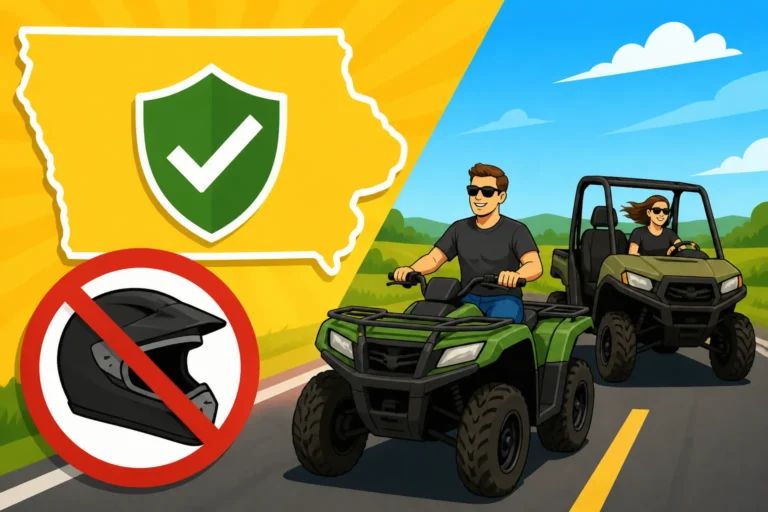
Beyond the routes and times, there could also be nuances in equipment requirements. While Iowa state law doesn't mandate helmets for adults on public roads, a city could potentially implement a local ordinance that does, although this is rare for ATVs. Passenger rules might also vary, especially for youth riders. The key takeaway here is that every single town that has an ordinance about OHV use on its roads might have its own twist on the rules. This is why a brand like SuperATV, which offers a wide range of accessories for customization and compliance, can be so helpful. Outfitting your machine with a variety of legal components ensures you're ready for whatever local ordinances might require.
The "Direct Route" and Crossing Limitations
Even with some cities opening their streets to ATVs and UTVs, it's crucial to understand how Iowa's "most direct route" rule can affect your travel, especially when connecting permitted roads or accessing designated OHV parks. This state-level concept plays a significant role in where and how you can ride your machine on public ways.
Understanding the Most Direct Route Rule
Iowa law often specifies that when an ATV or UTV is permitted to operate on certain public roads (like county gravel roads, or city streets that have been opened), riders must take "the most direct route" to their destination. This means you can't just joyride through town or take a scenic detour on public roadways that haven't been explicitly opened for OHV use. The intent of this rule is to facilitate practical transportation, such as getting to a gas station, accessing private land, or reaching an approved trail system like [The Most Direct Route to an Iowa OHV Park]. It is not an invitation for recreational riding on undesignated public roads.
This rule is particularly important when you're using permitted roads to connect to another trail system or private property. You're expected to choose the shortest, most efficient path available that utilizes legally approved routes. Deviating from the most direct route onto unapproved public roads could put you in violation of state law, even if you’re otherwise following all other local ordinances. It emphasizes that road access is often granted for a specific purpose—getting somewhere, not just riding for its own sake on public thoroughfares. It’s also crucial to understand how to handle intersections, especially when crossing larger roads. Knowing the rules for [Crossing a Multi-Lane Highway at an Intersection] ensures you stay legal and safe.
Interstate and Four-Lane Highway Restrictions
While city councils and county boards have the authority to open certain local roads, there are some major roadways in Iowa where ATV and UTV operation is universally prohibited by state and federal law. These include interstates and most multi-lane, divided primary highways. These roads are designed for high-speed vehicular traffic, and operating an OHV on them would pose a significant safety risk to both the rider and other motorists.
This means that even if you're in a city that has opened its streets to ATVs and UTVs, you cannot use these machines to access or travel along an interstate or a four-lane highway within or beyond the city limits. This distinction is vital for planning your routes and understanding the boundaries of legal operation. No local ordinance can supersede these state and federal prohibitions. So, while you might find a convenient route on a secondary street, remember that [Why Interstates Stay Closed in Iowa] and [Why Four-Lane Roads Stay Closed in Iowa] are firm rules that always apply, regardless of local flexibility. Always plan your ride to avoid these major arteries entirely; attempting to use them could lead to serious fines and dangerous situations.
Navigating the Local Ordinance Landscape: A Rider's Toolkit
Understanding why there's no single list is the first step, but the next is arming yourself with the right strategies to successfully navigate this complex landscape. As a responsible rider, having a clear approach to finding local rules is just as important as having the right gear on your machine.
Your Essential Checklist Before You Ride
Before you load up your ATV or UTV and head to a new area, create a personalized checklist for researching local rules. Start by identifying the specific city or cities you intend to ride in. For each city, follow the steps we've discussed: call the city clerk, check the city's official website for municipal codes, and look for any public notices or news releases. Don't rely on hearsay or old forum posts; always seek out official sources. This proactive approach will save you headaches in the long run.
It’s also wise to consider what the state laws do require as a baseline, ensuring your machine is always equipped with necessary safety items regardless of local rules. This means ensuring you have working headlights and taillights for any low-light conditions, an audible horn, and at least one rearview mirror. Even if a town says yes, you'll still need proper lighting and mirrors—accessories often found in a good SuperATV kit. Being prepared with this minimum level of compliance helps you meet most local requirements that build upon state law.
Advocating for Clearer Local Rules
If you find the process of researching local ordinances unduly difficult, or if your local community doesn't allow ATV/UTV access where you believe it could be safely implemented, consider becoming an advocate. Attend city council meetings, join local riding clubs, and respectfully voice your opinions and concerns. Local governments are responsive to their constituents, and a well-organized, respectful group of riders can make a difference. Perhaps your town could benefit from a designated OHV route that connects to a trail system, or clearer signage regarding permissible roads.
By engaging with your local officials, you can not only seek clarification on existing rules but also champion for new, more rider-friendly ordinances. Providing input on safety measures, responsible riding practices, and the economic benefits of OHV tourism can help councils make informed decisions. Remember, local laws are living documents; they can be reviewed, debated, and changed. Your participation in that process can contribute to making Iowa a more accessible place for ATV and UTV enthusiasts.
| Rule Category | General State Law (Baseline) | Typical City Ordinance (Variable) | How to Research |
|---|---|---|---|
| Registration/Title | Required for public land/trails and most road use | Always applies; city cannot override | County Recorder, DNR Website |
| Operator Age | 18+ for public roads (driver's license required) | Generally aligns with state; check for exceptions | City Clerk, Municipal Code |
| Insurance | Required for public road use (20/40/15 minimums) | Always applies; city cannot override | City Clerk, Insurance Provider |
| Speed Limit | 35 mph on public roads | May be lower in specific zones; watch for signage | City Clerk, Municipal Code, Roadside Signs |
| Equipment (Lights) | Headlight, taillight required (dusk-dawn, low visibility) | Always required; essential for safety | City Clerk, State Law, Equipment from SuperATV |
| Equipment (Mirror) | Required for road use | Always required; essential for safety | City Clerk, State Law, Equipment from SuperATV |
| Equipment (Horn) | Required for road use | Always required; essential for safety | City Clerk, State Law, Equipment from SuperATV |
| Helmet | Not required for adults on roads (state law) | City could theoretically mandate (rare for ATVs) | City Clerk, Municipal Code |
| Passenger Rules | State law dictates seating capacity | City might have specific rules for youth/passenger safety | City Clerk, Municipal Code |
| Designated Routes | "Most direct route" applies for connecting roads/accessing areas | City may designate specific streets/alleys for use | City Clerk, Municipal Code, City Maps |
| Hours of Operation | Generally sunrise-sunset for road use, unless specified | City may have specific hour restrictions (e.g., [Waukon's Midnight to Five Ban]) | City Clerk, Municipal Code |
| Prohibited Roads | Interstates, multi-lane divided highways ([Why Interstates Stay Closed in Iowa]) | City cannot open these; always prohibited | State Law, City Clerk (for confirmation) |
This table helps illustrate the interplay between state baseline rules and potential city-specific regulations, providing a clearer path for your research efforts. By understanding these distinctions, you can approach your local city clerk with informed questions, ultimately making your riding experiences in Iowa safer and more enjoyable.
Disclaimer
This article is for general informational purposes only and does not constitute professional advice. Laws, prices and regulations vary by location and change over time. Consult a qualified professional for guidance on your specific situation.