Why Iowa Standardised All 99 Counties
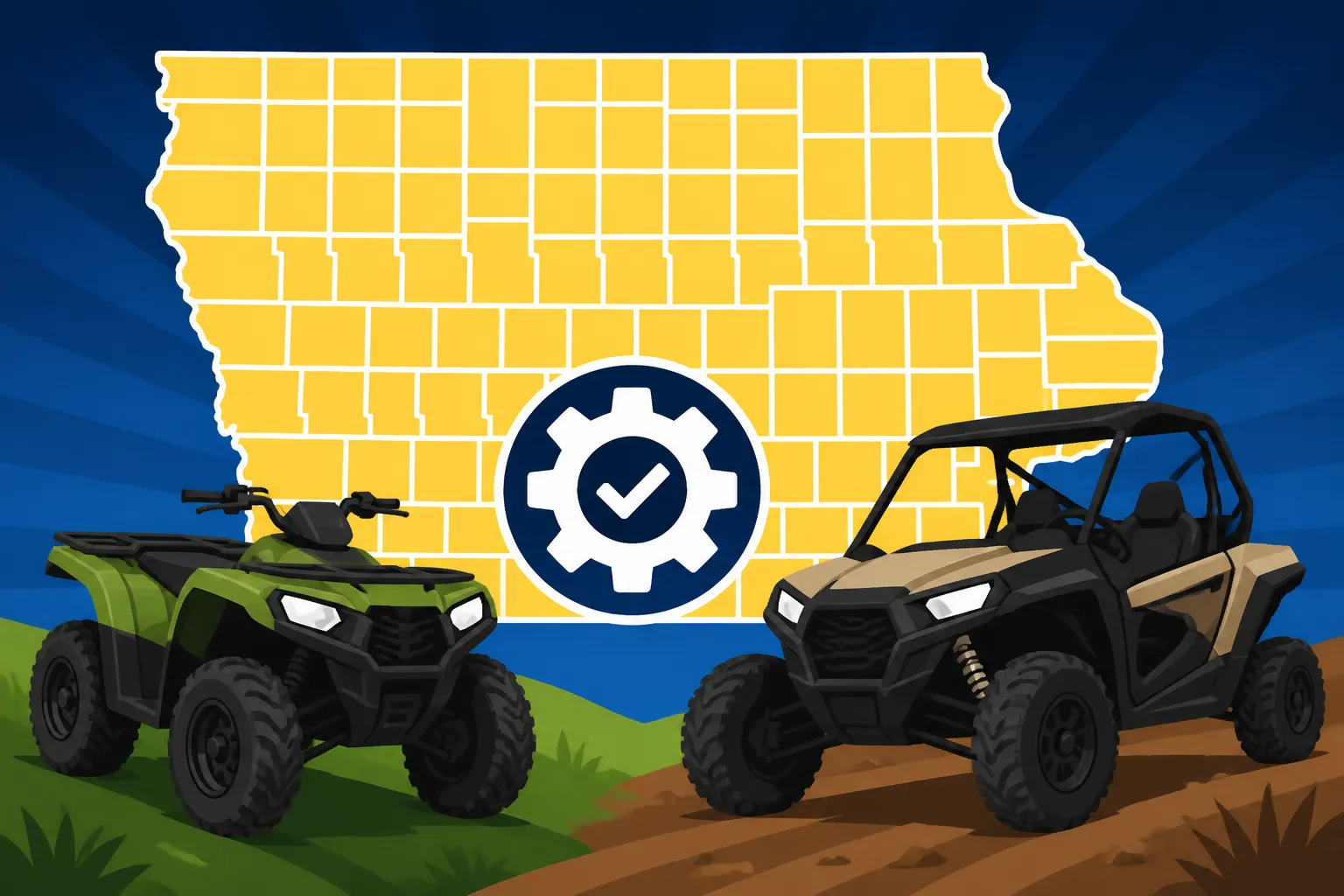
For years, navigating the rules for riding ATVs and UTVs on Iowa's roads felt like a dizzying maze, where what was perfectly legal in one county could get you pulled over just a few miles down the road in another. This inconsistency created endless frustration for riders and headaches for law enforcement. This guide delves into Iowa's pivotal decision to standardize ATV and UTV road use across all 99 counties, explaining the "why" behind this crucial change and what it means for you on the trails and gravel roads today.
The Frustrating Patchwork of Old Iowa ATV & UTV Laws
Before Iowa made the move to standardize ATV and UTV road use, trying to figure out where you could legally ride your machine often felt like a guessing game with real consequences. Imagine planning a weekend ride with friends, meticulously mapping out a route across what looks like perfectly good gravel roads, only to find out you've inadvertently crossed an invisible county line and are now breaking the law. It was a common, and intensely frustrating, scenario for many of us who just wanted to enjoy our machines responsibly.
Before Uniformity: A Tale of 99 Different Rulebooks
In the past, each of Iowa's 99 counties had the authority to set its own rules regarding ATV and UTV access on its public roads. This meant that while Benton County might have had a progressive ordinance allowing machines on certain gravel roads, its neighbor, Buchanan County, might have had a blanket ban. You could literally be riding legally on one side of a county line, cross over, and instantly be in violation, subject to fines or worse. This wasn't just about minor differences; it often meant completely opposing regulations from one jurisdiction to the next.
For riders, this created an impossible situation. How could you possibly keep track of 99 different sets of rules, especially if you enjoyed exploring different parts of the state? It discouraged casual riders and made organized group rides a logistical nightmare. Even within the same region, like around the Bluff Creek OHV Park in Eddyville, you might find that the rules on accessing the park via county roads varied drastically depending on which county you were passing through. This variability wasn't just confusing; it actively deterred people from fully enjoying their machines and exploring Iowa's beautiful landscape.
The Burden on Riders: Stress, Fines, and Uncertainty
The direct consequence of this legal mishmash was a heavy burden on riders. The constant stress of not knowing if you were compliant overshadowed the joy of the ride. Many riders received tickets not out of malicious intent, but out of genuine confusion about what was permissible in a specific area. Imagine getting a citation in an unfamiliar county for something you thought was perfectly legal, simply because that county hadn't adopted the same ordinances as your home county. This wasn't just an inconvenience; it often meant significant fines and potential legal hassle, turning a recreational outing into a costly headache.
Beyond the immediate risk of fines, this uncertainty made it incredibly difficult to plan any meaningful journey. You couldn't just hop on your ATV and expect to ride a continuous route for any distance without constantly consulting maps, county websites, and often making calls to local sheriff's departments – and even then, sometimes getting conflicting information. It stifled the growth of the sport and made Iowa feel less accessible to ATV and UTV enthusiasts, both residents and visitors alike. No one wants to constantly worry about inadvertently breaking the law when they're trying to unwind and enjoy their passion.
The Push for Consistency: Why Iowa Embraced Standardization
The call for a unified approach to ATV and UTV road access didn't come out of nowhere; it was the culmination of years of advocacy from various stakeholders who recognized the inherent problems with the fragmented system. It became clear that for the sport to thrive, for safety to improve, and for enforcement to be equitable, a statewide standard was essential. Iowa's legislature listened, understanding that a clearer framework would benefit everyone involved.
The Call from Riders and Industry for Clarity
Riders themselves were a powerful voice in this movement. Through clubs, online forums, and direct appeals to their representatives, they consistently highlighted the chaos and unfairness of the county-by-county system. They wanted to ride responsibly, but they needed clear, consistent rules to do so. This sentiment was echoed by the industry—dealers, accessory manufacturers, and companies like SuperATV, who provide so many of the parts and modifications that make our machines safer and more versatile. These businesses understood that a more predictable legal environment would encourage more people to participate in the sport, leading to growth for their own operations and the wider economy. They advocated for laws that supported safe and accessible riding, recognizing that growth in the industry was intrinsically linked to sensible, statewide regulations. The goal wasn't to open every road to every machine, but to create a common baseline that everyone could understand and rely on.
Legislative Will: Addressing Safety and Enforcement Challenges
The push for standardization also resonated deeply within law enforcement circles. Local sheriffs and state troopers often faced the unenviable task of enforcing a patchwork of laws that were difficult to remember, let alone apply consistently across county lines. This led to discrepancies in how violations were handled and created a perception of unfairness among riders. It was an operational challenge that consumed valuable time and resources. Legislators recognized that a uniform set of rules would not only simplify enforcement but also enhance public safety by clearly defining where and how ATVs and UTVs could be operated on public roads. It was about creating a predictable environment where both riders and other motorists understood the expectations. The move towards statewide consistency was seen as a way to clarify expectations, reduce accidents, and free up law enforcement to focus on more serious infractions, rather than adjudicating minor variations in local ordinances.
The Pillars of Iowa's Standardized ATV & UTV Road Use Laws
When Iowa finally moved to standardize ATV and UTV road use, it wasn't about opening every single road to every machine. Instead, it was a strategic effort to establish a baseline of predictable regulations, particularly for the most commonly accessed road types. This meant laying down clear, statewide rules that all 99 counties had to adhere to, bringing much-needed clarity to the issue.
What the Standardization Actually Means for All 99 Counties
The core of Iowa's standardization effort was to make unpaved county secondary roads generally accessible for ATVs and UTVs, provided the machines and operators met certain criteria. This was a game-changer. Suddenly, you didn't need to check individual county ordinances to know if you could legally traverse the gravel roads that crisscross much of Iowa's rural landscape. For example, [Iowa's Unpaved Secondary Road Rule] now provides a consistent framework: if it's an unpaved county secondary road, and you meet the age, license, and equipment requirements, you're generally good to go.
This means that whether you're riding in Polk County or Palo Alto County, the basic rules for gravel roads are the same. Riders must be 18 years or older and possess a valid driver's license, the machine must be registered and titled, and it needs proper lighting, a horn, and at least one mirror. [Iowa Minimum Age to Ride a Road] and [Iowa Driver's License Rules for ATVs] apply uniformly. This consistency removes a huge layer of complexity, allowing riders to plan trips and explore without fear of accidentally crossing into a forbidden zone. It also means that local law enforcement officers in every county are operating under the same set of expectations when it comes to these types of roads.
The Role of the County Board and City Council in This New Framework
While the standardization brought uniformity to unpaved secondary roads, it's crucial to understand that it didn't eliminate local control entirely. County boards and city councils still retain significant authority over other types of roads, specifically paved county secondary roads and municipal streets. This distinction is vital for riders to grasp. While you can generally assume gravel roads are open, paved roads and city streets still require explicit local authorization.
For paved county roads, the power to open them to ATV and UTV traffic rests with the individual county board of supervisors. They must pass a specific ordinance to allow such use. So, while [Gravel Roads You May Ride Without Asking Anyone], the same cannot be said for paved surfaces. Similarly, for riding on city streets, it's up to each city council to vote and approve an ordinance. [How an Iowa County Authorizes a Paved Road] and [How a City Council Votes to Open Streets] detail these processes. This means that while a county might open some paved roads, and a city might open its streets, these decisions are still made locally. Therefore, before venturing onto any paved road or into a city on your ATV or UTV, you must always verify the local ordinances. This balance allows for statewide consistency where it's most needed, while preserving local communities' ability to manage traffic flow and safety on their more developed roadways.
Real-World Impact: Benefits and Remaining Considerations
The shift to standardized ATV and UTV road laws in Iowa has had a tangible, positive impact on the riding community, making it easier and less stressful to enjoy machines across the state. However, it’s also important to remember that not all roads are created equal, and some local considerations still apply.
Easier Planning for Recreational Rides and Farm Use
One of the most immediate benefits of standardization is the significant reduction in planning headaches for both recreational riders and those using their machines for agricultural purposes. Before, if you lived in Mahaska County and wanted to ride some gravel roads that might skirt the border with Wapello County, you'd have to research the rules for both. Now, with the uniformity of [Iowa's Unpaved Secondary Road Rule], a rider from Mahaska County can confidently ride those gravel roads knowing the basic legal framework is consistent across the state. This opens up vast networks of rural roads for exploration, linking towns and trails more effectively.
For farmers, who frequently use ATVs and UTVs for work, this standardization also brings immense relief. Whether they are moving equipment between fields or accessing remote parts of their property, the ability to use unpaved secondary roads with a consistent set of rules simplifies their daily operations. The clarity surrounding rules like [Riding 2 Miles From the Home Place], which details specific agricultural exemptions, means farmers can focus on their work rather than constantly worrying about jurisdictional boundaries. This not only makes their work more efficient but also ensures they are operating within clear legal guidelines, reducing the risk of accidental infractions.
The Continuing Importance of Local Ordinances for Paved Surfaces
Despite the broad standardization, it's absolutely vital for riders to remember that the default "openness" primarily applies to unpaved county secondary roads. When it comes to paved county roads and, especially, city streets, local authorization remains the gatekeeper. Just because you can ride a gravel road with confidence doesn't mean you can turn onto an asphalt road or cruise through a town center without checking.
Each county board of supervisors has to individually approve paved secondary roads for ATV/UTV use, and each city council has to do the same for its streets. This means that while some forward-thinking communities, like those mentioned in [Iowa Cities That Opened Their Streets], have embraced ATV/UTV access, many have not. You can't assume. Always check with the specific county or city's official website or clerk's office for the most current ordinances. This nuanced approach allows local communities to manage traffic flow, noise concerns, and safety within their more populated or developed areas, while the rest of the state benefits from uniform access on less-trafficked rural routes. This dual system requires diligence from riders but provides a clear framework for both statewide and local governance.
Navigating the Standardized Iowa Landscape: Tips for Riders
Now that Iowa has a more standardized approach to ATV and UTV road use, riding legally has become significantly simpler. However, simplicity doesn't mean a free-for-all. It's still your responsibility as a rider to understand the rules, equip your machine properly, and ride safely. Being prepared and informed will make all the difference in enjoying Iowa's roads without incident.
Always Know Your Road Type and Local Authorizations
The cardinal rule for any ATV or UTV rider in Iowa is to distinguish between road types. Generally, unpaved county secondary roads are open for registered, compliant machines and licensed operators. This is the cornerstone of Iowa's standardization. However, the moment you consider venturing onto a paved road—be it a county secondary road, a state highway, or a city street—your diligence must kick in. Paved roads require explicit local authorization.
Before you plan a route, especially one that involves any asphalt, consult county and city websites or even call their administrative offices. For instance, if you're exploring the area around Marshalltown and want to connect some trails using a paved county road, you'll need to verify that Marshall County's board of supervisors has authorized such use. Similarly, if you want to grab lunch in a small town, confirm that its city council has opened its streets to ATVs and UTVs. Knowing whether you're on [Gravel Roads You May Ride Without Asking Anyone] or a road that needs specific local approval is paramount to avoiding fines and ensuring a smooth ride.
Essential Gear and Requirements for Road-Legal Machines
Just having a valid driver's license and being 18 years old isn't enough; your ATV or UTV itself must meet specific equipment requirements to be street-legal on Iowa's authorized roads. These requirements are consistent across all counties, part of the standardization effort to ensure safety. Your machine needs to be properly registered and titled with the county recorder, and it must display a current registration decal. [What Iowa Requires of an ATV on a Public Road] includes a comprehensive list.
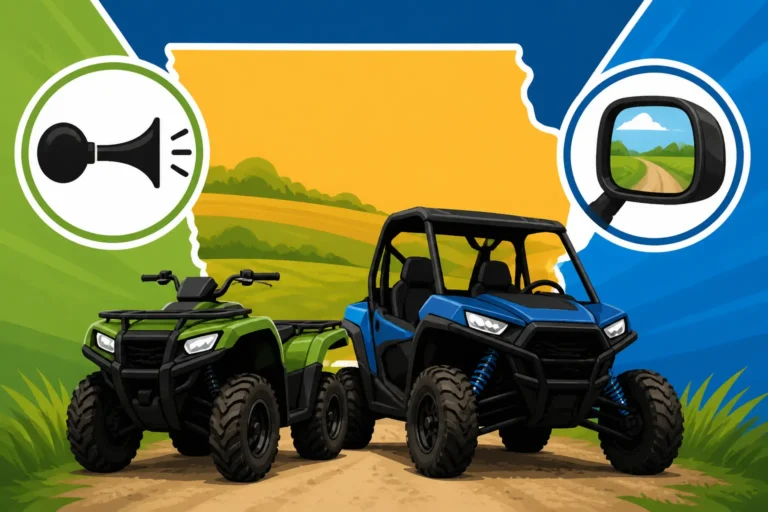
Beyond paperwork, functional safety equipment is non-negotiable. This includes working headlights that are on even during daylight hours, at least one functional taillight, brake lights, and a horn. Your machine must also be equipped with at least one rearview mirror, typically mounted on the left side, as detailed in [Iowa Mirror Requirement for Road Use]. Many riders find that aftermarket accessories from reputable brands like SuperATV are excellent for ensuring their machines meet these requirements, offering high-quality mirrors, turn signal kits, and lighting solutions that integrate seamlessly with various ATV and UTV models. Don't forget liability insurance; [Iowa ATV Insurance Requirement] mandates specific minimum coverage limits, and you must carry proof of insurance with you. Checking all these boxes before you hit the road is not just about legality; it's about your safety and the safety of others.
Understanding the Landscape: Iowa's Standardized ATV & UTV Road Use
To help clarify the differences between road types and the permissions required, here's a quick overview of how Iowa's standardized laws generally apply. Remember, always double-check specific local ordinances for paved roads and city streets.
| Road Type | Default Access (Standardized) | Local Authorization Required? | Key Rules/Considerations |
|---|---|---|---|
| Unpaved County Secondary | Generally Permitted | No | Must be 18+, licensed, registered, insured, and machine must be equipped. |
| Paved County Secondary | Generally NOT Permitted | Yes, by County Board | Check specific county ordinances; not all counties authorize. |
| City Streets/Alleys | Generally NOT Permitted | Yes, by City Council | Check specific city ordinances; some cities, like Waukon, have opened streets. |
| State Highways (Primary) | Generally NOT Permitted | No | Only for direct crossing at an intersection; no sustained riding. |
| Private Land | Permitted | No (with owner permission) | Always obtain landowner's explicit permission before riding. |
This table provides a general guide, but the specific details of your journey will always determine the exact rules that apply. Always prioritize safety and legal compliance to ensure a positive riding experience.
Disclaimer
This article is for general informational purposes only and does not constitute professional advice. Laws, prices and regulations vary by location and change over time. Consult a qualified professional for guidance on your specific situation.