Iowa’s Slow-Moving Vehicle Triangle
Navigating Iowa's intricate web of rules for riding ATVs and UTVs on public roads can feel like trying to solve a puzzle with half the pieces missing. One common point of confusion, and a critical safety requirement, revolves around the slow-moving vehicle (SMV) triangle. This guide will meticulously break down why, when, and how your off-highway vehicle needs to display this distinctive safety emblem to stay legal and safe on Iowa's diverse roadways.
Understanding Iowa's Slow-Moving Vehicle Triangle Requirement
Riding your ATV or UTV on public roads in Iowa isn't as simple as just firing it up and heading out. The state has specific regulations designed to ensure the safety of everyone on the road, and a crucial component of those regulations involves visibility. That's where the slow-moving vehicle (SMV) triangle comes into play. It's not just a suggestion; it's a mandatory piece of equipment when certain conditions are met, and understanding its purpose is the first step toward legal and safe road use.
What Exactly Is an SMV Triangle?
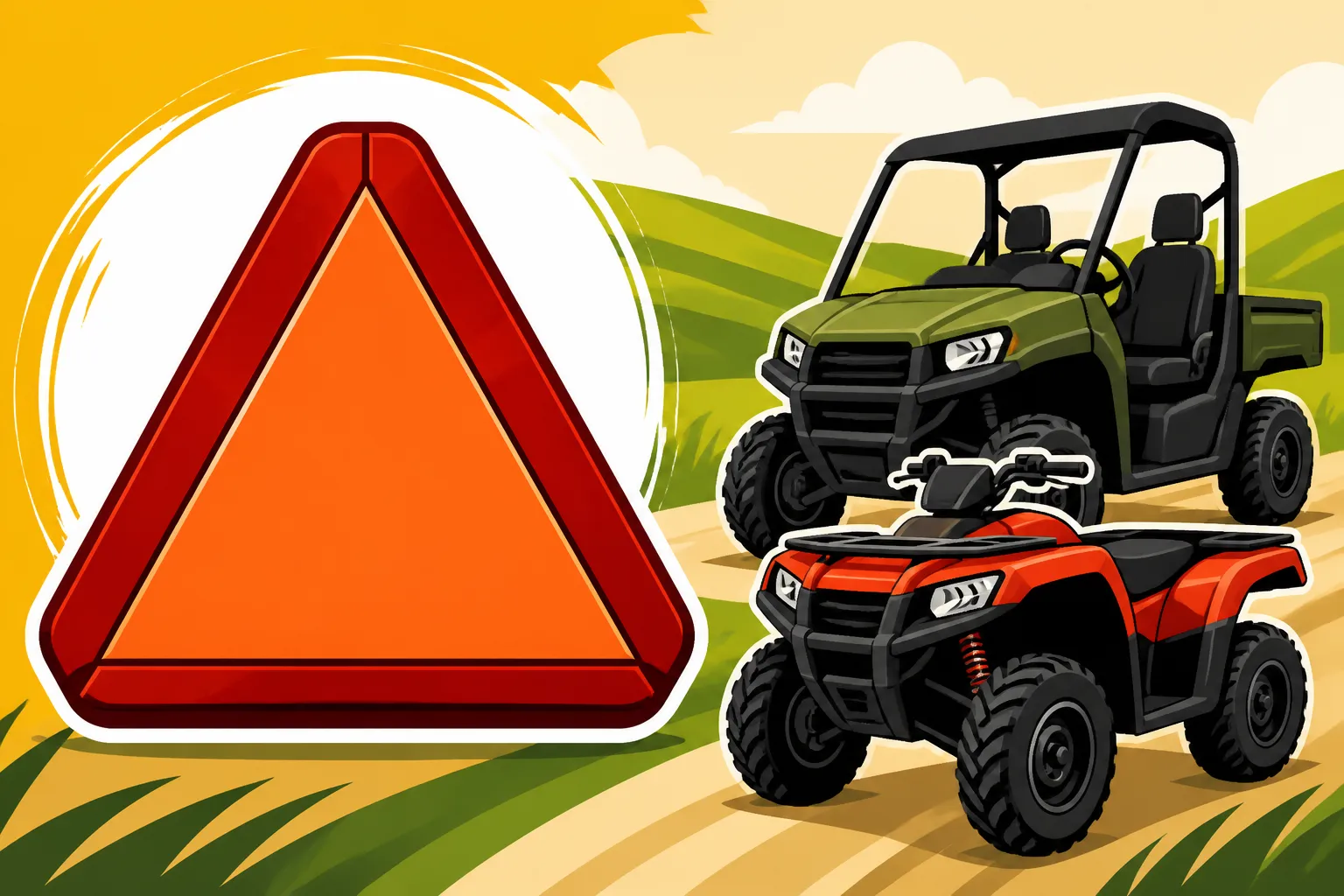
At its core, an SMV triangle is a highly reflective, fluorescent orange-red triangle with a dark red reflective border. You've undoubtedly seen them on the back of farm tractors, horse-drawn buggies, or road construction equipment. Its distinctive shape and color are universally recognized indicators that the vehicle displaying it is traveling at speeds significantly lower than the flow of typical traffic. This immediate visual cue gives other drivers crucial extra time to react, slow down, and maneuver safely around the slower-moving machine. Without this visual warning, a driver approaching a slow-moving ATV or UTV, especially on a winding rural road or at dusk, might not realize the speed differential until it's too late, leading to dangerous situations.
The materials used for SMV triangles are specifically chosen for maximum visibility under varying conditions. The fluorescent orange-red center is designed to be highly visible during daylight hours, almost seeming to glow. The dark red reflective border takes over at night, catching headlights from a distance and reflecting them back brightly, making the triangle stand out even in low light or adverse weather. This dual-purpose design is what makes the SMV triangle such an effective safety device, literally shouting "slow vehicle ahead!" to anyone approaching from the rear.
Why Iowa Demands This Specific Signage
Iowa's requirement for the SMV triangle on ATVs and UTVs used on public roads stems directly from a commitment to safety, particularly concerning the speed differential these machines often have compared to other vehicles. When you're operating an ATV or UTV, even if you're traveling at the legal maximum speed for your machine on a public road, you're likely moving slower than the cars and trucks around you. This difference in speed is a primary cause of rear-end collisions, especially in rural areas where speeds can be higher and visibility sometimes limited by hills or curves.
The SMV triangle acts as a critical early warning system. Imagine a scenario: you're cruising down a gravel road on your UTV, perhaps heading to a local fishing spot, enjoying the scenery. Behind you, a car approaches at 55 mph. If your UTV is moving at 30 mph, that's a 25 mph speed differential. In just a few seconds, that gap closes rapidly. Without the SMV triangle, the driver behind might assume you're moving faster, perhaps closer to their speed, until they are almost upon you. With the bright, unmistakable triangle, they see it from a much greater distance, giving them ample time to recognize the slow speed, adjust their own speed, and safely pass. This simple piece of signage can be the difference between a close call and a serious accident. It's about preventing those sudden, dangerous surprises that can lead to tragic outcomes. Iowa's Slow-Moving Vehicle Triangle is a rule that genuinely saves lives by improving situational awareness for all road users.
Which Machines Need the Triangle
The requirement for an SMV triangle isn't exclusive to traditional farm equipment in Iowa. The law broadly applies to any vehicle that is, by design, intended to operate at speeds of 25 mph or less and is being operated on a public highway. While most modern ATVs and UTVs can exceed 25 mph, when they are operated on public roads in Iowa, they are often subject to speed restrictions, such as the [Iowa's 35 mph Cap], that can still make them significantly slower than other traffic. Therefore, if you're using your ATV, UTV, or even certain types of off-road motorcycles on a public road where these speed differentials are present, the SMV triangle is a must.
It's important to clarify that this isn't just for agricultural use. If you're using your ATV to commute a short distance down a gravel road to a neighbor's house, or your UTV to get to a local trail access point, and you're doing so on a public roadway, the SMV triangle is required. The key is "public roadway" and "slow-moving." Even if your machine can go faster, the law anticipates that you will be operating it at slower speeds relative to other traffic on these roads, making the triangle necessary for visibility. This includes everything from a standard recreational quad to a utility side-by-side. The law doesn't discriminate based on the vehicle's primary purpose; it focuses on its operational characteristics on public roads.
When and Where Your ATV/UTV Needs an SMV Triangle in Iowa
Understanding what an SMV triangle is just the beginning. The real challenge for many riders is figuring out the specific scenarios and locations where this distinctive signage becomes a legal necessity in Iowa. It's not a blanket requirement for all ATV/UTV use, but rather applies under particular conditions related to public road travel. Missing these nuances can lead to citations and, more importantly, put you and others at risk.
Navigating Iowa's Unpaved and Paved Secondary Roads
Iowa law allows ATVs and UTVs to be operated on certain public roads, but with strict conditions. The most common allowance is on [Iowa Rules for Riding a Gravel Road], also known as unpaved secondary roads, as well as on authorized paved secondary roads. If you're riding your ATV or UTV on these types of roads, and you are operating at speeds that classify your vehicle as "slow-moving" in comparison to typical vehicular traffic (which, even at the 35 mph cap, you often will be), then the SMV triangle is absolutely required.
The distinction between unpaved and paved secondary roads is critical. Unpaved gravel roads are generally open to ATVs/UTVs unless specifically restricted. Paved secondary roads, however, require authorization from the county board of supervisors. Even if a paved secondary road is authorized, the SMV triangle rule still applies. It's all about ensuring that other drivers, especially those who might not expect to see an ATV on pavement, are given ample warning of a slower-moving vehicle. Without that triangle, you're not just breaking the law; you're creating a hazardous situation where a motorist might not react quickly enough to your presence, especially if visibility is poor or speeds are high. Always assume the SMV triangle is needed on any public road where you might encounter faster-moving vehicles.
The "Most Direct Route" and the Triangle
Iowa law often permits ATVs and UTVs to use public roads only for the purpose of getting from one legal riding area to another, or from private property to a legal riding area, via the "most direct route." This specific provision, often referred to as [Iowa's Most Direct Route Rule], is crucial because it defines why you're on the road. Even when adhering to this rule, the requirement for the SMV triangle does not disappear. In fact, it becomes even more vital because you are transitioning between different types of terrain and traffic flows.
Consider a scenario where you're leaving your private land to access a designated OHV park like Gypsum City. You might need to travel a mile or two on a county gravel road before you reach your destination. During this transit, even if it's a short distance, you are on a public road. The SMV triangle ensures that any oncoming or following traffic is immediately aware of your slower pace. It's not about the duration of your road travel, but the act of being on a public thoroughfare where other vehicles operate. This means whether you're taking [The Most Direct Route to Gypsum City the Short Way] or simply crossing a paved road to reach another gravel section, the SMV triangle needs to be securely affixed and clearly visible. The "most direct route" rule is about purpose and distance, not an exemption from safety equipment.
City Streets and Local Ordinances
While county roads have a fairly standardized set of rules, the situation with city streets can be much more varied and complex. Some Iowa cities have passed local ordinances that allow ATVs and UTVs on their streets, usually with very specific restrictions on hours, speeds, and approved routes. However, even in cities that have opened their streets to OHVs, the fundamental safety principles, including the need for adequate visibility, often remain. For example, some cities that have opened their streets, like [Waukon's Open Streets and Alleys], will still require adherence to state safety equipment laws, which would include the SMV triangle if your vehicle's speed falls within the slow-moving category.
It's a common misconception that if a city allows ATVs, all state-level road requirements vanish. This is rarely the case. Local ordinances typically add to state law, rather than superseding fundamental safety equipment requirements like the SMV triangle. Therefore, if you're planning to ride your ATV or UTV on authorized city streets, it is imperative to check both the specific city ordinance and general Iowa state law regarding slow-moving vehicles. If the city ordinance doesn't explicitly state an exemption for the SMV triangle (which is highly unlikely for safety reasons), then you should assume it's still required, especially if your machine's operational speed on those streets is below the general flow of traffic. When in doubt, err on the side of caution and display the triangle.
Proper Placement and Maintenance of Your SMV Triangle
Having an SMV triangle is one thing; having it correctly placed and maintained is another entirely. A triangle that's obscured, damaged, or improperly mounted loses its effectiveness as a safety device and can still lead to legal trouble. Just like ensuring your headlights are working or your tires are properly inflated, regularly checking your SMV triangle should be part of your pre-ride routine when hitting Iowa's roads.
Mounting the Triangle for Maximum Visibility
The effectiveness of an SMV triangle hinges entirely on its visibility to approaching drivers. This means proper mounting is non-negotiable. The triangle must be mounted on the rear of your ATV or UTV, centered as much as possible, and positioned between two and ten feet above the ground. The apex (point) of the triangle must always point upwards. It should be securely fastened so it doesn't swing freely, fall off, or become obscured by cargo, a passenger, or mud flung up from the tires.
Think about the perspective of a driver approaching you from behind. The triangle needs to be clear of any obstructions. If you have a large storage box, a passenger on the rear rack, or are towing something, you need to ensure the triangle is still fully visible. Many aftermarket accessories, like cargo racks or rear bumpers, come with designated mounting points for an SMV triangle, or you might need to utilize a mounting bracket specifically designed for this purpose. Brands like SuperATV often offer accessories or mounting solutions that can help ensure your triangle is properly displayed, keeping it out of the way of other gear while still being easily seen by following traffic. This isn't just a suggestion; it's about making sure the safety device can do its job effectively. [Mounting the Decal on the Rear of a Quad] isn't the only thing you need to worry about; the SMV triangle also needs to be on the rear.
Keeping Your SMV Triangle in Road-Ready Condition
An SMV triangle is a tool, and like any tool, it needs to be maintained. Over time, exposure to sun, dirt, mud, and weather can degrade its reflective and fluorescent properties. A faded, cracked, or caked-in-mud triangle is significantly less effective than a clean, vibrant one. The fluorescent orange-red can dull, and the reflective red border can become scratched or obscured. If your triangle looks like it's seen better days, it's time for a replacement.
Regular cleaning is a simple but vital maintenance step. After a muddy ride, make sure to wash off the triangle along with the rest of your machine. Use soap and water to remove any dirt or grime that could reduce its visibility. Periodically inspect it for cracks, peeling reflective material, or fading. If you notice any significant degradation, don't wait until you get a citation or, worse, are involved in an accident. A new SMV triangle is a small investment for a significant gain in safety. Remember, its primary function is to be seen, and a dirty or damaged triangle cannot fulfill that role effectively.
Beyond the Triangle: Other Required Lighting
While the SMV triangle is crucial for rear visibility during daylight and low-light conditions, it's only one piece of the puzzle for legal and safe road operation in Iowa. Your ATV or UTV must also be equipped with proper lighting. This includes at least one headlight (which must be on at all times, even during the day, as per [Headlights On All Day in Iowa]), at least one tail lamp, and typically brake lights. Many modern ATVs and UTVs come standard with these features, but older models or custom builds might need upgrades.
Furthermore, if you intend to ride on specific roads or at certain times, [Tail Lamps and Signal Lamps in Iowa] might also be required. Even if turn signals aren't explicitly mandated for all road use scenarios, having them significantly enhances your ability to communicate your intentions to other drivers, making your road presence safer and more predictable. Always ensure all your lights are functional before hitting the road, including checking for burnt-out bulbs or loose connections. A non-functional headlight or taillight combined with an obscured SMV triangle is a recipe for disaster on an Iowa road.
The Broader Picture: Other Requirements for Iowa ATV/UTV Road Use
The slow-moving vehicle triangle is a vital piece of the puzzle, but it's far from the only requirement you need to meet if you plan to operate your ATV or UTV on Iowa's public roads. The state has a comprehensive set of rules governing everything from who can operate these machines to what kind of safety gear and documentation they must carry. Ignoring any of these can lead to penalties and compromise your safety.
Age and Licensing for Iowa Road Riders
One of the most critical aspects of legal ATV/UTV road use in Iowa is the operator's age and licensing status. Unlike riding on private property or in designated OHV parks, where age restrictions might differ, [Iowa Minimum Age to Ride a Road] is 18 years old. No one under the age of 18 is permitted to operate an ATV or UTV on a public street or highway in Iowa. This rule is absolute and designed to ensure that only mature, experienced drivers are navigating the complexities of shared roadways.
In addition to the age requirement, the operator must possess a valid driver's license. This isn't just about showing an ID; it signifies that the rider has passed the state's requirements for operating a motor vehicle and understands traffic laws. Simply put, if you can't legally drive a car on an Iowa road, you cannot legally drive an ATV or UTV on one either. This requirement underscores the state's view of OHV road use: it's not simply an extension of off-road recreation but a distinct mode of transportation that demands the same level of responsibility and knowledge as operating any other vehicle on public thoroughfares.
Iowa's Mandatory Insurance Coverage
Another non-negotiable requirement for operating an ATV or UTV on Iowa public roads is proof of financial responsibility, typically in the form of insurance. Just like with cars and trucks, Iowa mandates minimum liability insurance coverage for any ATV or UTV operated on public roads. This protects you and others in the event of an accident. The minimum coverage amounts are often referred to as 20/40/15: $20,000 for bodily injury to one person, $40,000 for bodily injury to two or more people, and $15,000 for property damage. [Iowa ATV Insurance Requirement] is a serious matter, and failure to comply can have significant consequences.
Carrying proof of this insurance is just as important as having the policy itself. If you're stopped by law enforcement, you will be asked to provide proof of insurance. Without it, you could face fines and penalties. While some insurers might offer specific ATV/UTV policies, others may allow you to add your machine to an existing auto or recreational vehicle policy. It's crucial to confirm with your insurance provider that your coverage extends to public road use in Iowa and meets the state's minimum requirements. Don't assume your off-road coverage automatically carries over to public streets. [What Happens If You Cannot Show an Iowa Insurance Card] can include substantial fines.
Speed Limits, Horns, and Mirrors
Beyond age, licensing, insurance, and the SMV triangle, several other pieces of equipment and operational rules govern ATV/UTV road use in Iowa. As mentioned, a key limitation is the speed cap. While some machines can go much faster, you cannot exceed 35 mph on Iowa roads. This limit is in place to reduce the speed differential with other traffic and make these vehicles safer to operate on shared roadways.
Furthermore, your ATV or UTV must be equipped with [A Horn and a Mirror for Iowa Road Use]. A functional horn is essential for warning pedestrians or other drivers of your presence, particularly in situations where a visual warning might be missed. At least one mirror, typically mounted on the left side, is required to give the operator a clear view of traffic approaching from the rear. These are not optional accessories but mandated safety features. Additionally, while helmets are not universally required for adults on all Iowa roads, they are highly recommended for all riders, especially on faster roads or in challenging conditions. The combination of these requirements—age, license, insurance, SMV triangle, proper lighting, a horn, a mirror, and adherence to speed limits—forms the complete framework for legal and responsible ATV/UTV road use in Iowa. [What Iowa Requires of an ATV on a Public Road] is a comprehensive list that riders must fully understand.
Penalties and Enforcement for Non-Compliance in Iowa
Ignoring Iowa's regulations for ATV/UTV road use, particularly the requirement for a slow-moving vehicle triangle, isn't just a matter of inconvenience; it can lead to significant legal consequences. Law enforcement agencies throughout the state are tasked with enforcing these rules, and they take them seriously to protect both ATV/UTV riders and other motorists.
What Happens If You're Caught Without the Triangle
If you are stopped by law enforcement on an Iowa public road and your ATV or UTV is missing the required SMV triangle, you will likely face a citation. The specific penalty can vary depending on the officer's discretion, the severity of the infraction, and whether other violations are present. However, you can expect a fine. These fines are not trivial and can quickly add up, especially if combined with other infractions like not having proper lighting, no insurance, or operating under the age of 18. [Getting Cited for Riding Without a Recorder Decal] or an SMV triangle are similar issues of non-compliance.
Beyond the immediate financial penalty, getting a citation can lead to further scrutiny of your vehicle and your riding habits. It could also prompt law enforcement to pay closer attention to ATV/UTV activity in that specific area. More importantly, riding without the SMV triangle significantly increases your risk of an accident. If you are involved in a collision while not displaying the required safety equipment, you could be found partially or entirely at fault, leading to more severe legal and financial repercussions, even if you weren't primarily responsible for the accident. The SMV triangle is a preventative measure, and its absence demonstrates a disregard for established safety protocols.
The Role of Law Enforcement
Enforcement of Iowa's ATV/UTV road use laws falls primarily to county sheriff's deputies, city police officers (within their respective jurisdictions), and state conservation officers (especially in areas near public lands or trails). These officers are familiar with the rules and are on the lookout for non-compliant vehicles. A roadside stop could occur if an officer observes an ATV or UTV on a public road without visible registration decals, the SMV triangle, or proper lighting.
During a stop, the officer will typically check for your driver's license, proof of insurance, and valid registration. They will also inspect your machine for required safety equipment, including the SMV triangle, working headlights and taillights, a horn, and a mirror. [An Iowa Deputy Checks Roadside] regularly for these items. The purpose of these checks isn't to target ATV/UTV riders unfairly but to ensure that everyone sharing the road is doing so safely and legally. Officers are aware of the dangers posed by slow-moving vehicles that are not properly marked, and they act to mitigate those risks. Cooperation during a stop is always the best approach.
Avoiding Common Mistakes and Citations
The easiest way to avoid penalties and ensure a safe ride is to be thoroughly prepared and knowledgeable about Iowa's regulations. Here are some common mistakes to sidestep:
- "Just a short distance": Even if you're only riding a few hundred feet on a public road, the SMV triangle is required. The law doesn't provide a distance exemption.
- Assuming agricultural exemption: While some agricultural uses have exemptions, recreational or general utility use on public roads almost always requires the SMV triangle and other road-legal equipment. Don't assume your "farm quad" is exempt from all rules when on a public road.
- Faded or dirty triangle: A triangle that isn't clearly visible is effectively no triangle at all. Keep it clean and replace it if it's faded.
- Improper mounting: Ensure the triangle is centered, upright, and between 2 and 10 feet off the ground, with no obstructions.
- Lack of other equipment: Remember the SMV triangle is part of a larger safety package. Don't forget your horn, mirror, lights, and insurance.
By meticulously adhering to all the requirements for [Iowa Rules for Riding a Gravel Road] and other authorized public ways, you can enjoy your ride without the stress of a potential citation and, more importantly, contribute to safer roads for everyone. Being informed and prepared is your best defense against fines and accidents.
Equipping Your Machine for Iowa Road Safety
When preparing your ATV or UTV for legal road use in Iowa, it's not just about compliance; it's about maximizing safety for yourself and everyone else on the road. The slow-moving vehicle triangle is a cornerstone of this safety, but the broader picture involves thoughtful equipment choices and regular checks. Equipping your machine correctly means you're prepared for the varying conditions and demands of shared roadways.
Choosing a Durable SMV Triangle
Not all SMV triangles are created equal. While the basic design is standard, the quality of materials can vary. When selecting a triangle for your ATV or UTV, prioritize durability and visibility. Look for triangles made from high-quality, weather-resistant plastic that won't crack or fade quickly under the Iowa sun and weather conditions. The reflective border should be robust and securely attached, designed to withstand vibrations and impacts without peeling.
Consider triangles with sturdy mounting brackets that can be securely affixed to your machine's frame, bumper, or cargo rack. Aftermarket brands like SuperATV often provide high-quality, durable solutions that are built to last and designed with off-road and utility vehicles in mind. Investing a little more in a well-made SMV triangle can save you the hassle and cost of frequent replacements, and more importantly, ensure it performs its critical safety function reliably whenever you're on the road. A cheap, flimsy triangle that breaks or fades quickly isn't just an inconvenience; it's a safety hazard.
Integrated Lighting Solutions and Aftermarket Options
While your ATV or UTV likely came with basic headlights and taillights, operating on public roads often benefits from enhanced lighting, particularly for greater visibility to other motorists. Modern aftermarket lighting solutions can significantly improve your machine's road presence. This includes brighter LED headlights, more prominent LED taillights, and even integrated turn signal kits.
Many manufacturers and aftermarket companies, including those that specialize in ATV/UTV accessories, offer these types of upgrades. For instance, you might find complete lighting kits that include a brighter high/low beam headlight, a brake light that's more noticeable, and even amber turn signals that can be wired into your machine's electrical system. These upgrades not only ensure you meet legal requirements but also proactively enhance your safety by making your machine more visible, both day and night. Think of it as investing in an extra layer of protection, particularly if you're frequently riding during dawn, dusk, or in inclement weather where visibility is already compromised.
Regular Pre-Ride Checks for Road Readiness
Making your ATV or UTV road-legal isn't a one-time task; it's an ongoing commitment to safety. Before every ride that involves public roads, it's crucial to perform a quick but thorough pre-ride inspection. This check should go beyond just kicking the tires.
Your checklist should include:
- SMV Triangle: Is it clean, unfaded, securely mounted, and fully visible?
- Lights: Are your headlights (high and low beam), taillights, and brake lights all working? If you have turn signals, test those too.
- Horn: Does it produce a clear, audible sound?
- Mirror: Is it securely mounted, clean, and providing a clear view to the rear?
- Tires: Are they properly inflated and free of damage?
- Brakes: Do both front and rear brakes engage effectively?
- Steering: Is it responsive and free of excessive play?
- Insurance & Registration: Do you have your valid driver's license, proof of insurance, and current ATV registration certificate (the one with your decal number) on your person or securely carried on the machine? [Carrying the Certificate on an Iowa Ride] is legally required.
This routine not only ensures you're compliant with Iowa law but also helps you identify and address minor issues before they become major problems on the road. A little proactive maintenance can prevent a breakdown, a citation, or even an accident. It's all part of being a responsible and safe ATV/UTV operator on Iowa's public thoroughfares.
Dispelling Common Myths About Iowa ATV/UTV Road Use
There's a lot of misinformation and misunderstanding floating around about riding ATVs and UTVs on public roads in Iowa. These myths, often born from outdated rules, assumptions, or confusing interpretations, can lead riders into legal trouble or, worse, dangerous situations. Let's clear up some of the most persistent ones, especially concerning the SMV triangle.
"It's Only for Tractors" – Understanding the Scope
One of the most common myths is that the SMV triangle is solely for agricultural machinery like tractors, combines, or wagons. This simply isn't true for Iowa's road use laws regarding ATVs and UTVs. While tractors are certainly a primary user of the SMV triangle, the intent of the law is to mark any vehicle that operates at significantly slower speeds than regular traffic on public roads. Since ATVs and UTVs, even when adhering to the 35 mph speed limit, are typically slower than other vehicles on Iowa's secondary roads, they fall under this "slow-moving" category.
The law isn't concerned with what you call your machine, but how it operates on the road. If your vehicle is moving at speeds that require other motorists to slow down significantly or maneuver around you, then that triangle is there to provide an early warning. Don't let the image of a tractor dictate your understanding of the law. Your ATV or UTV, when on an Iowa public road, often needs that SMV triangle just as much, if not more, than a piece of farm equipment.
"My Farm Exemption Covers Everything" – Limits of Agricultural Use
Iowa does have provisions for agricultural exemptions for certain vehicles, including ATVs and UTVs, when they are used directly and primarily for farming operations. This can sometimes allow for limited road use without full registration or some other requirements. However, this "farm exemption" is often misunderstood and overextended by riders. It absolutely does not provide a blanket exemption from all road safety equipment, especially the SMV triangle, when your machine is being operated on public roads.
If your ATV is being used to haul fence posts across a county road to a distant pasture, that might fall under the agricultural exemption for certain things. But it absolutely doesn't mean you can skip the SMV triangle. The principle of marking a slow-moving vehicle for safety still applies. Furthermore, if you're using your ATV for recreational purposes, like riding [2 Miles From the Farm in Iowa] to visit a neighbor or access a fishing spot, the agricultural exemption typically doesn't apply at all. You transition from a "farm machine" to a "recreational machine on a public road," and all standard road use rules, including the SMV triangle, kick in. Always be honest about the purpose of your road travel; if it's not directly related to agricultural work, assume the exemption doesn't cover it. [When a Quad Counts as an Implement of Husbandry] has very specific criteria.
"I'm Just Crossing the Road" – The "Most Direct Route" Rule Revisited
Another common misconception is that if you're merely crossing a public road, or only traveling a very short distance on it, you don't need to abide by the full road-legal requirements, including the SMV triangle. This isn't accurate. As previously discussed with [Iowa's Most Direct Route Rule], even short transit on a public road triggers the need for proper identification and safety equipment.
A public road is a public road, regardless of how long you're on it. The moment your tires hit that public pavement or gravel, you are subject to the rules that govern that roadway. This includes the SMV triangle, proper lighting, and potentially a horn and mirror. The intent is to ensure that any time an ATV or UTV is sharing space with faster-moving vehicular traffic, it is clearly identifiable as a slow-moving vehicle. Don't gamble on the distance. Equipping your machine properly for even the shortest stint on a public road is the safest and most legally sound approach. A quick dash across a road could still result in a collision if other drivers aren't given adequate warning of your presence.
Practical Tips for Safe and Legal Iowa Road Riding
Beyond understanding the regulations, putting them into practice effectively is key to enjoying your ATV or UTV on Iowa's roads safely and legally. It's about developing good habits, planning ahead, and being a responsible member of the road-sharing community.
Planning Your Route to Stay Compliant
One of the most crucial steps to safe and legal road riding is planning your route meticulously. Iowa's rules for ATV/UTV road access are not uniform. Some counties allow more access than others, and as we've discussed, specific city streets might be open while others are closed. Relying on guesswork can quickly lead you onto prohibited roads, resulting in fines or dangerous encounters with traffic.
Before you even load your machine onto the trailer (or ride it out of your driveway), consult county ordinances and city regulations for your planned route. Use online maps, cross-reference with county recorder offices or local DNR resources, and consider calling local law enforcement (non-emergency line) if you have specific questions about a particular road segment. Your plan should clearly identify the legal gravel roads, authorized paved secondary roads, and any city streets you intend to use. This foresight ensures you utilize [The Most Direct Route to an Iowa OHV Park] or your destination while staying strictly within legal boundaries, minimizing surprises, and guaranteeing you're compliant with all equipment, including the SMV triangle, on every inch of your journey.
Riding Defensively and Being Predictable
Even with all the correct safety equipment, including a bright SMV triangle, defensive riding is paramount when operating an ATV or UTV on public roads. You are likely on a slower, less visible machine than other traffic, and you need to ride with that awareness constantly in mind.
- Be Visible: Always run your headlights, even in broad daylight. Wear brightly colored clothing or a reflective vest to enhance your profile. The SMV triangle helps, but personal visibility adds another layer of safety.
- Be Predictable: Use clear hand signals (even if you have turn signals) for turns or stops. Maintain a consistent speed and follow traffic laws diligently. Avoid sudden movements or swerving. Other drivers rely on your predictability to share the road safely.
- Maintain Distance: Keep a safe following distance from vehicles ahead of you, and be aware of vehicles behind you. Check your mirror frequently.
- Assume You're Not Seen: Even with all your safety gear, always operate under the assumption that other drivers might not see you. Make eye contact if possible, and be ready to react defensively to unexpected maneuvers by others.
- Understand Road Hazards: Be acutely aware of road conditions. Gravel roads can have loose surfaces, potholes, or dust. Paved roads can have debris, oil slicks, or other hazards that affect an ATV/UTV differently than a car.
Riding defensively means constantly anticipating potential dangers and being prepared to react. It's about being proactive, not just reactive, to ensure a safe journey on Iowa's roads.
Community and Advocacy for ATV/UTV Road Access
The rules and regulations surrounding ATV/UTV road access in Iowa are not static. They can evolve based on community input, safety data, and the efforts of local riding clubs and advocacy groups. If you're passionate about expanding safe and legal riding opportunities in Iowa, consider getting involved.
Local ATV/UTV clubs often play a crucial role in advocating for responsible access to trails and roads, working with county boards, city councils, and the Iowa DNR. They might organize meetings, provide educational resources, and gather support for specific initiatives, like opening new sections of paved secondary roads or city streets. [How a City Council Votes to Open Streets] is a process that benefits greatly from informed public input.
By joining a club or participating in advocacy efforts, you can lend your voice to promote safe riding practices, educate others, and help shape the future of ATV/UTV use in Iowa. This collective effort ensures that the needs of riders are heard and considered, potentially leading to more consistent and rider-friendly regulations across the state, always with an emphasis on safety, which naturally includes the proper use of the slow-moving vehicle triangle and other required equipment. Your active participation can help foster a positive image for the ATV/UTV community and ensure that responsible riding continues to thrive in the Hawkeye State.
| Iowa ATV/UTV Road Use Requirement | Description | Why it's Important |
|---|---|---|
| Slow-Moving Vehicle Triangle | Fluorescent orange-red triangle with red reflective border on the rear. | Early warning for approaching vehicles about slower speeds. |
| Age 18+ and Driver's License | Operator must be 18 years or older and possess a valid driver's license. | Ensures mature, licensed drivers operate on public roads. |
| Mandatory Insurance | Minimum liability coverage (20/40/15) required; proof must be carried. | Financial protection in case of an accident. |
| Headlights On | Headlights must be illuminated at all times, day or night. | Maximizes forward visibility for the rider and visibility to others. |
| Tail & Brake Lights | Functional tail lamp(s) and brake light(s) are required. | Indicates presence and deceleration to following traffic. |
| Horn | A functional horn is necessary for signaling. | Warning pedestrians and other motorists. |
| Mirror | At least one rearview mirror, typically on the left side. | Allows operator to monitor traffic from behind. |
| Speed Limit | Maximum speed of 35 mph on authorized public roads. | Reduces speed differential with other traffic. |
| Registration Decal | Valid Iowa registration decal affixed to the machine. | Identifies machine as legally registered for use. |
| Direct Route | Road use limited to the "most direct route" between legal areas or private land. | Prevents casual cruising on public roads. |
Disclaimer
This article is for general informational purposes only and does not constitute professional advice. Laws, prices and regulations vary by location and change over time. Consult a qualified professional for guidance on your specific situation.