Two Names on a Recorder Record
It's quite common for folks to wonder how things work when an ATV or UTV isn't just "mine" but "ours." Whether you've just bought a new side-by-side with your spouse for trail riding weekends or you're going in on a utility quad with a neighbor for shared farm tasks, figuring out how to put two names on the official record can feel like navigating a maze. This guide is here to untangle the complexities of registering and titling an off-highway vehicle in Iowa when more than one person owns it, explaining everything from the initial paperwork to future sales and potential bumps in the road.
Why Multiple Names Might Appear on Your Iowa ATV or UTV Record
Life happens, and sometimes, owning a recreational or utility vehicle is a shared endeavor. There are many perfectly good reasons why you might want or need more than one name on the official title and registration for your Iowa ATV or UTV. It’s not just a formality; it has real implications for everything from legal ownership to future transactions.
Joint Ownership for Couples or Family Members
Think about it: many households operate on a shared basis, and an ATV or UTV is often a significant purchase that both partners enjoy or benefit from. Perhaps you and your spouse have always dreamed of exploring the [Gypsum City OHV Park at Fort Dodge] together, and buying a new UTV seemed like the perfect way to make those dreams a reality. In this scenario, it makes perfect sense to have both your names on the title. It reflects shared investment and shared enjoyment. If you're a married couple, this is perhaps the most common reason for joint ownership. It simplifies things from a financial perspective, often making it easier to finance the purchase together, and ensures both parties have an equal stake.
Beyond spouses, joint ownership can also extend to other family members. Maybe you and your sibling decided to pool resources to buy an older ATV to use on the family farm, primarily for chores like hauling feed or checking fences. While the machine might primarily live at the farm, both of you contributed to its purchase and intend to use it. Or perhaps a parent gifted a youth ATV to two children, wanting to impart a sense of shared responsibility and ownership. In these cases, having multiple names on the title clarifies who legally owns the machine, even if only one person primarily operates it day-to-day. This shared legal status can be incredibly important down the line, especially if there are ever disagreements or if the machine needs to be sold.
Business Partnerships and Shared Machines
It's not just personal use that drives joint ownership; businesses and groups frequently share off-highway vehicles. Imagine two partners running a small landscaping business in Iowa. They might invest in a heavy-duty UTV to transport tools, mulch, and equipment around job sites. Since the UTV is a business asset purchased with shared funds, it's logical to title and register it in both partners' names, or perhaps in the business name itself, which then translates to the partners as responsible parties. This ensures that both individuals have the authority to manage the asset on behalf of the business.
Similarly, a local hunting club or conservation group in Iowa might acquire a quad or side-by-side to maintain trails on leased land, transport gear to blinds, or assist with wildlife management tasks. These machines are often purchased through club funds or donations, and the club's leadership or designated individuals would then appear on the registration records. This arrangement ensures that the machine is formally tied to the organization and its responsible members. For any group that pools resources for an ATV or UTV, having multiple names on the record—whether directly as individuals or through a business entity—provides clear legal standing and accountability. It prevents any single individual from unilaterally making decisions about the machine without the input or consent of the other owners or the group.
The Mechanics of Registering and Titling with Two Names in Iowa
Once you've decided on joint ownership, the practical steps for getting your ATV or UTV legally recognized in Iowa are crucial. It's not just a matter of scribbling a second name on a line; there are specific rules and procedures at the county recorder's office that you'll need to follow carefully. The nuances of how names are listed on a title, in particular, can have significant future implications.
Applying for a Title with Joint Ownership
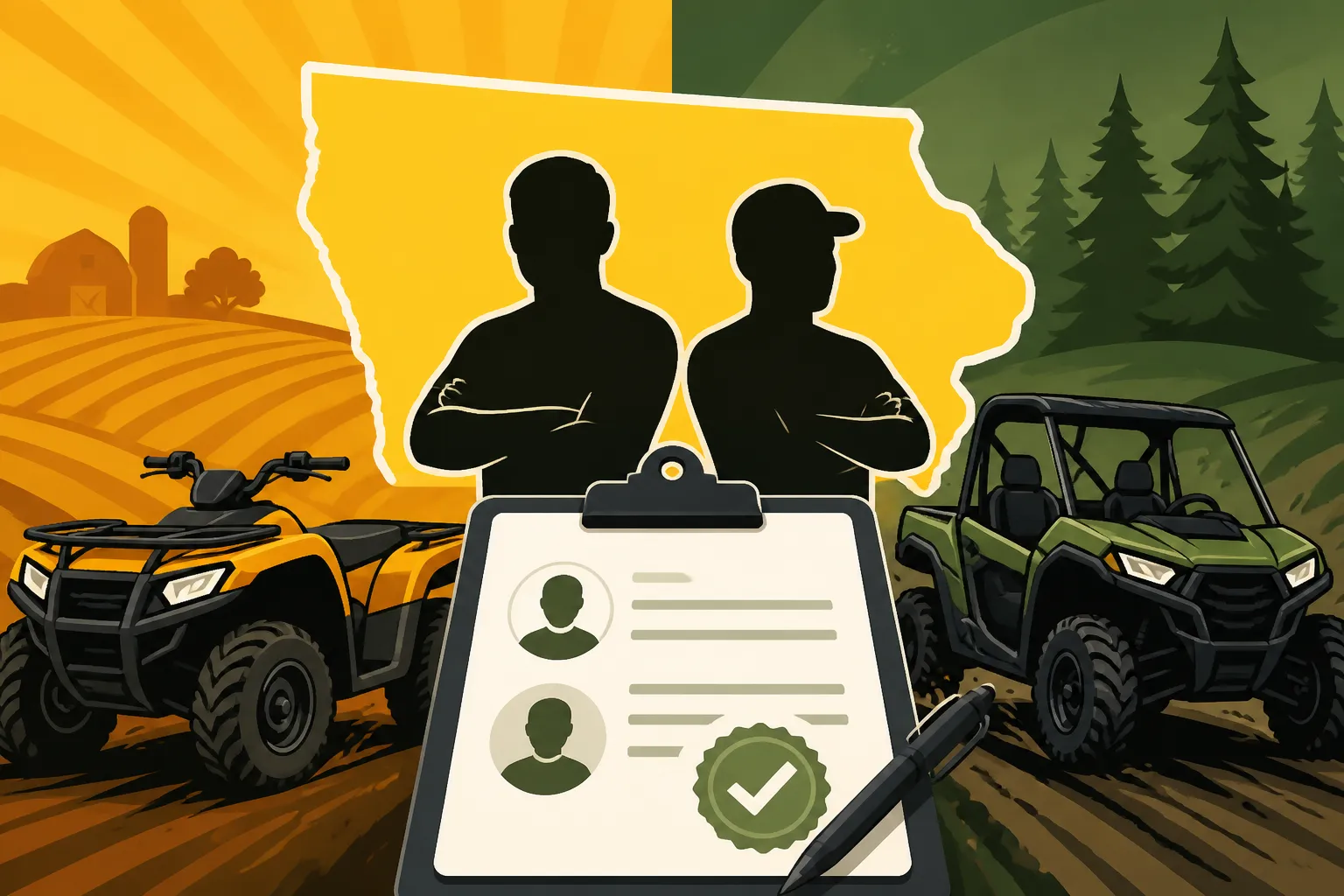
When you head to your county recorder’s office to apply for a title for your ATV or UTV, you'll need to specify how the multiple owners wish to hold title. This is where the distinction between "and" versus "or" becomes incredibly important – it's not just grammar! If the title lists owners as "John Smith AND Jane Doe," it generally means that both individuals must sign any future documents for the machine, such as a bill of sale when you decide to [Selling an ATV in Iowa]. This "and" designation implies joint tenancy with right of survivorship or tenancy by the entirety, depending on your relationship (e.g., married couple). In simpler terms, if one owner passes away, their share automatically transfers to the surviving owner without needing to go through probate. This can offer a lot of peace of mind for families.
However, if the title lists owners as "John Smith OR Jane Doe," this typically means that either owner can act independently to conduct transactions involving the ATV or UTV. This means either John or Jane could sell the machine without the other's signature. While this offers flexibility, it also means less protection for the other owner, as their share could potentially be sold without their direct consent at the time of sale. This "or" designation usually implies a tenancy in common, where each owner holds a distinct, transferable share. If one owner passes away, their share would then pass to their estate and not automatically to the other co-owner. Knowing this distinction and making the right choice for your situation is paramount when you're filling out the initial [Iowa ATV Title Requirements] paperwork. Make sure all parties who will be listed are present or have properly signed and notarized powers of attorney, as the county recorder will verify signatures for accuracy.
Registering for Decals with Joint Owners
Once your title is established with multiple names, the next step is registering your machine to get that all-important Iowa decal. The registration certificate will typically mirror the names on the title. When it comes to renewals, which happen annually and have an [Iowa's September to December Renewal Window], generally either of the registered owners can renew the registration. They'll need to provide the necessary information, pay the [Iowa ATV Registration Cost], and ensure everything is up to date. You don't necessarily need both owners to trek to the county recorder's office every year. This offers some practical flexibility, which is helpful in busy households or partnerships.
However, even though either owner can renew, it's crucial that the valid registration certificate and decal are properly displayed and carried with the machine. [Carrying the Certificate on an Iowa Ride] is a key rule, so make sure whoever is operating the ATV or UTV has the physical certificate or an authorized copy with them. If the decal needs replacement, say it fades or gets damaged, either registered owner can typically request an [Iowa ATV Decal Replacement] from the county recorder. The process for annual renewal or replacement is generally streamlined, recognizing that if multiple names are on the record, both individuals have a vested interest in keeping the machine legal and operable.
Navigating Future Transactions with Multiple Names
While the initial setup of joint ownership might seem straightforward, the real complexities often arise when it comes to future transactions. What happens when it's time to sell your beloved machine, or worse, if an owner passes away or a partnership dissolves? Understanding these scenarios from the outset can save a lot of headaches down the road.
Selling an ATV or UTV with Joint Ownership
When the day comes to [Selling an ATV in Iowa] that you co-own, the way your names are listed on the title will heavily dictate the process. If your title specifies "John Smith AND Jane Doe," then both John and Jane must sign the title when transferring ownership to a new buyer. This is a critical point that many people overlook, leading to delays and frustration at the point of sale. Imagine you've found a buyer, agreed on a price, and are ready to finalize the deal, only to realize one owner is out of town and can't sign the title. This can derail a sale quickly. Both signatures are typically required on the title assignment section to legally transfer ownership. The county recorder's office will check for this.
If, however, your title reads "John Smith OR Jane Doe," either John or Jane can usually sign the title to effect the transfer. This offers more flexibility but, as mentioned earlier, also carries the risk of one owner selling the machine without the other's direct involvement or consent at that moment. Regardless of how your names are listed, having a clear and comprehensive [An Iowa Bill of Sale for an ATV] is always recommended. This document protects both the seller(s) and the buyer. You can find excellent templates from resources like LawDepot, which can help ensure all the necessary details, including purchase price, date of sale, and condition of the machine, are properly recorded. This is especially vital in private sales where the transaction might not involve a dealership intermediary.
Dealing with Inheritance or Separation
Life is unpredictable, and joint ownership can face challenges beyond a simple sale. What if one of the owners passes away? If the title was held as "John Smith AND Jane Doe," meaning joint tenancy with right of survivorship, the surviving owner (Jane Doe, in this example) would typically become the sole owner automatically. She would then need to present the death certificate to the county recorder's office to have the title reissued in her name alone. This process bypasses probate, which can be a significant advantage during an already difficult time.
However, if the title was held as "John Smith OR Jane Doe" (tenancy in common), the deceased owner's share (John Smith's share) would typically become part of their estate. This means it would likely need to go through probate, and the ownership of that half would be determined by John's will or by intestate laws if there was no will. Jane would not automatically inherit John's share. This is a crucial distinction that can dramatically affect the future of the machine and create complexities for the surviving owner. Similarly, if co-owners are separating, such as in a divorce or the dissolution of a business partnership, the ATV or UTV becomes an asset that needs to be divided. This often involves one owner buying out the other's share, or the machine being sold and the proceeds divided. In these cases, clear communication, legal advice, and potentially a new [Iowa ATV Registration Transfer] are essential to ensure a clean break and proper ownership for the continuing party. For inherited machines, the process for [Registering an Inherited Machine in Iowa] has specific requirements to ensure legal transfer of ownership.
Potential Pitfalls and Best Practices for Co-Owners
While joint ownership offers many benefits, it also introduces shared responsibilities and potential challenges. Understanding these upfront, and taking proactive steps, can help ensure a smooth experience for all parties involved with an Iowa ATV or UTV.
Understanding Liability and Responsibility
When an ATV or UTV is co-owned, the liability for its use often falls on all registered owners. This means that if there's an accident, an outstanding fine for an infraction, or any legal issue related to the machine, all owners could potentially be held responsible. Imagine a scenario where one owner takes the UTV out for a ride, has an accident at [Bluff Creek OHV Park at Eddyville] that causes property damage, or worse, injury, and the insurance policy has a high deductible or doesn't cover the full extent of the damages. All co-owners could be on the hook for the remaining costs. This shared liability is a significant consideration, especially if one owner is less careful or responsible than the other.
It also extends to everyday operations. If the machine is cited for not having a valid registration decal or for illegal road use, all registered owners could face penalties, regardless of who was driving at the time. This makes proper insurance coverage incredibly important. When insuring a co-owned ATV or UTV, ensure that all owners are listed on the policy and that the coverage limits are adequate for the potential risks. Discussing [Iowa ATV Insurance Requirements] with your insurance provider and making sure everyone understands the implications of shared liability can prevent major headaches later on. It’s not just about who pays for the machine, but who is accountable for its use.
The Importance of a Written Agreement
Even if you're co-owning an ATV or UTV with a family member or a trusted friend, relying solely on verbal agreements can be a recipe for misunderstandings and disputes. This is where a written agreement, sometimes called a co-ownership agreement, becomes an invaluable tool. Think of it as a pre-nup for your power sports machine. This document can clearly outline each owner's responsibilities, financial contributions, usage rules, and what happens in various scenarios. For instance, it can specify who is responsible for maintenance costs, who gets to use the machine on certain weekends, or what steps will be taken if one owner wants to sell their share.
A comprehensive agreement drafted using resources like LawDepot can address critical questions such as:
- How will maintenance costs (oil changes, tires, repairs) be split?
- Who is responsible for paying the annual [Iowa ATV Registration Renewal Cost]?
- What are the rules for lending the machine to others?
- What happens if one owner wants to sell their share, and the other doesn't?
- How will the machine be valued if a buyout occurs?
- What if an owner defaults on their share of the payments or responsibilities?
- What happens if one owner moves out of state or becomes unable to use the machine?
By putting these details down on paper from the start, you create a clear roadmap for your co-ownership. It removes ambiguity, helps prevent disagreements, and provides a framework for resolving any issues that may arise. While it might seem overly formal for family or friends, it's a practice that truly protects everyone involved and ensures your shared enjoyment of your Iowa ATV or UTV remains a positive experience. It’s about setting clear expectations, not assuming them.
| Scenario | "AND" on Title (Joint Tenancy) | "OR" on Title (Tenancy in Common) |
|---|---|---|
| Initial Titling | Both owners must be present or provide power of attorney. | Both owners must be present or provide power of attorney. |
| Selling the Machine | Both owners MUST sign the title to transfer ownership. | EITHER owner MAY sign the title to transfer ownership. |
| Inheritance | Surviving owner automatically inherits full ownership. | Deceased owner's share goes to their estate (probate likely). |
| Annual Renewal | Either owner can typically renew the registration. | Either owner can typically renew the registration. |
| Liability | Both owners are generally equally liable for machine's use. | Both owners are generally equally liable for machine's use. |
| Agreement Necessity | Still highly recommended for usage/maintenance specifics. | Highly recommended to protect each owner's interest. |
Disclaimer
This article is for general informational purposes only and does not constitute professional advice. Laws, prices and regulations vary by location and change over time. Consult a qualified professional for guidance on your specific situation.