Iowa ATV Accident Reporting Requirements
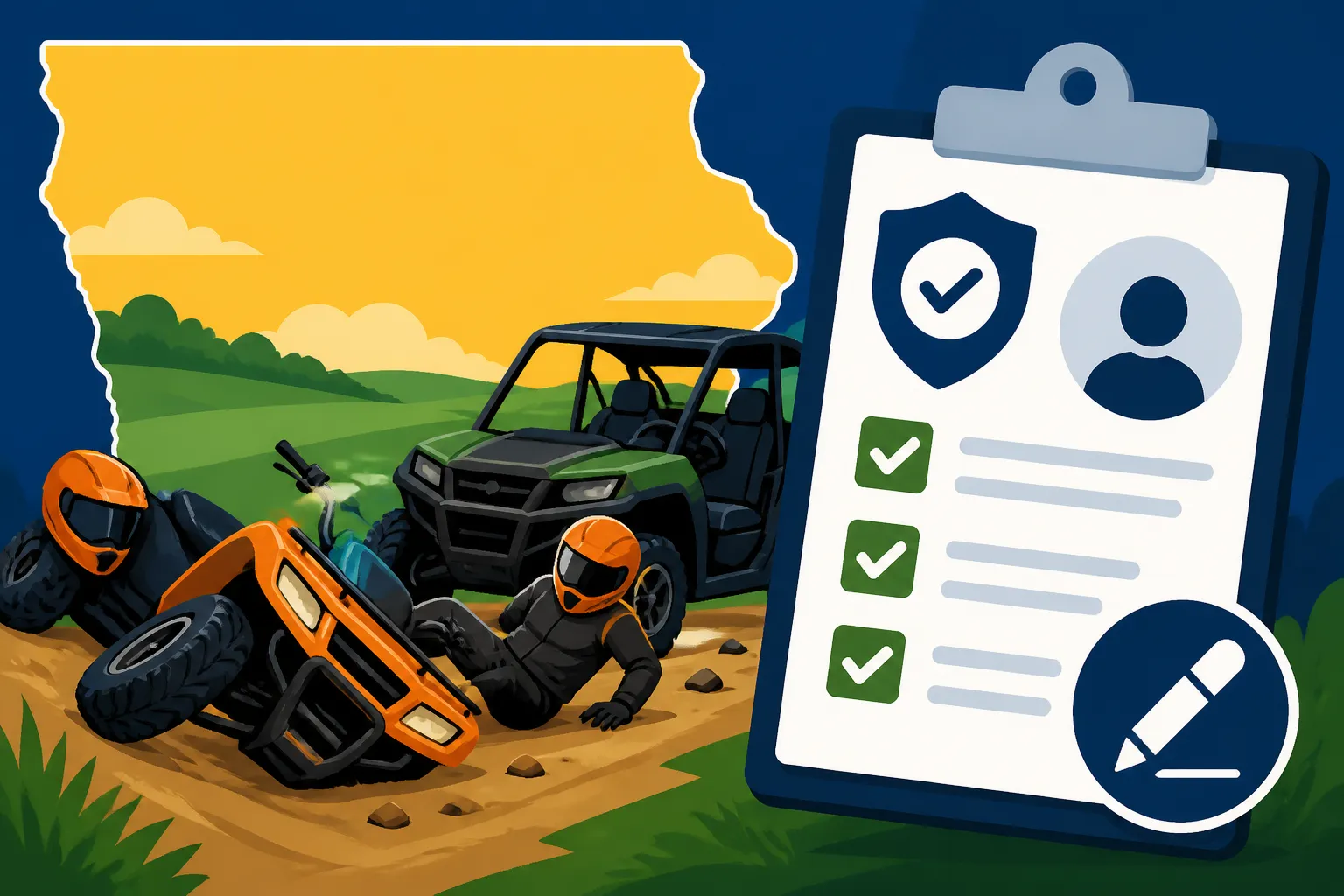
There’s nothing quite like the freedom of exploring Iowa’s trails on your ATV or UTV, feeling the wind and tackling challenging terrain. But even the most experienced riders can face an unexpected turn: an accident. When that happens, the last thing you need is confusion about what to do next, especially concerning official reporting requirements. This guide is here to cut through the noise, helping you understand Iowa's ATV accident reporting rules so you're prepared, even when you hope you never need this information.
The Initial Shock: When an Accident Happens on the Trail
The moment an ATV or UTV accident occurs, whether it’s a minor tip-over or a more serious collision, can be incredibly disorienting. Your adrenaline spikes, and it’s hard to think clearly. But having a clear plan, even a mental one, for those first few minutes can make all the difference. It's not just about following the law; it's about ensuring everyone's safety and managing the situation effectively.
Assessing the Situation: Safety First, Always
Your absolute first priority after any incident is to check for injuries. This isn't just a recommendation; it's a fundamental human response. Start with yourself, then immediately check on any passengers and other individuals involved. Even if you feel fine in the moment, take a deep breath and do a quick body scan. Adrenaline can mask pain, so what feels like a minor bump initially could be more serious once the shock wears off. Look for any signs of bleeding, broken bones, or head trauma. If anyone is unresponsive or complaining of severe pain, do not move them unless absolutely necessary for their immediate safety (like if the machine is on fire or in an unstable position).
Once you've assessed for injuries, consider the scene itself. Is your machine, or another's, blocking a trail? Is there a risk of further harm from passing riders or environmental hazards? If possible and safe to do so, move your machine to the side of the trail or to a more visible, secure location. This helps prevent secondary accidents, which can sometimes be more severe than the initial incident. Think about situations you might encounter at parks like [Gypsum City OHV Park at Fort Dodge] or [Bluff Creek OHV Park at Eddyville], where trails can be winding and visibility limited. Always prioritize getting to a spot where you and others are out of immediate harm's way before you even start thinking about paperwork or blame. Basic first aid, if you have a kit and are trained, can be invaluable here.
Who Needs to Know: Contacting Emergency Services
Once safety is paramount and initial injury assessments are made, it’s time to think about calling for help. This is where many riders get a little fuzzy on the details. When do you call 911? When do you just call a friend? The answer often depends on the severity of the injuries and the location of the accident.
If there are serious injuries – someone is bleeding profusely, unconscious, can't move, or you suspect a head or spinal injury – calling 911 is non-negotiable. Don't hesitate. Even if you're out in a remote area, dispatchers can often triangulate your position from your cell phone, and they can coordinate with local rescue teams, DNR officers, or the county sheriff's department. Be prepared to describe your location as accurately as possible, using trail markers, landmarks, or GPS coordinates if your phone has that capability. The faster emergency services know, the faster help can arrive, which is especially crucial if you're deep within a park or on a less-traveled trail.
For accidents involving property damage that looks significant (we'll dive into what "significant" means soon) but no immediate life-threatening injuries, you might call the local sheriff's office if you're on county land, city police if you're within city limits where ATVs are permitted, or a DNR conservation officer if you're in a state park or wildlife area. These agencies can assist with accident documentation and help you understand specific reporting steps. Remember, even if an accident seems minor, contacting the proper authorities early can prevent headaches down the line, especially when insurance companies get involved.
Iowa's Formal Reporting Requirements: The Seventy-Two Hour Rule
Iowa has specific rules about when an ATV or UTV accident absolutely must be reported to the state. These aren't just suggestions; they are legal requirements designed to track incidents, ensure safety, and provide data for trail improvements. Missing these requirements can lead to complications, including fines or issues with insurance claims.
Understanding the Thresholds: When a Report is Absolutely Necessary
Iowa mandates that you must report an ATV or UTV accident if it meets one of two primary criteria. It's not enough for an accident to just "happen"; it needs to cross a certain threshold to trigger the mandatory reporting.
First, if the accident results in an injury that requires medical attention beyond simple first aid. This means if anyone involved in the accident needs to see a doctor, go to an urgent care clinic, or visit a hospital for their injuries, it's a reportable incident. This isn't just for major, life-altering injuries; it includes things like stitches for a deep cut, an X-ray for a suspected fracture, or treatment for whiplash. If you or a passenger goes to the emergency room, even if you are later released with a clean bill of health, it still counts. The key here is professional medical intervention, not just discomfort.
Second, if the accident causes property damage to any one person's property (not just your own machine, but also another machine, a fence, a building, etc.) that exceeds a certain dollar amount. Now, as your guide, I can't give you the exact, current dollar figure because these numbers can change. However, you should always check the Iowa Department of Natural Resources (DNR) website for the most up-to-date threshold. It's usually a figure that represents "significant damage," meaning a crumpled fender, a broken axle, or extensive bodywork on a machine would likely push you over that amount. A minor scratch or a broken plastic handguard might not meet the threshold, but a bent frame or significant engine damage almost certainly would. Think of a rollover at a place like Rathbun OHV Area, where machines can get seriously banged up. Even if no one is hurt, if the damage bill climbs high enough, you're looking at a mandatory report. The [Iowa Accident Reporting on Form 542-8093] is the official document for this.
The Importance of the [Seventy-Two Hour Iowa Reporting Rule]
Once an accident meets either the injury or property damage threshold, Iowa law states that you have a very specific window of time to file your report: 72 hours. This is a hard deadline, and it's absolutely crucial not to miss it. The clock starts ticking from the moment of the accident. This timeframe is not just a suggestion; it's a legal requirement.
Why is this deadline so important? Firstly, it ensures that fresh details about the accident are captured accurately. Memories fade, evidence can be lost or disturbed, and the longer you wait, the harder it becomes to reconstruct what happened. Secondly, it helps the DNR monitor ATV/UTV safety trends, identify dangerous areas, and allocate resources for trail maintenance or safety education. From your personal perspective, filing within 72 hours helps protect you legally. If there's a dispute over fault or liability, having an official, timely report on file from the DNR can be invaluable. Failing to report within this window, when required, could lead to citations, fines, or even more serious legal repercussions, especially if someone else was injured or suffered significant property loss. It could also complicate or even jeopardize your insurance claim, as insurance companies often rely on official reports.
Gathering Information at the Scene
Even in the chaotic aftermath of an accident, try to gather as much information as possible. This data will be vital for your official report and any potential insurance claims. A little diligence at the scene can save you a lot of grief later.
Here's a checklist of what to collect:
- Names and Contact Information: Get the full names, phone numbers, and email addresses of everyone involved, including drivers, passengers, and any witnesses.
- Insurance Information: If other vehicles or people are involved, get their insurance company names and policy numbers.
- Machine Details: Note the make, model, year, and Vehicle Identification Number (VIN) of all machines involved. The VIN is usually stamped on the frame.
- Witness Information: Don't just get their contact details; ask them what they saw and if they'd be willing to provide a statement.
- Date, Time, and Location: Be precise. Note the exact date and time of the accident. For location, use trail names, mile markers, GPS coordinates (if available on your phone), or descriptive landmarks. For instance, "Trail 5, about 2 miles north of the main staging area at Bluff Creek OHV Park."
- Photos and Videos: Use your phone to take pictures of everything – damage to all machines, injuries, the accident scene from multiple angles, tire marks, trail conditions, and any relevant hazards. The more visual evidence, the better.
- Weather and Trail Conditions: Note if it was sunny, raining, dusty, muddy, or if visibility was poor.
- Damage Assessment: Make a preliminary note of all visible damage to all machines and property.
Having a small notepad and pen, or even using your phone's note app, is a smart move. In the stress of the moment, it's easy to forget crucial details. Some riders even keep a small, laminated card with key information they might need to collect in an emergency.
Filling Out the Form 542-8093: Step-by-Step Guidance
Once you've ensured everyone's safety and gathered preliminary information, the next crucial step is completing the official Iowa ATV/UTV accident report form. This isn't a form you can gloss over; accuracy and completeness are key.
Obtaining and Completing the Form
The official document you'll need is the [Iowa Accident Reporting on Form 542-8093]. This form is typically available for download directly from the Iowa Department of Natural Resources (DNR) website. You might also be able to pick up a physical copy at a local DNR office or, in some cases, from a county sheriff's department.
When you sit down to fill it out, take your time. Here's a general walkthrough of the sections you'll typically encounter:
- Operator Information: Your personal details, contact information, and operator's license (if applicable for road use).
- Machine Information: Details about your ATV or UTV, including make, model, year, VIN, and registration decal number. This is where having your machine's documentation handy is important, including your [Carrying the Certificate on an Iowa Ride].
- Accident Details: This section is critical. It asks for the exact date, time, and location of the accident. You'll need to describe the type of accident (e.g., rollover, collision with another machine, collision with a fixed object).
- Parties Involved: If another person or machine was involved, you'll need to provide their operator and machine information.
- Injuries: Document any injuries sustained by anyone involved, noting their severity (e.g., minor, serious, fatal) and if medical attention was required.
- Property Damage: Detail the damage to all machines and any other property involved, providing estimated repair costs. Be as specific as possible.
- Narrative: This is your chance to describe what happened in your own words. Be factual and objective. Avoid speculation or assigning blame. Just stick to the "who, what, when, where, and how."
Accuracy is paramount. Incorrect information could delay processing or, worse, be challenged later if there are legal or insurance disputes. It's often a good idea to draft your narrative on a separate piece of paper first to ensure it's clear and concise before transferring it to the official form. While LawDepot might not provide this specific DNR form, they offer various legal document templates that can be incredibly useful for general incident reporting or liability waivers if you ever organize group rides or manage private land access. Having familiarity with clear, structured documentation is always a good skill to have.
Submitting Your Report and What Happens Next
Once you've meticulously completed Form 542-8093, it needs to be submitted to the Iowa DNR. The form itself will usually specify the correct mailing address. While you can typically mail it through standard post, it's highly recommended to send it via certified mail with a return receipt requested. This provides you with irrefutable proof that you sent the report, when you sent it, and that the DNR received it. This proof can be invaluable if there are any questions later about whether you met the [Seventy-Two Hour Iowa Reporting Rule].
After submission, what happens?
- DNR Review: The DNR will review your report. They might contact you for clarification or additional details.
- Insurance Companies: If insurance claims are involved, your insurance company will likely request a copy of this official report. Having it on file with the DNR streamlines this process.
- Record Keeping: The DNR uses these reports to compile statistics, identify hazardous areas on trails, and guide future safety initiatives.
- Your Records: Always make several copies of the completed form before you send it off. Keep one copy for your personal records, one for your insurance company, and potentially one for your legal counsel if the situation warrants it. These copies are your safety net.
Remember, the goal of this reporting process is not to assign blame immediately but to gather facts and ensure that the incident is officially documented according to Iowa law. Cooperation and thoroughness during this stage benefit everyone involved.
Common Scenarios and Misconceptions: Beyond the Basic Report
Navigating accident reporting can feel like a minefield of "what ifs." Let's tackle some common scenarios and clear up a few misconceptions that riders often have when it comes to Iowa's ATV and UTV accident reporting requirements.
Accidents on Private Land vs. Public Trails
A frequent question riders ask is whether the reporting requirements change if an accident happens on private land, say, in your own timber or on a friend's farm, compared to a designated public OHV park like [Gypsum City OHV Park at Fort Dodge]. The general rule of thumb is that Iowa's mandatory reporting requirements (for injuries requiring medical attention or property damage exceeding the threshold) apply regardless of where the accident occurs.
While you might be [Riding Iowa Private Land Without Registering] your machine, your responsibility to report a significant accident remains. The key difference might be who responds to the scene if you call for assistance. On private land, you'd likely call the county sheriff's department. If you're at an OHV park, you might contact the park rangers or a DNR conservation officer who oversees that specific area. Regardless, the official Iowa DNR Form 542-8093 is still the document you'd use to file the state-mandated report if the thresholds are met. It's also incredibly important to notify the landowner immediately if the accident happened on their property, especially if there's damage to their land or property. Good communication can prevent strained relationships.
What if Law Enforcement Responds?
Sometimes, if an accident is serious enough, law enforcement (a county sheriff's deputy, city police, or DNR officer) will respond to the scene. They will conduct their own investigation, take statements, and create an official law enforcement accident report. This raises another common question: If they take a report, do I still need to file Form 542-8093 myself?
In most cases, if a law enforcement agency (like the DNR or Sheriff's office) completes an official accident report for an ATV/UTV incident, that report typically satisfies the state's reporting requirement. However, it is absolutely critical to confirm this with the responding officer at the scene. Don't just assume. Ask them directly, "Will your report fulfill the Iowa DNR's accident reporting requirement for me?" Also, ask how you can obtain a copy of their report for your records and insurance company. Getting a copy of their report is still vital, even if it means you don't have to fill out a separate form. This proactive step ensures you're compliant and have all necessary documentation.
Insurance and Liability: Why Reporting Matters
Beyond legal compliance, filing an official accident report is incredibly important for practical reasons, especially concerning insurance and potential liability. An official report from the Iowa DNR or law enforcement provides an objective, documented account of the incident.
- Insurance Claims: Your insurance company will almost certainly require an official report to process any claims for damage to your machine or medical expenses. Without it, you might face delays, disputes, or even denial of your claim. This is especially true if you have [Iowa ATV Insurance Requirement] for riding on roads or if you've purchased a comprehensive policy for trail riding. The report provides a factual basis for your claim and helps establish the details of the incident.
- Liability: If another party was involved and there's a question of who was at fault, or if there were significant injuries, an official report can be crucial for determining liability. It creates a formal record that can be referenced by lawyers, insurance adjusters, and courts if the situation escalates. Failing to file a required report can leave you vulnerable to accusations of negligence or attempting to hide details, potentially impacting your legal standing. It simply gives you a solid foundation if things get complicated.
Think of the official report as laying the groundwork for everything that follows an accident. It's an inconvenience, yes, but it's a necessary step to protect your interests, facilitate recovery, and ensure proper data is collected to make Iowa's trails safer for everyone.
| Reporting Trigger | Requirement | Deadline | Form | Submitting Agency |
|---|---|---|---|---|
| Injury | Requires medical attention beyond first aid (doctor, ER, etc.) | Within 72 hours of accident | Iowa ATV Accident Report (Form 542-8093) | Iowa DNR |
| Property Damage | Exceeds specific dollar amount (check current DNR threshold for exact figure) | Within 72 hours of accident | Iowa ATV Accident Report (Form 542-8093) | Iowa DNR |
| Law Enforcement Responds | Officer takes an official report at the scene | Confirm with officer | Officer's agency report (get copy) | Confirm with officer |
Disclaimer
This article is for general informational purposes only and does not constitute professional advice. Laws, prices and regulations vary by location and change over time. Consult a qualified professional for guidance on your specific situation.