Registering a Machine Bought Privately in Iowa
So, you’ve found the perfect used ATV or UTV privately here in Iowa – maybe it was a friend of a friend, a local farm sale, or even an online listing. That initial excitement of a new-to-you machine can quickly turn into a headache when you realize you've got to figure out how to legally make it yours. This guide is going to strip away all the confusion and walk you step-by-step through registering a machine you've bought from a private seller, ensuring you can hit the trails without a worry.
Understanding Iowa's Rules for Private ATV Sales
When you buy an off-highway vehicle (OHV), whether it's an ATV, UTV, or dirt bike, from an individual rather than a licensed dealer, there are a few specific things Iowa wants to see happen to ensure a smooth transfer of ownership. It’s not quite as simple as just handing over cash and keys, and if you miss a step, you might find yourself in a bind later. This section will help you understand the foundational requirements, so you're not caught off guard.
The Importance of a Bill of Sale
Even though it might seem like a casual exchange, a bill of sale for a private ATV or UTV transaction in Iowa is incredibly important. Think of it as your official receipt and proof that the machine has changed hands. While Iowa might not strictly require a separate bill of sale for registration if the title is correctly filled out, having one is a crucial layer of protection for both you and the seller. It details the machine, the purchase price, the date of sale, and the contact information for both parties. This document becomes invaluable if there's ever a dispute about the sale, or even if there are questions about the sale price when you go to register.
A good bill of sale should clearly identify the ATV or UTV, including its make, model, year, and most importantly, its Vehicle Identification Number (VIN) or serial number. It should also state the final agreed-upon sale price, which will be important for calculating sales tax. Many riders find it helpful to use a template from a reputable source, and companies like LawDepot offer customizable forms that can ensure you cover all your bases. Don't skip this step – it’s your best defense in any future misunderstanding.
Why Iowa Titles Every Transferred Machine
One common misconception is that if a machine is older or bought privately, it might not need a title. In Iowa, that's simply not the case for most off-highway vehicles. [Why Iowa Titles Every Transferred Machine] is a rule that ensures a clear chain of ownership for every ATV, UTV, or dirt bike that changes hands. This isn't just bureaucratic red tape; it's a vital consumer protection measure. A title proves who legally owns the machine, helps prevent the sale of stolen property, and provides a documented history of the vehicle.
When you buy privately, the seller must provide you with the existing Iowa Certificate of Title. This isn't optional. If a seller tells you they don't have a title, that should be a major red flag. Without a properly assigned title from the previous owner, you won't be able to register the machine in your name, which means you won't be able to legally ride it on public land or designated trails. Always ask to see the title before you finalize any private purchase. Check that the VIN on the title matches the VIN on the machine itself to avoid any last-minute surprises.
Sales Tax on a Private Sale
This is often where riders get a bit of a shock when buying privately: yes, you still have to pay sales tax on an ATV or UTV purchased from an individual in Iowa. Unlike some other states that might exempt "casual sales" between private parties, Iowa doesn't make that distinction for OHVs. When you go to the county recorder's office to register your newly acquired machine, they will collect the applicable sales tax based on the purchase price you declare. [Iowa ATV Sales Tax on a Private Sale] is a mandatory part of the process.
The sales tax rate is typically the state sales tax rate, plus any applicable local option sales tax. So, if you live in a county with a local option tax, you'll be paying a combined percentage. It’s critical to declare the actual purchase price. If the recorder suspects the declared price is significantly lower than the market value for that type of machine, they might ask for additional proof, like the bill of sale or an appraisal. Always factor this tax into your budget when you’re considering buying a used machine from a private seller; it's an expense that will come due at the time of registration.
Gathering Your Paperwork for the County Recorder
Navigating the paperwork for a privately purchased ATV or UTV can feel like a scavenger hunt, but getting everything in order before you head to the county recorder's office will save you a lot of time and potential frustration. The last thing you want is to drive all the way there, wait in line, and then find out you're missing a critical piece of information. Let's break down exactly what you'll need from both the seller and yourself to complete the transaction smoothly.
The Seller's Role: Title and Signature
The absolute most important piece of paper you need from the seller is the original Iowa Certificate of Title. This document is the legal proof of ownership, and without it, you can't transfer the machine into your name. On the back of the title, there's a section specifically for transferring ownership. The seller must sign this section, usually in front of a notary public, though some county recorders may accept it without a notary if the signatures are verifiable. The seller also needs to fill in the date of sale and the odometer reading (if applicable, though less common for ATVs/UTVs, it's good practice).
Crucially, ensure the seller’s name on the title perfectly matches their identification. If there are multiple owners listed on the title with "and" between their names, all listed owners must sign. If it says "or," generally only one needs to sign, but it’s always safest to get both. Any errors or missing information on the seller's part can cause significant delays. Before handing over any money, always inspect the title to make sure it's clear of liens (unless you're specifically buying a machine with a lien that you intend to satisfy) and that it's correctly filled out by the seller. This step is the linchpin of the entire process.
Your Role: Registration Application Details
Once you have the signed-over title from the seller, your next step is to prepare your own information for the registration. You'll need to complete an Iowa Off-Highway Vehicle Registration Application. While you can often get this form at the county recorder's office, some people prefer to download and fill it out beforehand from the Iowa DNR website. This form will ask for all your personal details, including your full name, address, phone number, and driver's license number. [What Iowa's Registration Form Asks For] usually also requires information about the machine itself, such as the VIN/serial number, make, model, year, and the purchase price.
It’s vital that all the information you provide is accurate and legible. Any discrepancies between your application and the title could lead to questions or delays. For instance, if you recently moved, make sure your current address matches your ID or bring proof of residency for your new address. Don't forget to sign the application where indicated. Having all this filled out correctly ahead of time streamlines your visit to the recorder's office and shows you're prepared.
Proving Sales Tax Payment
As we discussed, sales tax is collected at the time of registration for privately purchased machines. While you won't have "proof of sales tax payment" before you go to the recorder, you will need to be prepared to pay it. The county recorder's office will calculate the amount based on the purchase price you state on your application and potentially on your bill of sale. They will then add this to your registration and titling fees.
If you have a bill of sale, bring it along. It serves as an official record of the transaction and the agreed-upon price. This helps validate the sales price you're reporting, especially if the recorder has questions about the value of the machine. Prepare to pay for these fees and the sales tax with cash, a check, or a debit/credit card, depending on what methods your specific county recorder's office accepts. It's always a good idea to call ahead or check their website for accepted payment methods and current fee structures to avoid any surprises.
The Registration and Titling Process at the Recorder's Office
You've got your machine, you've got the title, and you've got all your personal information squared away. Now it's time to head to the county recorder's office to make it all official. This is where your privately purchased ATV or UTV finally gets its new identity under your ownership. While it might feel like a daunting trip, knowing what to expect can ease any anxieties.
What Happens at the Counter
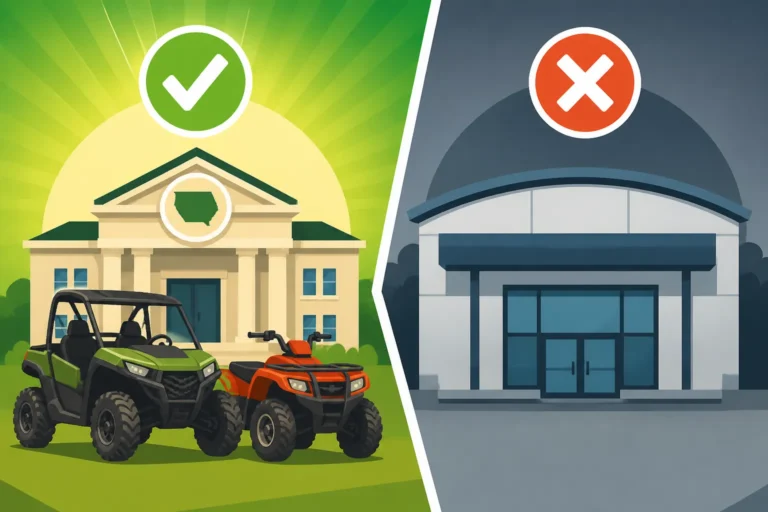
When you arrive at the county recorder's office – remember, [Why a County Recorder and Not the DMV] handles OHV registrations – you'll present all your prepared documents. This includes the signed-over original title from the seller and your completed registration application form. The clerk will review everything, verifying the VIN, checking the seller’s signature, and ensuring all fields are correctly filled out. They’ll process the title transfer, officially recording you as the new owner.
They will also process your registration. This involves entering your machine's details into the state system and collecting the various fees. They will calculate the sales tax based on the purchase price you declared, so be ready for that. This is also when you'll pay for your new registration decal. If everything is in order, they'll give you a temporary registration or a receipt that serves as immediate proof, and often the new registration certificate right then and there. Your physical title will typically be mailed to you within a few weeks, as will your new decal. [Two Weeks Before an Iowa Decal Arrives] is a common timeframe.
Understanding the Fees Involved
The cost of getting your privately purchased ATV or UTV registered and titled in Iowa isn't just one lump sum; it's a combination of several distinct fees. It's helpful to understand what each charge covers so there are no surprises when you're at the counter. [Iowa ATV Registration Cost] and [Iowa ATV Title Cost] are two separate charges.
Here's a breakdown of the typical fees you'll encounter:
| Fee Type | Description |
|---|---|
| Sales Tax | Collected on the purchase price of the machine, typically 6-7% depending on local option tax. |
| ATV Title Fee | The cost to transfer the title into your name. |
| ATV Registration Fee | The base yearly fee for the privilege of operating your machine. |
| Writing Fee | A small fee charged by the county recorder's office for processing the paperwork. |
| License Agent Fee | Another small fee that sometimes applies, depending on how and where the registration is processed. |
| Lien Notation Fee | If you financed your purchase and there's a lien on the title, this fee covers noting it. |
Always be sure to check with your specific county recorder's office for the most current fee amounts, as these can change. You'll pay all these fees, plus the sales tax, at once.
Receiving Your New Decal and Title
Once you've completed the transaction at the counter, you'll walk out with your immediate proof of registration, usually a paper certificate. This certificate is crucial, as [Carrying the Certificate on an Iowa Ride] is required whenever you operate your ATV or UTV. Keep it in a waterproof bag on your machine or carry it with you.
Your physical Iowa Certificate of Title, showing you as the new legal owner, will be mailed to the address you provided. This typically arrives within a couple of weeks. It’s a good idea to keep this document in a safe place, like a fireproof safe, and not on the machine itself. Your new registration decal will also arrive in the mail separately. Once it does, you'll need to mount it in the designated location, which is usually [A Decal on the Rear of an Iowa Machine]. This decal proves that your registration is current and valid for the season. Remember, your registration expires on December 31st each year, regardless of when you registered, so keep an eye on renewal notices for the following year.
Disclaimer
This article is for general informational purposes only and does not constitute professional advice. Laws, prices and regulations vary by location and change over time. Consult a qualified professional for guidance on your specific situation.