Why a County Recorder and Not the DMV
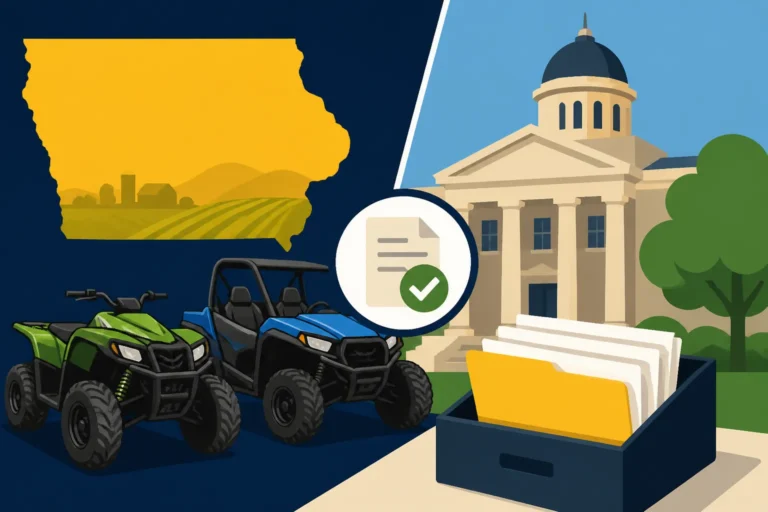
It's a common point of confusion for anyone new to the off-highway vehicle (OHV) world in Iowa, or even seasoned riders bringing in a new machine: when it comes to getting your ATV or UTV registered and titled, where exactly do you go? Many naturally assume the Department of Motor Vehicles (DMV), because that's where we handle our cars and trucks. But for your quad or side-by-side, it's a completely different office, and this guide will clear up exactly why your local County Recorder is the key.
The Core Question: Why Not the DMV?
Let's face it, our brains are wired for consistency, especially when it comes to government bureaucracy. If you register your car at the Department of Motor Vehicles, it stands to reason you'd do the same for your ATV, right? Well, not in Iowa, and understanding why this distinction exists is crucial to avoiding a wasted trip and a lot of frustration. The separation isn't arbitrary; it's a deliberate design to streamline specialized services and funding for different types of vehicles.
Understanding Vehicle Registration Responsibilities
When you think of the DMV, or more accurately in Iowa, the County Treasurer's office which handles motor vehicle registrations, you're thinking about vehicles primarily designed for road use. This includes your daily driver, your pickup truck, your family minivan, and even your motorcycle if it's street legal. These vehicles fall under a different set of laws and regulations, primarily focused on road safety, emissions, and highway infrastructure. The fees collected for these vehicles are often directed towards road maintenance, driver's licensing programs, and other general transportation initiatives. It's a vast system designed for the millions of cars and trucks crisscrossing our state every day.
However, ATVs and UTVs, despite sometimes being allowed on certain Iowa roads, are fundamentally different. They are off-highway vehicles, built for trails, fields, and rugged terrain, not primarily for paved roads. Because their purpose, the places they operate, and the specific concerns surrounding their use (think trail access, environmental impact, and specialized safety training) are so distinct, Iowa has carved out a separate administrative path for them. This ensures that the expertise and resources are appropriately allocated, rather than trying to fit a square peg (your quad) into a round hole (the typical motor vehicle system).
The Iowa DNR's Role in Off-Highway Vehicles
So, if not the DMV, then who oversees this whole OHV operation? That would be the Iowa Department of Natural Resources (DNR). The DNR is the central authority for all things related to off-highway vehicles in Iowa, from managing the state's OHV parks and trails to promoting rider safety and enforcing regulations. They're the ones who set the rules, administer the safety courses, and work with various clubs and organizations to ensure Iowa offers a robust and responsible OHV experience. When you think about it, this makes perfect sense. The DNR is already deeply involved in natural resource management, outdoor recreation, and wildlife protection across the state. Placing OHV oversight under their umbrella ensures that these vehicles are integrated into the broader outdoor recreational landscape with appropriate considerations for conservation and public access.
The DNR, however, doesn't have offices in every single county equipped to handle thousands of registrations and titles annually. That's where the County Recorder steps in. The DNR delegates the day-to-day administrative tasks of [Registering an ATV in Iowa] and [Titling an ATV in Iowa] to the County Recorders. This partnership allows the DNR to focus on its overarching mission of managing and promoting OHV use, while leveraging the existing local government infrastructure of the County Recorders to handle the paperwork efficiently. Essentially, the County Recorder acts as the DNR's local agent for OHV transactions. This division of labor is why the fees you pay for your ATV registration directly benefit OHV programs, trails, and enforcement, rather than disappearing into a general state transportation fund. It’s a dedicated system for a dedicated community, as you'll see laid out in more detail with [The Iowa DNR and Off-Highway Vehicles].
The County Recorder's Office: Your OHV Hub
Once you understand that the Iowa DNR is the guiding force behind OHV regulations, it becomes clearer why the County Recorder's office is your destination for all registration and titling needs. Think of it as your specialized service center for your off-road toys, completely separate from the system that handles your car or truck.
Centralized Service for ATV and UTV Owners
The beauty of the County Recorder's system for OHV owners is its centralized nature. Instead of having to go to one place for a title, another for registration, and perhaps yet another for renewals, your local County Recorder handles it all. This means less running around for you and more time out on the trails. Whether you're purchasing a brand-new side-by-side from a dealer in Fort Dodge, or buying a used quad from a private seller down the road, the County Recorder is where the paperwork gets finalized. They are equipped to process initial registrations, issue new titles, transfer ownership, handle lien notations if you're financing your machine, and even assist with duplicate titles or registrations if yours goes missing.
This integrated approach means that the staff at your County Recorder's office become experts in the specific nuances of OHV laws and regulations. They understand the difference between an ATV and a UTV, the requirements for youth machines, and the various exemptions that might apply. This specialized knowledge can save you a lot of headaches compared to trying to navigate the complexities within a broader, more generalized motor vehicle department. For example, if you're trying to figure out [Iowa ATV Title Requirements] or precisely what you need to bring to the counter, the Recorder's office is your primary resource.
The Fees You Pay and Where They Go
Now, let's talk about the money. When you pay your registration and titling fees at the County Recorder's office, you might wonder where that cash actually goes. This is where the DNR's administrative structure truly benefits the OHV community. Unlike general vehicle registration fees that might fund roads you rarely take your ATV on, your OHV fees are earmarked specifically for OHV-related programs and initiatives within Iowa. This includes funding for the acquisition, development, and maintenance of OHV parks and trails across the state, like Gypsum City OHV Park or Bluff Creek OHV Park. It also contributes to public education programs about OHV safety, grants for local clubs to maintain trails, and enforcement efforts by conservation officers to ensure responsible riding.
For example, when you pay the [Iowa ATV Registration Cost], a significant portion of that goes directly into the Off-Highway Vehicle Fund. This fund is then used to support projects that directly benefit riders, ensuring that Iowa continues to offer and expand quality riding opportunities. Similarly, the [Iowa ATV Title Cost] covers the administrative expense of securely documenting ownership, which protects both buyers and sellers. The system is designed to create a self-sustaining ecosystem where riders' contributions directly improve their riding experience. It’s a dedicated investment back into the very passion you enjoy, ensuring that our trails are well-maintained and accessible for years to come.
What to Expect at the County Recorder's Office
Heading to the County Recorder's office might seem a bit daunting if you've never registered an OHV before, but it's a straightforward process once you know what to bring. Being prepared is half the battle, and understanding the nuances between a new purchase and a used machine can save you a return trip.
Required Paperwork for Registration and Titling
When you walk into the County Recorder's office to get your ATV or UTV registered and titled, the absolute golden rule is: bring everything you think you might need, and then some. The most critical piece of documentation is almost always a proper bill of sale. For a new machine purchased from a dealer, they typically provide a manufacturer's statement of origin (MSO) and will often handle much of the initial paperwork for you, though you'll still need to visit the Recorder to finalize things and pay your taxes and fees.
For a used machine, however, the responsibility falls squarely on you. You'll need a signed and dated [An Iowa Bill of Sale for an ATV] from the previous owner, clearly stating the purchase price, the machine's make, model, year, and its Vehicle Identification Number (VIN) or serial number. This document is essential for proving ownership and calculating sales tax. If the machine was previously titled in Iowa, you'll also need the existing title, properly signed over by the seller. If it was titled in another state, you'll need that out-of-state title. Don't forget your valid photo ID! Having all of your [Iowa ATV Registration Paperwork] in order before you arrive will make the process much smoother and faster. Resources like LawDepot can be incredibly helpful for finding reliable, legally sound bill of sale templates if you're navigating a private sale and want to ensure you're documenting everything correctly.
The Process for New and Used Machines
The process at the County Recorder's office varies slightly depending on whether your machine is brand new or used.
For a New Machine (Bought from a Dealer):
When you purchase a new ATV or UTV from a licensed dealer in Iowa, they often take care of a lot of the initial legwork. They'll typically submit your MSO and sales paperwork to the County Recorder. You'll then visit the Recorder's office to pay the applicable sales tax, title fee, and registration fee. The Recorder will issue your new title and provide you with a temporary registration and decal. The permanent decal will usually arrive in the mail a few weeks later. This is often the smoothest path, as dealers are familiar with the requirements and want to make the sale as easy as possible for you.
For a Used Machine (Private Sale):
This is where riders need to be most diligent. When [Buying a Used ATV in Iowa] from a private individual, you are responsible for ensuring all the necessary documentation is correct. Make sure you get a clear, legible bill of sale. I can't stress this enough: a complete and accurate bill of sale is your proof of purchase and value, and it’s what the County Recorder will primarily use to calculate your sales tax and transfer ownership. You should also ensure the seller provides you with the signed-over original title certificate. If the seller doesn't have a title, or if the chain of ownership is unclear, proceed with extreme caution, as Iowa generally requires all ATVs and UTVs to be titled. Once you have these documents, you'll take them, along with your photo ID, to the County Recorder's office in the county where you reside. There, you'll pay the applicable sales tax (yes, even on private sales!), the title transfer fee, and the registration fee. The Recorder will process the transfer, issue you a new title, and provide a temporary registration until your permanent decal arrives. And if you're the one [Selling an ATV in Iowa], make sure you're providing the buyer with all the correct and properly endorsed paperwork for a smooth transaction for both parties. Again, having a comprehensive bill of sale, perhaps generated using a service like LawDepot, can protect both you and the buyer.
Benefits of This System for Iowa Riders
While the separation of OHV registration from traditional motor vehicle services might seem like an extra step or an oddity at first glance, it actually offers significant advantages for Iowa's off-highway vehicle community. This specialized approach ensures that your needs as an OHV enthusiast are met with focused expertise and that your contributions directly benefit the sport you love.
Focused Expertise and Streamlined Processes
Imagine trying to register a snowmobile or a dirt bike at a bustling DMV office that's primarily set up to handle cars, trucks, and driver's licenses. The staff might not be familiar with the unique serial number locations, the specific classifications, or the particular regulations that apply to OHVs. This could lead to delays, confusion, and incorrect processing. By entrusting OHV registration and titling to the County Recorders, Iowa has created a system where the staff often develop a more focused expertise in these types of vehicles. They become familiar with the common questions, the typical paperwork, and the specific laws that apply to ATVs and UTVs.
This specialization translates to a more streamlined process for you, the rider. When you go to the County Recorder, you're not waiting in line behind someone getting their CDL or renewing their car tabs; you're at an office that understands OHV transactions. This focused environment often means quicker service, more accurate processing, and the ability to get your questions answered by someone who genuinely understands the off-road world. It's a system built for efficiency within a niche, rather than trying to lump all vehicle types into one generalized, often overwhelmed, department.
Direct Support for Iowa's OHV Community
Perhaps the most compelling benefit of the County Recorder handling OHV registrations is the direct financial link to the OHV community. As we discussed, the fees collected for [Iowa ATV Registration Cost] and other OHV services are not simply absorbed into a general state fund. Instead, a significant portion is channeled directly into the Iowa DNR's Off-Highway Vehicle Fund. This dedicated funding mechanism is crucial for the growth and sustainability of OHV recreation in Iowa.
What does this direct support look like? It means that the money you pay to register your machine helps maintain and improve existing OHV parks and trails, ensuring they remain safe and enjoyable. It supports the development of new riding areas, expanding the options available to riders across the state. It funds safety education initiatives, helping to train new riders and promote responsible practices. Furthermore, these funds often provide grants to local OHV clubs and county conservation boards, empowering them to manage and develop local riding opportunities, fostering a strong sense of community and stewardship among riders. When you consider [Where to Register an ATV in Iowa], you're not just performing a legal duty; you're actively contributing to the future of OHV riding in the state. This direct feedback loop ensures that your investment in your machine and its legal operation directly benefits the very infrastructure and programs that enhance your riding experience.
Common Misconceptions and Troubleshooting
Despite the system being in place for years, it's completely understandable why misconceptions still pop up. Our brains just naturally gravitate to the "motor vehicle = DMV" equation. Let's tackle some of those common points of confusion and offer some troubleshooting advice.
"My Car Goes to the DMV, So Should My Quad!"
This is, by far, the most prevalent misconception, and it's totally natural to think this way! We've been conditioned our whole lives to associate vehicle registration with the Department of Motor Vehicles, or the County Treasurer's Office in Iowa for cars and trucks. The reasoning often goes: "It has an engine, wheels, and I ride it, so it's a vehicle, and all vehicles go to the DMV." However, as we've explored, Iowa makes a very clear legal distinction between on-road motor vehicles and off-highway vehicles. This isn't just a quirky administrative choice; it reflects different regulatory frameworks, funding streams, and safety considerations.
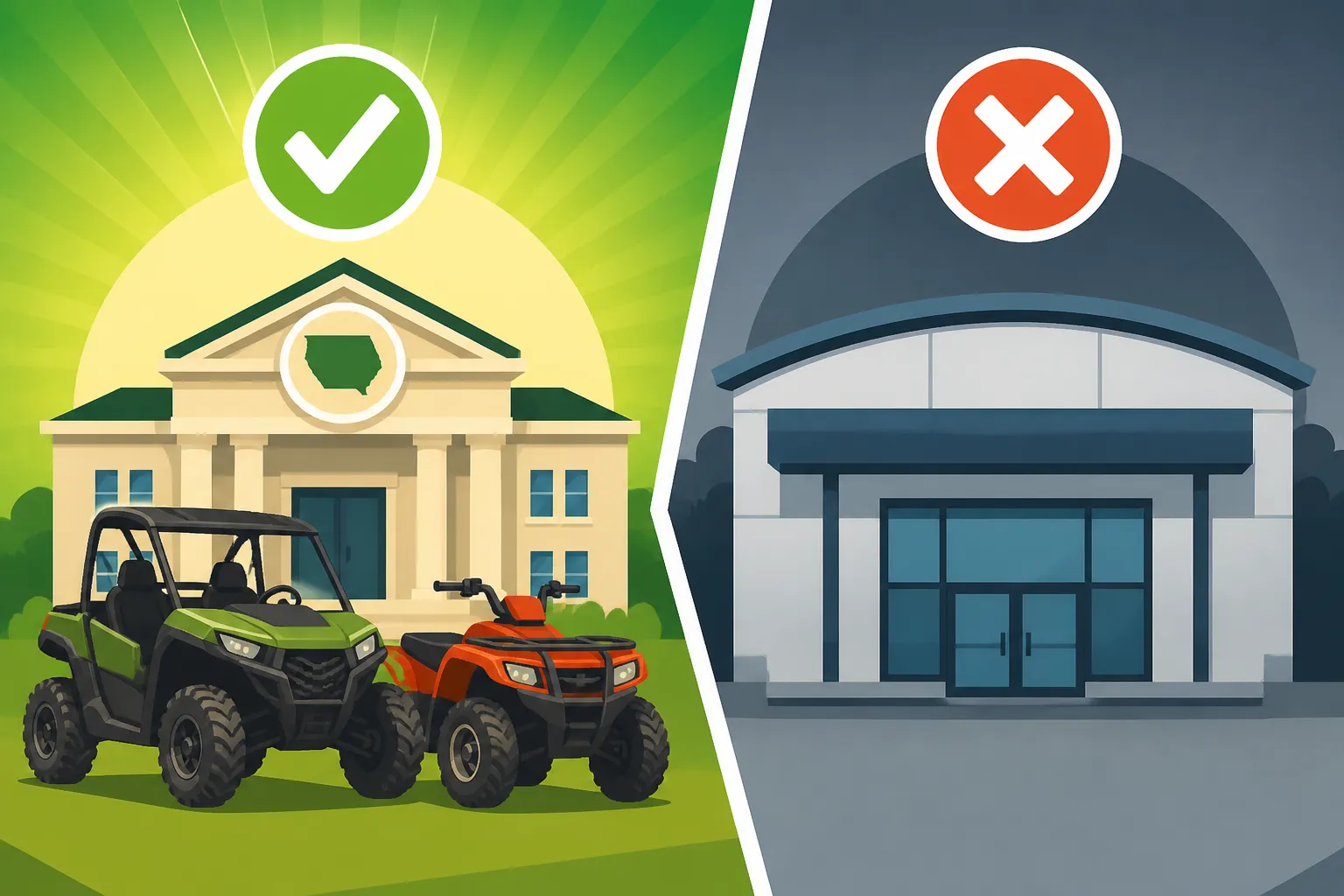
The key difference lies in their primary intended use and the governing body. Your car is primarily for paved public roads, overseen by state DOT and local treasurers. Your ATV or UTV is primarily for off-road trails, fields, and designated riding areas, overseen by the Iowa DNR. Trying to register an ATV at a County Treasurer's office (what most Iowans call the "DMV" for vehicles) would be like trying to get a fishing license at the Department of Public Safety – it's the wrong department for the job. They simply aren't set up to process OHV-specific paperwork, and their computer systems won't have the codes or categories for your quad. Understanding this fundamental separation helps you approach the correct office with confidence, saving you time and the frustration of being turned away.
What if My County Recorder is Unfamiliar?
While County Recorders across Iowa are generally well-versed in OHV registration and titling, occasionally, you might encounter a situation where a particular staff member, or even a smaller, less frequently visited Recorder's office, seems a bit unsure about the specific process. This can be frustrating, especially when you've done your homework and know you're in the right place! Don't panic, and remember that bureaucratic systems, even specialized ones, sometimes have their inconsistencies.
If you find yourself in this rare predicament, here are a few troubleshooting steps:
- Politely Ask for a Supervisor: Often, a more experienced staff member or a supervisor will be able to assist. They typically have a deeper understanding of all the various functions of the office.
- Reference the Iowa DNR: You can politely explain that the Iowa Department of Natural Resources (DNR) oversees OHV registration and delegates this function to the County Recorders. Sometimes, simply mentioning the DNR's role can clarify things.
- Refer to Iowa Code/Admin Rules: While you don't need to be a lawyer, knowing that these processes are governed by Iowa Code and Iowa Administrative Rules can sometimes help. The relevant administrative code for OHV registration is Iowa Admin Code 571-46.
- Have Your Documents in Order: Being meticulously organized with your bill of sale, title, and ID helps immensely. It shows you're prepared and makes it easier for them to locate the correct procedure.
- Try Another County: While the rules are standardized statewide, if you continue to face issues, you can register your OHV at any County Recorder's office in Iowa, not just the one in your home county. This might be a last resort, but it’s an option if you hit a wall in your local office.
Ultimately, remember that the County Recorder's office is the correct place. With a little patience and persistence, you should be able to complete your ATV or UTV registration and titling successfully, getting you one step closer to hitting those trails!
To help clarify the division of labor, here's a quick comparison:
| Feature | County Treasurer's Office (Often Called "DMV") | County Recorder's Office |
|---|---|---|
| Primary Vehicle Type | Cars, Trucks, Motorcycles (street legal) | ATVs, UTVs, Snowmobiles, Off-Road Motorcycles |
| Governing Authority | Iowa DOT, County Treasurer | Iowa DNR (delegated to Recorders) |
| Services Offered | Auto registration, driver's licenses, ID cards | OHV registration, titling, renewals, lien notations |
| Fee Destination | Roads, general transportation funds | Dedicated OHV Fund (trails, safety, enforcement) |
| Expertise Focus | General motor vehicle laws, licensing | Specific OHV laws, titling, and registration |
This article is for general informational purposes only and does not constitute professional advice. Laws, prices and regulations vary by location and change over time. Consult a qualified professional for guidance on your specific situation.