A Citation From an Iowa Conservation Officer
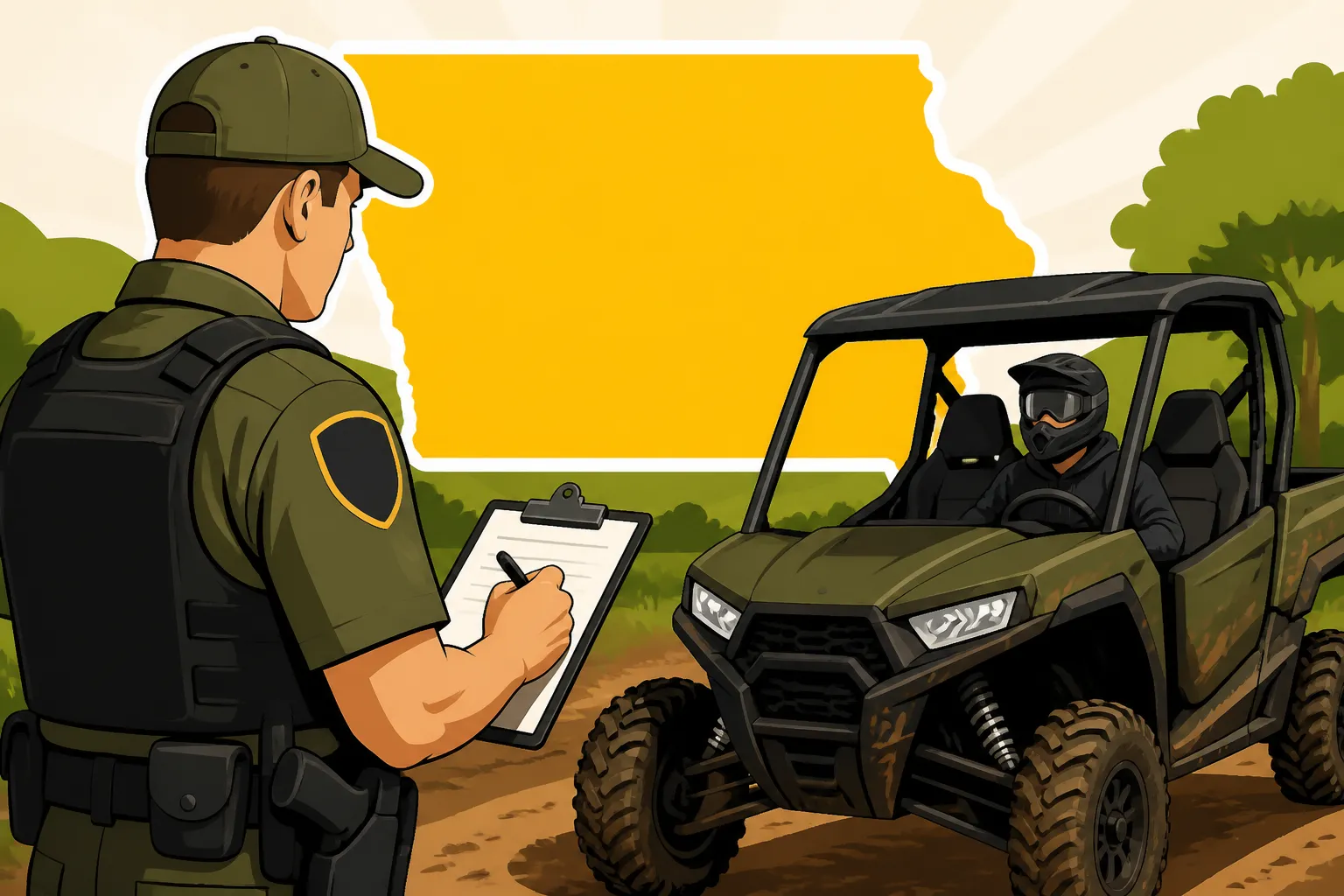
A citation from an Iowa conservation officer can be unsettling, especially if you are unsure whether it concerns your machine, your riding, or a permit. The safest first step is to read the paperwork carefully and follow its instructions. Knowing how to preserve details, check the rule cited, and respond on time can help you avoid turning a roadside stop into a bigger problem.
What a conservation officer’s citation may cover
A conservation officer may issue a citation for an alleged violation involving an off-highway vehicle, its operator, or the place where it was being ridden. The specific allegation should be written on the citation or related paperwork. It might involve registration or a permit, riding in a closed area, leaving a marked route, an age or safety-certificate requirement, or another rule.
The officer’s verbal explanation can help you understand the stop, but the written citation is the document to use when deciding what you must do next. Read every section, including any instructions about responding, paying, appearing in court, or contacting an office. Do not assume that a ticket is only a warning because the encounter ended politely, or that paying is the only possible response. The paperwork should explain the available steps.
Some rules depend on the type of machine and the place where it was ridden. A requirement for an ATV may not apply in the same way to a side-by-side or off-road motorcycle. Rules can also differ between a designated riding area, private ground, a public road, or land with restricted access. For background on how permits and other riding requirements fit together, see Iowa ORV Permits Explained.
| What the citation may concern | Details to check |
|---|---|
| Registration or visitor permit | Machine covered, registration status, permit type, and whether it was displayed as required |
| Closed trail or riding area | Location, closure notice, route status, and when the restriction applied |
| Riding outside a marked trail | Where the machine was in relation to the marked route and the area’s posted rules |
| Operator age or safety requirement | Rider’s age, machine type, and whether a certificate or supervision rule applied |
| Road use | Road type, local authorization, operator qualifications, and required equipment |
| Another alleged violation | The specific rule named on the paperwork and the court or agency instructions |
The table is a starting point, not a substitute for the rule named on your citation. If the wording is unclear, ask the court or agency listed on the paperwork how to identify the charge and the response process. Avoid relying on a general online summary to interpret a specific allegation.
Registration, permits, and certificates
A registration or permit citation can involve more than whether a sticker is visible. The officer may be concerned about whether the machine was registered, whether a visiting rider had the required Iowa permit, whether the decal belonged to that machine, or whether the paperwork was available. The relevant requirement can depend on the machine and its use. If the alleged issue is registration, Iowa Fines for Riding Without Registration explains the general subject; check the citation itself for the exact charge and instructions.
A visitor should not assume that a home-state document automatically settles every Iowa requirement. Reciprocity and permit rules can depend on the rider’s circumstances and the type of machine. If the stop involved an out-of-state machine, compare the allegation with Does Iowa Honor Out-of-State Registration? and Iowa ATV Registration for a Nonresident. Keep your home-state registration and any Iowa permit information together so you can show what you had at the time of the stop.
A safety-certificate allegation also needs careful checking. Requirements may vary by rider age and machine type. Review Iowa ATV Safety Certificate Requirements rather than assuming the same rule applies to every operator. If you had a certificate but could not show it during the stop, preserve proof of when it was issued and follow the citation’s response directions. Proof may be relevant, but it does not by itself cancel a citation.
Trail closures and riding off route
A citation for riding in a closed area or away from a marked trail is often tied to a particular place and time. Save the park name, trail or loop, approximate location, and the conditions you observed. If the area had a closure notice, note where it was posted and whether you saw it before entering. Do not remove signs or return to a closed route to recreate the incident.
For an allegation about a closed trail, Iowa Fines for Riding a Closed Trail may help explain the issue. For an allegation about riding outside a marked route, see Iowa Rules for Riding Off the Trail. Use those pages to orient yourself, then check the specific park rules and the wording of the citation. A rule may apply even if the route looked passable, and a closure can change after weather or trail damage.
What to do immediately after the stop
Once you are safely away from the roadside or trail, take a few minutes to make a factual record while the details are fresh. Do not try to reconstruct the event from memory days later if you can write it down now. Record what happened without adding guesses about the officer’s intentions or the legal meaning of the encounter.
- Keep the citation and every document you received. Photograph or scan both sides, including any instructions and case information. Store the originals somewhere they will not be damaged.
- Write down the timeline. Note the date, approximate time, location, route, weather, who was present, and what the officer said. Separate what you directly observed from what someone else told you.
- Save relevant records. Keep registration or permit documents, certificate records, receipts, messages, trail maps, photos, and any closure information you can lawfully access.
- Identify potential witnesses. Write down names and contact details for passengers or companions who saw the event. Ask them to make their own factual notes rather than coordinating a shared account.
- Check the response instructions. Look for a court, clerk, agency, case number, response method, and any deadline. If a detail is missing or hard to understand, contact the office identified on the paperwork.
- Do not ignore the citation while you investigate. A question about the facts does not necessarily pause a response deadline. Confirm what action is required and when.
If the citation concerns a stop on a road rather than an off-road area, the relevant equipment and road-use rules may differ from trail requirements. A Deputy at an Iowa Roadside Stop offers related background, but rely on the specific allegation and instructions in your case.
Keep communication with the officer, agency, and court calm and factual. If you contact an office, note the date, the person or department you reached, and what they told you. Ask procedural questions such as where to submit a response or how to request a hearing. Do not assume that an informal conversation changes what the citation requires; get important procedural information from the court or other official office.
How to review the allegation and respond
Start by identifying the exact rule or charge listed on the citation. A general description like “permit issue” or “off-trail riding” is not enough to determine what evidence matters. Read the wording and compare it with your own notes, the documents you held at the time, and any posted rules for that location.
Then check whether the details line up. Consider:
- Machine identity: Does the paperwork identify the correct machine or describe it accurately?
- Location: Does the stated location match where you were riding?
- Timing: Were you there at the time stated, and was a closure or restriction in effect then?
- Documents: Did you have the required registration, permit, or certificate? Can you establish its status on the date of the stop?
- Signs and route markings: What signs, boundaries, or trail markers were visible from your approach?
- Witnesses and records: Do photos, maps, messages, or witness accounts support or contradict a detail in the allegation?
A discrepancy does not automatically invalidate a citation. It does help you decide what to ask and what evidence to organize. Keep your notes objective. Avoid editing photos or deleting messages, and do not post a running account of the dispute on social media. If you have a genuine concern about evidence, ask the court or an appropriate legal professional how to preserve or request it.
The citation’s instructions determine how to enter a response and whether a court appearance is required. Read them closely and follow the listed procedure. If you want to contest the allegation, do not simply skip payment or fail to appear. Find out how to request a hearing, what information the court needs, and whether attendance is mandatory. For a more focused overview, see Appealing an Iowa ATV Citation.
If you are considering paying, first understand what the payment means under the instructions for that citation. It may resolve the case, but it may also have consequences beyond the immediate amount owed. Because the effects can depend on the charge and your circumstances, ask the court or a qualified legal professional before choosing a response you do not understand. No article can determine what outcome applies to an individual case.
A hearing is not the place to rely on a vague account such as “the trail was open” or “the officer got it wrong.” Organize the key facts in a short timeline, bring relevant documents in the form the court permits, and be ready to explain why each item matters. If you have a lawyer, follow their advice about what to submit and what to say. If you do not, ask the court about process, not about how to win; court staff generally cannot advise you on legal strategy.
Avoiding a second citation while the matter is pending
A citation does not give permission to keep riding in a way that may violate the same rule. Before another outing, confirm that the machine is properly registered or permitted for the planned use, that the decal or other proof is in place, and that the route is open. Check current park or land-manager notices before loading. Checking an Iowa Alert Before You Load can help with planning around changing trail conditions.
For a machine that will be ridden at a designated area, review that area’s posted rules and stay on the marked routes. Do not assume that a trail shown on an older map is still open. Wet conditions, maintenance, or other site-specific restrictions can change access. If the issue involved a permit or visitor status, resolve that question before the next ride rather than hoping the same interpretation will not come up again.
If you discover that you were missing a document, correct the problem, but keep proof of the date you fixed it. A later purchase or renewal may help prevent a repeat, but it does not necessarily change what was true at the time of the stop. Keep paperwork with the machine or rider as required, and make sure another family member or guest understands which documents and rules apply before borrowing it.
Finally, separate two tasks: complying with the citation and preventing another violation. Handle the response according to the paperwork, and make a practical checklist for future rides. That approach is more reliable than arguing roadside, relying on memory, or assuming a warning from a previous trip sets the rule for the next one.
Disclaimer
This article is for general informational purposes only and does not constitute professional advice. Laws, prices and regulations vary by location and change over time. Consult a qualified professional for guidance on your specific situation.