Iowa Rules for a Passenger at a Park
Taking a passenger to an Iowa OHV park raises a practical question: can your machine carry another person safely and within the rules? The answer depends on the vehicle’s design, the rider’s age and the park’s posted requirements. Use these checks before loading up so a passenger ride does not become an unsafe or unwelcome surprise.
Start With the Machine, Not the Park
A passenger should ride only when the machine is designed and equipped to carry one. The fact that someone can perch on a seat, rack or cargo box does not make that position a passenger seat. Check the owner’s manual and the vehicle’s labels for its intended number of occupants and any instructions about carrying passengers.
For an ATV, that often means one rider. Many ATVs have a single seat, and carrying someone behind the operator can affect balance, steering and braking. Do not carry a passenger on a machine that the manufacturer designed for one person, even for a short trail segment. A passenger on a rack or cargo area is especially risky because there may be no proper seat, footrests or way to hold on.
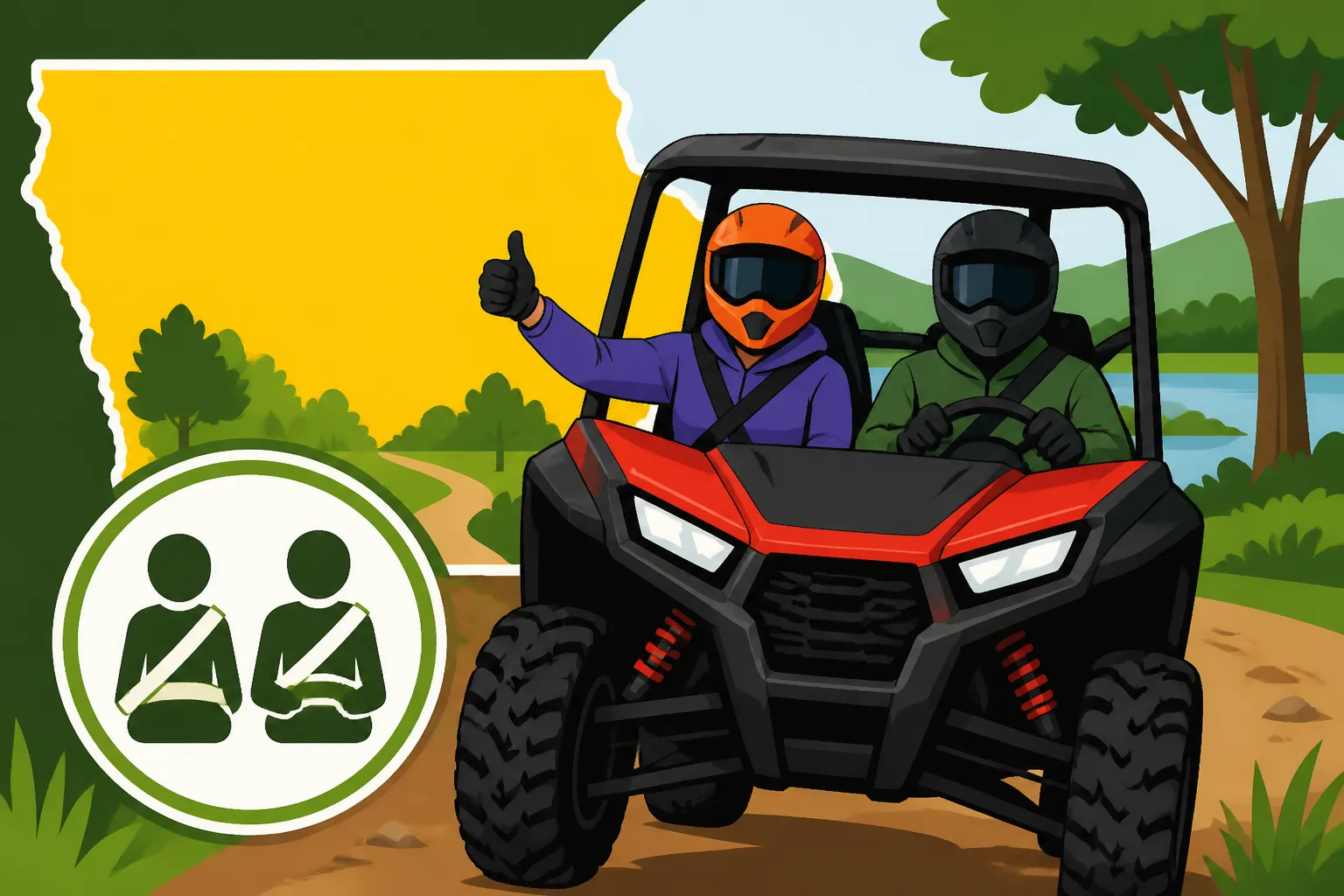
A side-by-side is built differently. It may have a passenger seat, seat belt and handholds, but the number of seats and the vehicle’s operating instructions still matter. Do not assume that a roomy cab means it can carry more people than its stated capacity. Keep every occupant in a designated seat and use the restraints provided.
| Before the ride | What to check | Why it matters |
|---|---|---|
| Occupant capacity | Manual, labels and seating positions | A machine may be designed for one rider or a specific number of occupants |
| Passenger position | A proper seat, footrests and available handholds | A rack or cargo area is not a safe substitute for a passenger seat |
| Restraints | Seat belts or other equipment supplied for that seat | Occupants need the protection intended for the vehicle |
| Park rules | Current posted rules and alerts | A park may have requirements beyond what you expect |
| Rider readiness | Ability to sit securely, hold on and follow instructions | The passenger needs to stay in position throughout the ride |
The machine’s design is only the starting point. Parks can have their own operating rules, and trail conditions can make a passenger trip more demanding than a ride on a smooth, open area. Read Iowa Rules for Riding a Designated Riding Area and check the park’s current information before you leave home.
If you have a full-size side-by-side, confirm that it is allowed on the trails you plan to use. Trail width and vehicle restrictions can matter even when the machine is designed to carry a passenger. Iowa Rules for a Full-Size Rig on a Trail is a useful place to review that issue.
Check the Passenger, Equipment and Park Rules
Passengers need to be able to stay seated, use the equipment provided and respond to the operator’s directions. That may be difficult for a young child or anyone who cannot comfortably reach the footrests or remain within the seat’s restraints. Do not try to solve a poor fit by holding a child in your arms or improvising a seat. If the passenger cannot ride securely in the position the manufacturer provided, leave them off the machine.
Age rules and supervision requirements can also affect a trip. They are not necessarily the same for every vehicle or riding situation, so check the rules that apply to the machine and the park. For riders under 12, review Iowa Rules for Riders Under 12 before planning the outing. If the young rider will operate a machine rather than ride as a passenger, check the applicable training and supervision requirements as well.
Parks may set rules for protective gear, passengers, vehicle types and how riders use the trails. Do not assume that a machine or passenger arrangement allowed on one property is automatically allowed at another. Check current posted signs and park information, and ask the park operator when an important detail is unclear. Iowa has designated OHV parks with different facilities and trail setups; Iowa’s Eight Designated OHV Parks can help you identify where you intend to ride.
Protective gear should fit each person, not just the operator. Review Iowa Helmet Rules at an OHV Park and follow the specific park’s requirements. A helmet that is loose, incorrectly fastened or too large for a child may not offer the intended protection. Bring appropriate eye protection, sturdy clothing, gloves and footwear, and make sure the passenger knows how to use any seat belt or other restraint.
If you are shopping for gear, compare fit and safety information rather than choosing by appearance alone. Amazon may have a broad selection, but the product listing should clearly identify the intended use and sizing; try to confirm the fit and relevant safety markings before riding. A helmet or protective item is not suitable simply because it is sold for an off-road activity.
A quick check before driving to the park can prevent a wasted trip:
- Confirm the machine’s occupant capacity in its manual or on its labels.
- Inspect the passenger seat, footrests, handholds and restraints.
- Check the park’s current rules for passengers, protective equipment and vehicle access.
- Make sure the passenger can sit securely and understands the operator’s instructions.
- Choose a route and pace that match the passenger’s comfort and the machine’s load.
Adjust the Ride for a Passenger
Carrying a passenger changes how a machine behaves. Added weight can affect acceleration, stopping distance, steering and stability. On an ATV, the passenger’s movement can also shift the machine’s balance. On a side-by-side, extra occupants and gear still add load, so stay within the vehicle’s limits and follow the manufacturer’s guidance.
Explain the basics before the engine starts. A passenger should know where to sit, what to hold, how to use restraints and what to do if the operator stops. On an ATV designed for two occupants, the passenger should follow the manufacturer’s instructions for position and movement. Avoid sudden changes in direction or speed, and stop if the passenger is uncomfortable or cannot maintain a secure position.
Start conservatively. Choose a suitable trail and keep the first outing short enough to gauge how the passenger handles the ride. Do not treat an empty-looking trail as permission to ride faster or take sharper turns. Hills, ruts, loose ground and changing conditions can be harder to manage with another person aboard. Check Iowa Trail Difficulty Ratings and Iowa Trail Conditions Before You Ride when selecting a route.
A passenger also changes what the operator needs to watch. Maintain a pace that leaves room to stop safely, give other riders space and avoid obstacles that could jolt or unseat the passenger. If visibility is limited or the trail becomes rough, slow down or stop and reassess. A route that is comfortable solo may not be appropriate with a passenger.
Before the trip, consider whether the passenger can handle the noise, vibration, weather and length of the ride. Bring water and suitable layers, and plan breaks. For children, pay attention to fatigue and discomfort; a young passenger may stop following instructions once tired or overwhelmed. It is safer to end the ride early than to push on because the group wants to finish a loop.
The operator remains responsible for making sensible decisions throughout the trip. If the passenger’s equipment comes loose, a restraint does not work, the trail becomes more difficult than expected or the machine feels unstable, stop in a safe place. Do not continue until the problem is resolved. If the machine was not designed for a passenger, the answer is not to ride more slowly: leave the passenger off that machine.
Plan for the Ride You Can Actually Make
A family or group outing works better when the passenger plan matches the available machines. If only single-rider ATVs are available, do not try to make them carry two people. Arrange a properly designed passenger vehicle, have the passenger ride separately on an appropriate machine if they are qualified to operate it, or choose another activity. The right decision may mean changing the plan, but it avoids relying on an unsafe workaround.
Confirm the details with the park before leaving, especially if you have a newer vehicle, an unusual seating setup or a passenger whose age or size raises questions. Ask whether the vehicle type is accepted on the intended trails and whether the park has any specific passenger or equipment rule. Bring the owner’s manual if you are unsure how to use a restraint or configure a seat.
Remember that registration or a permit does not answer every passenger question. Those requirements concern access or the machine’s legal status; they do not make an unsuitable seat safe or override a park rule. For background on riding areas and permit questions, see Iowa ORV Permits Explained.
A final parking-lot check is worthwhile. Look over tires and controls, make sure the passenger’s helmet and other protective gear fit, and verify that everyone knows the plan. Keep the first ride modest, then decide whether the passenger is comfortable continuing. A safe passenger outing depends on a suitable machine, a secure rider and a route that fits both.
Disclaimer
This article is for general informational purposes only and does not constitute professional advice. Laws, prices and regulations vary by location and change over time. Consult a qualified professional for guidance on your specific situation.