Riding Iowa Private Land Without Registering
It's a common assumption among ATV and UTV owners: if you own the land, you don't need to register your machine. And for the most part, that's true in Iowa. But like many things in life, the reality has a few more layers. This guide will peel back those layers, helping you understand precisely when your off-highway vehicle needs to be registered, even if you primarily ride on your own Iowa property, and when it truly doesn't. We'll explore the nuances of Iowa's off-highway vehicle laws, the critical importance of landowner permission, and how to navigate the potential pitfalls to ensure you're riding safely and legally.
The Core Question: Do You Really Need a Registration for Private Land in Iowa?
The question of whether an ATV or UTV needs to be registered when only ridden on private land is one that causes a lot of head-scratching and friendly debate around campfires across Iowa. Many riders purchase a machine with no intention of ever hitting a public trail or road, assuming their private property grants them complete exemption from all state regulations. While there's a good deal of truth to that sentiment, it's not quite the full picture, and misunderstanding can lead to unexpected fines or legal headaches.
The Immediate Answer: Usually, No, But There Are Nuances
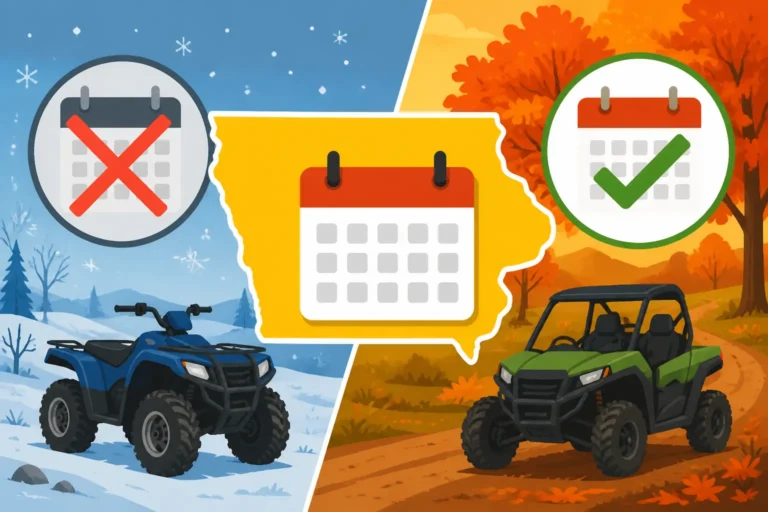
For the vast majority of situations, if your ATV or UTV never leaves private property and never crosses or operates on any public right-of-way, Iowa law does not require it to be registered. This means if you have a sprawling farm, a private timber plot, or even a large acreage for recreational riding that is fully enclosed and has no public access points, you can generally ride your machine all day long without needing that yearly decal. It’s a huge relief for many landowners and enthusiasts who just want to enjoy their machines without the bureaucratic overhead.
However, the moment your machine touches a public road, a public ditch, or even a utility easement that functions as a public thoroughfare, the rules often change. Even crossing a gravel road to get from one part of your property to another can invoke registration requirements. It's these "edge cases" that trip up many otherwise law-abiding riders and lead to citations from county deputies or conservation officers. The line between private and public isn't always as clear-cut as a fence line, especially in rural Iowa where easements and shared accesses are common.
Why This Confusion Exists Among Riders
The confusion surrounding private land registration stems from a few key factors. Firstly, laws vary significantly from state to state. What might be perfectly legal in a neighboring state like Missouri or Nebraska could be a violation in Iowa, and vice-versa. Riders who have moved or who frequently ride in different regions might mistakenly apply rules from one place to another. Secondly, there’s a general principle that "my land, my rules" which, while true for many aspects of property ownership, doesn't always supersede state safety and revenue generation regulations designed for public good, even if those regulations are sometimes narrowly applied.
Adding to the muddle is the often informal nature of ATV and UTV ownership, especially in agricultural communities. Machines are frequently bought used, sometimes without formal titles or proper transfer of ownership, further obscuring the legal requirements. Many riders might also confuse the lack of a need for a safety certificate for adults with a blanket exemption from all other regulations. It’s easy to assume that because you're not on a designated trail, the entire system of fees and permits doesn't apply.
What "Public Land" and "Private Land" Truly Mean in Iowa
In Iowa, the distinction between "public land" and "private land" is crucial for off-highway vehicle (OHV) regulations. "Private land" generally refers to property that is privately owned and not accessible to the general public without explicit permission. This could be your own farm, a friend's hunting ground, or a privately owned recreational area. The key here is exclusive access controlled by the owner.
"Public land," on the other hand, encompasses a much broader range of areas. This includes state-owned OHV parks like Gypsum City, county conservation areas, and, most importantly for this discussion, public roads and their adjacent ditches and rights-of-way. Even if a road is rarely traveled, if it's maintained by a county or state entity, it's considered public. Utility easements that run across private property can sometimes be considered public access points, depending on the specific easement language and local interpretation. Understanding this distinction is paramount. You can find more details on [The Iowa DNR and Off-Highway Vehicles] and their role in defining these spaces.
Understanding Iowa's Off-Highway Vehicle Registration Laws
Iowa's off-highway vehicle registration system isn't just about collecting fees; it's a foundational element of how the state manages and supports OHV recreation. For those of us who love to ride, understanding this system helps to clarify why certain rules are in place, even if they sometimes feel cumbersome. It’s designed to balance the freedom of riders with public safety and environmental stewardship.
The Purpose of Iowa's OHV Registration System
The primary purpose of [Registering an ATV in Iowa] is twofold: to identify machines and their owners for safety and law enforcement purposes, and to generate revenue. When an ATV or UTV is registered, it's assigned a unique identification number and displays a current decal, making it easier to track in cases of theft, accidents, or other incidents. This is especially important on public trails and roads where many machines operate.
Beyond identification, the registration system acts as a funding mechanism. The fees collected are not just general state revenue; they are specifically earmarked for programs that directly benefit OHV riders. These funds contribute to the acquisition, development, and maintenance of Iowa's designated OHV parks and trails, as well as educational and safety initiatives. Without these registrations, the very places many Iowans love to ride wouldn't exist or would fall into disrepair. This collective contribution ensures that the sport can continue to grow and thrive across the state.
Where Registration Fees Go and How They Benefit Riders
It's common to wonder where your money actually goes when you pay for that yearly registration. [What Iowa Charges to Register an ATV] includes several components, but a significant portion directly supports the OHV program. These funds are channeled into various initiatives:
- Trail Development and Maintenance: A large part of the budget is dedicated to building new trails and maintaining existing ones at Iowa's OHV parks. This includes everything from grading and signage to bridge repairs and erosion control.
- Land Acquisition: The DNR sometimes uses these funds to purchase land specifically for OHV use, expanding the network of legal riding areas for everyone.
- Safety Education: A portion supports ATV and UTV safety courses, which are crucial for educating new riders, especially younger ones, on safe operating practices.
- Law Enforcement: The funds also help support the efforts of conservation officers and local law enforcement in patrolling trails and ensuring compliance with OHV laws, which in turn makes riding safer for everyone.
So, while it might seem like just another fee, your registration directly contributes to the quality and availability of riding opportunities in Iowa. It's an investment in the future of the sport.
Specific Exemptions for Agricultural Use
One of the most significant exemptions from registration requirements, even if a machine might briefly touch a public road, is for agricultural use. Iowa law provides for an "[The Implement of Husbandry Exemption in Iowa]" which often applies to ATVs and UTVs. This means that if your machine is primarily used for farming purposes – such as checking fences, hauling tools, moving livestock, or spraying fields – it typically does not need to be registered, even if you occasionally use it on a public road to get from one field to another, as long as it's within a reasonable distance from your farm.
However, this exemption comes with conditions. The machine must be primarily used for agricultural purposes, not recreational. If you're using your UTV to haul feed during the week but spending your weekends ripping around local gravel roads for fun, you're likely outside the spirit of the exemption. Furthermore, when operating on public roads under this exemption, you're still subject to certain rules, such as operating during daylight hours and having appropriate slow-moving vehicle signage. Always consult the specific wording of the law or a local expert to ensure your agricultural use truly qualifies.
When Registration Becomes Necessary, Even on Your Own Property
While the general rule is "no registration needed for strictly private land," there are several scenarios where your machine's use, even if originating from your private property, will suddenly require it to be registered. These are the tricky situations that often catch riders off guard.
Crossing Public Roadways or Shoulders
This is perhaps the most common trigger for registration requirements. Imagine you own a large tract of land, but it's bisected by a county gravel road. To get from your north pasture to your south pasture, you have to cross that public road. The moment your ATV or UTV touches that public right-of-way, even for a brief crossing, it generally needs to be registered. The same applies if you ride your machine in the ditch or shoulder of a public road, even if you consider it "just an extension of my field." These areas are legally part of the public right-of-way and fall under the purview of public road regulations.
This also applies if your property has no direct access to public land, but you frequently ride out of your driveway and down a short stretch of public road to access another part of your property or a neighbor’s land. Even a hundred yards on a public road for access purposes can be enough to necessitate registration. It's a small detail, but one that local law enforcement officers are trained to observe.
Transporting Your Machine Beyond Your Property Line
If you're loading your ATV or UTV onto a trailer and transporting it to a friend's property, an OHV park, or even a local dealer for service, the journey on public roads to get there typically doesn't require the machine itself to be registered. The key distinction here is that the machine is being transported, not operated on public roads. The trailer and tow vehicle, of course, must be properly registered and insured.
However, once you arrive at your destination, if that destination is not your private land and is a designated riding area (like an OHV park) or another private property where you intend to ride, then the machine's registration status becomes relevant for operation. For instance, you can trailer an unregistered ATV to Gypsum City OHV Park, but you won't be allowed to unload and ride it there without a current Iowa registration decal or, for non-residents, a valid [Iowa's Nonresident User Permit].
The Implement of Husbandry Exemption and Its Limits
We touched on the implement of husbandry exemption, and it’s a crucial one for Iowa’s rural residents. However, it has very specific limits. As mentioned, the machine must be used primarily for agricultural purposes. This isn't a loophole for recreational riding. If a deputy observes you using your UTV to shuttle friends around a large property on a Sunday afternoon, with no clear agricultural activity occurring, you might find that the "implement of husbandry" defense doesn't hold up.
Furthermore, the exemption usually applies to operating on public roads only for the purpose of moving between different tracts of land or for agricultural work, and typically within a certain proximity to the farm. If you decide to take your "farm UTV" on an hour-long joyride down county gravel roads, even if you own property along the way, you're likely exceeding the scope of the exemption. The intent of the operation is key here. The machine needs to be equipped with certain safety features like a slow-moving vehicle sign when operating on roads under this exemption, and headlights must be on. [Riding an ATV on Iowa Roads] has even more detail about these requirements.
The Importance of Landowner Permission When Riding Private Ground
Even if you're riding on private land and your machine doesn't require registration, there's another critically important aspect to consider: permission. Riding on someone else's land without explicit permission is not just rude, it's trespassing, and it carries legal consequences. This is true whether the land is marked or not, and whether you thought it was abandoned or not.
Verbal vs. Written Permission: What's Safer for You?
When it comes to getting permission to ride on private land, you essentially have two options: verbal or written. Verbal permission is often the easiest and most common, especially if you know the landowner well. A simple "Yeah, go ahead and ride whenever you want" from your friend or neighbor might feel sufficient. However, verbal agreements can be easily forgotten, misinterpreted, or even denied later on. What if the landowner sells the property? What if they have a change of heart? Or what if a new family member takes over and claims no such permission was ever granted?
Written permission, while requiring a bit more effort upfront, offers significantly more protection for both the rider and the landowner. A simple letter or a basic form stating who has permission to ride, on what dates, with what types of machines, and any specific conditions (e.g., "stay on marked trails," "no riding after dark") can prevent misunderstandings and provide legal proof if any issues arise. This is especially vital if you're riding on land owned by someone you don't know intimately or if you plan to ride there regularly over an extended period. [Iowa Landowner Permission Rules] are clear that unauthorized entry is trespass.
Why a Formal Agreement Can Protect Both Rider and Landowner
A formal, written permission agreement goes a long way in establishing clear boundaries and expectations. For the rider, it means you have documented proof that you are legally on the property, which can be invaluable if you encounter law enforcement or if there’s a dispute with another party. It clarifies what you can and cannot do, avoiding accidental violations of the landowner’s wishes.
For the landowner, a formal agreement provides several benefits. It allows them to specify exactly who is allowed on their property, for what purpose, and under what conditions. This helps manage liability – by setting clear rules, they can argue that any unauthorized or dangerous activity was explicitly forbidden. It also protects against claims of adverse possession or implied easement if someone tries to claim long-term riding rights. It's about setting clear terms and protecting everyone involved, ensuring a positive relationship rather than a legal headache.
Using Tools Like LawDepot for Permission Agreements
Creating a formal permission agreement doesn't have to be complicated or expensive. You don't necessarily need to hire a lawyer for a simple riding permission slip. There are many online resources that provide templates for legal documents, making it easy to generate a written agreement. For example, platforms like LawDepot offer user-friendly interfaces where you can customize various legal forms, including permission agreements or waivers. You can input details like the names of the parties, the property description, the duration of the permission, and any specific rules for riding.
Using a service like LawDepot can help ensure that all the necessary legal language is included, giving both parties peace of mind. It’s a small investment of time and potentially a minor fee for a template, but it offers substantial protection against future disputes. Having a printed and signed document, perhaps even notarized for extra validity, is always a smart move when riding on someone else's private land, even if it's just your buddy's farm.
Potential Risks and Liabilities of Unregistered Machines on Private Land
Even when riding on private land without the need for registration, it’s a mistake to assume you're entirely off the hook when it comes to risks and liabilities. Accidents can happen anywhere, and the legal and financial repercussions can be significant, regardless of where the machine is operated or its registration status. Being informed is key to protecting yourself and your assets.
Insurance Considerations and Unregistered ATVs
One of the biggest areas of concern for unregistered ATVs on private land is insurance. While Iowa doesn't require liability insurance for off-road use on private property, having it is incredibly wise. Your homeowner's policy might offer some limited coverage for recreational vehicles on your property, but it's often minimal, and many policies have specific exclusions for ATVs and UTVs, especially if they are powerful machines or used regularly.
If you or someone else riding your unregistered machine on your private property causes an accident that results in injury or property damage to a third party (e.g., a visitor, a neighboring property), you could be personally liable for significant costs. An ATV-specific liability policy, even for private land use, can provide crucial protection. Imagine a scenario where a rider on your property hits a tree, and the tree falls on your neighbor's fence. Or worse, if a guest riding your machine is severely injured. Without adequate insurance, your personal assets could be at risk. It’s worth checking with your insurance provider about specific OHV policies, even if your machine will never touch a public road.
Accident Reporting Requirements, Registered or Not
Just because your machine isn't registered doesn't mean accidents go unreported. Iowa law has specific [Iowa ATV Accident Reporting Requirements] that apply to any accident involving an off-highway vehicle if it results in injury, death, or property damage exceeding a certain monetary threshold. This reporting requirement applies whether the accident occurred on public or private land, and regardless of whether the machine was registered.
If you're involved in such an incident, you are generally required to report it to the Iowa Department of Natural Resources (DNR) within a specified timeframe (typically 72 hours). Failing to report a serious accident can lead to additional legal problems. The purpose of these reports is to track accident trends, identify safety issues, and assist in investigations. It's not about punitive action against an unregistered machine, but rather about collecting vital information for public safety.
The Myth of "No Harm, No Foul" on Your Own Land
There's a prevailing myth that "what happens on my land stays on my land," and that if no one else is involved, there's "no harm, no foul." This couldn't be further from the truth. While you might not face legal repercussions from the state for a minor mishap on your own property, serious accidents can still have devastating consequences. Self-inflicted injuries can lead to massive medical bills, and damage to your own property can be costly to repair.
Moreover, if you have guests riding on your property, your liability increases significantly. Even with a signed waiver (which can be created using tools like LawDepot, as discussed earlier), you still have a responsibility to provide a reasonably safe environment. Failing to maintain your machine, having hazardous riding conditions, or allowing an inexperienced rider on a powerful machine could all lead to negligence claims against you if an accident occurs. Always prioritize safety, regardless of the land's ownership or your machine's registration status.
Best Practices for Private Land Riding Without Registration
Riding an unregistered ATV or UTV on private land can be a fantastic way to enjoy your machine without the added layer of state fees and decals. However, operating without state registration doesn't mean operating without responsibility. There are still many best practices you should follow to ensure safety, maintain good relationships with neighbors, and protect yourself legally. Think of it as self-governance for the private land rider.
Maintaining Your Machine for Safe Operation
Whether your ATV or UTV is registered or not, proper maintenance is paramount for safety. There's no annual state inspection, but that puts the onus entirely on you, the owner. A poorly maintained machine can be a serious hazard, leading to accidents and injuries. Regularly check your tires for proper inflation and wear, inspect brakes for functionality, ensure all lights are working (even if you only ride during the day, they are critical safety features), and verify that the steering and suspension components are in good order.
Engine maintenance, including oil changes and air filter cleaning, not only extends the life of your machine but also ensures reliable operation. No one wants to break down deep in a remote part of their property. Keeping your machine in top shape is a personal commitment to safety, preventing not just accidents but also unnecessary wear and tear. A well-maintained machine is a safe machine, regardless of where it's ridden.
Respecting Property Boundaries and Neighbor Relations
Even if you own a vast tract of land, respecting your property boundaries is essential, especially when riding. It's incredibly easy to inadvertently cross a property line, especially in wooded areas or open fields without clear demarcation. Riding onto a neighbor's property, even by accident, can quickly sour relationships and lead to trespassing complaints. Always know where your property ends and your neighbor's begins.
Beyond physical boundaries, consider the impact of your riding on your neighbors. Excessive noise, especially late at night or early in the morning, can be a major source of friction. Kicking up dust near a neighbor’s home or allowing exhaust fumes to drift their way can also cause issues. Be considerate: ride during reasonable hours, consider aftermarket exhaust systems that reduce noise, and try to keep dust to a minimum where possible. Good neighbor relations are invaluable, and responsible riding helps maintain them.
Documenting Ownership Even Without a Title (Bill of Sale, etc.)
Even if your ATV or UTV is solely for private land use and doesn't require registration or titling, it's incredibly important to have proper documentation of ownership. This means having a [An Iowa Bill of Sale for an ATV] from the previous owner, or at least a manufacturer's certificate of origin if purchased new. This documentation proves that you legally own the machine, which is critical for several reasons:
- Theft Recovery: If your unregistered machine is stolen from your property, proving ownership to law enforcement for recovery and insurance claims will be much easier with a bill of sale. Knowing [Iowa ATV Serial Number Requirements] and having that number clearly documented is also vital.
- Future Sale: When you decide to sell the machine, a potential buyer will want proof of ownership. A clear chain of title or a bill of sale from your purchase date will make the transaction smoother and instill confidence in the buyer. Even if the machine doesn't have an Iowa title (perhaps it was never titled by a previous owner), a bill of sale is the next best thing. Read more about [Buying a Used ATV in Iowa] to understand what to look for in documentation.
- Estate Planning: In the event of your passing, having clear ownership documents will simplify the process for your heirs.
Without some form of ownership documentation, you could find yourself in a difficult position if questions about legal possession arise. Even for private land use, treat your ATV or UTV like any other valuable asset and keep careful records.
| Scenario | Registration Required? | Key Consideration |
|---|---|---|
| Riding exclusively on your own fenced land | No | Ensure no public access or easements are used. |
| Crossing a public gravel road between fields | Yes | Any touch of public right-of-way typically triggers it. |
| Riding in a public ditch next to your land | Yes | Ditches and shoulders are usually public property. |
| Agricultural use on roads (implement of husbandry) | No | Must be primarily for farming, follow road rules. |
| Transporting on a trailer to an OHV park | No (for transport) | Yes (for riding at the park). |
| Riding on a neighbor's private land | No | Crucially requires explicit landowner permission. |
| Selling the machine | No (for sale itself) | Proof of ownership (bill of sale) is vital. |
| Riding a non-resident's machine in Iowa | Yes | Non-resident permit needed for public land/trails. |
In Iowa, enjoying your ATV or UTV on private land offers a wonderful freedom from some of the typical registration requirements. However, this freedom comes with a significant personal responsibility to understand the nuances of the law, ensure you have explicit permission when riding on others' property, and prioritize safety and good neighbor relations. By following these best practices, you can confidently and responsibly enjoy your machine, knowing you're protected and playing by the rules, even when those rules are largely your own.
Disclaimer
This article is for general informational purposes only and does not constitute professional advice. Laws, prices and regulations vary by location and change over time. Consult a qualified professional for guidance on your specific situation.