Iowa Registration for a Side-by-Side
Many folks find themselves scratching their heads when it comes to registering a side-by-side or UTV in Iowa. These versatile machines often straddle the line between utility vehicle and recreational off-highway vehicle, leading to a lot of confusion about which rules apply and what paperwork you actually need. This guide is here to untangle all of that, walking you through every step of the Iowa registration and titling process specifically for your side-by-side.
Understanding Iowa's Definition of a Side-by-Side (OHV)
Before we dive into the nitty-gritty of forms and fees, it's crucial to understand how Iowa views your side-by-side. Is it an ATV? Is it an OHV? Does it matter? Yes, it absolutely does, because these definitions dictate the specific requirements you'll need to meet to stay legal and enjoy your machine without a worry.
The OHV Category and Your Machine
In Iowa, side-by-sides, commonly known as UTVs (Utility Terrain Vehicles) or SxSs (Side-by-Sides), generally fall under the broader umbrella of "Off-Highway Vehicles" (OHVs). This category also includes ATVs (All-Terrain Vehicles) and off-road motorcycles. The key distinction for a side-by-side is its design: typically, it has a steering wheel, foot pedals, and seating for two or more passengers side-by-side, much like a small car. While some regulations might refer generally to "ATVs" in a way that could include UTVs, for registration and titling purposes, the state recognizes these differences. The Iowa Department of Natural Resources (DNR) oversees the registration of all OHVs, ensuring that these machines are properly identified and accounted for. This structured approach helps manage trail access, fund trail maintenance, and track ownership, making your recreational or utility activities smoother in the long run.
When you bring your new or used side-by-side to the county recorder's office, you won't be checking a box that says "ATV" if your machine is clearly designed as a UTV. The registration system is designed to differentiate between these machine types, even if the core registration process is very similar. This differentiation ensures that any specific rules, like those for passengers or certain operational requirements, can be applied correctly to your particular vehicle. Understanding that your side-by-side is an OHV, distinct from a traditional single-rider ATV, helps clarify much of the subsequent process, from what forms you fill out to where your registration decal needs to be displayed.
Why the "Implement of Husbandry" Exemption Matters
Now, here's where things can get a little complex, especially for those living and working in Iowa's agricultural heartland. Many side-by-sides are bought and primarily used for farm work. Whether you're hauling feed, checking fences, or moving tools around your property, your UTV might be functioning as what Iowa calls an "implement of husbandry." This designation carries a significant exemption: such machines do not need to be registered or titled with the state if their use is solely for agricultural purposes. This can save you a chunk of change and a trip to the county recorder.
However, the "solely" part of that definition is critical. If your side-by-side ever leaves your private agricultural land—even just to cross a road to another field, or, heaven forbid, you take it to an OHV park for a weekend of fun—it immediately loses its implement of husbandry exemption. The moment it touches public ground or is used for non-agricultural recreation, it falls under the standard OHV registration and titling requirements. This is a common pitfall for many farm owners; they assume because it's a "farm vehicle," it's always exempt. Always consider your actual usage patterns. If there's any chance your UTV will be on public land or used recreationally, it's best to register and title it proactively to avoid potential fines or complications down the line. You can learn more about this by reading [Iowa's Implement of Husbandry Exemption].
The Mandatory Steps to Register a Side-by-Side in Iowa
Once you've determined your side-by-side needs to be registered (which, for most recreational and even many farm-adjacent uses, it will), the next step is to gather your documents and head to the right place. This process is fairly standardized across Iowa's 99 counties, aiming for consistency no matter where you live.
Gathering Your Essential Paperwork
Proper preparation is half the battle when dealing with any government agency, and registering your side-by-side is no exception. You'll need a few key documents to prove ownership and ensure all the details about your machine are correctly recorded. The foundation of your application will be the official registration form, which asks for specifics about your machine, its serial number, and your personal details as the owner. Having this filled out accurately and completely before you arrive will definitely speed things up at the counter. For a comprehensive overview of what to expect, refer to [What Iowa's Registration Form Asks For].
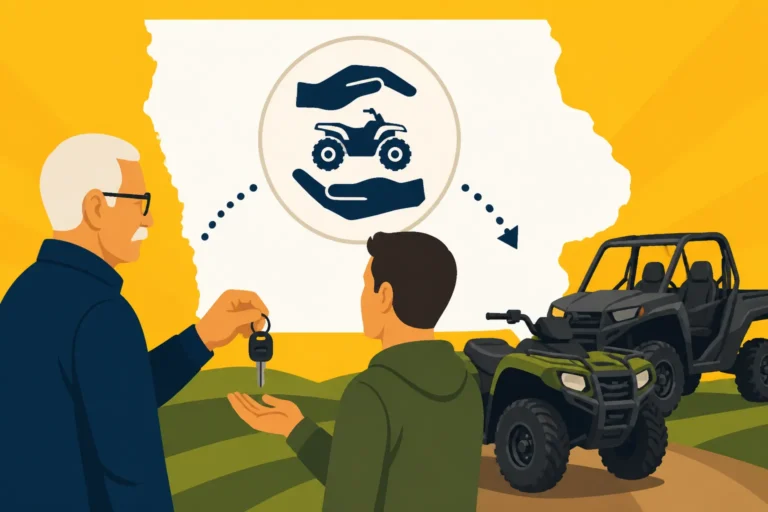
Beyond the form, the proof of ownership is paramount. If you bought your side-by-side new from a dealership in Iowa, they will typically provide you with a Manufacturer's Statement of Origin (MSO) or Manufacturer's Certificate of Origin (MCO). This is essentially the birth certificate of your vehicle. If you purchased a used side-by-side, you'll need the previous owner's properly assigned Iowa title. Even if you don't typically use a formal bill of sale for a casual transaction, it's highly recommended, especially for used purchases. A robust bill of sale clearly outlines the terms of sale, purchase price, and confirms the transfer of ownership. Resources like LawDepot can provide customizable bill of sale templates that help ensure you're covering all your bases legally, protecting both buyer and seller. Without proper proof of ownership, the county recorder simply cannot process your registration or title application.
Where to Complete the Registration Process
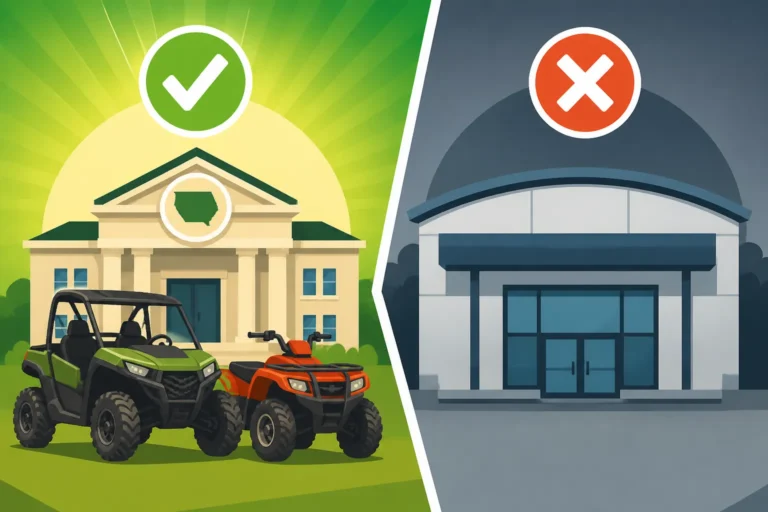
In Iowa, the responsibility for titling and registering OHVs, including your side-by-side, falls to the county recorder's office in the county where you reside. This is a crucial distinction, as many people mistakenly believe they should go to the Department of Motor Vehicles (DMV) or local driver's license bureau. However, the DMV handles road vehicles, while the county recorder manages recreational vehicles and land records. So, resist the urge to drive to the local DOT office; they'll only send you to the recorder.
When you visit your county recorder's office, be prepared with all your documents, including your MSO/MCO or assigned title, proof of identity, and payment for the various fees. The process typically involves presenting your paperwork, having the serial number verified (though they don't usually inspect the machine itself), and paying the necessary fees. Once processed, you'll receive a temporary registration certificate and a new Iowa OHV decal. This decal must be prominently displayed on the rear of your side-by-side. The physical decal and official certificate usually arrive in the mail a couple of weeks later. Understanding [Registering at an Iowa County Recorder] can help you prepare for this visit, ensuring you have the smoothest experience possible.
Titling Your Side-by-Side: A Separate, Crucial Step
While often done concurrently with registration, titling is a distinct legal process that formally establishes legal ownership of your side-by-side. It's not just a formality; it's a vital document for proving who truly owns the machine, especially for future sales, insurance claims, or in cases of theft.
When a Title Is Required in Iowa
Iowa law requires a title for all OHVs, including side-by-sides, unless a specific exemption applies. The most common exemption, as discussed, is for implements of husbandry used solely for agricultural purposes on private land. Beyond that, if your side-by-side is going to be registered, it absolutely needs an Iowa title. This means if you're taking your UTV to an OHV park, riding it on approved gravel roads, or simply want to have clear proof of ownership, a title is non-negotiable.
The title acts as a formal record of your side-by-side's existence and ownership in the state. It records the vehicle identification number (VIN) or serial number, the make, model, and year, and the name of the legal owner. If you finance your side-by-side, the lender will often be noted on the title as a lienholder, which means they have a financial interest in the machine until the loan is paid off. For a used side-by-side, the previous owner must properly sign over their existing Iowa title to you. If the previous owner never titled the machine, you might need additional documentation, such as a sworn statement of ownership and a detailed bill of sale, perhaps generated using a platform like LawDepot, to establish a clear chain of ownership for the county recorder. It’s important to understand this process, as without a valid title, you won't be able to legally register the machine for use on public lands or trails.
The Process for Obtaining Your Iowa Title
Obtaining your Iowa title for a side-by-side is typically handled at the same time and location as your registration: your county recorder's office. When you present your proof of ownership (MSO for new, or assigned title for used), the recorder's staff will process the title application alongside your registration. This streamlined approach makes it relatively convenient for new owners. You'll fill out a title application form, which gathers similar information to the registration form but is specifically for the legal ownership document.
After your application is processed and fees are paid, the county recorder will typically mail the official title document to you within a few weeks. It's crucial to keep this document in a safe place, separate from your machine, as it's the ultimate proof of ownership. Do not keep your title on your side-by-side! While you should carry your registration certificate when riding, the title is too important to risk losing or damaging out on the trail. If you ever sell your side-by-side, you'll endorse this title over to the new owner. If your title is lost or damaged, you'll need to apply for a duplicate title through the county recorder's office for a small fee, which highlights why keeping it safe from the start is so important. More details can be found under [Iowa's $13.50 ATV Title Fee].
Costs Involved in Registering and Titling Your UTV
Nobody likes surprises when it comes to fees. Understanding the costs associated with registering and titling your side-by-side in Iowa beforehand can help you budget and ensure you have sufficient funds when you visit the county recorder. While specific figures can vary, the structure of the fees is generally consistent.
Breaking Down the Registration Fees
The annual registration for your side-by-side in Iowa involves a few components that add up to the total cost. The base registration fee is applied to all OHVs, including UTVs. On top of that, there's a small "writing fee" charged by the county recorder for processing the paperwork, and often a "license agent fee" if you're processing it through certain channels. These fees contribute to the overall OHV fund, which helps maintain trails, provide safety programs, and manage the registration system across the state.
It’s important to remember that these fees are annual. Iowa's registration period for OHVs runs from January 1st to December 31st, regardless of when you initially register it during the year. This means if you register in July, your registration still expires on December 31st of that year, and you’ll need to renew it for the following year. This can sometimes catch new owners off guard, especially if they register late in the year. For a full breakdown of the typical costs, it's helpful to review resources like [Iowa ATV Registration Cost].
Here’s a simplified breakdown of typical fees you might encounter when registering your side-by-side:
| Fee Type | Description | Recurrence |
|---|---|---|
| Base Registration Fee | The primary annual fee for OHV operation. | Annual |
| Writing Fee | Small administrative charge by the County Recorder. | Per Transaction |
| License Agent Fee | Additional fee if processed through an agent, often included in total. | Per Transaction |
| Nonresident Permit Fee | Required for out-of-state UTVs used in Iowa (replaces Iowa registration). | Annual (for nonresidents) |
Note: Specific fee amounts are subject to change; always check with your local County Recorder's office for the most current figures.
Understanding Title-Related Costs
Beyond the registration, there are specific fees associated with titling your side-by-side. The primary cost is the title fee itself, which is a one-time charge to establish the official record of ownership. This fee covers the administrative costs of creating and maintaining your title document within the state's system. Like the registration, the title fee is also handled by the county recorder's office.
Another potential cost related to titling comes into play if you've financed your side-by-side. When a lender holds a lien on your machine (meaning they have a financial claim until you pay off the loan), a "lien notation fee" is charged to record this on the title. This is a standard practice and ensures that any future buyer or interested party knows there's a lien against the vehicle. If you ever lose your title, there's also a fee for obtaining a duplicate. These are all one-time fees per transaction or event, not recurring annual costs like registration. For instance, if you pay off your loan, you'll receive a clear title from your lender, but there's no additional state fee to remove the lien notation from the record once the lender has released it.
Unique Considerations for Side-by-Side Owners
Side-by-sides, by their very nature, often invite different usage scenarios than a typical ATV. This means there are a few special considerations regarding nonresidents and safety certifications that UTV owners should be particularly aware of when riding in Iowa.
Nonresident Registration for Visiting UTVs
Iowa is a popular destination for trail riding, and many enthusiasts from neighboring states like Minnesota, Missouri, or Nebraska bring their side-by-sides to explore our beautiful OHV parks and gravel roads. If you're visiting Iowa with an out-of-state registered UTV, you generally don't need to get a full Iowa registration if your machine is properly registered in your home state and that state offers reciprocity with Iowa. However, Iowa also offers a specific [Iowa's Nonresident User Permit] which is a wise choice for most visitors.
This permit acts as a temporary Iowa registration for your out-of-state machine. It's an annual sticker that allows you to legally operate your UTV on Iowa's designated OHV trails and public lands. This ensures that you're contributing to Iowa's OHV fund, which directly supports the trails you're enjoying. It’s a very straightforward process to obtain one, often available online or at some county recorder offices, and it prevents any confusion about reciprocity. Always carry proof of your home state registration and your Iowa nonresident permit when riding to avoid any issues with law enforcement.
What About Safety Certificates for UTV Operators?
This is a frequently asked question, and for side-by-side operators in Iowa, the answer is generally good news. Unlike traditional ATV operators who, if between the ages of 12 and 17, are required to complete an approved OHV safety course and carry a safety certificate, side-by-side (UTV) operators are typically exempt from this requirement. The law differentiates between the types of machines.
However, "exempt" doesn't mean "ignore safety." While you may not need a physical certificate if you're operating a UTV, it is still paramount to understand and practice safe riding techniques. Manufacturers often include specific safety guidelines for their UTVs, and understanding these, along with general OHV safety principles, is crucial. If you also operate an ATV or an off-road motorcycle, the safety certificate rules for those machines would still apply. So, while you might not have to worry about a certificate for your side-by-side, always prioritize safe operation, wear appropriate gear, and know your machine's capabilities and limitations.
Maintaining Compliance: Renewals and Road Use
Getting your side-by-side registered and titled is a great first step, but it's not a one-and-done deal. You'll need to keep your registration current, and if you plan to use your UTV on public roads, there are very specific rules you must follow.
Keeping Your Registration Current
As mentioned earlier, your Iowa side-by-side registration is an annual affair. All OHV registrations in Iowa expire on December 31st each year. To avoid any lapse, the renewal window typically opens in September, giving you a few months to get it done before the new year. Renewing your registration is crucial to legally ride your side-by-side on any designated OHV trails or approved public roads in Iowa. Riding with an expired decal can lead to citations and fines.
You have a couple of convenient options for renewing. You can visit your county recorder's office in person, just like you did for the initial registration, or you can often renew your registration online through the Iowa DNR's licensing system. Renewing online is usually quick and straightforward, allowing you to update your information and pay the fees from the comfort of your home. The new decal will then be mailed to you. Make sure to affix the new decal to the rear of your side-by-side as soon as it arrives, replacing the old one. This ensures you're always showing current proof of registration. For more detailed information, check out [Renewing an Iowa ATV Registration Online].
Navigating Iowa's Road Use Rules for UTVs
This is one of the most significant areas of confusion and potential legal trouble for side-by-side owners. While many states have varying rules, Iowa has specific and somewhat restrictive laws regarding OHV use on public roads. Generally speaking, ATVs and UTVs are not street legal in Iowa for general transportation purposes. However, there are exceptions.
Side-by-sides are permitted on unpaved county secondary roads (gravel roads) unless a county ordinance specifically prohibits it. Even then, you must be 18 years or older and possess a valid driver's license. There's also a 35 mph speed limit, and your UTV must be equipped with working headlights (on at all times), taillights, a horn, a mirror, and liability insurance. Some cities and counties have also passed ordinances allowing OHVs on paved secondary roads or even certain city streets, but this is entirely at the discretion of the local authority. You absolutely cannot ride on state highways (primary highways) or interstates, except to directly cross them at an intersection. Furthermore, farm vehicles operating as implements of husbandry may use roads for short distances between fields, but this is a very narrow exemption. Always check with local authorities for specific rules in your area and understand the nuances, which you can explore further in [Iowa Rules for Riding a Gravel Road] or [Are ATVs Street Legal in Iowa?]. Ignoring these rules can lead to significant fines and penalties.
Disclaimer
This article is for general informational purposes only and does not constitute professional advice. Laws, prices and regulations vary by location and change over time. Consult a qualified professional for guidance on your specific situation.