Best Places to Ride an ATV in Iowa
Finding a good place to ride in Iowa can take more planning than loading the ATV: parks have different terrain, machine rules and opening conditions, and a long drive is frustrating if a trail is closed. This guide compares established riding areas, helps you choose a park for your group and explains what to check before you leave home.
How to choose an Iowa ATV riding area
Iowa riding areas are not interchangeable. One may suit a first-time rider looking for manageable trails, while another is a better fit for an experienced group seeking varied terrain. The park’s own rules matter, too: trail access, machine eligibility, hours and closures can change, so confirm details before setting out.
Compare the parks before choosing
Use the table as a starting point, not a substitute for checking park information. Terrain descriptions are broad; conditions and available riding areas may vary. For a wider overview of Iowa’s designated riding areas, see Iowa's Eight Designated OHV Parks.
| Riding area | Location | A practical reason to consider it | Check before traveling |
|---|---|---|---|
| Gypsum City OHV Park | Near Fort Dodge | A large riding area with multiple trail and track options | Which areas are open and whether your machine fits the trail rules |
| Bluff Creek OHV Park | Near Eddyville | A useful option for riders in south-central Iowa | Trail conditions, access and any weather-related closures |
| Paul Huting Recreation Area | Waterloo | A riding option in the Cedar Valley area | Helmet requirements, machine rules and current access |
| Rathbun OHV Area | Near Plano | Convenient for riders planning around the Rathbun area | Conditions after rain and the park’s current operating details |
| Lakeview OHV Park | Near Solon | An option for riders in eastern Iowa | Current trail availability and machine eligibility |
| Nicholson-Ford OHV Park | Marshalltown | A central Iowa choice to compare with other parks | Open areas, trail conditions and site-specific requirements |
If you are planning a first trip, start with [Iowa Trails for Beginners] and look for a park whose posted trail information matches your group’s experience. A route that sounds exciting online may feel very different to a new rider once it includes tight turns, uneven ground or changing traction.
If machine width is a concern, check [Iowa Trails for a Wide Machine] before you load. A side-by-side or wider ATV may not be allowed on every route. Do not assume that a park’s general welcome to off-road vehicles means every machine can use every trail.
Match the park to your group and your ride
Think about who is coming, not just which park looks closest. A family with a young rider may value a designated youth area, clear trail information and an easy place to take a break. A group of experienced riders may care more about the variety of routes, available tracks or the amount of riding they can fit into a day.
Also consider what your group expects from the outing. If you want to ride for a few hours and head home, travel time and parking logistics may matter most. If you plan to camp or spend a weekend nearby, look into facilities and overnight arrangements separately. Camping availability and riding access are not necessarily the same thing, so check both.
A simple way to narrow the choice is to make a short list of needs before browsing park pages:
- Identify the machines in your group, including their type and approximate width.
- Note the experience level and ages of the riders.
- Decide how far you are willing to travel and whether you need camping or other facilities.
- Check the park’s posted rules, open areas and conditions.
- Choose a backup riding area in case weather or maintenance affects your first choice.
For route planning, onX Offroad can help you review mapped areas and organize a trip. Treat any app map as a planning aid rather than proof that a route is open or that your machine is permitted there. Compare what you see with information from the park or land manager.
Iowa riding areas worth comparing
The best place for your ride depends on where you are starting, what you want to ride and what is open when you go. These parks are useful options to compare across different parts of Iowa. Before leaving, verify directions, access and park-specific rules rather than relying on an old post or a map pin.
Gypsum City and Bluff Creek
Gypsum City OHV Park at Fort Dodge is a natural choice to look into if you want to compare several kinds of riding in one destination. The park is known for an extensive riding area and includes track and youth-riding features. That variety can make it appealing to a mixed group, though you should still confirm which areas are open and whether your particular machine is eligible for the routes you want to use.
For a family or a group with different skill levels, check the park’s layout before you arrive. Find out where beginners can ride, whether youth areas have separate requirements, and whether the track is appropriate for the machines in your trailer. A large park can offer options, but it also helps to know how you will spend your time once you reach the staging area.
Bluff Creek OHV Park at Eddyville is another option to compare, especially if you are traveling from south-central Iowa. As with any off-road destination, recent rain can change the experience quickly. Iowa clay can become slick or rutted, and a route that was comfortable in dry conditions may be difficult after a wet spell. Check current park notices before making the drive.
A map can make it easier to understand the general location and plan the trip, but it cannot tell you whether a trail is open today. onX Offroad may be useful for reviewing your route and keeping your planned destination organized. Before you unload, confirm the actual access point and follow the park’s posted signs and directions.
Paul Huting and Rathbun
Paul Huting Recreation Area at Waterloo is worth considering for riders in the Cedar Valley. Before planning around it, look closely at the site’s current requirements. Some parks have rules that differ from what riders expect, including requirements involving helmets, eligible machines or where particular vehicles can ride. Make sure everyone in your group knows those rules before arriving.
It is also wise to check what the park means by an open riding area. A facility may have trails, tracks or other designated spaces with different expectations. If riders in your group have different experience levels, decide in advance where they will ride and how they will stay together. That can prevent confusion at the trailhead and reduce the temptation to follow a route that is beyond someone’s comfort level.
Rathbun OHV Area at Plano can suit riders whose trip is centered around the Rathbun area. It is especially important to check conditions after rainfall, when soft ground may lead to closures or poor riding conditions. Respecting a closure protects the trail and helps avoid arriving to discover that the route you planned is unavailable.
For a weekend outing, do not assume that nearby recreation opportunities automatically mean you can ride an ATV everywhere in the surrounding area. Riding access is tied to the specific designated site or to permission from the landowner. A public lake, campground or wildlife area is not automatically an ATV trail.
Plan around weather, access and rules
A successful ride starts before the trailer leaves the driveway. Weather, trail conditions, access rules and the type of machine you are bringing can all affect whether a park is a good choice for that day. A quick check can save you a long drive and help you avoid damaging trails or breaking site rules.
Check closures and trail conditions
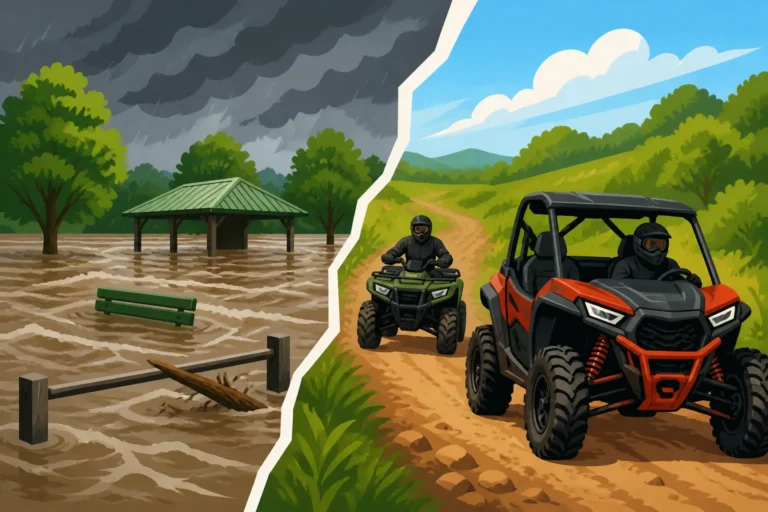
Use [Iowa Trail Conditions Before You Ride] and [Iowa Trail Closures to Check First] as reminders to verify conditions before you load. Look for recent park notices or contact the site when information is unclear. Heavy rain, maintenance, flooding or other local issues may affect access, even if a general map still shows the park.
Be cautious about relying on older online reviews. A rider may describe a route as open based on a visit that happened under very different conditions. If the park or land manager asks riders to stay off wet trails, follow that direction. Riding in soft ground can deepen ruts, widen a trail and create repair work for the people who maintain the area.
A practical weather check includes more than looking at the forecast for the hour you plan to ride. Consider recent rainfall, the forecast during your travel window and whether the park has issued an alert. If conditions look uncertain, have a backup plan. onX Offroad can help you keep alternate destinations and routes in mind, but confirm that a backup location is actually open before changing plans.
Confirm your machine, permit and riding area
Before the trip, verify that your machine is allowed at the park and that you have the required registration or permit for your circumstances. Iowa registration, visitor requirements and park access are related to where and how you ride, but they are not a blanket authorization to use every public or private trail. The rules for a specific destination still apply.
If you are visiting from outside Iowa, check what documentation and permit requirements apply to your machine. [Iowa's Permit for a Visiting Machine] provides a useful starting point for understanding visitor requirements. Riders should not assume that an out-of-state registration automatically settles every Iowa riding or park-access question.
Keep your paperwork accessible, and review the park’s rules for riders of different ages and machine types. If you are bringing a side-by-side, confirm that the route allows it rather than assuming a trail designed for smaller ATVs will accommodate a wider vehicle. For help understanding how the decal relates to park access, see Why the Iowa Decal Is the Admission.
Ride responsibly beyond the trailhead
A designated riding area is only one part of planning. You may need to travel through public roads to reach a park, and you may be tempted to ride nearby land because it looks open. Those situations have their own rules. Keep the park’s trail permission separate from road access and private-land permission.
Do not assume nearby land is open to ATV riding
A trail map, public road map or app does not establish permission to ride on private property. Get clear permission from the landowner before entering private ground, including timber, fields and farm lanes. A neighbor’s informal invitation may not cover an adjoining parcel or a route across someone else’s property.
Likewise, do not treat every public area as an off-road riding area. Wildlife areas, county conservation properties, bike trails and public recreation lands may have restrictions that differ from those at a designated OHV park. Confirm the rules for the specific property before unloading or riding.
onX Offroad can help you orient yourself while planning, but property boundaries and routes should be checked carefully, and app information should not replace direct confirmation from the land manager. If you are unsure whether a route crosses private property or enters a restricted area, stop and resolve the question before riding.
Make the trip safer and less stressful
Tell the group where you plan to ride, agree on a meeting point and make a plan for what to do if someone becomes separated. Carry the essentials your group may need for the conditions, and make sure each rider understands the park’s trail markings and rules. For a new park, take a few minutes at the staging area to review signs before heading out.
Choose a pace that fits the least-experienced rider in your group. A route that feels easy to one person may be intimidating to someone new, especially when mud, loose ground or steep terrain is involved. Take breaks, communicate before changing routes and avoid pressuring anyone into a section they are not comfortable riding.
Finally, leave the site in good condition. Stay on marked routes, pack out what you bring and respect closures. The most rewarding Iowa riding trip is not necessarily the one with the most miles; it is the one where the group finds a suitable place, rides within its limits and can return to enjoy the area again.
Disclaimer
This article is for general informational purposes only and does not constitute professional advice. Laws, prices and regulations vary by location and change over time. Consult a qualified professional for guidance on your specific situation.