Staging Early at Gypsum City
Arriving at Gypsum City OHV Park after the lot is already busy can make the first part of a ride feel rushed: unload, gear up, check the machine, and figure out where the trails begin while other riders are moving around you. This guide explains how to stage early, prepare for the park, and make the most of your riding time near Fort Dodge.
What staging early at Gypsum City really means
Get ready before you reach the park
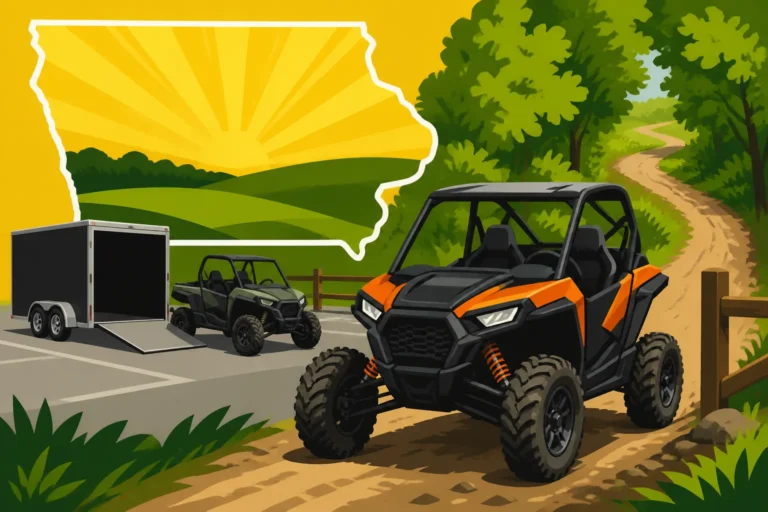
Staging early is less about racing to the gate and more about arriving with enough breathing room to unload and get organized. If you are trailering a machine, that means planning for the time it takes to park, lower ramps, remove tie-downs, inspect the ATV or UTV, and put on riding gear. Those small tasks add up, especially when you have more than one machine or are helping children get ready.
Try to do as much as possible at home. Check tire pressure, fuel, lights, brakes, and basic controls before loading. Pack helmets, gloves, eye protection, water, snacks, and any tools you expect to need where you can reach them without unpacking the whole trailer. A forgotten helmet is frustrating anywhere; discovering one is missing after you have unloaded at the park can derail the morning.
Before leaving, confirm current park access and trail conditions through official park or Iowa DNR information. Conditions can change after rain, and a trail that looked suitable on a map may be closed or difficult when you arrive. Iowa Trail Conditions Before You Ride is a useful reminder to check before committing to the drive.
Make the first stop calm and orderly
When you arrive, take a moment to understand the lot before unloading. Look for posted instructions, marked parking areas, trail access points, and any boundaries between staging and riding areas. Avoid blocking traffic lanes or taking more space than your trailer and machines need. A calm setup helps everyone, particularly when several groups arrive around the same time.
Unload with a simple routine. Park and secure the tow vehicle, check that the trailer is stable, then remove machines one at a time. Keep children and pets away from loading ramps and moving vehicles. Once a machine is off the trailer, move it to an appropriate spot rather than leaving it where other people need to maneuver.
If your group has different experience levels, agree on a meeting point before anyone heads toward the trails. A busy lot is a poor place to discover that one rider thought the group was taking a short beginner loop while another expected a longer ride. A quick conversation before starting can prevent confusion later.
Plan the ride before unloading
Choose a route that fits your group
Gypsum City is a large riding area outside Fort Dodge, with a network of trails and different riding features. The park is often described as spanning about 800 acres, with roughly 65 miles of trail. That scale makes it worth deciding what kind of ride you want before you set off. A family outing, a first visit, and a day focused on longer trail loops may each call for a different plan.
Talk through the basics with your group: how long you want to ride, who is least experienced, whether anyone needs frequent breaks, and what kind of terrain they are comfortable handling. A route that seems short on a map can feel much longer to a new rider, especially if the trail is rough, dusty, muddy, or crowded. It is usually easier to extend a ride than to turn an ambitious plan into a comfortable one once someone is tired.
Use the park’s posted map and signs as your primary guide. A navigation app such as onX Offroad can be useful for reviewing an area and keeping your bearings, but it should support rather than replace official trail markings and park instructions. Download or prepare any map information you may need before you lose reliable service, and make sure everyone understands how the group will stay together if riders become separated.
Set a realistic meeting and regrouping plan
Before starting, pick a few clear regrouping points and explain what to do if the group splits. For example, riders can agree to stop at a signed junction and wait rather than continuing to guess which direction the others took. Do not rely on a single person’s phone battery or map as the group’s only plan. A simple verbal plan is easy to remember when machines are noisy and riders are wearing helmets.
If your group includes children or beginners, keep the pace appropriate for the least experienced rider. Put an experienced adult where they can help, and avoid pressuring a newer rider to keep up with someone who is more confident. A slower, enjoyable loop is better than a long ride that leaves someone anxious or exhausted.
For first-time visitors, spend a few minutes studying the trail layout before riding. Iowa Trail Maps From the DNR can help you understand the value of checking official map information, while Iowa Trails for Beginners offers a useful starting point when choosing an outing that feels manageable.
Prepare for weather, closures, and park rules
Treat trail conditions as part of the plan
Iowa weather can change the character of a ride quickly. After rain, clay can become slick and sticky, and low areas may hold water. Mud can obscure ruts, make turning harder, and pack into tires or machine components. Riding when the ground is too wet can also leave damage that affects later visitors. If conditions are poor, changing plans is often the responsible choice rather than trying to force a ride.
Check for alerts before loading and again before driving to the park. A closure may affect only part of the riding area, or it may change whether the trip is worthwhile. If you are traveling a long distance, have a backup plan rather than assuming the park will be open in the condition you expect. Iowa Trails Closed After Rain and Iowa’s Weather-Driven Trail Closures cover why a forecast alone may not tell the whole story.
A navigation app can help you keep track of your planned route, but it cannot tell you that a trail is currently closed unless you check an authoritative, current park notice. Use onX Offroad as a planning aid, then follow park signs and any posted closure instructions on site. If a route is blocked, turn around rather than riding around a barrier or making a new trail.
Check the season and park-specific information
Gypsum City has a defined riding season, and its posted dates and operating details should be checked before you go. The park is associated with an April-to-October season, but that does not mean every trail is necessarily open or rideable on every day within that period. Weather, maintenance, and local conditions can affect access. April 15 to October 15 at Gypsum City provides more detail about the park’s seasonal window.
Look for current information about the entrance, staging area, camping, and any special event or trail restrictions. Gypsum City has a campground, but do not assume that a particular site, service, or facility will be available without checking directly. If you plan to stay overnight, confirm the details before making the drive. Gypsum City’s Thirty-Three Site Campground is relevant for riders building a weekend around the park.
Rules matter even when your group is focused on getting on the trail. Follow posted speed, direction, machine-type, and safety requirements. Keep to marked routes, yield appropriately, and avoid disturbing other park users. If there is uncertainty about a rule, ask park staff or consult official guidance rather than relying on what someone remembers from a previous visit.
A practical early-staging routine
Use a simple arrival checklist
An arrival routine helps prevent the familiar scramble where one person is unloading, another is searching for gloves, and nobody knows where the map went. Keep it consistent whether you are riding solo or bringing a group.
- Check park information before leaving. Look for closures, weather-related notices, seasonal access details, and any special instructions.
- Inspect the machines at home. Check fuel, tires, brakes, controls, and visible damage before loading.
- Pack equipment where it is easy to reach. Keep helmets and essential gear separate from tools and spare clothing.
- Arrive with enough time to unload safely. Do not assume setup will take only a few minutes, especially with multiple machines.
- Read the posted information at the park. Confirm that your intended route and riding area are open.
- Set a group plan. Choose a starting route, a reasonable pace, and clear regrouping points.
- Ride the plan, then adjust. If conditions or energy levels are different than expected, shorten the ride or take a break.
For groups, assign small jobs before you arrive. One adult can handle the trailer and tie-downs while another checks that younger riders have their protective gear. If everyone knows their role, the group is less likely to crowd the staging area or leave equipment behind.
| Before you leave | At the staging area | Before the first trail |
|---|---|---|
| Check alerts and conditions | Park and unload carefully | Review signs and route |
| Inspect machines | Keep ramps and lanes clear | Confirm the group pace |
| Pack protective gear | Secure loose equipment | Choose regrouping points |
| Prepare maps and navigation | Keep children clear of vehicles | Stay on marked trails |
Leave time for a safer first ride
The first few minutes on a trail are not the time to discover that a machine has a problem or that a rider is uncomfortable. Before moving out, confirm that everyone’s helmet and gear fit properly, that the machines are ready, and that the group knows where it is going. If a rider is nervous, start with a short, familiar-feeling route and give them time to settle in.
Navigation should be a backup for good group habits, not a substitute for them. Keep the group within a comfortable distance, stop in safe places when needed, and avoid relying on a phone screen while moving. onX Offroad may help with orientation and route planning, but each rider should still pay attention to signs, trail markers, and the people around them.
If you are new to the park, a careful start can make the whole day feel easier. Staging early gives you time to handle the practical details, check current conditions, and choose a route that suits the group. The goal is not simply to be first out of the lot. It is to begin the ride prepared, without rushing, and with enough flexibility to respond to what the trail actually offers.
Disclaimer
This article is for general informational purposes only and does not constitute professional advice. Laws, prices and regulations vary by location and change over time. Consult a qualified professional for guidance on your specific situation.